Bridging the Digital Divide: How VirtualGo is Redefining Social Interaction in Mixed Reality
The landscape of spatial computing is currently navigating a pivotal transition. While Virtual Reality (VR) has successfully established immersive, purely digital worlds, and Augmented Reality (AR) has found its niche in enterprise and utility, Mixed Reality (MR) has often struggled to find its "killer app"—the specific experience that makes the blending of real and digital worlds essential rather than gimmicky. However, a significant breakthrough from VirtualGo, the developers behind the acclaimed horror title Hauntify, suggests that the next frontier of MR isn’t just about what you see in your room, but who you can invite into it from across the globe.
At the recent UploadVR Summer Showcase and the Augmented World Expo (AWE), VirtualGo unveiled a sophisticated system that allows a remote player to join a host’s local mixed reality environment. By utilizing advanced scene-meshing technology, the system converts the host’s physical home into a virtual environment that a remote player can navigate via a VR headset. This innovation addresses one of the most persistent hurdles in the XR (Extended Reality) industry: the "social isolation" of mixed reality.
The Core Innovation: Remote Presence in Private Spaces
For years, Mixed Reality has been a largely solitary experience. If you are playing an MR game where zombies crawl through your actual windows or ghosts hide behind your real sofa, you are the only one who can see them in that specific context. While "co-location" (local multiplayer where two people in the same room wear headsets) exists, it requires both participants to be physically present and own expensive hardware.
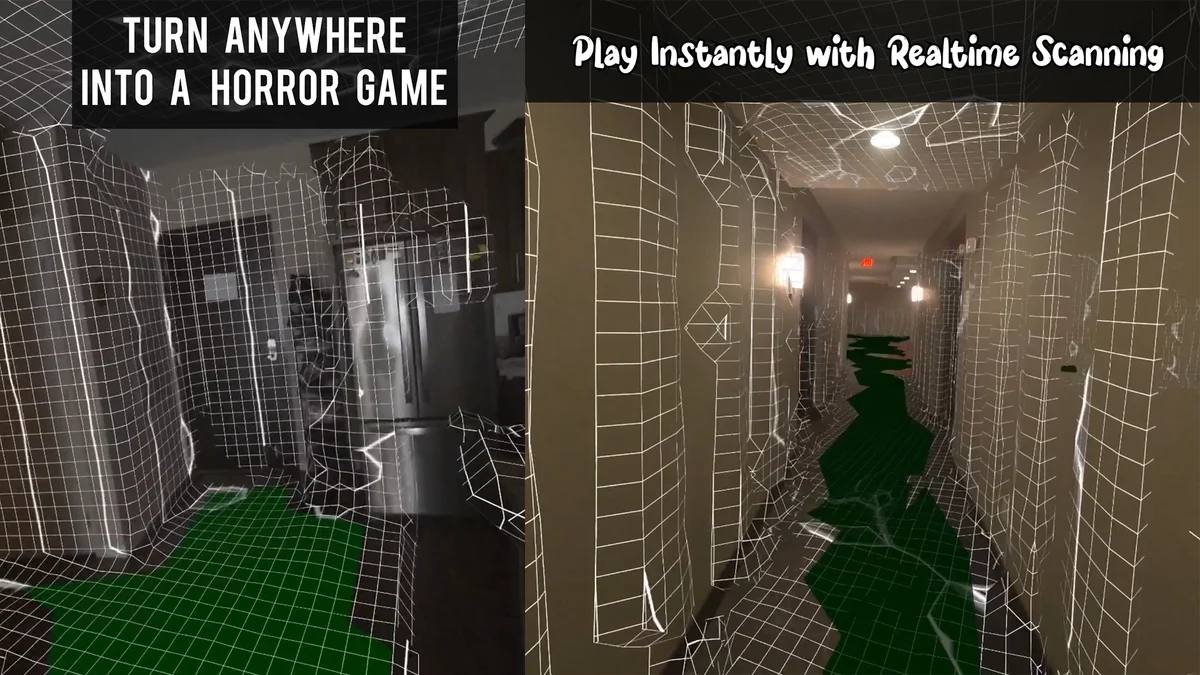
VirtualGo’s new system shatters this limitation. The technology functions by taking the "scene mesh"—a digital map of the walls, furniture, and layout of a room—and streaming it to a remote user. To the host, the remote player appears as an avatar standing in their actual living room. To the remote player, the host’s home appears as a fully realized VR world.
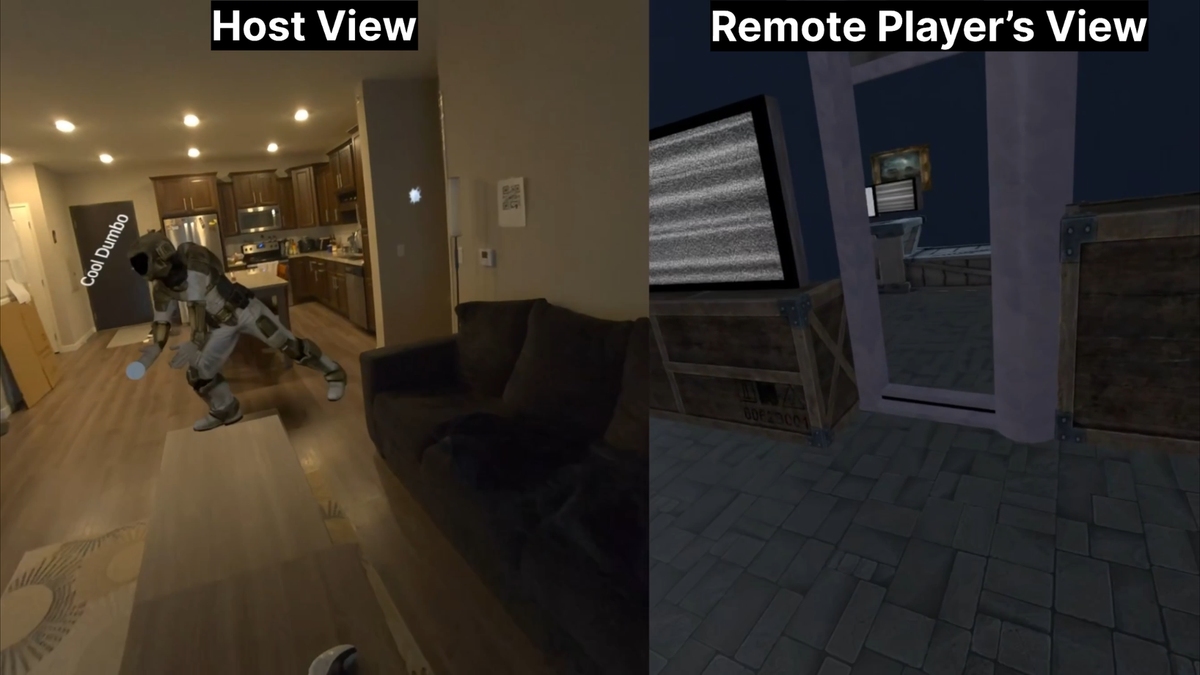
David Montecalvo, CEO of VirtualGo, emphasizes that this isn’t just a static map. The system is designed to transform real-world objects into in-game assets in real-time. A coffee table in the host’s home might appear as a sacrificial altar or a supply crate to the remote VR player, ensuring that both participants are interacting with the same spatial geometry, despite seeing different aesthetic skins.
Technical Breakdown: Overcoming the "Meta" Limitations
A critical component of this development is VirtualGo’s departure from standard platform tools. While Meta provides official room scanning systems for the Quest 3 and Quest Pro, these have often been criticized by developers for being static or cumbersome to update during active gameplay.
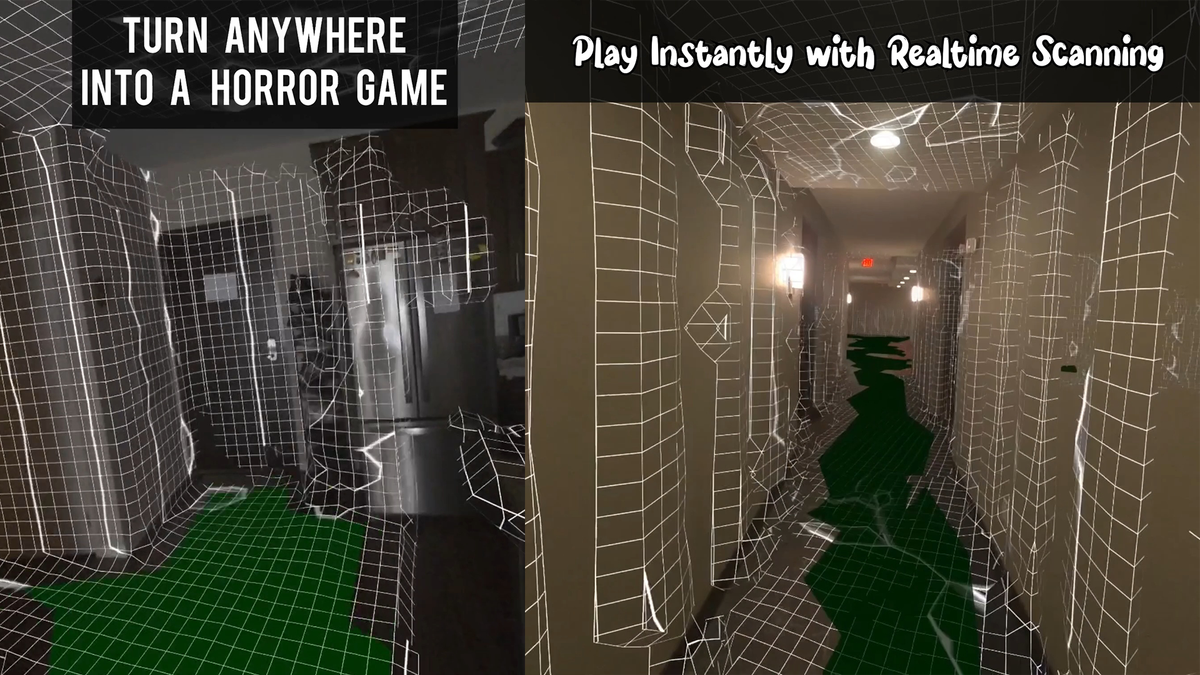
To achieve a seamless experience, Hauntify utilizes "Lasertag’s continuous scene meshing." This technology allows the headset to constantly update its understanding of the environment. If a door is opened or a chair is moved, the mesh updates dynamically. This is vital for multiplayer synchronization; if the host moves a physical object, the remote player’s VR representation of that object must move accordingly to prevent "ghosting" or immersion-breaking collisions.
During discussions at AWE, Montecalvo addressed the primary concern for any networked gaming experience: latency. For a remote player to feel "present" in someone else’s home, the synchronization of movement and spatial data must be near-instantaneous. Montecalvo reported that the latency in their current builds is "negligible," a claim that, if it holds up under consumer-grade internet conditions, marks a massive leap forward for spatial networking.

The Chronology of Development and the "Atari Era" of XR
The journey to this point has been iterative. Mixed Reality began with simple overlays—digital pets or weather widgets floating in the air. We then moved into "Scene Understanding" games, such as:
- Espire: MR Missions: Which used the room’s layout for stealth mechanics.
- Drop Dead: The Cabin – Home Invasion: Which turned the player’s walls into breach points for monsters.
- Into the Dead: Crimson Heights: An upcoming title focusing on survival horror within home geometry.
While these titles were successful, they remained "asymmetric" or solo experiences. The industry consensus, shared by experts like UploadVR’s David Heaney, is that XR is currently in its "Atari era." This comparison suggests that while the foundational technology is functional, we have yet to reach the "NES" or "PlayStation" era of mass-market, polished social connectivity.
VirtualGo’s multiplayer update, slated for a 2027 release, aims to be the catalyst for that next era. By removing the requirement for both players to be in the same physical room, they are tapping into the established social habits of the VR community (found in apps like VRChat and Gorilla Tag) and applying them to the physical world.
Implications for the Industry: Beyond the Horror Genre
While VirtualGo is currently testing this system within the horror and shooter genres—specifically in Hauntify, Mission Rift, and FPS Enhanced Reality—the implications are far broader. Montecalvo noted that the technology is genre-agnostic.
1. The Rise of "Cozy" Mixed Reality
The system could allow friends to "visit" each other’s homes to play board games, decorate a shared digital space, or watch movies together, where one person is in MR (seeing their real snacks and furniture) and the other is in VR (seeing a digital twin of that room).
2. User-Generated Content (UGC)
If players can scan their homes and invite others in, it opens the door for a new form of level design. Instead of playing a map designed by a studio, you are playing a map "designed" by your friend’s interior decorator. This adds a level of personal connection and variety that traditional gaming cannot replicate.
3. Economic and Hardware Adoption
One of the biggest hurdles for MR is that most households only own one headset. If a game requires two people in the same room to have headsets to play together, the potential market is tiny. By allowing a VR user to join an MR user, VirtualGo creates a bridge. The millions of Quest 2 owners (who primarily use VR) can now play with Quest 3 owners (who are exploring MR), preventing the fragmentation of the user base.
Official Responses and Future Outlook
The response from the developer community at AWE was one of cautious optimism. The logistical challenge of demonstrating "Remote-to-MR" play in a convention setting—where Wi-Fi is notoriously unstable—prevented live public testing, but the pre-alpha footage showcased a high level of stability in the mesh-to-VR translation.
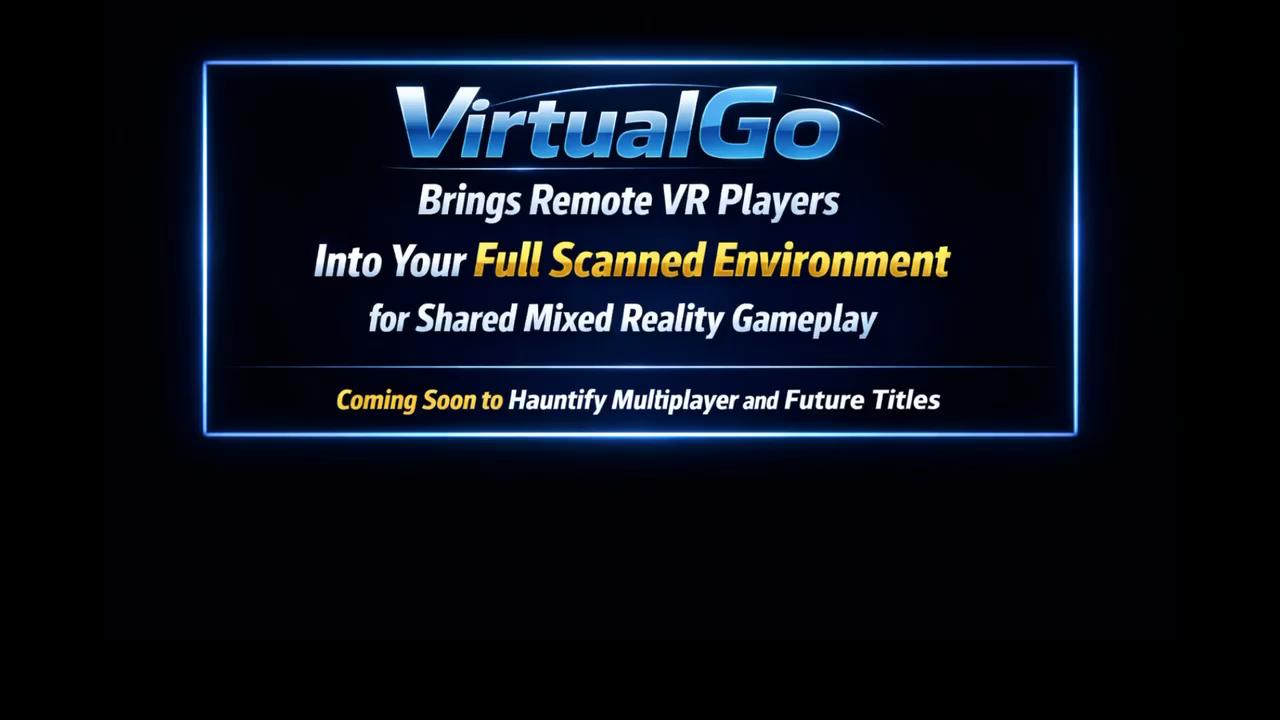
VirtualGo has confirmed that the multiplayer updates for their suite of games are planned for a 2027 rollout. This timeline suggests a significant period of "under-the-hood" refinement to ensure that the system can handle various home layouts, lighting conditions, and networking speeds.
In the interim, VirtualGo continues to support its current versions of Hauntify, Mission Rift, and FPS Enhanced Reality on the Meta Quest store. To encourage early adoption and testing of their scene-meshing tech, the studio has released a promotional code (AWE2026-878AEE) providing a 25% discount on these titles.
Conclusion: The Home as the New Game Board
The work being done by VirtualGo represents a shift in the philosophy of spatial computing. For years, the goal of VR was to take the player away from their reality and transport them to a digital one. Mixed Reality’s goal was to bring the digital world into our reality. VirtualGo is proposing a third path: the digitization of our personal reality for the sake of social connection.
By turning the "home" into a shared, synchronizable game board, they are addressing the fundamental human desire for shared experience. If 2027 sees the successful launch of this system, the "Atari era" of XR may come to a close sooner than expected, replaced by a world where the walls of our homes are no longer barriers to digital companionship, but the very foundation of it.