The Paradox of Haven: Why Stephen King Disowns ‘The Tommyknockers’ Novel and Its TV Adaptation
In the pantheon of modern American literature, few names command as much immediate recognition and commercial authority as Stephen King. With a career spanning half a century, King has defined the parameters of contemporary horror, suspense, and speculative fiction. However, even a titan of the genre is not immune to the occasional misfire. For decades, one particular title has remained a point of contention for both the author and his vast readership: The Tommyknockers.
Released in 1987, the novel was a massive commercial success, yet it occupies a dark corner of King’s bibliography. The author has famously disparaged the book, calling it "awful," and extended that disdain to the 1993 ABC television miniseries adaptation. The story of The Tommyknockers—both on the page and on the screen—serves as a fascinating case study in the intersection of creative burnout, substance abuse, and the difficulties of translating high-concept science fiction into the visual medium.
The Core Conflict: A Bestseller Without a Soul
The primary facts surrounding The Tommyknockers are a study in contradictions. On one hand, the novel was a #1 New York Times bestseller, proving that by the late 1980s, the "Stephen King" brand was essentially bulletproof. On the other hand, the work is widely regarded by critics and the author himself as a bloated, unfocused mess.
The narrative centers on the fictional town of Haven, Maine, where a local writer named Roberta "Bobbi" Anderson uncovers a mysterious metallic object buried in the woods behind her home. As she excavates the object—which turns out to be an ancient alien spacecraft—the town’s residents begin to undergo a terrifying transformation. They gain "genius" levels of inventiveness, creating advanced technological gadgets out of household appliances, but they also begin to lose their humanity, physically and mentally "becoming" the alien entities known as the Tommyknockers.
While the premise offered a unique blend of King’s signature small-town horror and 1950s-style science fiction, the execution was hampered by the author’s personal struggles at the time. King has since admitted that the book was written during the height of his addiction to cocaine and alcohol, leading to a narrative he describes as being powered by "spurious energy."
Chronology of a Creative Crisis (1987–1993)
To understand why The Tommyknockers failed to live up to King’s standards, one must look at the timeline of its creation and subsequent adaptation.
1. The Literary Publication (1987)
In the mid-1980s, Stephen King was producing work at a frantic pace. Between 1986 and 1987 alone, he released IT, The Eyes of the Dragon, Misery, and The Tommyknockers. While IT and Misery are hailed as masterpieces, The Tommyknockers felt like the product of a writer who had lost his internal editor. At over 900 pages, the book was dense, convoluted, and featured subplots that many readers found tedious.
2. The Personal Reckoning (Late 1980s)
Shortly after the publication of The Tommyknockers, King’s family staged an intervention. He entered sobriety, a transition that would eventually lead to a more disciplined and focused era of writing. In retrospect, King began to view The Tommyknockers as a symbol of his lowest point—a book that lacked the heart of his earlier works because it was fueled by chemicals rather than craft.
3. The Television Adaptation (1993)
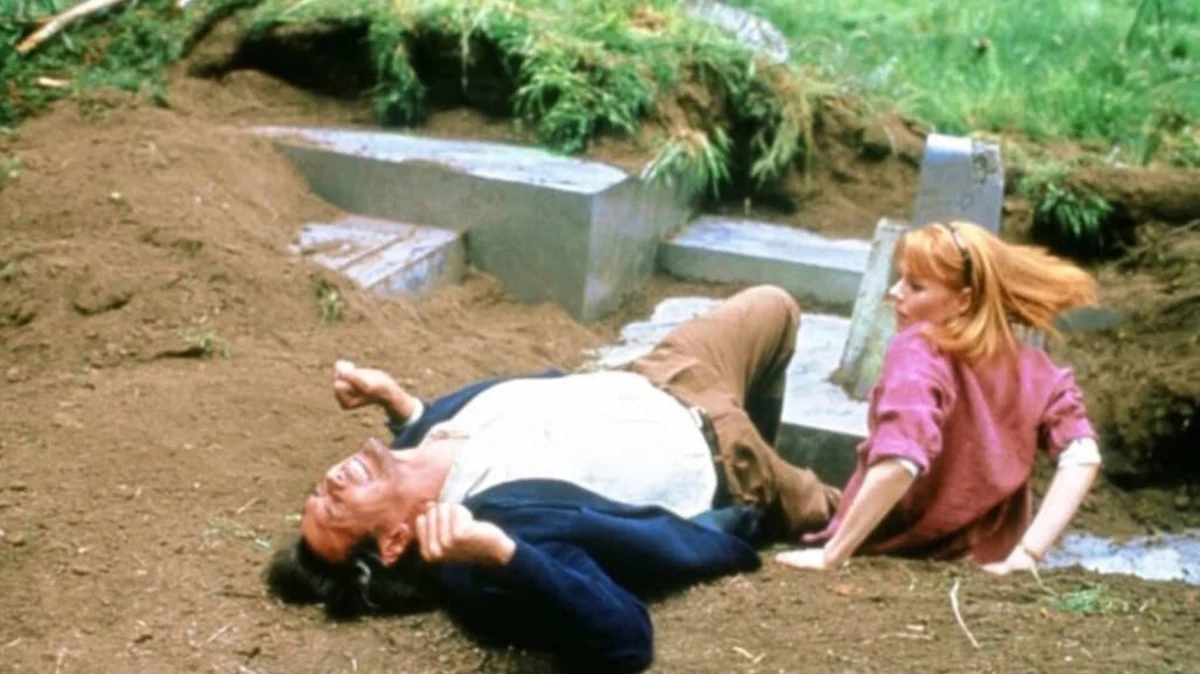
Despite the mixed critical reception of the book, the "King Fever" of the early 90s meant that any property with his name on it was prime real estate for television networks. ABC, following the success of the 1990 IT miniseries, greenlit a two-part adaptation of The Tommyknockers. Starring Jimmy Smits as Jim Gardener and Marg Helgenberger as Bobbi Anderson, the miniseries premiered in May 1993.
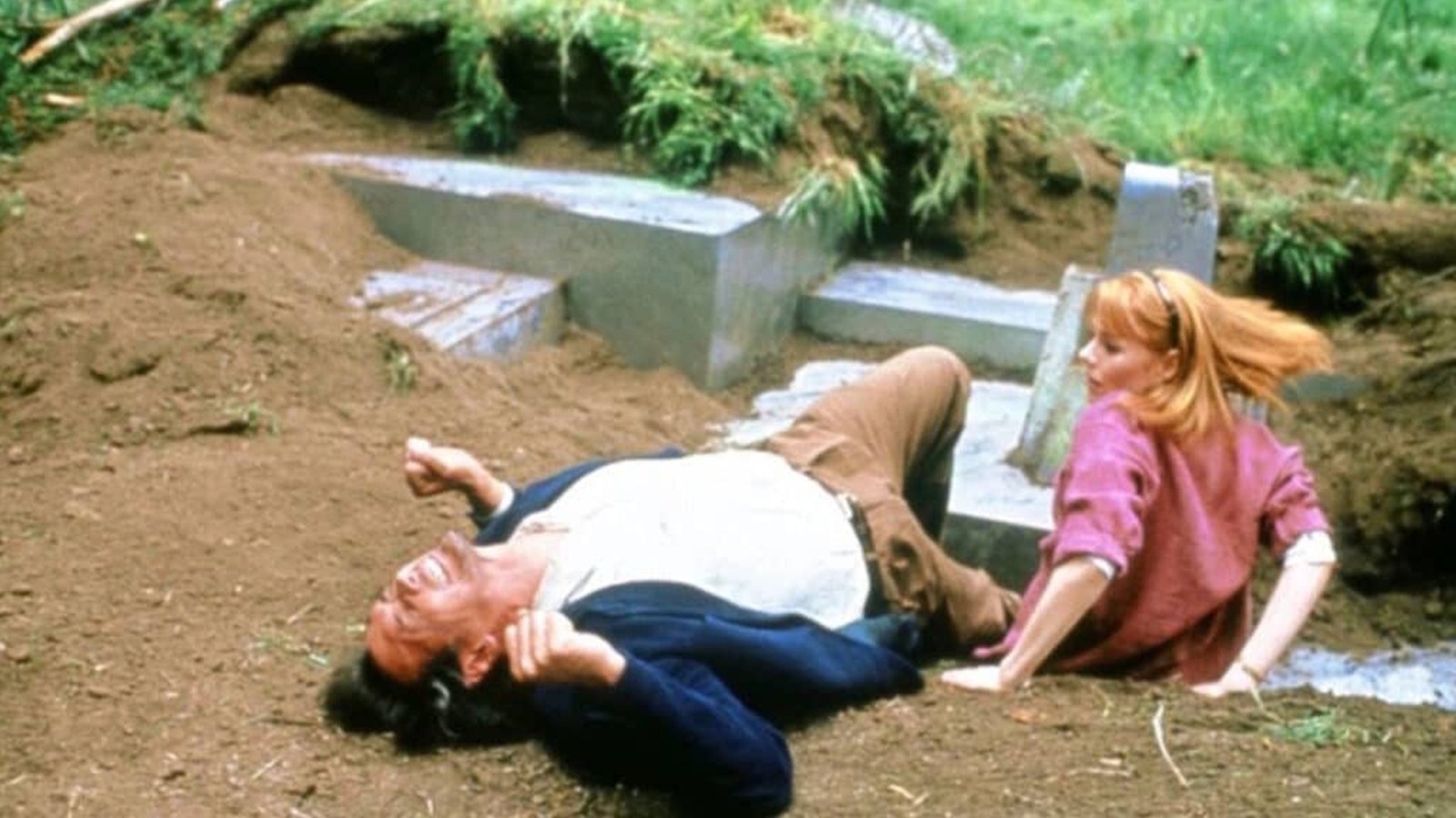
The adaptation was a ratings success but a critical disaster. It attempted to condense the massive novel into a three-hour window, resulting in a production that felt rushed, visually dated (even for the time), and stripped of the novel’s darker psychological undertones.
Supporting Data: Critical Failure and Audience Dissatisfaction
The data surrounding the reception of The Tommyknockers reinforces King’s own negative assessment. On review aggregation sites like Rotten Tomatoes, the 1993 miniseries holds a dismal "Rotten" rating, with critics often citing the poor special effects and the lack of tension as primary failings.
| Metric | The Tommyknockers (1993 Miniseries) |
|---|---|
| Rotten Tomatoes Critic Score | ~25-30% (Variable) |
| IMDb User Rating | 5.4/10 |
| Network | ABC |
| Format | Two-part Miniseries (approx. 180 mins) |
While the novel remains a staple on many bookshelves due to King’s legacy, it frequently ranks near the bottom of fan-voted lists of his best works. The "bloat" King refers to is quantifiable; the book is nearly 200,000 words long, yet the central plot arguably only requires half that length to be effective.
Official Responses: King’s Own Words
Stephen King has never been one to mince words regarding his own work or the adaptations of it. His critique of The Tommyknockers is twofold: he dislikes the source material he produced, and he dislikes the way ABC handled the translation.
In a candid interview with Rolling Stone, King remarked:
"The Tommyknockers is an awful book. That was the last one I wrote before I cleaned up my act. And I’ve thought about it a lot lately and said to myself, ‘There’s really a good book in here, underneath all the sort of spurious energy that cocaine provides, and I ought to go back.’"
King’s assessment of the 1993 TV series was equally harsh, though somewhat paradoxical. He told The New York Times that the adaptation "felt kind of cheap and thrown together." Interestingly, he also suggested that the series "should have been much longer." This creates a strange dichotomy: King believes the book is 700 pages too long, yet the three-hour TV show was too short to capture the "sense of the book."
This contradiction highlights King’s belief that while the writing in the novel was undisciplined, the world-building and the slow-burn horror of the town’s transformation required more breathing room than a standard television format allowed.
The Technological and Artistic Failures of the Miniseries
The 1993 miniseries suffered from the limitations of early 90s television budgets and technology. The Tommyknockers is a story that relies heavily on "body horror" and extraterrestrial machinery. In the novel, the descriptions of the green glowing energy and the residents’ physical mutations are visceral and disturbing.
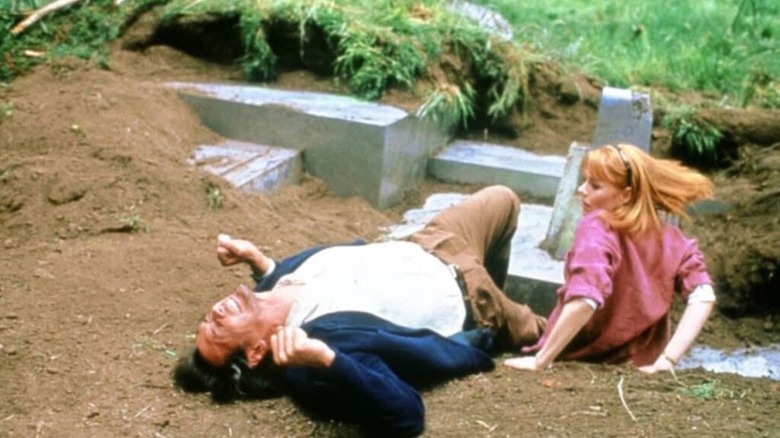
On screen, these elements often came across as campy. The "genius inventions" created by the townspeople—such as a killer vending machine or a lipstick laser—looked more like props from a low-budget sci-fi parody than the terrifying tools of an alien hive mind. Furthermore, the chemistry between Smits and Helgenberger, while professional, could not overcome a script that struggled to balance the book’s internal monologues with the external action.
Implications: The Legacy of Haven and the Difficulty of Sci-Fi Horror
The failure of The Tommyknockers has broader implications for the "King-verse" and the horror genre as a whole. It serves as a reminder of several key industry realities:
1. The Challenge of "The Becoming"
King’s best works often involve internal psychological shifts—what he calls "the becoming" in The Tommyknockers. This is notoriously difficult to film. When a character’s descent into madness or alien possession is internal, a camera can only do so much. Without the benefit of King’s prose, the "becoming" of Haven’s residents felt superficial rather than tragic.
2. The Era of the "Network Miniseries"
The early 90s were the heyday of the network miniseries. While this format worked for The Stand (which had a more linear, epic structure), it struggled with the more abstract, science-fiction elements of The Tommyknockers. Today, such a project would likely be a 10-episode prestige series on a streaming platform like Netflix or HBO, allowing for the "350-page good book" King envisions to be properly explored.
3. A Lesson in Creative Sobriety
For writers and creators, King’s admission regarding The Tommyknockers is a cautionary tale. It debunks the myth that drugs and alcohol are necessary fuel for creativity. King’s later works, written in sobriety, often possess a clarity and emotional depth that The Tommyknockers lacks. The book remains a "cocaine-fueled" artifact of a specific, turbulent time in his life.
Conclusion: A Second Chance for the Tommyknockers?
Despite King’s dislike for the 1987 novel and the 1993 show, the core concept of The Tommyknockers remains undeniably chilling. The idea of a small town slowly losing its soul to an ancient, indifferent force is a classic trope that King arguably pioneered in the modern era.
In recent years, there have been rumors of a modern cinematic reboot produced by James Wan (The Conjuring, Aquaman). A contemporary adaptation could finally excise the "spurious energy" King lamented, focusing instead on the tight, 350-page horror story hidden within the original 900-page tome. Until then, The Tommyknockers remains a fascinating footnote in literary history: a bestseller that its own creator wishes he could rewrite, and a television event that serves as a reminder that even the King of Horror can occasionally lose his way in the Maine woods.