
The Hollow Parade: Victory Day in Moscow Amid Global Quagmires and Domestic Unrest
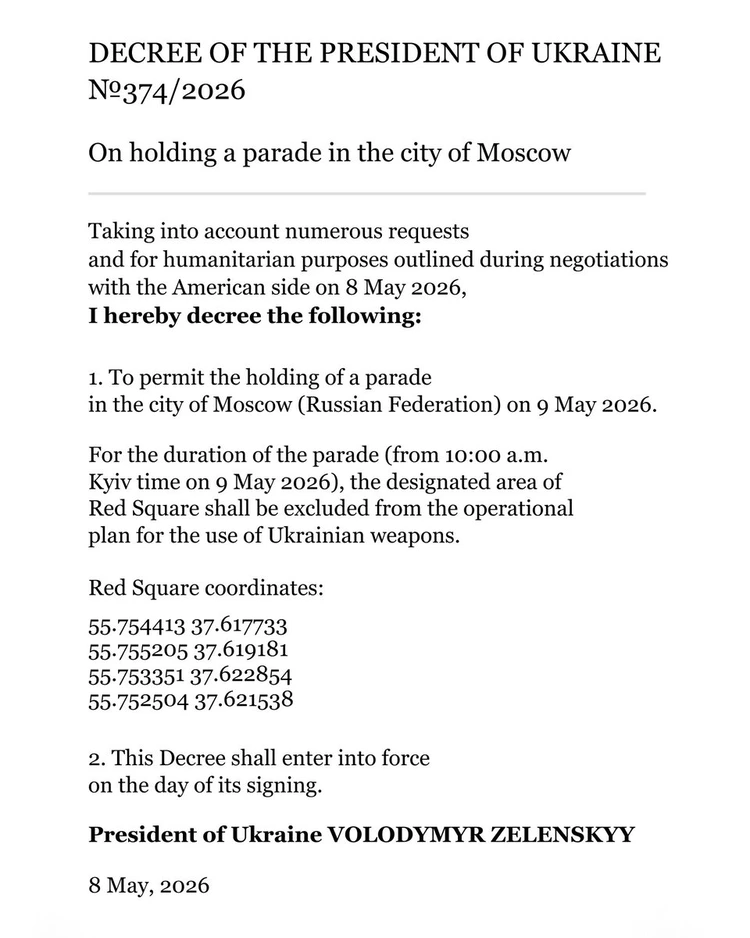
MOSCOW and WASHINGTON D.C. — As the sun rose over Red Square this May 9th, the traditional thunder of heavy armor and the roar of supersonic jets were conspicuously muted. Russia’s Victory Day, a cornerstone of national identity commemorating the 1945 defeat of Nazi Germany, has been transformed by the realities of a modern conflict that refuses to follow the Kremlin’s script. While the holiday traditionally serves as a display of indomitable military might, the 2026 iteration highlighted a nation stretched thin, its "cool stuff"—as satirists have noted—largely absent, currently mired in the mud of Ukraine or resting at the bottom of the Black Sea.
The spectacle in Moscow serves as a centerpiece for a broader global landscape defined by miscalculation. From the protracted struggle in Eastern Europe to a burgeoning and unexpectedly difficult offensive against Iran, and into the fractured political theaters of the United States, the theme of the day is the disconnect between official triumphalism and the gritty, statistical reality of the front lines.
Main Facts: A Victory Day Devoid of Hardware
The 2026 Victory Day parade was characterized by what was missing rather than what was present. Political cartoonists and military analysts alike observed that the usual phalanx of T-14 Armata tanks and advanced missile systems was replaced by a leaner, more symbolic display. The reason is twofold: heavy losses in the ongoing Ukrainian theater and the strategic necessity of keeping functional equipment at the front.
The Ukrainian Counter-Pressure
According to recent intelligence and reports from the Cartoon Movement, Ukraine has successfully turned the tide of Russian territorial gains. Kyiv’s forces have reportedly delivered a "deadly spanking" to the invading military, with casualty figures now estimated at a staggering 35,000 Russian soldiers killed in action. This toll, coupled with the recent loss of an oil depot and significant portions of the Black Sea fleet to drone assaults, has left the Kremlin in a defensive crouch even as it attempts to project strength on the world stage.
The Iran Complication
Simultaneously, the United States’ own "quick conquest" narrative regarding Iran is beginning to fray. Under the direction of the administration—often referred to by critics as "Dear Leader"—and Defense Secretary Pete Hegseth, the air campaign against Iranian assets was promised to be an "in-and-out" operation. However, much like the Russian experience in Afghanistan, the campaign is entering a phase of attrition that the administration seems ill-prepared to acknowledge.
Chronology of Escalation: 2024–2026
To understand the hollow nature of today’s celebrations, one must trace the timeline of the past twenty-four months, where military optimism repeatedly collided with tactical reality.
- Early 2025: The Ukrainian Pivot. Following a winter stalemate, Ukrainian forces utilized advanced drone technology and long-range precision strikes to begin reclaiming territory in the Donbas. The "turning of the tide" became evident as Russian supply lines, specifically oil infrastructure, became consistent targets.
- Late 2025: The Iranian Directive. The U.S. administration initiated a series of strikes against Iran, ostensibly to neutralize missile threats. The rhetoric emphasized "might makes right," with Hegseth and the President assuring the public of a swift submission by Tehran.
- Spring 2026: The Intelligence Gap. By May, the CIA issued a sobering report contradicting the White House’s claims of total air transition. Despite claims that Iran’s military was "reduced to a paltry pile of remnants," the agency confirmed that the majority of Iran’s mobile launchers remained operational.
- May 9, 2026: The Parallel Parades. Russia celebrates Victory Day with a diminished motorcade, while in the U.S., the administration continues to "declare victory" in Iran despite a lack of ground-level progress and rising economic costs at home.
Supporting Data: The Cost of Conflict
The disparity between political rhetoric and the lived experience of the citizenry is increasingly backed by hard data. In both Russia and the United States, the price of "victory" is being felt at the gas pump and in the national treasury.
- Human Cost: 35,000 Russian deaths represent a demographic blow that mirrors the Soviet Union’s disastrous decade in Afghanistan.
- Military Capability: CIA reports indicate that Iran retains 75% of its mobile launchers and 70% of its missile stockpile. Despite intensive bombing, the Iranian military is estimated to be capable of withstanding a blockade for several additional months.
- Economic Impact: In the United States, the domestic fallout of the Iran conflict has manifested in energy prices. Gasoline is currently retailing at an average of $4.60 per gallon, a figure that is forcing a "heat or eat" choice for low-income families and threatening the commuting stability of the middle class.
- Public Opinion: The administration’s "Ballroom Project"—a billion-dollar bunker and vanity renovation under the Executive Mansion—enjoys a mere 28% approval rating, with 58% of the public actively opposing the expenditure during a time of economic hardship.
Official Responses and Political Rhetoric
The responses from world leaders have been a study in "shilly-shallying" and tactical distraction.
The Kremlin’s Stance
President Putin remains determined to maintain the optics of the Victory Day parade, regardless of the missing armaments. The official line remains that the "Special Military Operation" is proceeding according to plan, even as cartoonists like Serhiy Kolyada depict a Russia awash in the victims of war and living in fear of the next drone strike.
The White House and the "Might Makes Right" Doctrine
In Washington, the President and Secretary Hegseth have doubled down on the efficacy of the Iran strikes. Drawing on a philosophy that suggests aerial bombardment can force cultural and political submission, the administration has dismissed comparisons to Vietnam or Afghanistan. However, internal friction is growing. Republican lawmakers, particularly those facing difficult mid-term elections, are reportedly "very unhappy" about being forced to defend the billion-dollar "Ballroom" project on the record.
The Intelligence Community
The CIA’s release of data on Iran’s remaining missile strength has been viewed by some as a rare moment of institutional pushback against executive overreach. Simultaneously, the Pentagon’s release of files regarding potential alien life (UFOs) has been criticized by analysts like Leahy as a "purposeful distraction" designed to draw media attention away from the "Epstein Files" and the mounting failures in the Middle East.
Implications: A "Brave New World" of One-Party Rule?
The long-term implications of these combined crises point toward a significant shift in domestic governance and global stability.
The Erosion of the Two-Party System
In states like Tennessee and Florida, the GOP is moving aggressively toward redistricting maps that favor one-party rule. This consolidation of power is seen as an attempt to insulate the party from the "November mid-terms" backlash expected over high gas prices and unpopular foreign wars. The "Brave New World" of centralized authority is being constructed rapidly, though historians suggest that a motivated electorate, angered by "faux-monarchy" and expensive fuel, may still provide a check on these ambitions.
The "Tax the Rich" Controversy
The cultural divide was further exacerbated this week by a prominent New York City real estate billionaire who compared the phrase "tax the rich" to "disgusting racial slurs." This sentiment, aimed at a proposed tax on second homes valued over $5 million, risks further alienating a voting bloc that is currently struggling to afford modest first homes. The optics of billionaires complaining about taxes while the government spends billions on bunkers has created a volatile political environment.
The Graveyard of Empires Redux
The most haunting implication remains the "Afghanistan Effect." Both Russia and the United States appear to be ignoring the lessons of the "Graveyard of Empires." As Danziger and other veteran commentators have noted, the current strategy of "declaring victory and staying put" mirrors the failures of the Vietnam era. The Iranian resistance, coupled with the Ukrainian resilience, suggests that the era of "quick conquests" is over, replaced by a "Big Muddy" of attrition that threatens to swallow the political capital of those who initiated the conflicts.
Conclusion: The Song Remains the Same
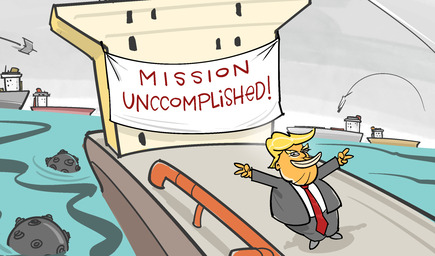
As Victory Day concludes in Moscow, the world is left with the image of a parade that is more about what is lost than what is won. Whether it is Putin’s missing tanks, Trump’s elusive victory in Iran, or the American taxpayer’s missing billions, the gap between the leaders and the led has never been wider. The "musical selection" for the era remains Pete Seeger’s Waist Deep in the Big Muddy—a reminder that when the "big fool" says to push on, the water only gets deeper.



Leave a Comment