The High-Speed Collision of Ambition and Execution: A Critical Analysis of Lanesplit’s VR Update
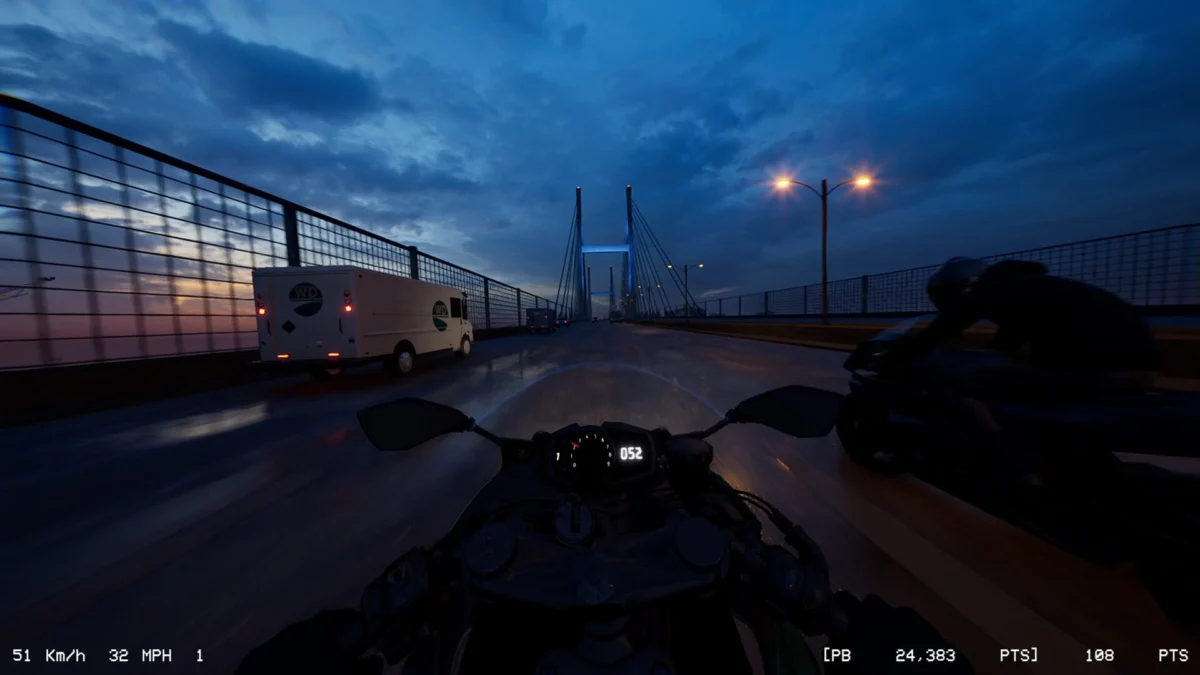
The promise of virtual reality has always been rooted in the erasure of the barrier between the player and the digital world. For racing enthusiasts, this means more than just a wider field of view; it means the tactile sensation of gripping handlebars, the visceral rush of wind (simulated or otherwise), and the precision of 1:1 motion tracking. When Lanesplit, an urban motorcycle racing title developed by FunkyMouse, announced a comprehensive VR support update for June 23, 2026, the community’s expectations were high. However, the reality of the update has proven to be a sobering reminder that "VR support" is not a monolithic quality, but a spectrum that ranges from transformative to debilitating.
Main Facts: The Lanesplit Dossier
Before delving into the technical shortcomings that have defined the game’s recent reception, it is essential to establish the foundational data of the product. Lanesplit is positioned as a mid-tier indie title focused on the high-stakes world of illegal street racing and traffic weaving.
- Lanesplit
- Developer: FunkyMouse
- Platform: PC (via Steam)
- Initial Release Date: January 28, 2026
- VR Support Launch: June 23, 2026
- MSRP: $17.99
- Core Gameplay: Score-chasing endless runner/racer featuring customizable weather and traffic density.
- Input Methods: Traditional gamepad, keyboard/mouse; limited VR controller support (triggers only).
Despite a modest price point of $17.99, the game finds itself in a competitive market where VR titles are increasingly held to the "made-for-VR" standard, even when they are hybrid releases.
Chronology: From Flat-Screen Success to Virtual Stagnation
The journey of Lanesplit began in early 2026. Upon its initial launch on January 28, the game received a lukewarm but stable reception. It was praised for its aesthetic representation of a neon-drenched metropolis and its straightforward, "pick-up-and-play" arcade mechanics. As a flat-screen experience, it served its purpose as a digital adrenaline shot.
The developer, FunkyMouse, spent the following five months teasing a VR update that promised to "put players in the driver’s seat like never before." On June 23, 2026, that update arrived. The transition from a standard monitor to a head-mounted display (HMD) was intended to be the game’s "Second Act."
However, initial testing—including a rigorous evaluation on high-end hardware—revealed that the transition was far from seamless. While the visual assets remained intact, the fundamental interaction layer of the game was not sufficiently re-engineered for the medium. By late June, the discourse surrounding Lanesplit shifted from its arcade charms to its "baffling" design choices, as players struggled with a control scheme that felt like a relic of 2016 rather than a standard of 2026.
Supporting Data: Performance Metrics and Technical Hurdles
To understand the depth of the issues plaguing Lanesplit, one must look at the technical data. Virtual reality is famously demanding; while a flat-screen game can be "playable" at 30 or 60 frames per second (FPS), VR requires high, stable frame rates (typically 90Hz or higher) to maintain player comfort and presence.
Hardware Testing Environment
The evaluation was conducted on a top-tier enthusiast rig to ensure that any performance bottlenecks were the result of software optimization rather than hardware limitations:
- GPU: NVIDIA RTX 5070 Ti (16GB VRAM)
- CPU: AMD Ryzen 7 9850X3D
- RAM: 32GB DDR5
- HMD: Meta Quest 3 via Virtual Desktop (Ultra Preset)
The Framerate Crisis
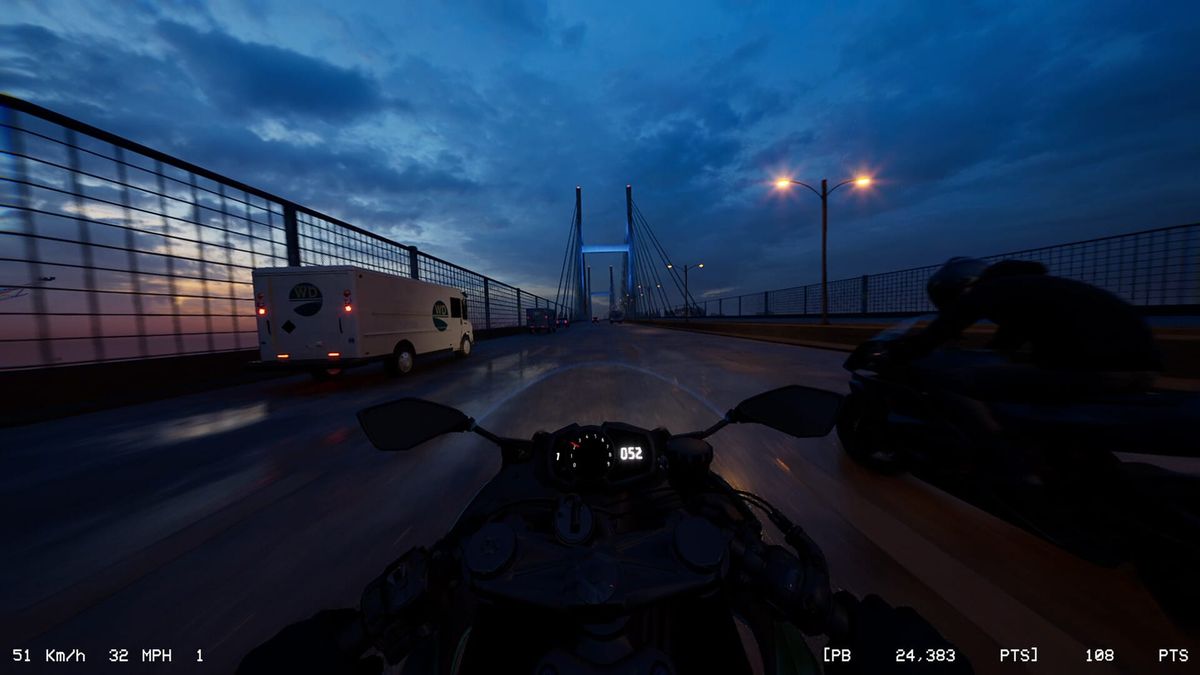
Despite the formidable power of the RTX 5070 Ti, Lanesplit failed to exceed a meager 36 frames per second during active gameplay. This resulted in a heavy reliance on "reprojection"—a technique where the software generates synthetic frames to fill the gaps. While reprojection can smooth out minor dips, using it to compensate for a 36 FPS baseline leads to "ghosting" and visual artifacts.
The Speed Paradox
The game’s primary mechanic is the sensation of speed, yet two factors actively work against this in VR:
- AI Traffic Velocity: In an apparent attempt to make lane-weaving easier, the developer set AI traffic speeds to a crawl. In VR, where the sense of scale is 1:1, watching a semi-truck move at an estimated 20 miles per hour while you "speed" past it breaks the illusion of a high-stakes race.
- Visual Stutter: At high speeds, the low framerate causes environmental objects—guardrails, skyscrapers, and streetlights—to "judder." For the player, this creates significant vestibular mismatch, often leading to nausea or dizziness within minutes of play.
Control Scheme Limitations
Perhaps the most egregious data point is the lack of motion-controlled steering. While the Meta Quest or Valve Index controllers are recognized, their motion sensors are ignored for navigation. Players must use the left and right triggers for braking and acceleration, but steering is relegated to the thumbsticks. This removes the "physicality" of riding a motorcycle, which is the primary draw of VR racing.
Official Responses and Developer Stance
As of the week following the June 23 update, FunkyMouse has acknowledged some of the friction points via the game’s Steam community hub. A "theater mode" warning was added to the Steam boot sequence, alerting players that certain elements of the game—specifically the main menu—do not render in full VR.
However, the developer has yet to release a comprehensive roadmap addressing the two most critical complaints: the lack of motion-tracked steering and the "broken" in-game menu system. Currently, if a player wishes to adjust settings or return to the main menu during a race, the UI often fails to appear in the headset, rendering only on the physical PC monitor. This forces the player to remove their HMD to navigate basic menus—a cardinal sin in VR design.
The official stance remains that Lanesplit is a "hybrid" title, and the VR mode is an "enhanced viewing option" rather than a ground-up reconstruction. This distinction, while technically true, has done little to mollify a player base that expects modern VR standards for a $17.99 purchase.
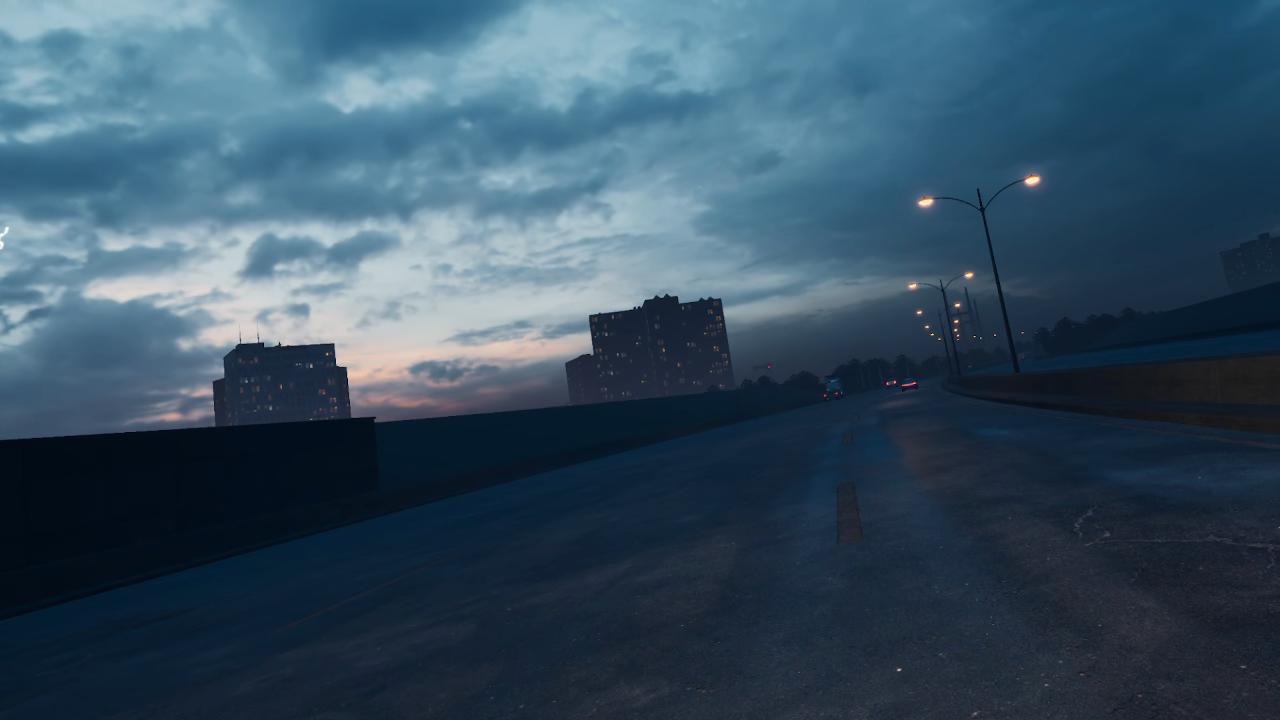
Implications: The Dangers of the "Tacked-On" VR Experience
The failure of Lanesplit to deliver a competent VR experience carries broader implications for the VR industry as a whole. We are currently in an era of "Hybrid Gaming," where titles like No Man’s Sky, Resident Evil Village, and F1 24 have set a high bar for how flatscreen-to-VR ports should function.
1. The Erosion of Consumer Trust
When a developer adds VR support that is "plagued with baffling design choices," it reinforces the negative stereotype that VR is a "gimmick." For a user who has just invested in a high-end headset, a "broken" experience like Lanesplit can discourage future purchases within the genre.
2. Proprioception and Immersion
The lack of motion controller support in Lanesplit highlights a growing divide in VR philosophy. Is VR simply a "camera" that we wear on our heads, or is it an interactive space? The industry trend is moving toward the latter. Games like VRacer Hoverbike have proven that physical leaning and handlebar gripping are not just possible but essential for the motorcycle sub-genre. By ignoring this, Lanesplit feels obsolete on arrival.
3. The Performance Threshold
The fact that a Ryzen 7 9850X3D and an RTX 5070 Ti cannot push this game past 36 FPS suggests deep-seated issues with the game’s engine pipeline or its implementation of the OpenXR/SteamVR API. It serves as a cautionary tale: if a game is not optimized for high-refresh-rate rendering at the foundational level, "adding VR" later will almost always result in a sub-par experience.
Conclusion: A Road Best Traveled Elsewhere
Lanesplit represents a missed opportunity. The core ingredients—a stylish urban setting, a simple but addictive gameplay loop, and a reasonable price point—are all present. However, the VR implementation feels less like a feature and more like a liability. Between the stuttering performance, the snail-paced traffic that kills the sense of danger, and a UI that requires the constant removal of the headset, the experience is more frustrating than fun.
For those seeking the thrill of two-wheeled racing in virtual reality, the recommendation remains to look toward established titles like VRacer Hoverbike, which respect the unique requirements of the medium. Until FunkyMouse addresses the fundamental performance and input issues, Lanesplit is a race that most VR users should sit out. The "brick wall" of poor design is one obstacle that no amount of in-game skill can overcome.