Global Urban Canvases: Design in Motion Festival Announces 2027 Edition and Worldwide Open Call
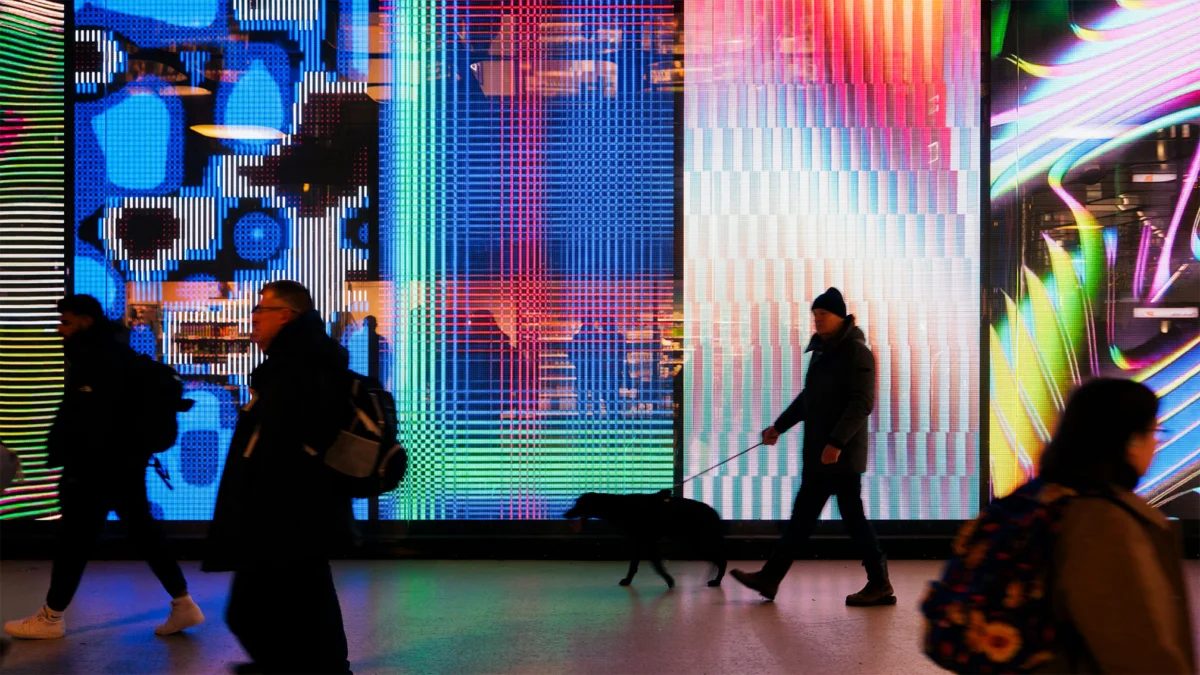
The boundary between public infrastructure and digital art is set to dissolve once again as the Design in Motion Festival (DEMO) officially announces its 2027 edition. Recognized as the world’s premier celebration of motion design, DEMO has opened its international call for entries, inviting a global community of animators, digital artists, and motion designers to submit their work. By January 28, 2027, the festival will execute its most ambitious takeover to date, transforming thousands of commercial digital billboards across 16 major global cities into an open-air gallery of experimental moving imagery.
Main Facts: A 24-Hour Departure from Commercialism
The Design in Motion Festival is a biennial event that challenges the status quo of urban environments. For one full day, the relentless flow of commercial advertising—the lifeblood of modern city centers—is voluntarily suspended. In its place, a curated selection of non-commercial motion design is broadcast to millions of commuters, tourists, and residents.
The 2027 edition marks a significant scaling of the festival’s footprint. While previous iterations focused heavily on the Netherlands, the upcoming event will span 16 cities across multiple continents. Confirmed locations include Amsterdam, Antwerp, Tokyo, Thessaloniki, Warsaw, Madrid, Barcelona, Vienna, and Vancouver. This expansion signifies a growing appetite for "public art in the digital age," moving beyond the confines of the traditional white-cube gallery and into the high-traffic hubs of the modern metropolis.
Artists have until July 19, 2026, to submit their work. The festival is looking for a diverse range of content, from typographic experiments and abstract 3D renders to socially conscious messaging and conceptual short-form cinema. The unifying requirement is that the work must be non-commercial, ensuring that for 24 hours, the public’s attention is not being sold a product, but rather offered a moment of aesthetic reflection.
Chronology: From Amsterdam Central to Global Dominance
The trajectory of DEMO is a testament to the rapid evolution of motion design as a respected discipline within the broader art world.
- 2019: The Genesis: DEMO was founded by Studio Dumbar (now Studio Dumbar/Dept) in collaboration with Exterion Media (now Global). The inaugural festival took place at Amsterdam Central Station, where 80 screens were taken over for 24 hours. It was a localized experiment that proved the public had a profound appreciation for motion art when removed from a commercial context.
- 2022: National Expansion: Following a hiatus during the height of the pandemic, the festival returned with a massive expansion. It utilized the entire digital out-of-home (DOOH) network of the Netherlands, involving over 5,000 screens in train stations, shopping centers, and along highways. This edition proved that the technical infrastructure existed to sync high-quality art across an entire country simultaneously.
- 2024-2025: International Proof of Concept: The festival began planting seeds in international territories, testing smaller takeovers in cities like London and Barcelona. These pilots confirmed that the "DEMO model" could be exported, provided there was cooperation between local media owners and creative curators.
- 2027: The Global Network: The upcoming January 2027 edition represents the culmination of nearly a decade of logistical and creative planning. By coordinating 16 cities across different time zones, DEMO 2027 will effectively create a "rolling wave" of motion design that follows the sun around the globe.
Supporting Data: The Logistics of a Digital Takeover
The scale of DEMO 2027 is underpinned by staggering logistics and technical coordination. To understand the impact of the festival, one must look at the reach of Digital Out-of-Home (DOOH) advertising.
- Screen Count: It is estimated that over 10,000 screens will be involved in the 2027 takeover. This includes massive "spectaculars" in hubs like Tokyo’s Shibuya Crossing and Amsterdam’s Dam Square, as well as thousands of smaller vertical displays in transit hubs.
- Audience Reach: Based on pedestrian and commuter data from participating cities, the 2027 festival is projected to reach an estimated 250 million "impressions" in a single 24-hour period. Unlike a museum, which requires an intentional visit, DEMO meets the audience where they are, democratizing access to high-end digital art.
- The Curatorial Filter: The open call typically attracts thousands of submissions from over 100 countries. For the previous edition, fewer than 10% of submissions were selected for the final program, ensuring a standard of quality that rivals the world’s most prestigious film festivals.
- Duration and Frequency: The festival runs for precisely 24 hours. The content is programmed in loops, often categorized by "hours" (e.g., an hour of typography, an hour of 3D character design, an hour of abstract generative art).
Official Responses: The Vision Behind the Motion
The curatorial team for 2027 features a prestigious lineup of industry leaders, each bringing a unique perspective to the selection process.
Liza Enebeis, Creative Director at Studio Dumbar/Dept and the driving force behind DEMO, emphasizes the festival’s role in reclaiming public space. "DEMO is about showing the world what happens when you remove the ‘sell’ and replace it with ‘soul,’" Enebeis stated in a recent briefing. "By taking over these screens, we are giving the city back to the people and giving designers a platform that is unparalleled in its reach."
The Bright Side Theme: This year’s overarching theme, "The Bright Side," is a deliberate response to the often-bleak nature of global news cycles. Curators are specifically looking for work that explores hope, fresh perspectives, and unexpected storytelling. Connor Campbell, co-director of Daisy Chain Studio and a 2027 curator, noted: "We want to see how motion can be a tool for optimism. It’s not about being naive; it’s about using the vibrancy of digital light to create moments of genuine wonder in an otherwise grey urban environment."

Other curators, including Niels van der Donk and Vikki Young of Yonk, known for their tactile 3D work, and educator Tim Rodenbröker, highlight the educational aspect of the festival. They view DEMO as a living classroom where the next generation of designers can see their work alongside established masters, breaking down the hierarchies of the design world.
Implications: Motion Design as the New Public Square
The rise of DEMO signals a broader shift in how society views digital screens. Historically, screens in public spaces have been viewed with skepticism—often seen as intrusive or as contributors to "visual pollution." DEMO flips this narrative, suggesting that these screens are actually the most significant cultural canvases of the 21st century.
1. The Democratization of Art
By placing experimental art in train stations and on street corners, DEMO bypasses the "gatekeeping" of the traditional art world. An individual who might never step foot in a contemporary art museum in Warsaw or Vancouver is suddenly confronted with cutting-edge digital work during their morning commute. This has profound implications for cultural literacy and the accessibility of digital design.
2. A New Era for Motion Designers
For the artists involved, DEMO offers a rare opportunity to work without a client brief. In an industry dominated by commercial work for tech giants and consumer brands, the festival provides a "pure" space for experimentation. This often leads to technical breakthroughs and aesthetic shifts that eventually trickle back into commercial work, making DEMO a vital R&D lab for the global design industry.
3. The Future of Smart Cities
The festival also raises questions about the future of "Smart Cities." If city infrastructure can be used for a 24-hour art festival, could it be used for other non-commercial purposes? DEMO serves as a case study for city planners and media owners on how to integrate cultural programming into the digital fabric of the urban landscape, potentially leading to permanent "art hours" or dedicated public screens.
4. Technical Challenges and Innovation
Broadcasting high-resolution, uncompressed motion files across 16 cities with different hardware specifications is a monumental task. The success of DEMO 2027 will likely push the boundaries of DOOH technology, requiring innovations in cloud-based content management and synchronization.
Conclusion: A Day of Digital Wonder
As the July 19 deadline approaches, the global design community is preparing to showcase the full potential of the moving image. The Design in Motion Festival 2027 is more than just a showcase; it is a temporary utopia where commerce takes a backseat to creativity. For 24 hours on January 28, 2027, the world’s most iconic cities will stop selling and start dreaming, proving that even in our hyper-connected, consumer-driven age, there is still plenty of room for "The Bright Side."
Designers interested in participating in this global event are encouraged to submit their non-commercial works via the official portal at demofestival.com/submit. Whether a seasoned professional or a student pushing the boundaries of the medium, the festival offers a unique chance to see one’s work illuminated on a grand, international scale.