Subverting the Cinematic Gaze: Maggie Gyllenhaal Honored at Karlovy Vary for Redefining the Female Experience
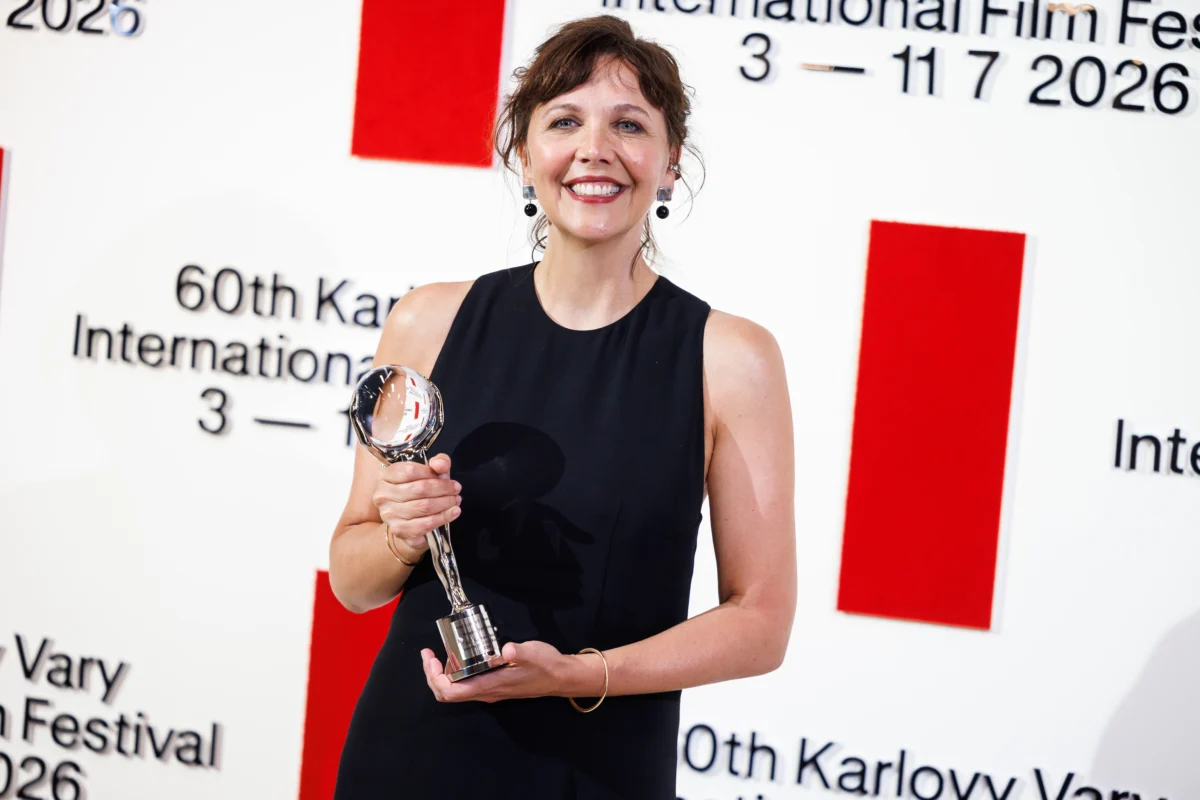
KARLOVY VARY, Czech Republic — In a cinematic landscape that has been dominated by the male perspective for over a century, few voices have emerged with as much disruptive clarity as Maggie Gyllenhaal. Recently honored at the 58th Karlovy Vary International Film Festival (KVIFF), Gyllenhaal is being celebrated not just for her storied acting career, but for her meteoric rise as a director who dares to dismantle long-standing tropes regarding womanhood, motherhood, and agency.
Receiving the prestigious President’s Award during the festival’s opening night ceremony, Gyllenhaal took the opportunity to reflect on her transition from an Oscar-nominated actress to a visionary filmmaker. In a comprehensive press conference held at the historic, neo-baroque Grand Hotel Pupp, she provided a profound look into her creative process, her partnership with major studios, and her unwavering commitment to portraying the "whole spectrum" of the female experience.
Main Facts: A Directorial Vision Rooted in Authenticity
Maggie Gyllenhaal’s directorial journey, though only two films deep, has already left an indelible mark on contemporary cinema. Her debut, The Lost Daughter (2021), adapted from Elena Ferrante’s novel, earned three Academy Award nominations and was lauded for its unflinching look at the "taboo" aspects of motherhood—specifically the ambivalence and resentment that can accompany the role. Her follow-up, The Bride, a reimagining of the Bride of Frankenstein mythos, continues this trend by stripping away the character’s status as a secondary "monster" and granting her a level of autonomy and agency never before seen in the genre.
The Karlovy Vary Film Festival, one of the oldest and most prestigious film events in Central and Eastern Europe, recognized Gyllenhaal for her "extraordinary contribution to world cinema." Festival President Jiří Bartoška presented the award, noting that Gyllenhaal represents a new wave of filmmakers who are not afraid to challenge the status quo.
During her address to the international press, Gyllenhaal emphasized that her goal is not necessarily to be a provocateur, but to be a truth-teller. She noted that because the vast majority of film history has been written and directed by men, there are vast "unexplored territories" of the female psyche that remain hidden or shrouded in shame. Her work seeks to bring these hidden experiences into the light, providing a sense of "comfort" to audiences who see their own complicated realities reflected on screen for the first time.
Chronology: From the Opening Gala to the Grand Hotel Pupp
The festivities began on Friday evening at the Hotel Thermal’s Great Hall, where Gyllenhaal was greeted with a standing ovation. The President’s Award serves as a bookend to a career that has seen her evolve from indie darling in films like Secretary to a blockbuster powerhouse in The Dark Knight, and finally to an auteur in her own right.
On Saturday morning, the conversation shifted to a more intimate setting in a suite at the Grand Hotel Pupp. This venue, iconic for its appearance in films like Casino Royale, served as the backdrop for Gyllenhaal’s deep dive into her cinematic philosophy.
She recounted the pivotal moment she read Elena Ferrante’s The Lost Daughter. As a mother herself, Gyllenhaal described a visceral reaction to the material: "I thought, oh, whoa, I can’t. Are you so fucked up? Hold on, I actually relate to what you’re saying." This realization—that the "dark" thoughts she harbored were shared by others—became the catalyst for her directorial debut.
The timeline of her career is currently focused on the post-production and reception of The Bride and the early development of her next project, Creation Lake. Despite the varying commercial performances of auteur-driven films in the current market, Gyllenhaal’s trajectory remains upward, bolstered by her strong ties with industry leaders at Warner Bros.
Supporting Data: The Disparity of the Female Experience in Cinema
Gyllenhaal’s critique of the male-dominated industry is backed by decades of film theory and statistical data regarding gender disparity in Hollywood. During the press conference, she pointed out that while male filmmakers have created "fascinating" female characters, they often lack the fundamental insight into the "feminine experience," particularly the parts that women are conditioned to hide.
"I don’t see how you have insight into all of a feminine experience, especially the parts of ourselves that we are ashamed of," she remarked. This "shame" often stems from the societal pressure on women to be nurturing, composed, and selfless—archetypes that Gyllenhaal’s films actively resist.
Her data-driven approach to character building avoids the modern trap of the "strong female character." Instead, she advocates for:
- Multifaceted Realism: Characters that exhibit both "terrible weakness" and "beautiful strength."
- Vulnerability as Power: Allowing women to be terrified, joyful, and selfish simultaneously.
- Collaborative Agency: Ensuring that her production designers, actors (like Jessie Buckley), and crew have the space to inject their own lived experiences into the work.
Gyllenhaal’s insistence on "making space" rather than just "breaking barriers" suggests a shift from reactive filmmaking to proactive creation. She noted with some surprise that her exploration of these themes often makes people "angry," a reaction she attributes to the rarity of seeing such honesty on screen.
Official Responses: Partnerships and the "Big Swings" at Warner Bros.
A significant portion of the discussion centered on Gyllenhaal’s relationship with Warner Bros. Discovery. In an era where many studios are retreating into safe, franchise-led content, Warner Bros. Motion Picture Group Co-Chairs and CEOs Pam Abdy and Mike De Luca have earned a reputation for supporting bold, director-driven projects.
Gyllenhaal was vocal in her praise for the duo, describing them as "lovers of film and lovers of filmmakers." Despite the competitive box office landscape, she expressed a deep sense of partnership with the studio. "They’ve been just wonderful as partners all the way through this process," she said.
This relationship is further cemented by her next project, an adaptation of Rachel Kushner’s critically acclaimed novel Creation Lake. While Gyllenhaal was cautious about revealing specific plot details—noting that the project is in a "really private" stage where she is still "bouncing ideas off my own mind and heart"—the collaboration signals Warner Bros.’ continued investment in her unique voice.
Kushner’s Creation Lake, a spy thriller infused with philosophical ruminations on human history and prehistory, seems a natural fit for Gyllenhaal’s intellectual and visceral style. The director praised Kushner’s artistry, suggesting that the film will continue her trend of exploring complex, often contradictory female protagonists.
Implications: The Future of Female Directing and the "New Language" of Film
Gyllenhaal’s transition to directing was not merely a career pivot but a necessity for her artistic survival. She revealed that as an actress, she often felt her "art and expression" were ignored if they didn’t align with a director’s pre-conceived notions.
"I got very good at figuring out ways to protect the little bit of real estate around me," she explained, referring to the "dance" actresses must perform to maintain their integrity on set. "But then I got tired of having to do that dance, and I thought, I need more space."
The implications of Gyllenhaal’s success are twofold:
- For the Industry: Her ability to secure backing from major studios for challenging material provides a blueprint for other female auteurs. It suggests that there is a commercial and critical appetite for films that do not adhere to traditional gendered tropes.
- For the Audience: Gyllenhaal views her films as an "invitation" to learn a new language. By presenting the female experience without the filter of the male gaze, she is asking audiences to step into a perspective that may feel foreign but is ultimately more honest.
In her closing remarks at Karlovy Vary, Gyllenhaal reflected on the "honest expression" of her own mind. Her work serves as a reminder that cinema is at its most powerful when it stops trying to be "appropriate" and starts trying to be true. As she continues to develop Creation Lake and refine her directorial voice, the film world remains watchful, anticipating how she will next challenge the boundaries of what a "woman’s story" can be.
The President’s Award at Karlovy Vary is more than a trophy; it is a validation of Gyllenhaal’s belief that the "whole spectrum" of human experience—the pleasure, the terror, and the "beautiful weakness"—deserves a place on the silver screen.