The Towering Canopy of the Undergrowth: Theo Bosboom’s "Flowerscapes" and the Silent Crisis of European Biodiversity
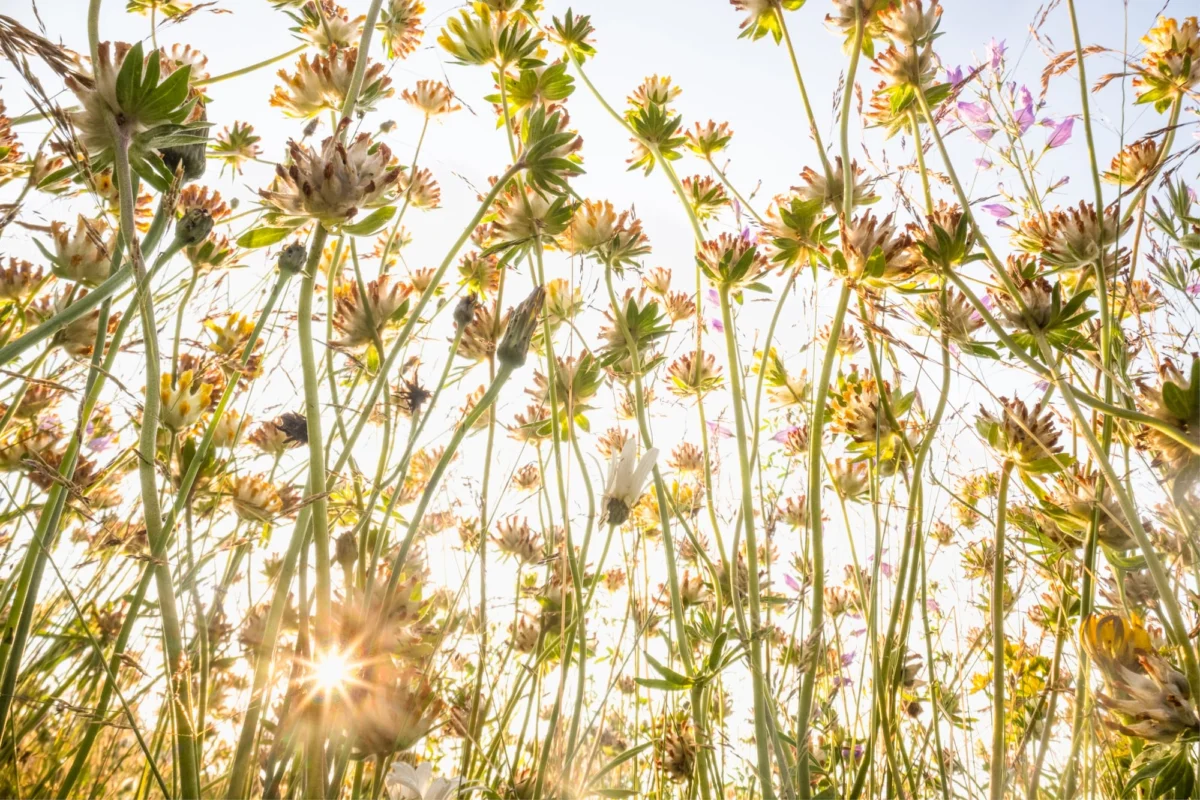
In the traditional lexicon of nature photography, the term "majesty" is usually reserved for the gargantuan. We speak of majesty in the context of the snow-capped Himalayas, the sweeping vistas of the Serengeti, or the ancient, sky-piercing redwoods of the Pacific Northwest. Yet, for Dutch photographer Theo Bosboom, majesty is not a matter of scale, but of perspective. In his latest masterwork, Flowerscapes: A Bug’s Eye View, Bosboom invites viewers to descend from their upright human posture and crawl among the stems of wild geraniums and buttercups.
By tilting his lens upward from the forest floor, Bosboom transforms the humble flora of Western Europe into a sprawling, prehistoric-looking wilderness. However, beneath the aesthetic brilliance of these "micro-forests" lies a sobering ecological reality: the very creatures for whom this perspective is a daily reality—the bees, beetles, and butterflies—are vanishing at an alarming rate.
Main Facts: Shifting the Human Lens
Theo Bosboom, an acclaimed nature and landscape photographer based in the Netherlands, has built a career on finding the extraordinary within the ordinary. His project, Flowerscapes, is a technical and philosophical departure from traditional botanical photography. Rather than focusing on the isolated beauty of a single petal or the clinical precision of a macro shot, Bosboom seeks to capture the environment of the undergrowth.

The central premise of the series is the "Bug’s Eye View." By positioning his camera at ground level and looking upward, Bosboom mimics the visual experience of an invertebrate. In these frames, a cluster of wild garlic (Allium ursinum) takes on the architectural grandeur of a cathedral; a common buttercup (Ranunculus) sways like a towering sequoia against a blurred, sun-drenched sky.
The series was born from Bosboom’s desire to reconnect with the "local." Eschewing long-haul flights to exotic locales, he focused his efforts on the landscapes within a short radius of his home, traversing the Netherlands and crossing borders into Germany and Belgium. The resulting body of work, compiled into a high-quality art book, serves as both a celebration of resilience and a visual eulogy for a declining world.
Chronology: From Visual Wonder to Ecological Alarm
The evolution of Flowerscapes followed a trajectory that mirrors the broader awakening of the scientific community to the "insect apocalypse."

The Initial Inspiration (Early Phase)
The project began as a formal exploration of perspective. Bosboom was fascinated by the idea of "miniature landscapes." During his initial excursions into local forests and dunes, his primary goal was to capture the elegance and strength of plants that are often stepped over or dismissed as weeds. He spent months experimenting with wide-angle lenses at extreme low altitudes to create a sense of immersion.
The Observation of Silence (Mid-Phase)
As Bosboom spent more time lying in the dirt, waiting for the perfect light to hit a stem of wild geranium, he began to notice a disturbing trend. Despite being surrounded by blooms that should have been teeming with life, the air was often still. In the preface to his book, Bosboom notes that it was "eerily quiet." The absence of the characteristic hum of pollinators—the bees, hoverflies, and beetles—became a recurring theme of his field notes.
The Synthesis of Art and Activism (Final Phase)
By the time the project neared completion, the focus had shifted. What began as a purely aesthetic pursuit became a vehicle for environmental advocacy. Bosboom realized that his photographs could do more than just please the eye; they could illustrate what was at stake. The publication of Flowerscapes: A Bug’s Eye View was timed to coincide with a growing public discourse on biodiversity loss in Western Europe, positioning the book as a vital contribution to the "localist" movement in photography.

Supporting Data: The "Insect Apocalypse" in Western Europe
Bosboom’s anecdotal observations of "eerie silence" are backed by a staggering body of scientific data. The decline of insects in Western Europe is no longer a fringe theory; it is a documented ecological catastrophe.
The Krefeld Study
One of the most significant pieces of data supporting Bosboom’s concerns is the 2017 study conducted by the Krefeld Entomological Society in Germany. Researchers found a 76% decline in flying insect biomass over 27 years within protected areas. Because Bosboom often photographed in similar protected pockets of Germany and the Netherlands, his work provides a visual companion to this data.
Habitat Fragmentation in the Netherlands
The Netherlands is one of the most densely populated and intensively farmed countries in the world. According to the Living Planet Report Netherlands, butterfly populations in the country have declined by an estimated 80% over the last 130 years. The primary drivers are:

- Nitrogen Deposition: High levels of nitrogen from intensive livestock farming favor the growth of fast-growing grasses, which outcompete the wildflowers Bosboom photographs.
- Urban Sprawl: The conversion of "roadside verges" and wild patches into manicured lawns or paved surfaces.
The "Windshield Phenomenon"
Scientists often refer to the "windshield phenomenon"—the observation that people used to have to frequently clean dead insects off their car windshields after a long drive, a task that is rarely necessary today. Bosboom’s photography attempts to reverse this "erasure" by making the insects’ habitat so large and imposing that it can no longer be ignored.
Official Responses and Conservation Efforts
While the data is grim, Bosboom’s work also highlights a shift in how European authorities are managing landscapes. His project has brought attention to several "green" initiatives that offer a glimmer of hope.
Environmentally Friendly Road Management
In the Netherlands, there has been a notable shift in the management of "roadside verges"—the strips of land between highways and fields. Traditionally, these were mowed frequently, preventing flowers from seeding. Bosboom has observed a transition toward "Ecological Mowing," where local municipalities mow less frequently and remove the clippings to lower soil fertility, which encourages the growth of rare wildflowers.

The EU Pollinators Initiative
On a broader scale, the European Commission launched the EU Pollinators Initiative, the first-ever EU framework to address the decline of wild pollinators. This includes:
- Improving knowledge of pollinator decline and its causes.
- Tackling the causes of decline, such as pesticides and habitat loss.
- Raising awareness and engaging the public.
Bosboom’s photography serves the third pillar of this initiative perfectly. By making the "bug’s eye view" beautiful, he fosters an emotional connection that policy papers cannot achieve.
Localism and Carbon Footprint
Beyond the subject matter, Bosboom’s methodology represents a professional response to the climate crisis. By limiting his travel to destinations reachable by foot, bike, or short drives, he aligns his practice with the "Slow Photography" movement, which emphasizes a reduced carbon footprint and a deeper, long-term engagement with a single ecosystem.

Implications: The Role of Art in the Anthropocene
The implications of Bosboom’s Flowerscapes extend far beyond the borders of the Netherlands. His work raises critical questions about how we value nature in the age of the Anthropocene.
Redefining "Wilderness"
Typically, "wilderness" is thought of as a place where humans do not go—a vast, untouched expanse. Bosboom redefines wilderness as something that can exist in a roadside ditch or a public park. By elevating these small spaces to the status of "landscapes," he argues that every square meter of soil is a battlefield for biodiversity.
The Empathy Gap
There is a profound "empathy gap" between humans and insects. While charismatic megafauna like polar bears or elephants easily garner public sympathy, insects are often viewed as pests. Bosboom’s choice to photograph plants from the insect’s perspective is a psychological tool. It forces the viewer to occupy the space of the "other," potentially narrowing that empathy gap and making the "eerie silence" of the fields feel like a personal loss.

A Call for Native Planting
The project also serves as a visual argument for the restoration of native plant species. The flowers featured in the book—wild geraniums, buttercups, garlic—are the essential infrastructure for insect life. Bosboom’s work encourages gardeners and urban planners to view these plants not as weeds to be eradicated, but as the "sequoias" of their local environment.
Conclusion
Theo Bosboom’s Flowerscapes: A Bug’s Eye View is more than a collection of beautiful images; it is a profound meditation on the fragility of the world beneath our feet. Through his lens, a buttercup is no longer a common flower, but a towering monument to resilience.
As Western Europe grapples with the loss of its insect populations, Bosboom’s work serves as both a warning and an invitation. It warns of the silence that follows when we neglect the small, and it invites us to look down, change our perspective, and recognize that the most magnificent forests in the world might be growing right in our own backyards. For those interested in supporting this vision, Bosboom’s book and prints remain available via his web shop, offering a permanent window into a world that—if we are not careful—may soon exist only in photographs.