
From Strategy to Stewardship: Nicholas Lovell’s Resilience and the Rise of ‘Trash Goblin’
The landscape of the independent gaming industry is often defined by its volatility, its creative bursts, and the intellectual heavyweights who navigate its business complexities. Few names carry as much weight in the realm of game monetization and strategy as Nicholas Lovell. As the founder of Gamesbrief and the author of seminal works like The Curve, Lovell has spent over a decade advising developers on how to turn art into sustainable commerce. However, for the past eighteen months, the influential voice behind the "business of games" went silent.
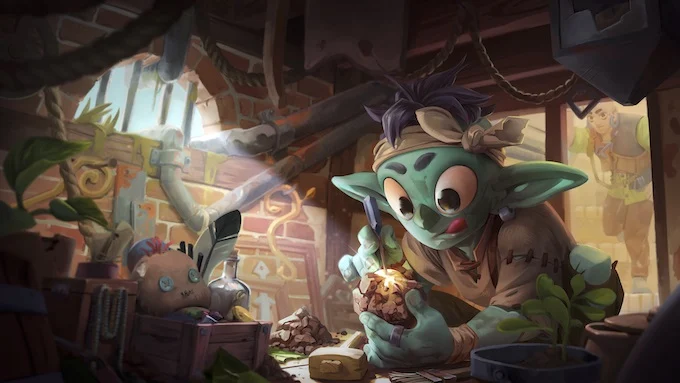
In a candid announcement that has resonated across the development community, Lovell revealed the cause of his hiatus: a debilitating battle with Long Covid. But his return is marked not just by a recovery of health, but by a significant pivot in his professional trajectory. Stepping away from the purely analytical sidelines, Lovell has joined forces with Andrew Smith at Spilt Milk Studios to co-develop Trash Goblin, a "cozy" shopkeeping simulator that recently took Kickstarter by storm.
I. The Core Facts: A Strategic Return and a Crowdfunding Triumph
On December 7, 2023, Nicholas Lovell broke his long-standing silence to announce his partnership with Spilt Milk Studios. The centerpiece of this collaboration is Trash Goblin, a game that marks Lovell’s transition from a consultant and theorist to a hands-on creator.
The project launched on the crowdfunding platform Kickstarter with a modest but targeted goal, managing to secure £10,000 within its first 24 hours. This immediate financial validation underscores both the community’s respect for Lovell and the burgeoning market for the "cozy game" genre.
Trash Goblin is described as a wholesome, shopkeeping experience where players take on the role of a goblin merchant. Unlike traditional RPGs where goblins are often fodder for experience points, this title focuses on the meticulous and satisfying tasks of cleaning, upcycling, and selling trinkets in a fantasy setting. It is a game built on the pillars of "repair-and-resell" mechanics, catering to a demographic that finds solace in digital organization and creative restoration.
II. Chronology of a Crisis: From May 2022 to the 2024 Horizon
The timeline of Lovell’s absence and subsequent return provides a sobering look at the impact of long-term illness on high-level creative professionals.
- May 2022: The Onset. Lovell contracted Covid-19. While many recovered within weeks, Lovell joined the ranks of those suffering from "Long Covid," a condition characterized by persistent, often neurological, symptoms.
- January 2023: The Nadir. At the start of 2023, Lovell’s condition reached a critical point. He describes a period where basic daily functions—showering and eating three meals—exhausted his entire energetic reserve. The "brain fog" and fatigue common to the condition rendered the high-level cognitive work of business strategy and writing impossible.
- Mid-2023: Reflection and Realignment. During his forced convalescence, Lovell began to re-evaluate his career goals. The desire to move from analyzing games to actively building them became his primary focus.
- December 2023: The Launch. With his health estimated at approximately 40% of his pre-illness capacity, Lovell officially announced his role at Spilt Milk Studios and the launch of the Trash Goblin Kickstarter.
- 2024 and Beyond: Lovell intends to balance continued recovery with an increased role in game development, signaling a permanent shift in his professional identity.
III. Supporting Data: The Economic and Cultural Context
The success of Trash Goblin and Lovell’s shift in focus do not exist in a vacuum. They are supported by two major industry trends: the "Cozy Game" explosion and the evolution of the Kickstarter model for veteran developers.
The Rise of the "Cozy" Market
The "cozy game" genre, popularized by titles like Stardew Valley, Animal Crossing: New Horizons, and more recently, Unpacking and PowerWash Simulator, has become a powerhouse in the indie sector. According to market analysts, the demand for low-stress, non-violent gaming experiences surged during the pandemic. Trash Goblin taps directly into this by focusing on "upcycling"—a mechanic that mirrors the real-world trend of sustainable living and the satisfaction of restorative labor.
Crowdfunding as Community Validation
The £10,000 raised in the first 24 hours for Trash Goblin is a testament to the "Superfan" theory Lovell himself championed in his book, The Curve. His theory posits that in a digital world where "average" content is free, creators must build a path that allows their most dedicated fans to spend significant amounts of money on things they value. By leveraging his existing reputation and the established brand of Spilt Milk Studios, Lovell effectively applied his own business theories to his personal creative debut.
The Long Covid Impact on the Tech Sector
Lovell’s struggle reflects a broader, often overlooked issue in the global workforce. According to the Office for National Statistics (ONS) in the UK, hundreds of thousands of professionals have been forced out of the labor market or had their hours severely curtailed due to Long Covid. Lovell’s transparency about his "40% road to recovery" provides a rare, high-profile look at how the industry must adapt to the "new normal" of chronic health management among its talent pool.
IV. Official Responses: A Partnership of Mutual Respect
While the announcement was made primarily through Lovell’s Gamesbrief platform, the sentiment from his collaborators at Spilt Milk Studios has been one of enthusiastic support.

Andrew Smith, the founder of Spilt Milk Studios, has long been a fixture in the UK indie scene. The partnership with Lovell is seen as a "meeting of the minds." Smith’s technical and production expertise provides the foundation, while Lovell brings a deep understanding of player psychology and monetization ethics.
In his announcement, Lovell noted, "I’m going to step up to help Andrew Smith at Spilt Milk Studios make great games." This phrasing suggests a collaborative mentorship and a shared vision for what independent games can achieve when they prioritize "wholesome" engagement over predatory monetization—a topic Lovell has criticized in the past.
Supporters on Kickstarter have echoed this sentiment, with many comments praising the "tactile" feel of the game’s trailer and expressing relief at Lovell’s return to the public eye. The community response suggests that Lovell’s personal brand—built on integrity and sharp business acumen—has remained intact despite his long absence.
V. Implications: The Future of Gamesbrief and the "Practitioner" Shift
The return of Nicholas Lovell carries several significant implications for the gaming industry and the followers of his work.
1. From Theory to Practice
For years, Lovell has been the man who told others how to run their businesses. By becoming a developer, he is putting his own reputation on the line. If Trash Goblin succeeds, it will serve as a definitive case study for his theories on "The Curve" and "Free-to-Play" design rules (even if the game itself follows a more traditional premium or hybrid model). It represents the ultimate "proof of concept" for his life’s work.
2. The Evolution of Gamesbrief
The future of Gamesbrief remains an open question. While Lovell has used the platform to announce his return, his admission that he needs "a bit more rest" and intends to focus on "making games more next year" suggests that the blog may shift from a general industry analysis site to a more personal "devlog" or a specialized resource. The industry may be losing a full-time critic but gaining a high-profile practitioner.
3. A New Standard for Work-Life Integration
Lovell’s openness about his health sets a precedent for the industry. The "crunch culture" of game development is notoriously unforgiving. By launching a successful Kickstarter while openly stating he is only at 40% capacity, Lovell is challenging the notion that one must be "always on" to be successful. It is a powerful message to other developers struggling with burnout or chronic illness: productivity can be reclaimed, but it must be managed with radical honesty.
4. The Sustainability of "Cozy" Mechanics
Trash Goblin’s focus on upcycling and cleaning trinkets suggests a shift in game design toward "mindful" mechanics. As the world becomes increasingly chaotic, the appeal of a "fantasy world" that isn’t about saving the universe, but rather about the quiet dignity of a well-run shop, is likely to grow. Lovell’s entry into this space may signal that "cozy" is no longer just a niche, but a primary target for strategic investment.
Conclusion
Nicholas Lovell’s journey from the heights of industry consulting to the depths of a chronic health crisis, and finally to the creative rebirth of Trash Goblin, is a narrative of resilience. By aligning himself with Spilt Milk Studios, he is not just returning to work; he is evolving.
As the Trash Goblin Kickstarter continues to gain momentum, the industry will be watching closely. This is more than just the launch of a new indie game; it is the practical application of a decade of business wisdom, tempered by the hard-won perspective of a man who had to relearn how to balance a shower and a meal. In the wholesome world of Trash Goblin, Lovell may have found the perfect vessel for his next chapter: taking something broken, cleaning it up, and turning it into something of immense value.


Leave a Comment