"Physical Magic" Resonates with Judges: A Fresh Tide in Self-Published Fantasy
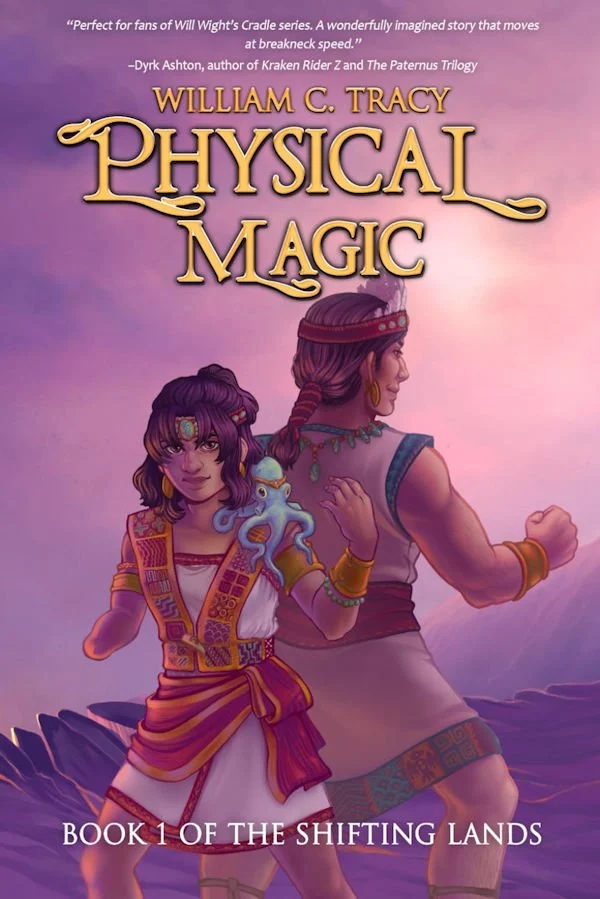
FOR IMMEDIATE RELEASE
In a captivating display of innovative storytelling, the self-published fantasy novel Physical Magic has emerged as a standout contender in Round One of this year’s highly anticipated Self-Published Fantasy Blog-Off (SPFBO) competition. Garnering significant praise from the judging panel for its distinctive worldbuilding, authentic character development, and inclusive themes, the book offers a refreshing departure from traditional fantasy narratives, drawing deeply from Pacific Island-inspired cultures.
Physical Magic introduces readers to Silluka, a protagonist whose journey transcends the conventional hero’s arc, grappling with profound self-doubt stemming from a physical disability in a society that values perfection. Her story, set against a backdrop of impending ecological disaster and existential threats, has resonated powerfully with judges, highlighting the growing demand for diverse and thoughtfully crafted fantasy literature. As the SPFBO approaches its first-round conclusion, Physical Magic stands as a testament to the vibrant and evolving landscape of independent publishing.
The Core Narrative: Silluka’s Journey of Self-Discovery
At the heart of Physical Magic lies the compelling tale of Silluka, a young woman born with only one arm in a society where the precise, exacting motions required to summon divine favor are paramount. This innate difference renders her an outcast, unable to practice the sacred rituals, and consequently, unable to secure her place within her community.
Born an Outcast: A Struggle Against Stigma
Silluka’s initial circumstances are bleak. Caught in an act of desperation – stealing – she is forced to undergo a test of her powers, a trial she inevitably fails, resulting in the devastating loss of her village citizenship. This branding as an outcast is not merely a legal status; it’s a deeply internalized belief that she is useless, a perception reinforced by her society’s rigid structure that prioritizes magical capability and physical perfection. Her early journey is defined by this struggle against stigma and the pervasive self-doubt it fosters, making her an immediately relatable and empathetic character. Judge Julia Kitvaria Sarene profoundly appreciated "how much space the book gives to this mindset," noting that Silluka’s journey is not one of sudden transformation, but a "slowly questioning the story she has been told about herself."
A Desperate Path: Unveiling Physical Magic
In a pivotal moment, driven by a fit of desperation to reclaim her lost citizenship, Silluka attempts to steal a badge from the enigmatic Elder Quilqi. This encounter, however, proves to be a turning point, as the Elder reveals an entirely different path to harness the powers of the gods – a path that does not demand conventional perfection. This revelation is further aided by the introduction of an extraordinary companion: an octopus-like technological wizard. These fascinating beings, who worship their own eldritch divinities, bring a unique blend of ancient magic and advanced, albeit quirky, technology to the narrative. Their presence, particularly their "genuinely fun" dialogue and "enthusiasm for inventing all the things," as highlighted by Julia, injects humor and an inventive edge into the world, enriching the narrative with unexpected charm.
Facing the Storm: An Impending Invasion
Time, however, is a luxury Silluka and her village cannot afford. A new, ominous island is rapidly approaching the coastal town, heralded by devastating hurricanes and tidal waves that threaten to engulf everything in their path. The village’s traditional protectors – the gods and their godlike storm warriors – prove insufficient against a mysterious creature that breaches their defenses. This creature is merely the vanguard of a terrifying species: fast, deadly, and poised to invade the larger island.
The imminent threat necessitates a desperate inland migration for the entire village. Amidst this chaotic exodus, Silluka is burdened not only by her outcast status but also by the failing abilities of her beloved brother. The stakes are dramatically raised, compelling Silluka to confront her deepest fears and insecurities. To safeguard herself, her family, and her entire village, she must transcend her internalized limitations, broaden her understanding of the world beyond her immediate community, and ultimately, master the enigmatic powers of "Physical Magic." This dramatic convergence of personal struggle and external cataclysm forms the driving force of the narrative, promising a high-stakes adventure rooted in profound personal growth.
A Distinctive Tapestry: Worldbuilding and Cultural Resonance
One of the most universally praised aspects of Physical Magic is its meticulously crafted and refreshingly original worldbuilding, which stands in stark contrast to the often-recycled tropes of Western medieval fantasy.
Beyond Western Tropes: Pacific Island Inspiration
The novel consciously departs from the familiar castles, knights, and European folklore that dominate much of the fantasy genre. Instead, Physical Magic immerses readers in a world richly inspired by Pacific Island cultures. This influence is palpable in every facet of the narrative, from the societal structures and spiritual beliefs to the very landscape itself. Judge Julia eloquently noted that the world "is clearly not drawing from the usual Western medieval fantasy toolbox. Instead, the world feels inspired by island-based cultures of the Pacific, with gods tied to storms and survival." This choice of inspiration not only offers a visually and culturally vibrant setting but also imbues the story with a unique thematic depth.
Maureen Neuman lauded Tracy’s "great job on this, both in terms of martial arts forms and their elemental affinities, and the societies of the islands." The integration of martial arts forms, or ‘chayus,’ that appeal to specific gods for elemental power, feels organically tied to this cultural backdrop, providing a magical system that is both distinctive and deeply rooted in the world’s spiritual framework. The concept of moving islands crashing against each other, as highlighted by Maureen, adds a dynamic and inherently perilous element to the geography, underscoring the impermanence of existence within this world.
Impermanence and Societal Flaws
This Pacific Island inspiration extends beyond mere aesthetics, shaping the core philosophical underpinnings of the society depicted. The "sense of impermanence," as Julia observed, is central to the narrative, particularly the concept of communities that must relocate when their land can no longer sustain them. This fundamental instability gives rise to "harsh rules" within the society, creating a distinct and often unsettling atmosphere. The Huaca people, caught in a cycle of migration and survival, operate under a deeply flawed social contract: only the strong and magically capable are deemed worthy of survival and progression.
While the book does not fully excuse this belief, it also refrains from offering overly simplistic resolutions. Instead, it portrays a nuanced societal shift where "some characters begin to question it, some do not, and the shifts in thinking feel tentative rather than magically fixed," as Julia pointed out. This honest portrayal of societal change, where progress is gradual and often hard-won, lends a powerful layer of realism and depth to the fantasy setting. The interplay between cultural roles, from village elder to the "lowly undesirable," as Maureen noted, further enriches the narrative, demonstrating how individual personalities navigate and sometimes challenge these deeply ingrained societal norms.
Character and Representation: A Deep Dive
Beyond its compelling setting, Physical Magic shines in its character development and its commitment to thoughtful, organic representation.
Silluka’s Authentic Struggle with Self-Worth
Silluka’s journey is not merely an external quest for survival but a profound internal battle against deeply ingrained self-doubt. Her disability, a limb difference, is not presented as a hurdle to be magically overcome or a flaw to be cured, but as an integral part of her identity and the source of her societal marginalization. The narrative devotes significant space to "slowly questioning the story she has been told about herself," emphasizing that her growth is not about suddenly becoming "capable or exceptional," but about proving her worth to herself first. This nuanced approach to disability representation is a significant strength, avoiding common tropes and instead focusing on the psychological and emotional impact of living in a discriminatory society. Adawia Asad, while noting a desire for more shown cleverness, strongly highlighted Silluka’s "extraordinary courage" even "under fire," a quality that resonates deeply with her journey of overcoming adversity.
Casual Inclusivity: LGBTQ+ Narratives
Another quiet yet powerful strength of Physical Magic lies in its seamless and casual integration of LGBTQ+ representation. Julia Kitvaria Sarene specifically praised this aspect, noting that Silluka’s brother, Ichu, is "openly bi and moves naturally between relationships with different genders, and no one treats this as remarkable." This matter-of-fact portrayal of queerness extends to Silluka herself, who is described as being attracted to more than one gender. Her lack of relationships is thoughtfully tied to her internalized belief of unworthiness rather than a lack of interest, offering a subtle layer of character depth.
The absence of overt celebration or dramatic revelation around these identities is precisely what makes this representation so impactful. It normalizes diverse sexual orientations within the fabric of the world, making them feel organic and authentic. Julia further noted that the author openly identifies as bi/pan, suggesting that this personal connection likely contributed to the "organically and well" written aspect of this inclusivity. This approach stands as a model for how fantasy literature can genuinely reflect the diversity of human experience without tokenism or heavy-handed messaging.
The Whimsical Technomancers: Octopus Artificers
Adding a unique flavor of humor and inventiveness to the narrative are the octopus-like artificers. These technological wizards, with their distinctive dialogue and "genuinely fun" banter, serve as more than just supporting characters; they are integral to the world’s imaginative charm. Eva Geraghty found herself "absolutely cackling" at their attempts at communication, particularly the "translation circlet" that required a good "smack" to function correctly, leading to humorous misinterpretations like "wake attack" instead of "wake up call." These characters embody the inventive and slightly strange edge that elevates Physical Magic beyond a serious, introspective drama, ensuring that moments of levity and wonder are woven throughout the story. Their worship of eldritch divinities also adds another intriguing layer to the world’s complex spiritual landscape.
The Art of Magic: Balance, Stance, and Intention
The magic system in Physical Magic is another area where the book distinguishes itself, presenting a familiar concept with a fresh and accessible approach.
Accessible Power: Reimagining Physicality
While judge E.G. Stone noted that the system is "technical" and goes into "lots of detail," which might not appeal to everyone, Julia praised its presentation, stating it "does not get lost in pages of technical explanation." Instead of hyper-detailed descriptions of every magical movement, the focus is on the foundational elements of "balance, stance, dexterity, and intention." This approach makes the system "easy to grasp without feeling shallow," allowing readers to understand the principles without being bogged down by overly complex mechanics.
Crucially, the book subtly challenges the notion that "physically perfect movement might not be the only way to access the power of the gods." This aligns perfectly with Silluka’s personal journey and the broader themes of the narrative, suggesting that true power can be found in adaptability, inner strength, and perhaps, alternative methods of connection. This gentle subversion of magical prerequisites reinforces the book’s inclusive ethos and allows for a more diverse range of individuals to engage with its mystical elements.
Assistive Tools: Aid, Not Cure
In a thoughtful integration of technology and magic, the story introduces an element that functions as an assistive tool for magic use. Julia, initially "wary of anything that risks turning into a magical cure for disability," found herself mostly comfortable with its implementation. The key distinction, she explained, is that it functions as an "aid than a miracle fix," opening "possibilities for people with many different kinds of bodies and conditions, not just one." This careful handling of assistive technology avoids the problematic trope of magically "fixing" a disability, instead portraying it as an empowering enhancement that broadens access to magical abilities, further reinforcing the book’s commitment to genuine inclusivity. This nuanced approach ensures that Silluka’s journey of self-acceptance remains paramount, rather than being overshadowed by a convenient magical solution.
Critical Reception and Judges’ Insights
The collective reviews from the SPFBO judging panel paint a vivid picture of Physical Magic‘s strengths and minor areas for refinement, ultimately showcasing a book that deeply impressed.
Praises for Humor and Immersion
The judges consistently highlighted the book’s ability to create a deeply immersive experience. Maureen Neuman found "immersion terrific," noting she was "in a hurry to get back to the story when I’d set it aside." Eva Geraghty’s enjoyment of the humorous elements, particularly the quirky translation circlet, underscores the narrative’s successful blending of serious themes with moments of levity. The unique worldbuilding, as praised by Maureen, Julia, and E.G., consistently drew readers in, offering a refreshing escape from conventional fantasy settings. The distinctive atmosphere, blending the familiar with the fresh, contributed significantly to this high level of engagement.
Nuances and Minor Critiques
While the overall reception was overwhelmingly positive, the judges also provided constructive feedback on specific elements. Adawia Asad felt that the protagonist’s cleverness was often "told" rather than "shown," suggesting that a greater emphasis on her courage might have been more impactful. Maureen Neuman noted that while characters were "easily likeable," they were "just" that, lacking "that little something" to make them truly unforgettable, and found the pacing of the voyage segments "a bit clunky." Julia mentioned a "small worldbuilding hiccup early on involving how citizenship tokens are handled," though she clarified it was "easy to move past." E.G. Stone, while enjoying the story, admitted a personal preference against "highly technical magic systems," though this did not detract significantly from her overall positive experience. These minor points, however, did not diminish the judges’ collective enthusiasm for the book’s core strengths, serving primarily as fine-tuning suggestions rather than fundamental criticisms. The consensus remained that Physical Magic delivers a "thoughtful, inclusive fantasy with a strong emotional core, a distinctive setting, and a protagonist whose struggle with self-worth feels honest and earned."
The SPFBO Context: A Platform for Emerging Voices
The review of Physical Magic arrives as the Self-Published Fantasy Blog-Off (SPFBO) contest enters its crucial final stages for Round One, underscoring the competition’s vital role in uncovering and celebrating exceptional independent fantasy authors.
Nearing the Finish Line: Round One Conclusion
With only one more semi-finalist review pending, the tension builds towards the much-anticipated announcement of Fantasy-Faction’s finalist pick for Round Two, slated for Friday, June 26th. The SPFBO, now in its eleventh year, is a prestigious platform that provides invaluable visibility to self-published authors, many of whom might otherwise struggle to gain widespread recognition in a crowded market. The rigorous multi-judge review process ensures that books are assessed from diverse perspectives, reflecting the varied tastes within the fantasy readership. The transparent nature of the reviews, published sequentially with final scores to be revealed later, maintains an element of suspense and fairness, encouraging readers to engage with each title on its own merits.
The Importance of Subjectivity and Author Courage
The SPFBO organizers consistently remind readers and authors alike that "Reading is subjective. What didn’t click for us might be exactly your kind of story." This ethos acknowledges the inherent diversity of literary preferences and encourages potential readers to explore titles that pique their interest, regardless of specific critiques. This philosophy is crucial in a competition setting, ensuring that a book’s journey is not solely defined by one panel’s perspective.
Furthermore, the SPFBO team extends a "sincere thank you to every author who entered," recognizing that "Putting your work forward for a competition takes real courage." This sentiment underscores the significant personal investment and bravery required for authors to subject their creative endeavors to public scrutiny. The contest, therefore, serves not only as a literary competition but also as a supportive community, celebrating the tenacity and talent of independent authors worldwide. For those unfamiliar with the process, the official SPFBO website and Fantasy-Faction’s introductory guides offer comprehensive information on the contest’s structure, mission, and past successes, inviting broader engagement with the self-published fantasy landscape.
Implications and the Future of Fantasy
Physical Magic is more than just a captivating read; its strong performance in the SPFBO carries significant implications for the fantasy genre, pointing towards a future where diversity and authenticity are increasingly prioritized.
Paving the Way for Diverse Narratives
The book’s success highlights a growing appetite among readers and critics for fantasy that moves beyond traditional Eurocentric frameworks. Its Pacific Island-inspired setting and culturally integrated magic system demonstrate the rich tapestry of stories waiting to be explored from non-Western perspectives. This diversification of settings and lore enriches the entire genre, offering fresh imaginative landscapes and unique philosophical underpinnings. The deliberate and organic inclusion of LGBTQ+ characters, where their identities are simply a part of the world rather than a plot point, sets a powerful precedent for normalizing diverse representation. This approach ensures that inclusivity feels authentic and integrated, reflecting the complexities of the real world within fantastical realms.
Furthermore, Silluka’s journey as a disabled protagonist who grapples with internalized ableism rather than seeking a miraculous cure offers a nuanced and deeply empathetic portrayal of disability. Her story champions the idea that worth is intrinsic, not dependent on physical perfection or societal validation, resonating with a broad audience and promoting a more inclusive understanding of heroism. By showcasing such narratives, Physical Magic contributes to a broader movement within fantasy to reflect the full spectrum of human experience, making the genre more accessible and resonant for a wider readership.
A Series in the Making
While Physical Magic offers a "satisfying on its own" narrative arc, it also clearly "sets up a larger series, with much more to come," as noted by Julia. Maureen, too, expressed confidence that "there are more surprises in subsequent books" and intends to "picking them up to see if I’m right." This strategic design allows the initial volume to deliver a complete story while tantalizing readers with the promise of further adventures, deeper world exploration, and continued character development. The unresolved societal flaws, the ongoing threat of the invading species, and the full scope of Silluka’s potential mastery of Physical Magic all serve as compelling hooks for future installments. The prospect of continuing Silluka’s journey, witnessing her growth, and delving deeper into the rich, innovative world Tracy has created is undoubtedly a major draw for readers and judges alike, cementing Physical Magic as a significant new voice in self-published fantasy.