Fungalpunk Thriller "A Murder Most Fungal" Delves into Culinary Noir and the Perils of the Sophomore Slump
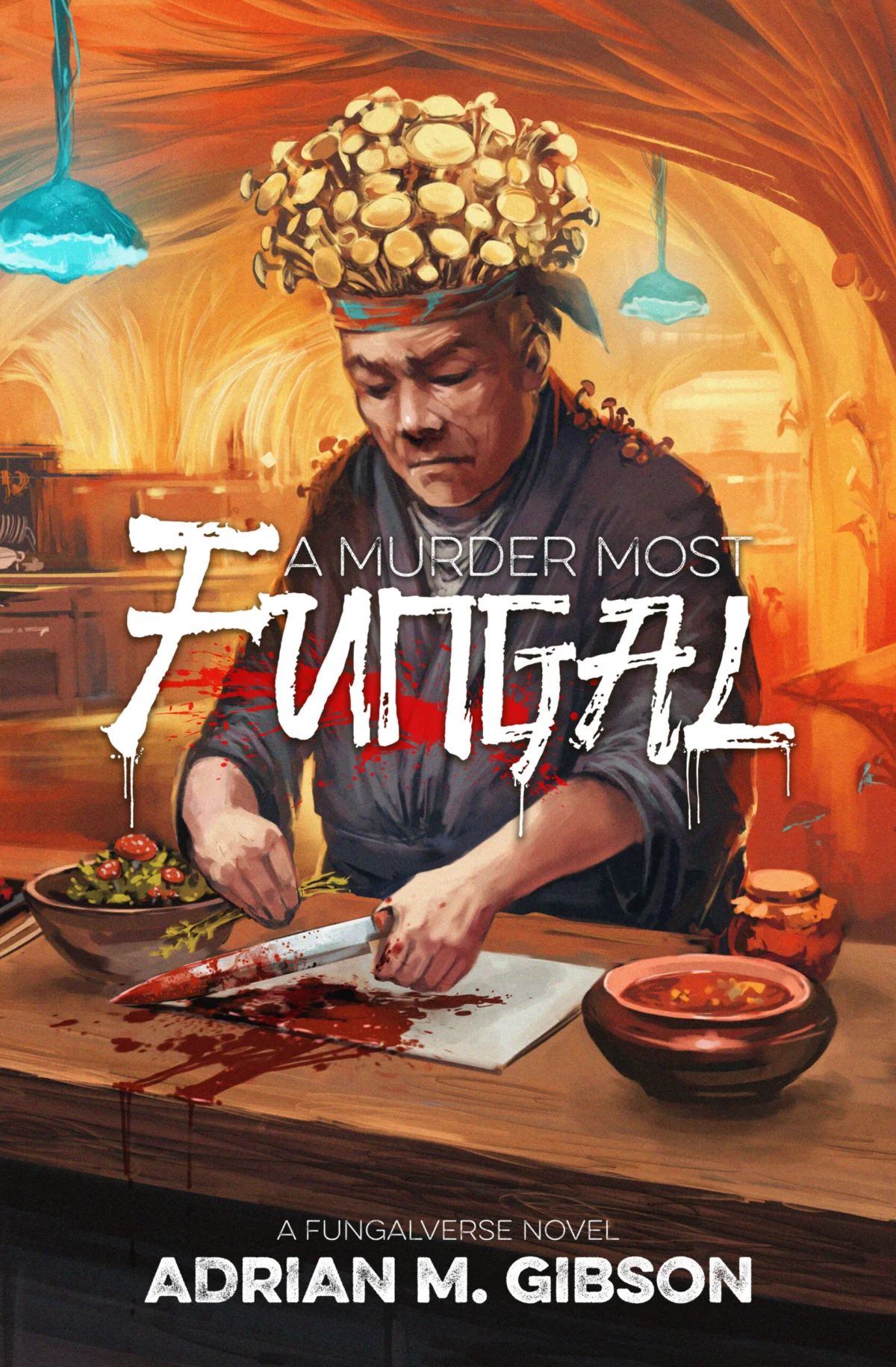
Neo Kinoko, Hāppon – The rain-slicked streets of Neo Kinoko, a metropolis steeped in fungal culture and simmering with unrest, are once again the backdrop for a gripping narrative. Adrian M. Gibson’s latest novel, "A Murder Most Fungal," plunges readers back into the intricate and often perilous Fungalverse, offering a standalone experience that draws parallels to cinematic masterpieces of culinary drama and crime thrillers. Set several months after the cataclysmic "Fuyu Massacre," the novel explores the reverberations of conflict and occupation through the eyes of Pocho Jiro, a disgraced makizushi chef forced into a dangerous game of survival.
The Stakes are High in a City Under Siege
"A Murder Most Fungal" is not a direct sequel to Gibson’s award-winning debut, "Mushroom Blues," but rather a potent side story that expands the Fungalverse with a compelling blend of genres. The narrative unfolds in Hāppon, the Hāpponese capital now under the suffocating grip of foreign military occupation. The atmosphere is thick with the aftermath of the Fuyu Massacre, a brutal event that has left the city reeling from riots and whispers of revolution.
At the heart of this turbulent landscape is Pocho Jiro, a former luminary of the makizushi world. His fall from grace is complete; he now serves as the personal chef and, effectively, an indentured servant to Duncan MacArthur, the Coprinian Military Governor of Hāppon. This precarious existence is shattered when Pocho becomes entangled with dangerous fungal gangsters. He is presented with an impossible choice: assassinate MacArthur, or witness the tragic demise of his beloved sister. The novel masterfully weaves a tale of culinary artistry colliding with brutal coercion, posing the chilling question: will Pocho’s culinary skills be weaponized for his sister’s survival?
Gibson describes the novel as a fusion of "the culinary wonder of Jiro Dreams of Sushi, the kitchen chaos of The Bear, and the explosive tension of Hong Kong crime thrillers." This ambitious blend promises a fast-paced, character-driven story that is as much about the intricate preparation of food as it is about life-or-death decisions.
The Author’s Journey: Navigating the "Sophomore Slump"
Beyond the fictional world of Neo Kinoko, "A Murder Most Fungal" represents a significant personal milestone for author Adrian M. Gibson. The writing of this second novel was a profound exploration of the challenges faced by authors after a successful debut, often termed the "sophomore slump" or "sequelitis."
Gibson candidly admits that his initial publishing plans, meticulously laid out before the release of "Mushroom Blues," unraveled quickly. "Writing a second book can actually be as challenging as people say," he stated in a recent reflection. "The ‘Sophomore Slump,’ ‘Sequelitis,’ ‘Second Book Blues’ – whatever you want to call it, it’s real!"
The success of "Mushroom Blues," which sold thousands of copies, garnered numerous awards, and secured second place in Mark Lawrence’s prestigious Self-Published Fantasy Blog-Off (SPFBO), created a formidable benchmark. Gibson explained that the immense mental and emotional energy poured into his debut left him unprepared for the aftermath. Instead of savoring his achievement, he found himself grappling with self-doubt and the daunting prospect of replicating that success.
"I was plagued with questions that did more to break me down than build me up: Was Mushroom Blues a fluke? Would I be able to write a good book again? What the hell am I even doing? A second book became something that felt more and more distant, even unattainable," he confessed.
Gibson’s breakthrough came not from forcing a direct sequel, but from embracing the freedom of a standalone narrative. "I realized I was too caught up in the perceived requirements of being a debut self-published author, and I let my entrepreneurial pursuit override the fact that I’m a creator first and foremost," he elaborated. This realization underscored the vital importance of prioritizing the creative process over the business aspects of publishing.
The Sacredness of Creativity and the Limits of Marketing
A significant hurdle Gibson encountered was his prolonged focus on marketing his debut novel. "I didn’t stop marketing Mushroom Blues for a year-and-a-goddamn-half," he revealed. This relentless promotional drive, while initially aimed at maximizing his debut’s reach, inadvertently stifled his creative output.
"I was so wrapped up in making that book a success that I created this tunnel vision scenario for myself, where nothing felt as important as the thing that already existed," Gibson explained. He found himself repeating, "I can hustle and get that book into more readers’ hands!"
However, this marketing-induced fog began to dissipate as its efficacy plateaued and the creative core of his being cried out for attention. "The creative parts of my brain were screaming at me to ‘WAKE THE FUCK UP AND WRITE!’" he exclaimed. This pivotal moment led to the understanding that the most potent marketing strategy for any author is the creation and publication of new work.
This epiphany prompted a period of deep self-reflection, guiding Gibson toward a more creatively sustainable path. He rediscovered joy in the drafting process, finding inspiration in his folktale novelette "The Stem-Cutter’s Daughter" and collaborating on diverse projects like graphic novels and audio dramas. This rejuvenation process taught him to view marketing as a supportive element, a "sidecar of my creative motorcycle," rather than the primary driver.

Food as a Catalyst for Worldbuilding
"A Murder Most Fungal" hinges on the intricate role of food, a subject that initially sparked apprehension in Gibson. Centering a narrative around a chef and a culture deeply intertwined with fungi presented unique challenges. However, as he delved into the cultural significance of food within the Fungalverse, a rich tapestry of worldbuilding possibilities unfurled.
"Food is a fundamental pillar of most any culture… and it can reveal so much about a people once it becomes cuisine," Gibson observed. He detailed how culinary practices offer insights into a society’s geography, available resources, social structures, and even systems of control. Recipes passed down through generations become "an adaptive, edible history," while celebrations and religious practices are often intertwined with feasts.
Gibson utilized this concept extensively in "A Murder Most Fungal," subtly weaving in details about the fictional cuisine. The mention of "fungalfin tuna," for instance, prompts readers to ponder the broader implications for other species within this world. This layered approach, where both author and reader contribute to the world’s depth, enhances believability. "That layering… makes a world feel so much more believable," he stated.
Kitchens: The Crucible of High-Stakes Drama
The novel’s restaurant setting was another element that initially caused Gibson pause. He questioned whether such a confined space could adequately support the necessary tension and character development. However, the drafting process quickly dispelled these doubts, revealing kitchens as ideal incubators for compelling storytelling.
Gibson likens professional kitchens to modern-day pirate ships: a diverse group of individuals, each with unique skills and temperaments, thrown together under immense pressure to produce high-quality results. "It’s a narrative goldmine!" he declared. The intense camaraderie, potential for trauma bonding, and simmering interpersonal dynamics – including sexual tensions and infighting – create a fertile ground for drama.
To hone his understanding of kitchen dynamics, Gibson revisited influential media, including Pixar’s "Ratatouille," Gordon Ramsay’s fiery reality shows like "Hell’s Kitchen," the vérité documentary "Jiro Dreams of Sushi," and the anxiety-inducing family struggles depicted in "The Bear." These varied examples showcased how tension can arise from meticulous craftsmanship, explosive personalities, or the precarious balance of a struggling business.
"Suffice to say, my early doubts were absurd, because restaurants are a perfect scenario for high-stakes drama," Gibson concluded. "After all, a kitchen is bound to get messy at some point, and that mess makes for great stories."
The Allure of Fungal Body Horror
A pervasive and potent element within Gibson’s work, particularly "A Murder Most Fungal," is his fascination with fungal body horror. The visceral and unsettling nature of the human body being deformed and altered, especially by the insidious infiltration of fungi, holds a unique appeal for him.
Two key influences shaped this obsession: the "The Last of Us" video game and television series, with its terrifying depiction of fungal spores and mycelia transforming hosts into grotesque beings, and Jeff VanderMeer’s Southern Reach Trilogy, which explored the psychological and philosophical implications of alien fungal infection. Both properties, in their distinct ways, showcased how fungi can fundamentally alter both the body and the mind.
While "Mushroom Blues" touched upon fungal horror, "A Murder Most Fungal" elevates it, especially given the novel’s culinary focus. Gibson intentionally explored how food and fungi could converge to create a "truly fucked up body horror extravaganza," leaving readers to discover the unsettling culmination of this exploration.
About the Author
Adrian M. Gibson is an accomplished Canadian author, podcaster, book designer, illustrator, and tattoo artist. He is the creator of the SFF Addicts podcast and serves as the Publishing Project Manager at Grimdark Magazine. Gibson currently resides in Quito, Ecuador, with his family.
Connect with Adrian M. Gibson:
- Website: https://adrianmgibson.com/
- Instagram: https://www.instagram.com/adrianmgibson/
- SFF Addicts Podcast: https://linktr.ee/SFFAddicts
- YouTube: https://www.youtube.com/@fanfiaddict
"A Murder Most Fungal" is available at:
- Amazon: [Link to Amazon]
- The Broken Binding: https://www.thebrokenbinding.co.uk/product-page/a-murder-most-fungal-numbered-adrian-m-gibson