Deciphering the Cosmos: Amabel Holland’s ‘City of Six Moons’ Redefines the Board Game Experience
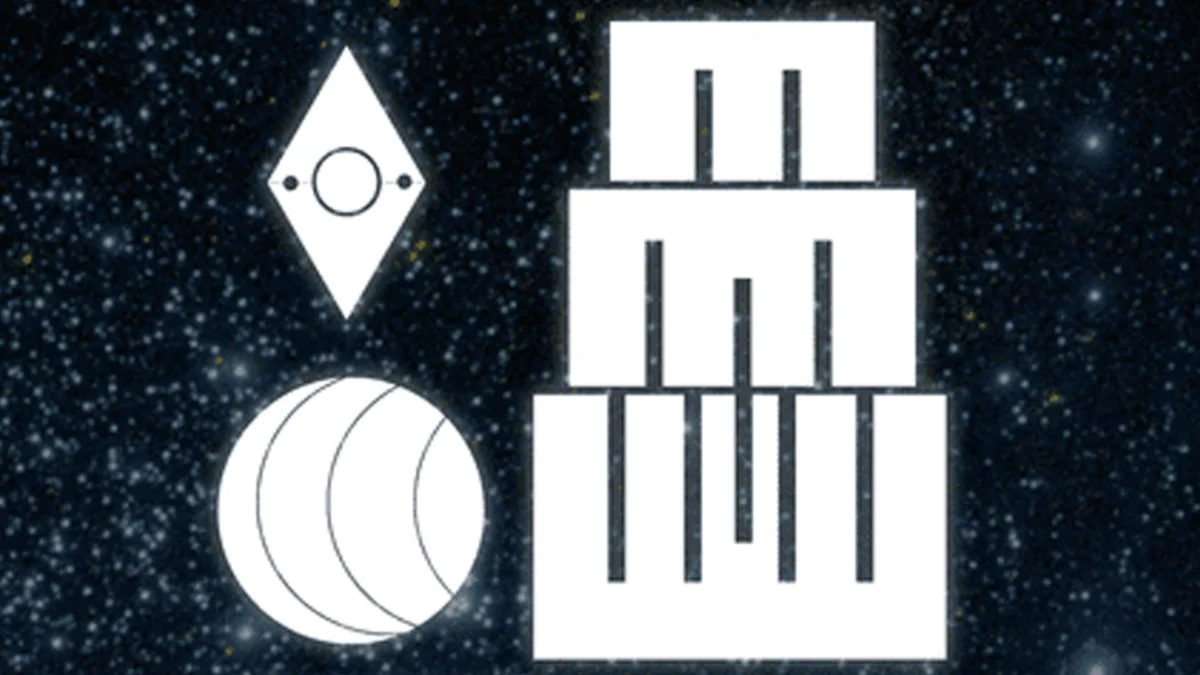
A revolutionary single-player board game, "City of Six Moons," is poised to challenge players not just with its strategic depth but with the unprecedented task of translating its entire rulebook, written in an alien language of symbols and glyphs. Designed by the visionary Amabel Holland and published by Hollandspiele, this upcoming title promises an immersive intellectual odyssey where the act of deciphering precedes—and is integral to—the gameplay itself. Adding to the enigma, Holland has explicitly stated she will not provide any clarifications, leaving players to grapple with the inherent uncertainty of their interpretations.
Main Facts: An Uncharted Lexicon of Play
The forthcoming board game, "City of Six Moons," is generating significant buzz within the tabletop gaming community for its audacious and highly unconventional design philosophy. At its core, the game is a solitaire experience that tasks players with guiding the fortunes of an alien civilization. However, its most striking feature lies not in its thematic premise or mechanical intricacies, but in its presentation: the entirety of its rulebook is penned in a fictional, alien language composed of unique icons, glyphs, and symbols. This immediately transforms the initial engagement with the game from a straightforward rules absorption process into a profound act of linguistic and cultural decryption.
Amabel Holland, the acclaimed designer behind this ambitious project, describes "City of Six Moons" as a game conceptualized not just about an alien civilization, but as if it were genuinely created by one. This radical approach dictates that players must first endeavor to translate the alien script to comprehend the game’s mechanics, objectives, and win conditions. The inherent challenge is further compounded by Holland’s deliberate decision to withhold any official answers or clarifications regarding the rulebook’s interpretation. Players, therefore, are left to navigate a labyrinth of symbols, drawing upon their own cognitive abilities, cultural assumptions, and an open mind to the alien perspective, without the comforting assurance of a definitive "correct" solution. The game, set for release next month by Hollandspiele, promises to be a singular experience, pushing the boundaries of what a board game can be.
Chronology: From Concept to Cryptic Release
The journey of "City of Six Moons" from an audacious concept to an anticipated release has been marked by a series of intriguing revelations that have steadily built anticipation among enthusiasts of experimental and thought-provoking game design.
Amabel Holland, known for her intricate and often politically charged designs published under the Hollandspiele label (co-owned with Mary Holland), first hinted at a project that would radically redefine player engagement with game rules. Hollandspiele has cultivated a reputation for publishing niche, often heavy, and intellectually stimulating games that frequently defy mainstream conventions, making it the ideal home for such an avant-garde concept. Their catalog often features wargames and strategic simulations that prioritize depth and player agency, aligning with the philosophical underpinnings of "City of Six Moons."
The formal announcement of "City of Six Moons" brought with it the startling detail about its alien language rulebook. This immediately positioned the game as a departure from traditional tabletop experiences, where clarity and unambiguous rules are typically paramount. Initial discussions across various gaming platforms, notably highlighted by BoardGameGeek’s blog post, quickly underscored the magnitude of the challenge presented to prospective players. The news spread through the community, sparking conversations about the nature of rules, player interpretation, and the role of a game designer.
Holland’s subsequent direct communications, particularly on platforms like Bluesky, further elaborated on her artistic vision. She confirmed the game’s functional and replayable nature after the initial deciphering, but crucially emphasized that the act of translation itself is a core component of the experience. Her assertion that the "loss" of mystery once the code is cracked is an intended emotional outcome further solidified the game’s status as a deliberate artistic statement rather than a mere novelty. With its impending release, "City of Six Moons" stands as a testament to Hollandspiele’s commitment to pushing the boundaries of interactive entertainment and Amabel Holland’s distinct creative voice.
Supporting Data: The Semiotics of Play and the Meta-Game
"City of Six Moons" is not merely a game with unusual rules; it is a profound exploration of semiotics, ludology, and the very nature of human interaction with unknown systems. By presenting its rules in an untranslated alien language, Amabel Holland transforms the traditional onboarding process into an intrinsic, multi-layered puzzle.
The Deciphering Challenge: A Core Mechanic
The central "game" of "City of Six Moons" arguably begins before any pieces are moved or strategies are considered. Players are confronted with a rulebook that is, by design, an opaque text. This requires them to engage in a process akin to cryptanalysis or linguistic archaeology. The article specifies the language is composed of "icons, glyphs, and symbols." This suggests a visual, rather than phonetic, language, potentially drawing parallels to ancient hieroglyphs or modern iconographic systems. Players will need to look for patterns, recurring symbols, contextual clues from the game components (which are presumably also devoid of human language or marked in the same alien script), and perhaps even infer meaning from the cover artwork.
This meta-game of deciphering adds several layers of intellectual stimulation:
- Pattern Recognition: Identifying repeated symbols or sequences that might represent actions, resources, or game states.
- Contextual Inference: Deducing meaning based on the placement of symbols relative to images or other components.
- Hypothesis Testing: Formulating theories about symbol meanings and testing them against perceived game logic or intuitive understanding.
- Cultural Bridging: The designer’s note about drawing on "existing cultural assumptions" while accepting the alien civilization’s difference suggests an exercise in empathy and cognitive flexibility. Players must navigate their own biases while trying to understand a fundamentally foreign logic.
Psychological Dimensions: Frustration, Eureka, and Lingering Loss
The player experience of "City of Six Moons" is poised to be a complex emotional journey. The initial frustration of encountering an incomprehensible rulebook could be a significant barrier for some. However, for those who embrace the challenge, the eventual "eureka" moment of cracking a symbol’s meaning, or piecing together a grammatical structure, could be profoundly rewarding. This journey mirrors the thrill of scientific discovery or archaeological breakthroughs.
Holland’s intention that the "loss" felt after deciphering the code should "linger" is particularly insightful. It speaks to the idea that the process of discovery often holds more magic than the discovered truth itself. Once the alien language is understood, the game shifts from a linguistic puzzle to a conventional strategy game (albeit one with a unique origin story). The initial wonder and intellectual struggle are replaced by certainty, and this transition, according to Holland, is a deliberate part of the emotional arc she wishes players to experience. This evokes a sense of nostalgia for the unknown, a wistful reflection on the intellectual adventure that has concluded.
Hollandspiele’s Vision: A Niche for Innovation
The choice to publish "City of Six Moons" through Hollandspiele is entirely consistent with the publisher’s ethos. Founded by Amabel and Mary Holland, Hollandspiele has carved out a distinct niche in the board game market by consistently releasing titles that prioritize unique design, intellectual rigor, and often challenge player expectations. They are not a publisher known for mass-market appeal, but rather for catering to a discerning audience that appreciates innovation, depth, and a designer’s singular vision. Their catalog often features games with complex mechanics, historical themes, or abstract concepts that demand significant player engagement. "City of Six Moons" pushes these boundaries even further, making it a natural fit for a publisher that actively seeks to expand the definitions of tabletop gaming. This commitment to artistic integrity over commercial ubiquity allows for the kind of daring experimentation exemplified by Holland’s latest creation.
Precedents and Parallels: Art, Language, and Games
While "City of Six Moons" is undeniably unique in the board game sphere, it draws upon broader artistic and intellectual traditions. The concept of creating fictional languages and scripts, or "conlangs," has a rich history, from Tolkien’s Elvish to the Klingon of Star Trek. These creations often serve to deepen world-building and enhance immersion. However, to make the rules of an interactive medium contingent on deciphering such a language is a novel application.
In literature, authors like James Joyce have presented readers with texts that demand active interpretation and re-reading. In art, conceptual pieces often require the audience to engage intellectually to derive meaning, rather than passively consume. Within gaming, some titles feature elements of meta-narrative or emergent gameplay, but few have made the very understanding of the game’s operating principles the primary hurdle. "The Witness," a video game known for its environmental puzzles and lack of explicit tutorials, comes close in terms of requiring players to learn systems through observation and experimentation, but it still relies on universal visual cues rather than a wholly invented language for its core mechanics. "City of Six Moons" pushes this boundary further into pure semiotic challenge.
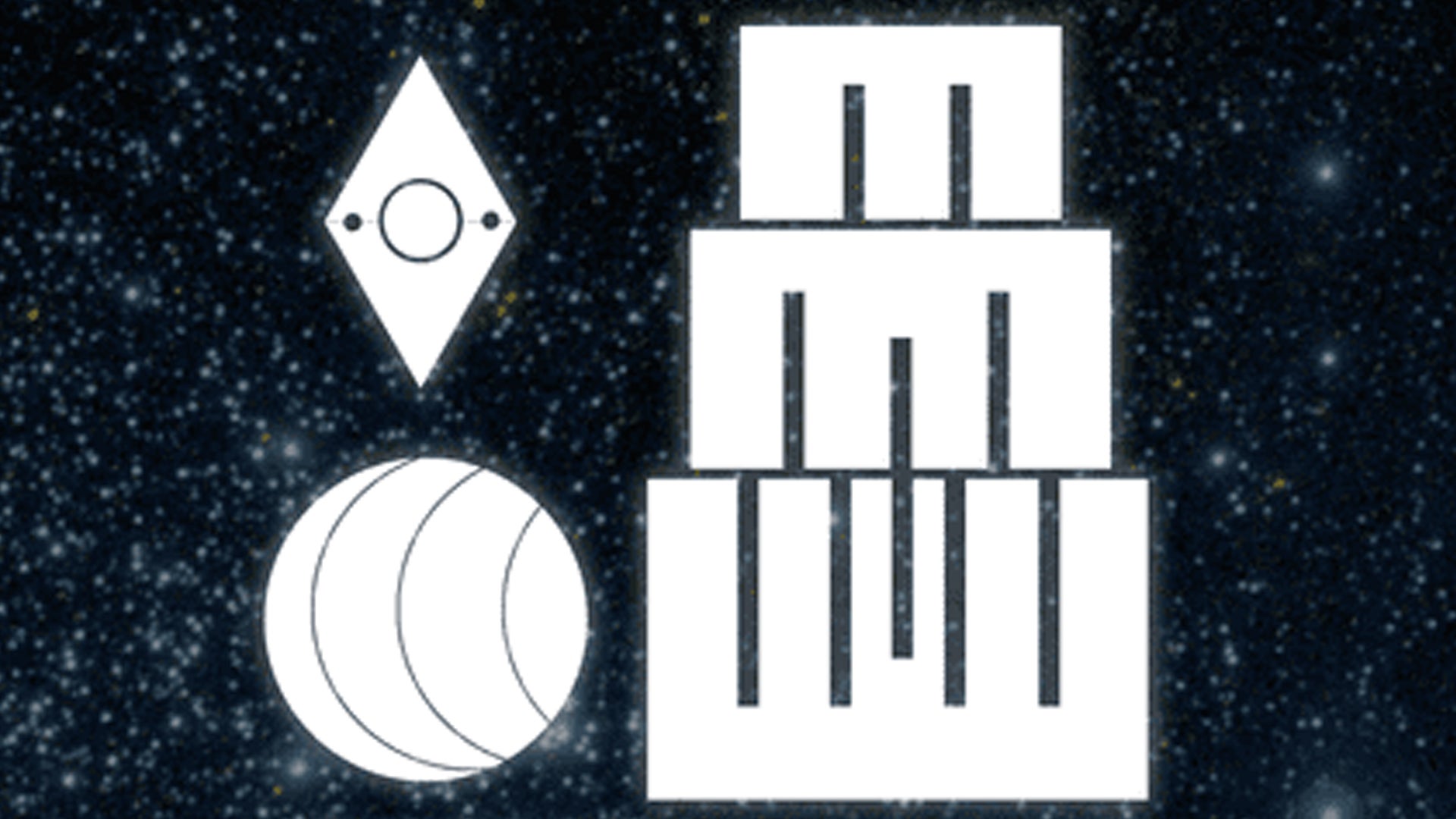
The game’s components—presumably devoid of human language or marked in the alien code—will be crucial "Rosetta Stones" for players. Every symbol on a card, every marking on a board, every piece of art could hold a clue to the overarching linguistic puzzle, turning the entire game box into an archaeological dig site. This holistic approach ensures that the design intent permeates every aspect of the product, reinforcing the narrative of an alien artifact dropped into human hands.
Official Responses: The Designer’s Manifesto
Amabel Holland’s pronouncements regarding "City of Six Moons" are not mere descriptive statements; they form a veritable manifesto on her artistic intent and her philosophy of game design. Her refusal to answer rules questions is perhaps the most provocative and defining aspect of this approach.
The Unyielding Oracle: No Rules Questions Answered
The explicit declaration that the designer "will refuse to answer any questions about the game’s rules" (as noted by BoardGameGeek) is a deliberate act of artistic control and a fundamental part of the game’s challenge. In an era where designers and publishers are often highly accessible through online forums and social media, offering clarifications and errata, Holland’s stance is a radical departure. It places the onus entirely on the player to engage with the system as presented, without an external authority to validate their understanding. This fosters a unique relationship between player and game, one based on self-reliance, deduction, and perhaps, communal interpretation rather than definitive answers.
This refusal is not an act of dismissiveness, but rather an integral design choice. It ensures that the intended "uncertainty" remains a persistent element of the experience. If players could simply ask for clarification, the core challenge of deciphering and the "loss" Holland speaks of would be undermined. It forces players to truly inhabit the role of an archaeologist or xenolinguist, for whom the original creators are long gone or utterly unknowable.
The Paradox of Play: Functional, Replayable, and "Lesser"
Holland’s statements on Bluesky provide further depth to her vision. She assures players that "City of Six Moons" will be a "functional, replayable game" for those who successfully crack its code. This is a crucial reassurance, indicating that the game is not merely a linguistic puzzle with no gameplay payoff, but a legitimate strategic experience once its secrets are unlocked. The promise of replayability suggests a robust underlying system that transcends the initial deciphering challenge.
However, this reassurance is immediately juxtaposed with the profound statement that players might find it a "lesser" experience after they know its secrets. "That loss is a thing I want you to feel; I want it to linger," Holland states. This seemingly paradoxical sentiment is central to understanding her artistic ambition. It highlights the ephemeral magic of discovery and the unique intellectual satisfaction derived from overcoming a truly novel challenge. Once the unknown becomes known, a certain wonder is inevitably lost. Holland actively embraces this transition, designing it as an emotional endpoint to the initial, foundational gameplay experience.
This perspective elevates the act of playing "City of Six Moons" beyond mere entertainment into a form of artistic engagement. The game becomes a journey with a distinct beginning (the bewildering alien text), a challenging middle (the process of deciphering and initial gameplay), and a reflective end (the lingering sense of loss and familiarity). It’s a game that acknowledges and even orchestrates the player’s emotional response to knowledge acquisition, making the transient nature of novelty a core theme.
Implications: Reshaping Game Design and Player Dynamics
The release of "City of Six Moons" carries significant implications, not only for the board game industry but also for broader discussions about art, interpretation, and community engagement.
Innovation in Game Design: Pushing Boundaries
Amabel Holland’s latest work represents a bold stride in game design, challenging established paradigms of rulebook clarity and designer-player interaction. If successful, "City of Six Moons" could inspire a new wave of experimental games that integrate meta-challenges and unconventional narrative structures. It prompts designers to reconsider the role of the rulebook itself—is it merely an instruction manual, or can it be an integral part of the game’s artistic statement and initial experience? This approach moves beyond simply "thematic rules" to "experiential rules," where the form of the rules dictates the initial player experience. It encourages an auteur theory of game design, where the designer’s vision is paramount, even if it creates a higher barrier to entry.
Community Building and Collective Intelligence
One of the most fascinating implications concerns the player community. Given the designer’s refusal to answer questions, players are likely to flock to online forums, dedicated wikis, and social media groups to collaboratively decipher the alien language. This could foster an unprecedented level of collective intelligence and shared discovery. Imagine a global community pooling insights, testing hypotheses, and celebrating breakthroughs in translation. This collaborative meta-game could become as compelling as the actual game itself, transforming individual solitude into a shared intellectual quest. The game might become a cultural touchstone for those who participate in its decryption, creating a strong, engaged, and self-sufficient player base.
The Nature of "Rules": Fixed or Interpretive?
"City of Six Moons" forces a re-evaluation of what constitutes a "rule" in a game. Are rules absolute, immutable laws handed down by the designer, or are they living, interpretive constructs that players must actively engage with and understand? By making the rules opaque, Holland suggests that interpretation is not a side effect of poor writing but a fundamental component of play. This blurs the lines between explicit instruction and emergent understanding, challenging the traditional notion of a game as a perfectly defined system. It asks players to accept ambiguity and to trust their own judgment, echoing philosophical discussions about meaning-making and the limits of objective truth.
Accessibility and Audience: A Deliberate Niche
The game’s inherent difficulty in accessing its core mechanics will inevitably create a high barrier to entry. This is not a game for casual players or those seeking immediate gratification. However, this deliberate choice likely targets a specific, niche audience: puzzle enthusiasts, linguists, cryptographers, and players who appreciate avant-garde or "art games." Hollandspiele has always catered to such an audience, and "City of Six Moons" refines this focus even further. It’s a bold statement that not all games need to be universally accessible; some can serve as intellectual challenges designed for a specific kind of engagement, embracing the idea that some art is meant to provoke and challenge, not just entertain.
Academic Interest: Ludology and Semiotics
Beyond the gaming community, "City of Six Moons" is ripe for academic study in fields like ludology (the study of games), semiotics (the study of signs and symbols), and even cognitive psychology. It provides a unique case study on how players interact with ambiguous systems, how meaning is constructed in the absence of explicit instruction, and the psychological impact of intellectual struggle and discovery within a recreational context. The game could become a touchstone for discussions on experiential design, the role of narrative in rule-making, and the evolving relationship between creators and their audience in interactive media.
As "City of Six Moons" prepares for its release, it stands as a testament to the boundless creativity within the board game industry. Amabel Holland has crafted not just a game, but an experience designed to challenge, provoke, and ultimately, leave a lasting intellectual and emotional imprint on those brave enough to embark on its cryptic journey. Good luck to all who dare to decipher the secrets of the City of Six Moons.