The Phoenix of the Air Nomads: Animated "Avatar Aang" Soars to an Unexpected Early Release
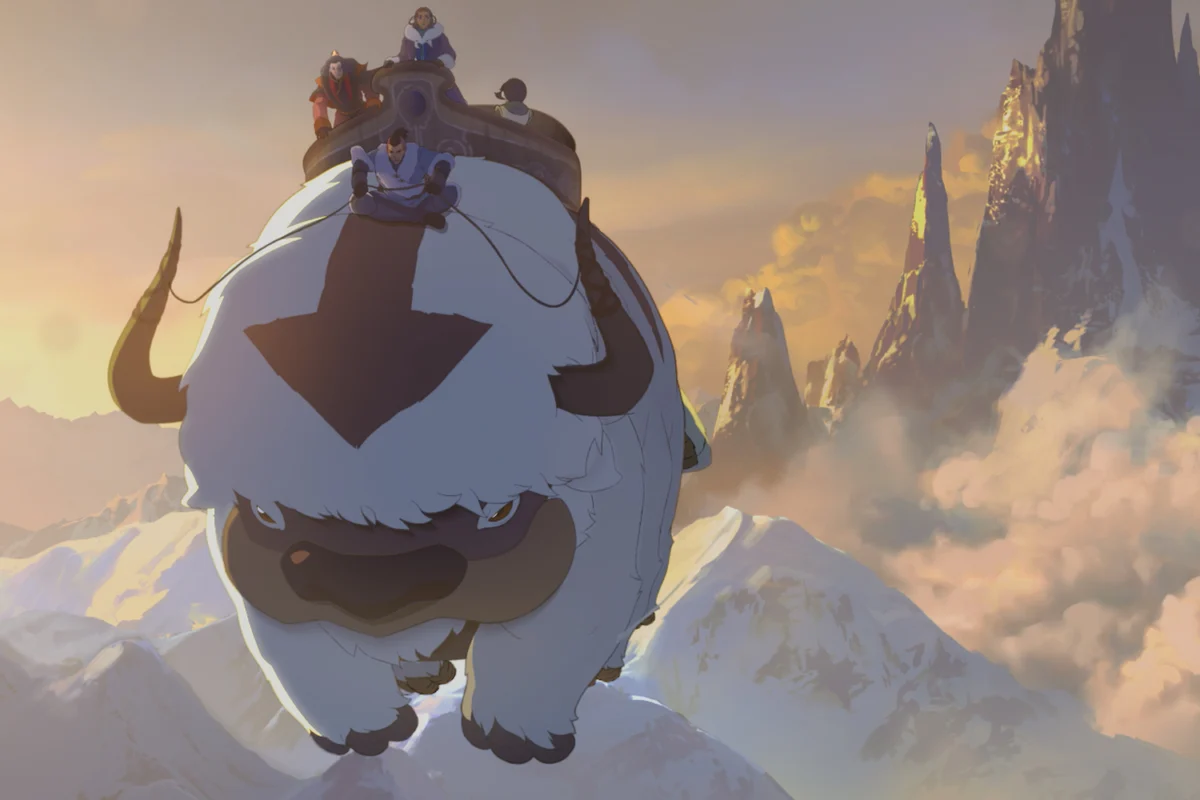
Los Angeles, CA – As Netflix’s live-action adaptation of Avatar: The Last Airbender concludes its second season with a third on the horizon, the original animated universe is preparing its grand return to the screen. Paramount has officially announced the accelerated release of Avatar Aang: The Last Airbender, the first in a series of highly anticipated animated films, now set to premiere on Paramount+ on July 25th. This rapid deployment, accompanied by a brand-new trailer, comes mere months after a significant portion of the film reportedly leaked online, raising questions about strategic responses to digital piracy and the future of the beloved franchise.
The animated film promises to transport audiences back to the world of Avatar Aang, voiced by Eric Nam, as he grapples with the aftermath of the Hundred Year War. The trailer reveals a seemingly peaceful world where "all of the nations live together in peace and harmony"—except for Aang’s own Air Nation, still struggling with its near extinction. The discovery of another frozen airbender, Tagah (voiced by Dave Bautista), offers a glimmer of hope, potentially altering Aang’s quest to restore his culture. However, power-hungry enemies lurk in the shadows, threatening to unravel the hard-won peace. This cinematic venture is poised to be a pivotal moment for Avatar fans, marking a return to the animation style and continuity that first captured global imagination.
A New Chapter for Aang and Friends
Avatar Aang: The Last Airbender represents a significant investment by Paramount and Avatar Studios, a dedicated content division established in 2021 by Nickelodeon and Paramount to expand the Avatar universe with original creators Michael Dante DiMartino and Bryan Konietzko at the helm. This film is the first tangible outcome of that ambitious initiative, aiming to deliver new stories within the established animated canon, specifically set after the events of the original series but before The Legend of Korra.
The synopsis teases a narrative rich with cultural preservation and global stakes: "The new film, based on the animated series created by Michael Dante DiMartino and Bryan Konietzko, sees Avatar Aang, the world’s last Airbender, learn of an ancient power that could save his culture from extinction. With the help of his friends, he embarks on a global quest to find it before it falls into the wrong hands and threatens to upend the peace they sacrificed everything to achieve." While the initial description from the trailer highlights Aang’s personal struggle with the Air Nation’s fate, the broader synopsis confirms the involvement of his core companions—Katara, Sokka, Zuko, and Toph—in a quest that echoes the epic scope of their original journey.
A Rapid and Unexpected Release
The announcement of a July 25th release, just weeks away, has surprised many. Typically, major animated features undergo extensive marketing campaigns over several months. This condensed rollout is widely speculated to be a direct response to the film’s leak earlier this year. Reports indicated that a significant portion of Avatar Aang: The Last Airbender had appeared online, a major security breach for Paramount and Avatar Studios. While no official statement has explicitly linked the leak to the accelerated release, industry analysts suggest that launching the film swiftly is a common strategy to mitigate the financial damage and curb further illegal distribution once content has entered the public domain prematurely. By making the official version readily available, studios aim to regain control over the narrative and monetize their product before the illicit copies saturate the market further.
A Chronology of Avatar’s Expansion
The Avatar franchise has experienced a dynamic trajectory since its inception, evolving across various media platforms.
The Foundations: From Original Series to Korra
The journey began in 2005 with Nickelodeon’s Avatar: The Last Airbender, a critically acclaimed animated series that ran for three seasons, garnering widespread praise for its intricate storytelling, complex characters, and profound thematic depth. Its success led to a sequel series, The Legend of Korra, which premiered in 2012 and explored the Avatar world 70 years after Aang’s time, continuing to expand the lore and address more mature themes. These two series established a passionate global fanbase and cemented the Avatar universe as a cultural phenomenon.
Avatar Studios: A New Era Announced (2021)
Recognizing the immense potential of the franchise, Nickelodeon and Paramount announced the formation of Avatar Studios in February 2021. This dedicated division was created with the express purpose of developing new animated content, including films and series, set within the Avatar universe. Crucially, original creators Michael Dante DiMartino and Bryan Konietzko were brought on board to lead the studio, assuring fans that future projects would maintain the authentic spirit and quality of the original works. This move was celebrated by fans, particularly after a prior live-action film adaptation in 2010 failed to meet expectations. The initial announcement promised a theatrical animated film, later revealed to be Avatar Aang: The Last Airbender.
The Unforeseen Leak and its Aftermath (Early 2024)
The enthusiasm surrounding Avatar Studios was briefly overshadowed earlier this year when news broke of a significant leak. Details were scarce, but reports from reputable entertainment outlets indicated that an unfinished version of Avatar Aang: The Last Airbender had made its way onto the internet. Such leaks are a persistent challenge for the entertainment industry, often resulting in lost revenue, disrupted marketing plans, and potential demoralization for the creative teams involved. While Paramount remained tight-lipped about the specifics of the breach, the rapid shift in the film’s release strategy strongly suggests that the studio prioritized damage control and immediate monetization over a prolonged promotional cycle.
The Immediate Future: Film Premiere and Beyond
The July 25th premiere of Avatar Aang: The Last Airbender on Paramount+ marks the immediate future of the animated franchise. This is not, however, the sole animated project in the pipeline. Last year, a new animated sequel series from DiMartino and Konietzko, Avatar: Seven Havens, was announced. This series is slated to explore an even later point in the Avatar timeline, taking place after the events of The Legend of Korra. These multiple projects underscore Paramount’s long-term commitment to the animated Avatar universe, aiming to build a rich, interconnected tapestry of stories for fans to explore for years to come.
Delving into the Details: Plot, Cast, and Creative Vision
The forthcoming film promises a blend of familiar elements and fresh challenges, brought to life by a stellar voice cast and an experienced creative team.
A Post-War World: Aang’s New Challenge
The central premise of Avatar Aang: The Last Airbender pivots on Aang’s post-Hundred Year War responsibilities. Having achieved global peace, his new burden is the revival of his own culture. The trailer hints at Aang’s melancholy over the state of the Air Nomads, highlighting that while the other nations live in harmony, his own remains diminished. The introduction of Tagah, a newly discovered frozen airbender voiced by Dave Bautista, is a critical plot point. This character could represent a literal and symbolic beacon of hope for the Air Nation, potentially holding ancient knowledge or a unique perspective that aids Aang’s quest. The pursuit of an "ancient power" to save his culture adds a mystical element, suggesting that the challenges extend beyond political reconciliation to profound spiritual and cultural restoration. The return of "power-hungry enemies" indicates that even in times of peace, the struggle against malevolent forces persists, reminding audiences that vigilance is always required.
A Star-Studded Voice Ensemble
The voice cast for Avatar Aang: The Last Airbender is notably high-profile, reflecting the film’s significance within the franchise. Eric Nam takes on the titular role of Aang, bringing a fresh voice to the beloved character. He is joined by a returning ensemble of core characters: Jessica Matten as Katara, Román Zaragoza as Sokka, Steven Yeun as Zuko, and Dionne Quan as Toph. The presence of Steven Yeun, known for his acclaimed work in The Walking Dead and Minari, as Zuko, suggests a mature portrayal of the now Fire Lord, building on the character’s complex journey.
Beyond the main Gaang, the film boasts an impressive roster of additional talent. Dave Bautista’s casting as Tagah adds significant star power and an intriguing vocal presence to a potentially pivotal new character. The list further includes acclaimed actors such as Freida Pinto, Ke Huy Quan (an Academy Award winner), Taika Waititi (renowned director and actor), Geraldine Viswanathan, Ronny Chieng, and Ken Jeong. Their involvement not only elevates the film’s profile but also promises a rich tapestry of vocal performances. A welcome return for long-time fans is Dee Bradley Baker, who reprises his roles as the iconic animal companions, Appa and Momo, ensuring continuity and nostalgia. This caliber of voice talent underscores Paramount’s commitment to delivering a premium animated experience.
The Guiding Hands: Directors and Writers
The creative team behind the film also brings a wealth of experience within the Avatar universe. Lauren Montgomery directs, a name familiar to Avatar enthusiasts as a storyboard artist on the original Avatar: The Last Airbender series and a director on The Legend of Korra. Her deep understanding of the franchise’s visual language and storytelling nuances is invaluable. She is joined by co-directors Steve Ahn and William Mata. The screenplay is penned by Tim Hedrick and Christopher Yost. Hedrick has a strong background in animated series, including previous Avatar projects, while Yost is known for his work on Marvel films like Thor: The Dark World and Thor: Ragnarok, suggesting a potential for dynamic action sequences and compelling character arcs. The story itself is credited to original creators Bryan Konietzko and Michael Dante DiMartino, alongside Tim Hedrick and Kenneth Lin, ensuring that the foundational narrative remains true to the spirit of the Avatar universe. This blend of established Avatar veterans and proven talent from broader cinematic landscapes bodes well for the film’s creative direction.
Official Stances and Strategic Maneuvers
The dual existence of Netflix’s live-action series and Paramount’s animated films highlights a multifaceted strategy for the Avatar brand, while the recent leak adds a layer of complexity to official responses.
Navigating the Leak: An Unspoken Urgency
Paramount has not issued a direct official comment specifically addressing the leak of Avatar Aang: The Last Airbender. However, the accelerated release schedule speaks volumes. In the entertainment industry, a sudden shift from a planned fall release to a mid-summer launch, with a truncated marketing window, is almost invariably a response to an unforeseen event like a significant content leak. The strategy is to minimize the window during which pirated copies can circulate without an official, high-quality alternative, thereby protecting potential revenue and intellectual property. This reactive approach, while understandable from a business perspective, underscores the ongoing battle studios face against digital piracy and the challenge of maintaining secrecy around highly anticipated projects.
Paramount+’s Flagship Animation Bet
For Paramount+, Avatar Aang: The Last Airbender is more than just another film; it represents a significant flagship title for its streaming service. In the fiercely competitive streaming landscape, exclusive, high-quality content based on beloved intellectual property is crucial for subscriber acquisition and retention. By bringing the original animated continuity back to its platform, Paramount+ aims to capitalize on the nostalgia and enduring appeal of the Avatar universe, distinguishing itself from rivals like Netflix. This film could serve as a powerful draw, particularly for fans who prioritize the authentic animated style and storytelling of the original creators.
The Live-Action vs. Animated Divide
The coexistence of Netflix’s live-action Avatar series and Paramount’s animated films creates an interesting dynamic within the franchise. Netflix’s adaptation, while garnering significant viewership, has received mixed critical and fan reactions. Many purists of the original series have expressed disappointment with certain narrative changes and tonal shifts. In contrast, the animated films from Avatar Studios, with the direct involvement of DiMartino and Konietzko, are seen by many fans as the "true" continuation of the universe. This dichotomy sets up a fascinating test of which interpretation of Avatar will resonate most deeply with audiences and ultimately drive the franchise forward. Paramount’s strategy appears to be leaning into the strength of the original format and creators, offering an alternative narrative path for the franchise.
Implications for the Beloved Franchise
The release of Avatar Aang: The Last Airbender carries significant implications for the future of the franchise, the animation industry, and the ongoing struggle against content leaks.
Charting the Course for Avatar Studios
As the inaugural film from Avatar Studios, Avatar Aang: The Last Airbender will set a crucial precedent. Its reception—both critically and commercially (in terms of Paramount+ viewership)—will heavily influence the direction and scale of future projects, including Avatar: Seven Havens and other unannounced animated ventures. A successful launch would validate Paramount’s investment in Avatar Studios and reinforce the creative vision of DiMartino and Konietzko, potentially leading to an even more expansive slate of animated content. Conversely, a lukewarm reception could necessitate a re-evaluation of strategies. This film is the first major step in building a coherent, interconnected animated Avatar universe for a new generation of fans and a nostalgic return for existing ones.
The Enduring Power of 2D Animation
In an era dominated by CGI-heavy blockbusters and 3D animation, the return to traditional 2D (or traditionally styled) animation for Avatar Aang underscores the enduring artistic and narrative power of the medium. For many fans, the original series’ animation style is intrinsically linked to its charm and emotional resonance. This film serves as a testament to the continued viability and appeal of hand-drawn aesthetics, demonstrating that complex storytelling and immersive world-building do not always require the latest technological advancements. It could inspire other studios to invest in similar projects, further diversifying the animation landscape.
A Test of Fan Loyalty and Industry Security
The rapid release in the wake of a leak will also be a test of fan loyalty and industry security measures. While some might have accessed the leaked version, the official release offers the opportunity to support the creators and experience the finished product as intended. The industry will be closely watching how this release strategy impacts viewership and piracy rates. Furthermore, the incident will undoubtedly prompt Avatar Studios and other production houses to re-evaluate and strengthen their digital security protocols, emphasizing the constant arms race between content creators and those who seek to illegally distribute their work.
In conclusion, Avatar Aang: The Last Airbender is not just another animated film; it’s a statement. It represents a commitment to the original spirit of the Avatar universe, a strategic move by Paramount+ in the streaming wars, and a high-stakes response to a challenging leak. As Aang and his friends embark on their new quest to save the Air Nation, the film itself carries the hopes of a fanbase eager to return to the beloved animated world. The unexpected early arrival ensures that fans won’t have to wait long to witness this new chapter unfold.