The 250-Year Prophecy: Is America Approaching its Imperial Sunset?
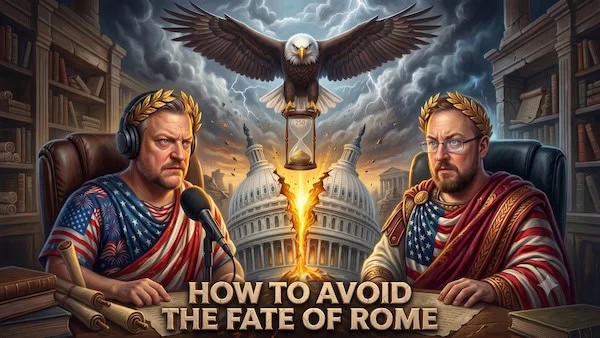
As the United States marks a monumental milestone, the 250th anniversary of its founding, a somber historical theory is resurfacing, casting a long shadow over celebratory festivities. The essay "The Fate of Empires," penned by British General Sir John Glubb in 1976, posits a stark cyclical pattern in the rise and fall of empires, with an average lifespan of approximately 250 years. Coincidentally, this year marks America’s bicentennial plus half a century, a temporal alignment that has captured the attention of many, sparking both apprehension and spirited debate about the nation’s future.
While official celebrations like the White House’s projections on the Washington Monument and nationwide block parties organized by America250 aim to project an image of enduring strength and exceptionalism, Glubb’s prescient analysis suggests that this period of national introspection might also serve as a prelude to decline. The viral spread of his essay, coinciding with America’s landmark anniversary, transforms the jubilation into a potential wake for an era of imperial dominance.
The Glubb Cycle: A Historical Blueprint for Imperial Demise
Sir John Glubb, a decorated military figure with extensive experience in the Middle East, meticulously analyzed eleven empires spanning three millennia, from the ancient Assyrians to the British Empire. His research, detailed in his seminal 1976 essay, revealed a striking consistency: empires, on average, followed a predictable trajectory, rarely exceeding 250 years. This duration, he argued, equates to roughly ten human generations, a timescale for the natural ebb and flow of societal characteristics.
Glubb’s model outlines six distinct stages that empires typically traverse:
- Pioneers: The initial phase of ambition, exploration, and nation-building, characterized by a strong sense of purpose and resourcefulness.
- Conquest: The expansionist period, where military might and strategic acumen lead to territorial growth and the establishment of dominance.
- Commerce: The focus shifts to economic prosperity, trade, and the accumulation of wealth, laying the foundation for affluence.
- Affluence: A period of material comfort and widespread prosperity, often leading to increased consumption and a softening of national character.
- Intellect: The era of intellectual and cultural flourishing, where arts, sciences, and philosophy thrive, but often accompanied by a decline in practical skills and a growing sense of detachment from the nation’s core values.
- Decadence: The final stage, marked by moral decay, complacency, internal division, and a loss of the pioneering spirit.
Crucially, Glubb’s thesis challenges the common perception that empires crumble under external pressures. Instead, he argues, their demise is primarily an internal affair. The very success and prosperity that define an empire, he contends, subtly rewire a people’s priorities. Material comfort can breed complacency, eroding the resilience and shared values that initially fueled the empire’s ascent. The empire, in essence, hollows out from within, leaving it vulnerable to eventual collapse, often before any significant external threat materializes.
Glubb’s observations are not an isolated historical curiosity. Contemporary scholars, such as mathematician and historian Peter Turchin, lend further credence to these cyclical theories. Turchin’s work, particularly his book "Secular Cycles," utilizes mathematical modeling to identify historical patterns of civilizational collapse. His data points to recurring cycles of approximately 200 to 300 years, driven by a phenomenon he terms "elite overproduction." This occurs when an excess of ambitious individuals compete for a limited number of positions of power, leading to social friction and instability as disenfranchised elites seek to dismantle the existing system. Turchin himself predicted in 2010 that the 2020s would represent a peak decade for American instability, a forecast that resonates with the current discourse.
Echoing these sentiments, commentator Thomas notes the biblical wisdom of Solomon, who stated, "The crown does not endure to all generations." This aphorism underscores the ephemeral nature of power and dominion. Furthermore, Thomas observes that many Chinese dynasties also adhered to this approximate 250-year lifespan, reinforcing the notion of a generational expiration date for hegemonic powers.
America’s Trajectory: A Mirror to the Glubbian Stages
The narrative of the United States appears to map remarkably onto Glubb’s six stages. The initial "Pioneers" and "Conquest" phases are evident in the nation’s westward expansion and the spirit of Manifest Destiny. The subsequent "Gilded Age" and the post-World War II era represent periods of immense "Commerce" and "Affluence." The latter half of the 20th century and the early 21st have seen an explosion of intellectual and technological advancement, aligning with the "Intellect" stage. Many now argue that America is currently grappling with the characteristics of the "Decadence" era, marked by internal political polarization, cultural shifts, and a perceived erosion of traditional values.
The Roman Exception: Reinvention as a Strategy for Longevity
While the 250-year mark appears to be a formidable barrier for most empires, history offers a compelling, albeit complex, exception: Rome. The Roman civilization, the very model upon which America’s founders drew inspiration, endured for over a millennium in the West and for two millennia if the Eastern Roman Empire (Byzantium) is included. However, Rome did not defy the cycle; it mastered the art of reinvention.
The Roman Kingdom, lasting 244 years (753-509 BC), eventually succumbed to monarchical rot. In its place, the Romans established a Republic, introducing elected consuls, a Senate, and term limits. This was not a smooth transition; the Republic endured two centuries of internal class struggle, known as the Conflict of the Orders. The pivotal Lex Hortensia in 287 BC, which granted plebeian assembly votes binding authority over all citizens, effectively reset the republican clock. This reform, occurring 222 years after the Republic’s inception, directly around Glubb’s threshold, allowed Rome to circumvent collapse and embark on another two centuries of significant development.
Yet, the engine of empire eventually sputtered. The wealth generated by conquest led to the very decay Glubb describes. A century of civil wars, from the Gracchi brothers in 133 BC to the Battle of Actium in 31 BC, marked the Republic’s decline. Augustus, ascending to power with a "Make Rome Great Again" platform, ushered in the Principate in 27 BC. This system maintained the Senate as a republican façade, masking an underlying autocratic rule, and lasted 261 years until the Crisis of the 3rd Century (235 AD). Diocletian’s response was another reinvention: the openly absolutist Dominate. While the Western Roman Empire fell in 476 AD, the Eastern Empire continued for another millennium, demonstrating a remarkable capacity for adaptation.
Rome’s near-death experiences consistently aligned with Glubb’s 250-year cycle. The crucial difference lay in Rome’s response: reform when possible, and reinvention when necessary. They did not merely replace a failing leader; they fundamentally altered their governing structures. The transition from monarchy to Republic, the establishment of the Tribune of the Plebs to mediate class conflict, and the later evolution of the Principate and Dominate were all radical transformations that allowed Rome to persist.
America’s Constitutional Engine: A Modern Echo of Roman Resilience?
The prevailing narrative suggests that America, in its foundational design, consciously emulated Rome’s capacity for self-correction. The framers of the Constitution, drawing heavily from Roman republican principles and biblical law (Deuteronomy being a frequently cited text), embedded a mechanism for systemic adaptation. The amendment process, a powerful "pressure valve," allows for the nation to "rewrite its own operating system without a secession of the plebs."
The very abandonment of the Articles of Confederation in favor of the Constitution in 1787, just eleven years after independence, exemplifies this spirit of reinvention over mere continuation. The Civil War, a cataclysmic internal conflict, led to the transformative 13th, 14th, and 15th Amendments, a period historians aptly refer to as the "Second Founding." The Great Depression, a period of immense social and economic upheaval, saw the New Deal fundamentally reconfigure the American state, defusing radical movements that threatened to destabilize the nation. Similarly, the Civil Rights Movement, employing tactics akin to Roman plebeian struggles, culminated in landmark legislation like the Civil Rights Act of 1964 and the Voting Rights Act of 1965, preventing a descent into widespread societal breakdown.
From this perspective, the question facing America at its 250th anniversary is not whether the historical cycle is real, but whether its internal "reform engine" still functions effectively. Has the nation reached a "Gracchi moment," where political gridlock and entrenched interests prevent necessary reforms, thereby forcing a more radical, potentially destabilizing reinvention?

The possibility of a constitutional convention within our lifetime is not a fringe theory but a potential mechanism for defining America’s future trajectory. The nation’s founding was a deliberate synthesis of Roman republicanism and biblical principles. The language of American governance, from the Senate to the Latin terms "Aye" and "Nay," bears the indelible imprint of Rome. Even the initial governmental structure, the Articles of Confederation, predates the formal presidency.
The inherent tensions within the nascent union, particularly the conflict between large and small states, and the deeply divisive issue of slavery, were temporarily papered over by pragmatic compromises, driven by external threats like British aggression and Barbary piracy. These immediate dangers fostered a sense of shared vulnerability, pushing the divisive question of secession to a later date.
Today, America operates as both a republic and an empire. Within the republican framework, checks and balances—the Supreme Court, state governors, and even sanctuary cities acting with a degree of autonomy—limit presidential power. Externally, however, the president wields significant executive authority, capable of decisive, unilateral action on the global stage. The expansion of American influence, often through institutions like NATO, has created a Pax Americana, where nations with significant military capabilities largely refrain from engaging in direct conflict with each other, a dynamic reminiscent of Roman hegemony.
The Looming Crisis and the Call for Constitutional Reinvention
The confluence of the 250-year imperial cycle and the 80-year "Fourth Turning" generational cycle points towards an impending period of significant crisis. The proposed solution, advocates argue, lies in utilizing the "break-glass-in-case-of-emergency" tool envisioned by the founders: a constitutional convention. This mechanism, if activated, could facilitate a profound reinvention of the American system, preparing the nation for the next 250 years.
The urgency is underscored by the fact that the traditional amendment process has yielded no significant changes in decades. Without a functional reform mechanism, the likelihood of a more violent and disruptive crisis increases. The path forward, therefore, hinges on a deliberate and constructive reinvention, shaped by informed discourse and the collective will of the people.
Implications for Authors: Shaping the Narrative of Decline and Renewal
The burgeoning belief among millions that they are living at the twilight of an era is profoundly influencing cultural consumption, particularly in fiction. The theme of "decline and renewal" is becoming a dominant narrative backdrop, creating a fertile ground for stories that explore civilizational hinge points.
The historical resonance of Rome’s capacity for reinvention offers a rich vein for novelists. Roman historical fiction and Roman-coded science fiction are experiencing a resurgence, tapping into a public appetite for narratives that acknowledge societal challenges but ultimately offer hope for rebuilding. Purely dystopian visions, while popular, are a crowded market. The true niche lies in narratives that confront collapse head-on but culminate in a process of renewal and reconstruction.
The founding era of the United States is also experiencing a cultural renaissance, with museums, publishers, and Hollywood actively mining this period for material. Revolutionary War romances and founding-era thrillers are poised to capitalize on this renewed interest, particularly as the nation approaches its semiquincentennial in 2026.
The concept of "alternate history" offers a framework for exploring potential futures. Just as speculative fiction delves into "what-if" scenarios of the past, a new subgenre, "alternate future," could explore the consequences of different choices made in the present, particularly in the context of the Fourth Turning.
Authors, therefore, hold a significant, and perhaps terrifying, responsibility. As Thomas posits, "Every war has a novel that inspires it, and it might be your novel." The narratives crafted today have the potential to shape public perception and even influence the course of future events. While war is not inevitable, the power of rhetoric and storytelling to either de-escalate or inflame conflict is undeniable. The assassination of political figures, such as the hypothetical example of Charlie Kirk, is presented as a dangerous escalation, pushing societies closer to physical conflict. Sanctuary cities, refusing to enforce federal law, are framed as a form of de facto secession, further contributing to societal fragmentation.
The Moral Compass: Virtue, Vice, and the Power of Fiction
The discussion then pivots to the moral underpinnings of storytelling. The ability to portray the "ugly" and call it "ugly" is crucial for enhancing the appreciation of beauty and truth. This principle applies directly to the portrayal of character flaws and the consequences of immoral actions. Rather than offering preachy moralizing, effective fiction allows readers to experience the fallout of poor choices vicariously.
The concept of "getting hurt" versus "getting injured" is a powerful analogy. A character’s struggles and suffering within a narrative, if portrayed honestly and with realistic consequences, can offer a valuable, albeit painful, lesson to the reader, akin to learning one’s limits on a playground. This approach cultivates virtue by allowing readers to explore complex ethical dilemmas and their ramifications in a safe, fictional space.
Ultimately, good fiction, by grappling with darkness and ugliness, guides readers toward the "good, the true, and the beautiful." This requires portraying deeply flawed characters and depicting the honest consequences of their actions, rather than resorting to simplistic moral pronouncements or sanitized narratives. The lack of a strong moral foundation, as seen in the struggles of authors like George R.R. Martin to conclude his epic series, can lead to unsatisfying endings and a failure to reflect the realities of human experience.
The call to action for authors is clear: write true books, write beautiful books, and write with the understanding that the fate of the Republic, in part, rests on the narratives they weave. By embracing their role as storytellers, they can contribute to a culture of thoughtful engagement, moral responsibility, and ultimately, a more resilient and enduring society. The challenge is immense, but the potential for positive impact, even in the face of impending historical cycles, remains profound.