The Unyielding Need for Heroism: A Personal Reckoning Amidst Wildfire and Fictional Valor
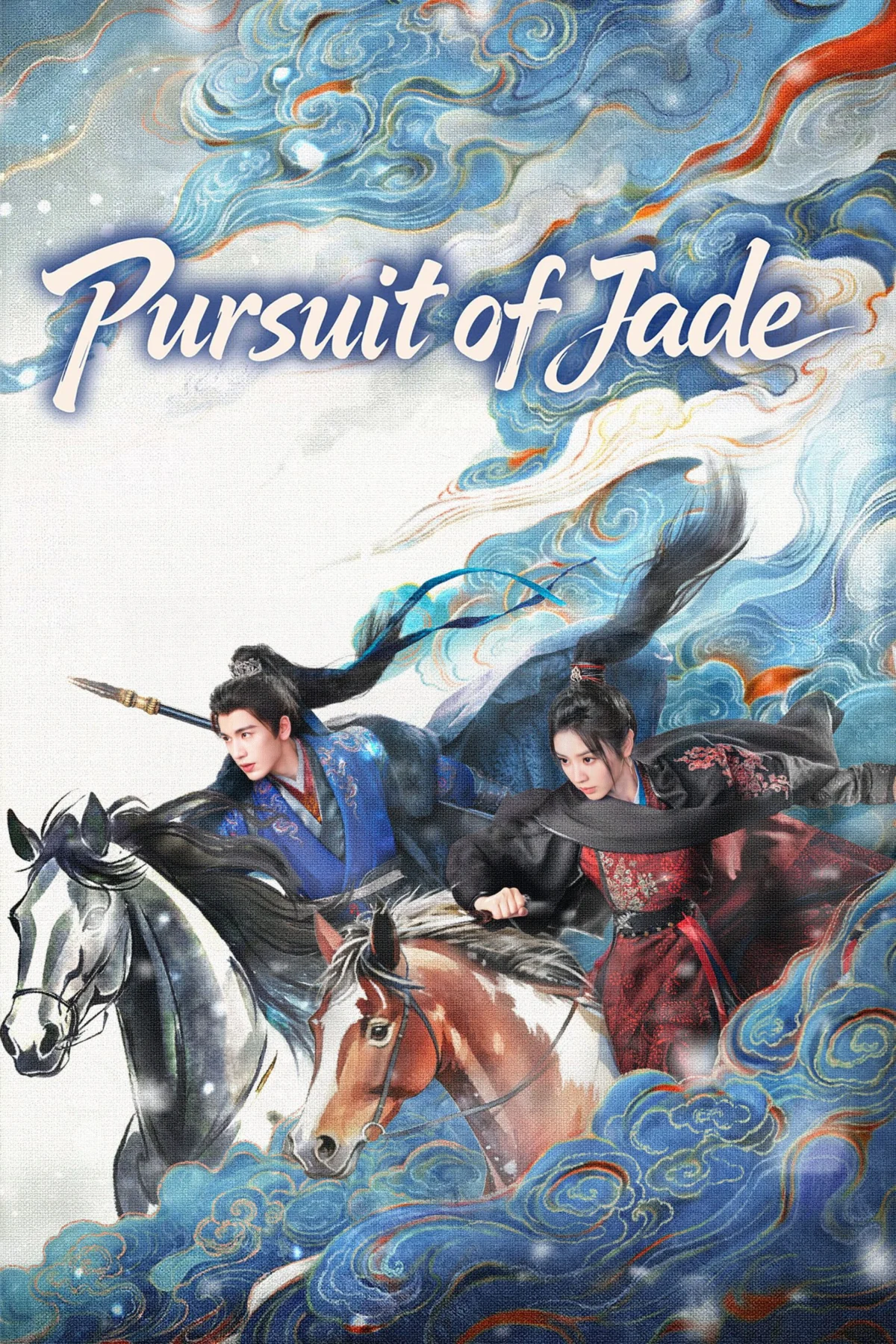
In a cultural landscape often saturated with moral ambiguity and the allure of the "morally gray," a fundamental truth persists: we need heroic stories. This isn’t a simple assertion of preference for clear-cut protagonists; it’s a recognition of a profound human need for narratives that illuminate courage, virtue, and the transformative power of unwavering resolve. While the complexity of modern storytelling offers invaluable insights into the shadows of the human psyche and the catharsis of tragedy, it risks overshadowing the vital archetype of heroism that has long guided and inspired humanity.
This sentiment was recently brought into sharp focus for me through a confluence of personal experience and artistic discovery. A gripping Chinese historical drama, Pursuit of Jade, not only captivated my attention but, in a startling twist of fate, provided a reservoir of courage during a real-life confrontation with danger. This unlikely pairing of fictional heroism and imminent peril underscores the enduring significance of stories that champion the heroic spirit.
The Protagonist vs. The Hero: A Crucial Distinction
It’s a common misconception to equate "protagonist" with "hero." While protagonists are the driving forces of narrative, the structural anchors around which plots are built, the term itself carries no inherent moral weight. An antagonist, conversely, is the obstacle to that narrative momentum, again, without dictating moral character. The modern literary and cinematic landscape frequently embraces antiheroes and characters shrouded in moral complexity, and there is indeed value in exploring these facets of the human condition.

Stories that delve into the "morally gray" offer a crucial reflection of life’s intricate tapestry. They allow us to examine the shadows, confront our own confusions, and find catharsis in shared suffering. However, in our pursuit of sophistication, there’s a subtle danger of denigrating the truly heroic. Genres like action-adventure and romance, often characterized by their reassuring "happily ever after" resolutions, are sometimes dismissed as less artistically significant than their more ambiguous counterparts. Yet, the underlying symbolic architecture of these narratives is inherently heroic. They depict a journey of transformation: shedding the false, enduring trials, and emerging reborn, much like a phoenix from ashes. The arc of a well-crafted story, much like the cycle of day and night, guides us through darkness and back to dawn, offering a profound gift. It illustrates what is possible through hope and courage. While disillusionment has its place in storytelling, igniting the archetype of heroism within our imaginations is a necessity we cannot afford to neglect.
Discovering Pursuit of Jade: A Gateway to Heroic Narratives
My recent immersion into the world of Asian dramas, particularly the highly acclaimed Chinese historical series Pursuit of Jade, has been nothing short of revelatory. This 40-episode saga, currently captivating audiences worldwide, embodies precisely the qualities I’ve been seeking in storytelling: a compelling narrative, rich character development, and, crucially, an unabashed celebration of heroism.
Set against the backdrop of a fantastical medieval China, Pursuit of Jade introduces us to Fan Changyu, a young woman burdened by the recent murder of her parents. To care for her younger sister, she continues the family’s ignominious trade of pig butchering. Her life takes a dramatic turn when she discovers a severely wounded man in the snow. Driven by innate goodness and sincerity, she risks everything to bring him home and nurse him back to health.

Unbeknownst to Changyu, the man is Xie Zheng, a powerful general and nobleman. He conceals his identity, eventually agreeing to a nominal marriage into her family to circumvent legal loopholes that would allow her home to be seized by a dissolute uncle. This act of kindness sets in motion a sweeping epic. As the narrative unfolds, Changyu and Zheng fall in love, are tragically separated, and a devastating war descends. Changyu embarks on a courageous quest to become a hero in her own right, eventually reuniting with Zheng. Their journey culminates in the dramatic revelation of his true identity, forcing them to rebuild their relationship while unraveling a conspiracy that led to her parents’ murder and ultimately saving the empire.
The series is a masterclass in captivating storytelling, boasting gorgeous visuals, a sweeping soundtrack, moments of humor and charm, an achingly slow-burn romance, and the grandeur of a wartime epic. I found myself deeply invested in every character, experiencing laughter, tears, swoons, and moments of pure exhilaration. I binged the entire series in three days, a testament to its immersive power, and immediately felt compelled to rewatch it. While Pursuit of Jade is not without its minor structural and pacing imperfections in its latter half, it delivered a storytelling high I hadn’t experienced in years. More importantly, it served as a potent reminder of why narratives of this ilk are far more than mere entertainment.
When Fiction Meets Fire: A Test of Courage
The night I concluded my Pursuit of Jade marathon, I retired to bed content and buzzing with the vicarious thrill of the story. However, my peaceful slumber was abruptly shattered at 12:30 AM by a phone call from my father. His terse message, "You’ve got fires around you," sent a jolt of adrenaline through me.

My home is situated at the edge of a high-risk wildfire zone in a sparsely timbered region of Nebraska. While fire is an ever-present concern, this year’s extreme drought, following a winter with minimal snowfall, has exacerbated the threat to an alarming degree. Estimates suggest that the region would need 14 inches of rain in a single month to alleviate the drought, with projections indicating a potential comparison to the Dust Bowl if a predicted El Niño fails to alter weather patterns significantly.
Nebraska has already grappled with devastating wildfires in 2026, including the Morrill Fire, the state’s worst on record, and the South Fork Fire near Fort Robinson National Park. Nearly a million acres have been consumed by flames statewide this year alone.
Therefore, when my father alerted me to a nearby fire, especially on a windy night, my immediate reaction was to act. Fortunately, the narrative that followed was anticlimactic. Although the fire raged in the hills just two miles from my house, with flames towering over nearby structures, and on a Red Flag Day with winds directly threatening my neighborhood, an unexpected lull in the wind for approximately an hour at dusk provided local residents and firefighters with the crucial window needed to contain the blaze. By the time I even considered going to bed, the fire was extinguished. My father, residing ten miles away, had only learned of the incident through local news reports after smelling smoke. By the time I was preparing to leave my home, he had confirmed the fire’s containment with my neighbor. Nevertheless, I proceeded to my parents’ house for the night.

Fire has always been a deep-seated fear of mine, and living in a wildfire-prone area, particularly during this severe drought, has tested my resilience significantly. Yet, as I received my father’s call and calmly initiated my emergency "go plan" (which, thankfully, remained a singular event), the events and characters of Pursuit of Jade were vividly playing out in my mind.
The Unseen Power of Stories: Cultivating Courage Before the Crisis
After approximately 40 hours immersed in the world of Pursuit of Jade, my mind was saturated with its imagery and emotional resonance. I could almost hear the stirring soundtrack, visualize the characters confronting their adversies with unwavering courage, and feel the legacy of their epic journey coursing through my veins as I faced what, in that moment, felt like a significant personal threshold.
The overwhelming emotion I experienced, even before knowing the full extent of the situation, was profound gratitude. I was thankful that this story, with its themes of resilience and valor, was what I carried with me into the uncertainty and pressure of that night. The images, emotions, and archetypes it provided served as a portal to my own latent courage and steadfastness. In the days that followed, as I processed the residual adrenaline and the visceral reality of the experience, I recognized the profound impact of Pursuit of Jade and similar unabashedly heroic narratives.

These stories offer us a vision of the hardships we might face, and they imprint upon us the powerful promise that we can overcome them. This aligns with my ongoing exploration of mythic storytelling, where I aim to articulate how these narratives bypass the rational mind and connect directly with our "imaginal unconscious" – a pre-linguistic, archetypal realm that underlies all of life.
The power of these stories, as Carl Jung elucidated, lies not in their technical mastery or symbolic intricacy, but in their direct communication with a deeper part of ourselves. It wasn’t my rational understanding or even my deep appreciation for Pursuit of Jade that provided me with courage that night. Instead, it was an archetypal recognition of the capacity for heroism within myself, resonating with the story’s symbolic imagery. Like a tuning fork vibrating in sympathy with another, the narrative had struck a chord within me.
Ultimately, stories evoke and activate archetypes. They are an inevitably subliminal technology. While a heroic throughline may be inherent in the structure of storytelling itself, individual narratives can evoke a spectrum of responses, from cowardice and cynicism to heroism and courageous hope. These heroic narratives are among story’s greatest gifts, offering solace and inspiration in the weariness of everyday life and providing crucial strength during moments of profound crisis.

Crafting the Echo of Heroism: Six Principles for Inspiring Storytelling
The capacity for heroic storytelling extends beyond the realm of personal experience. As authors, we can consciously cultivate this resonance in our work. Whether our stories are overt tales of good triumphing over evil, or more nuanced explorations of heroism in the face of despair, they possess the potential to tap into readers’ archetypal experiences of courage, steadfastness, and grace. Here are six principles to guide this endeavor:
1. Channel Heroism Before You Write Heroic Characters
The ability to craft resonant heroic stories begins with the author’s own capacity to connect with and channel these archetypal forces. This connection often emerges organically during the creative process – through daydreaming, outlining, drafting, and even editing. It’s a relationship that can’t always be consciously cultivated; the primal force of archetypes often arrives when we are most receptive, like an empty vessel waiting to be filled.
2. Write Heroic Archetypes, Not Just Heroic Actions
Creating genuinely heroic characters transcends simply depicting individuals performing "heroic" deeds. While such actions can form the backbone of engaging stories, a deeper caliber of storytelling emerges when the character embodies the Hero archetype itself. Pursuit of Jade resonated so deeply because it felt to embody these heroic elements with a sincerity that returned them to their archetypal roots, rather than merely ticking a checklist of heroic tropes.

3. Remember Heroic Characters Come in Many Archetypal Forms
It is crucial to understand that not all compelling stories need to feature the classic "Hero" archetype. The Hero is but one of many archetypes that can evoke powerful reader responses. My own work, such as the Writing Archetypal Character Arcs system, explores six central transformation archetypes (Maiden, Hero, Queen, King, Crone, Mage), each requiring immense courage. Steadfast archetypes like the Child, Lover, Parent, Ruler, Elder, and Mentor also demand heroism. Even archetypes often perceived as negative, such as the Tyrant or the Tempter, can ignite valuable responses when integrated thoughtfully into the story’s arc.
4. Focus on the Feeling Readers Carry Away
Heroic stories are not always defined by happy endings or explicit answers. Their truth lies not solely in the words or even the characters’ final beliefs, but in the lasting feeling they impart to the reader. Aristotle’s concept of catharsis in tragedy remains relevant; stories can be powerful catalysts for spontaneous initiation. While some narratives merely entertain, others fundamentally alter us, plunging into our symbolic depths like a flashbomb. This experience is inherently subjective, but certain stories achieve a cultural resonance, leaving a universal impact. Classics like The Lord of the Rings and Children of Men exemplify this, with the latter’s ending offering a profound sense of sacrifice, hope, and a future worth believing in.
5. Take Readers Through Death to Reach New Life
Storytelling fundamentally operates on a cycle of life, death, and rebirth. To offer true life, stories must confront death. Truly heroic narratives, regardless of scale, involve facing and ultimately allowing something within us to die. Heroism emerges from the darkness of despair in the face of mortality. Without death and darkness, there is no heroism; one is the shadow of the other. While not every heroic story needs to plumb the deepest abysses, the darker the pit, the greater the heroism, and the starker the archetype.

6. Let Goodness Be Genuinely Good
In certain instances, complexity can be overrated. This is not to diminish the importance of dimensionality – we desire characters we can believe in as real individuals, not mere caricatures. However, there are times when the simple act of witnessing a good person making the right choices in the face of severe consequences is profoundly impactful. Archetypes, by their nature, can be simple. They may arise from complexity and exhibit dimensionality, but they are ultimately what they are. It is deeply satisfying to root for a character whose archetype embodies goodheartedness, sincerity, and devotion, especially when witnessing that goodness tested and strained by harsh realities, yet ultimately prevailing.
The Enduring Language of Story
My experience with Pursuit of Jade and the subsequent wildfire scare transformed a simple act of entertainment into a profound personal experience. It reminded me that story is, and always has been, our fundamental language. It is the medium through which we communicate, encourage, and, crucially, transcend our limited capacity to engage with the often-bewildering nature of existence. Through the stories we tell and receive, one archetypal imagination speaks to another, forging a transformative connection that can exceed any prediction for both teller and listener.
For those interested in delving deeper into the creation of impactful heroic narratives, my masterclass, "Ego-Driven Character Arcs vs. Soul-Driven Character Arcs," offers a practical framework. It explores how stories can invite readers into an inner way of being that champions courage, integrity, and growth, even amidst adversity. The class is available on-demand.