
Echoes of Apocalypse: From Newton’s Prophecies to Modern Scientific Forewarnings
The End of the World: A Recurring Human Fascination
The concept of an impending apocalypse, the catastrophic end of civilization as we know it, has been a persistent thread woven through human history. From ancient prophecies to modern scientific projections, humanity has repeatedly grappled with the notion of its own demise. Interestingly, some of the most striking "end of the world" predictions, spanning centuries and methodologies, converge on a surprisingly similar timeframe: the mid-21st century. This exploration delves into the historical context of these predictions, from the esoteric calculations of Isaac Newton to the data-driven models of the Club of Rome, examining their underpinnings, the surprising parallels, and the profound implications for our present and future.
The Prophet of Cambridge: Isaac Newton’s Apocalyptic Calculations
In the annals of scientific thought, Isaac Newton stands as a colossus, his laws of motion and universal gravitation fundamentally reshaping our understanding of the cosmos. Yet, beyond his groundbreaking contributions to physics and mathematics, Newton harbored a profound, almost obsessive, interest in biblical prophecy. In 1704, through a complex series of calculations derived not from the "book of nature" but from his interpretations of the Book of Revelation, Newton predicted that the world would end sometime around or after the year 2060, but "not before."
This revelation, unearthed and documented in more recent times, offers a startling glimpse into the intellectual landscape of an era where scientific inquiry and religious exegesis were not necessarily mutually exclusive. For Newton, the meticulous deciphering of ancient scriptures and the elucidation of Christian doctrine were not peripheral pursuits but, according to scholar Matthew Stanley writing in Science, his "truly important work." His monumental scientific achievements, while revolutionary, were, in his own estimation, a "sideshow" compared to his theological endeavors. This perspective challenges our modern, compartmentalized view of scientific and religious thought, highlighting how figures of immense intellectual stature could integrate seemingly disparate fields of study.
Newton’s prediction, rooted in a hermeneutic approach to biblical texts, underscores a long-standing tradition within Christianity that has often looked to scripture for signs of the end times. While such pronouncements are not new, the source of this particular prediction – the mind behind calculus and the laws of gravity – lends it a unique and unsettling weight for contemporary audiences.
The Digital Oracle: The Club of Rome and the Limits to Growth
Fast forward over three centuries, and the specter of global collapse continues to haunt human discourse, albeit through a vastly different lens. While religious doomsayers still predict the end of days, their ranks have seemingly been joined by a new generation of forecasters: scientists and researchers interpreting data from climate science, sustainability estimates, and demographic projections. These modern predictions, unlike Newton’s, do not draw from ancient prophecies or theological interpretations. Instead, they are grounded in the cold, hard logic of data, modeling the consequences of unchecked population growth, dwindling resources, and environmental degradation.
The "end of the world" in these contemporary scenarios does not typically involve divine wrath or a final battle between good and evil. Rather, it signifies the collapse of modern industrial societies, the unraveling of complex supply chains, the destabilization of global climates, and the erosion of nation-states. These are the predicted consequences of overproduction and overconsumption, driven by a causal chain of environmental and social factors.
A pivotal moment in the development of these scientific warnings came in the late 1960s with the formation of the Club of Rome. This influential group, comprising industrialists, scientists, and academics, foresaw the potential for global disasters in the early 21st century. A key element of their foresight was a groundbreaking computer program developed at MIT by Jay Forrester, a pioneer in digital computing and systems theory. Forrester’s model of global sustainability, one of the earliest of its kind, predicted a trajectory toward civilizational collapse by the year 2040.
A Chronology of Foreboding: From 1970s Models to Present-Day Concerns
The lineage of these dire predictions can be traced through several key milestones:
-
1969-1971: Jay Forrester’s Foundational Models: Jay Forrester, a professor at MIT, published his influential books, Urban Dynamics (1969) and World Dynamics (1971). These works laid the groundwork for systems dynamics modeling, applying it to complex societal and global issues. His models explored the interdependencies of factors such as population, capital, natural resources, and pollution, revealing potential feedback loops that could lead to societal breakdown.
-
1972: The Club of Rome Publishes "The Limits to Growth": This seminal report, drawing heavily on Forrester’s work and employing the World3 computer model, brought the concept of global unsustainability to a wider audience. The report famously projected that if current trends in population growth, industrialization, pollution, food production, and resource depletion continued unabated, the limits to growth on a finite planet would be reached within the 21st century, leading to a drastic decline in living standards and societal collapse. The model specifically highlighted a potential tipping point around the mid-21st century.
-
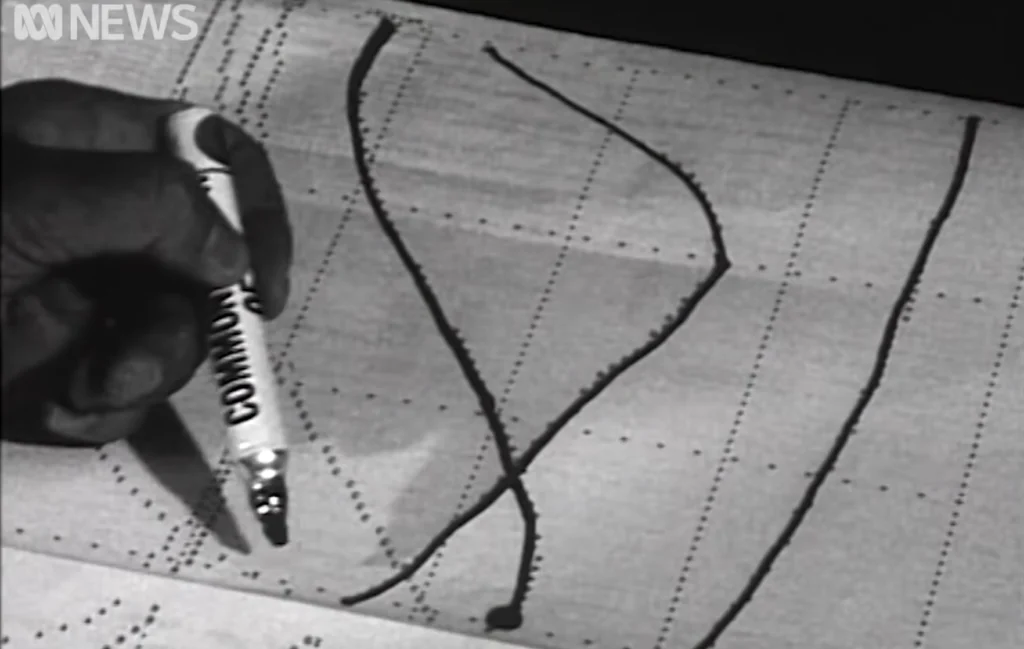
The Computer’s Grim Forecast: The computer programs developed by Forrester and his successors at MIT, including the World3 model used in "The Limits to Growth," provided a stark visual representation of these potential futures. Graphs generated by these simulations often depicted a sharp decline in the "quality of life" metric starting in the latter half of the 20th century, coinciding with increasing pollution levels and dwindling resources. The World3 model, in particular, projected a collapse of the global system around the year 2040.
-
Revisiting the Warnings (1999): In 1999, Australia’s ABC revisited the findings of "The Limits to Growth" in a report featuring Club of Rome member Keith Suter. This retrospective analysis confirmed that many of the trends predicted in the 1972 report – such as population growth, pollution levels, and the degradation of the quality of life – had indeed materialized. The report underscored the alarming accuracy of the model’s projections regarding the interaction between societal behavior and resource limits.
-
The Present Day: Convergence of Predictions: Remarkably, despite the passage of decades and significant technological advancements, the core timeframe of these predictions – the mid-21st century, around 2040-2060 – continues to be a focal point for both scientific and, in some circles, even pseudo-scientific apocalyptic forecasts. The convergence of Newton’s 1704 biblical interpretation with the 1970s computer models of global sustainability is a striking, albeit coincidental, phenomenon. It highlights a persistent human tendency to project future cataclysms, whether through divine revelation or empirical data analysis.
Supporting Data: The Pillars of the Predictions
The scientific predictions of societal collapse are not based on mere conjecture but on a substantial body of data and complex modeling. The core concerns articulated by the Club of Rome and its predecessors revolve around several interconnected issues:
-
Population Growth: Exponential population growth, particularly in the 20th century, has placed unprecedented strain on the Earth’s resources. The models project that continued growth will exacerbate these pressures, leading to increased demand for food, water, and energy.
-
Resource Depletion: Many of the planet’s finite resources, from fossil fuels to rare earth minerals, are being consumed at unsustainable rates. The models indicate that depletion of these essential resources could trigger widespread economic disruption and societal instability.
-
Environmental Degradation: Industrialization and consumption have led to significant environmental damage, including pollution of air and water, deforestation, biodiversity loss, and climate change. These factors not only diminish the quality of life but also threaten the very ecosystems that support human civilization.
-
Food and Agricultural Production: While agricultural productivity has increased significantly, the models suggest that it may not be able to keep pace with growing demand, especially in the face of climate change and resource scarcity. This could lead to widespread food shortages and famine.
-
Industrial Output and Economic Systems: The models suggest that the current trajectory of industrial growth, driven by resource extraction and consumption, is inherently unsustainable. A collapse in industrial output, driven by resource scarcity or environmental breakdown, could have cascading effects on global economies and social structures.
The World3 model, in particular, was designed to simulate the interplay of these global factors. Its projections revealed how various feedback loops could accelerate a decline. For instance, increased industrial activity leads to more pollution, which can then degrade agricultural land, leading to decreased food production, which in turn can fuel social unrest and further impact industrial output. The "Zed Curve," a metric used to chart pollution levels, often showed a sharp upward trend that directly intersected with the predicted decline in the "Quality of Life" metric, visually representing this interconnected crisis.
Official Responses and Criticisms: A Spectrum of Reactions
The "Limits to Growth" report and its subsequent iterations have been met with a wide range of reactions, from outright dismissal to cautious acknowledgment and calls for urgent action.
-
Skepticism and Dismissal: The report has faced significant criticism, particularly from free-market economists and libertarians. They often label its projections as "neo-Malthusian" and argue that technological innovation and market mechanisms will overcome resource constraints. Critics have pointed to the fact that some of the direst predictions have not yet fully materialized, suggesting that the models were overly pessimistic or failed to account for human ingenuity. For example, some argue that advancements in renewable energy and agricultural technology have mitigated some of the predicted resource scarcities.
-
Accusations of Alarmism: Some have accused the Club of Rome and its proponents of engaging in alarmism, using dire predictions to push specific political or economic agendas. The fact that the Club of Rome is often a "frequent player in many conspiracy theories" has further fueled skepticism among certain segments of the public.
-
Acknowledgement of Prescience: Despite the criticisms, many acknowledge the alarming prescience of the report’s core findings. As Christian Parenti notes, the climate forecasts within "Limits to Growth" were "alarmingly prescient." The ongoing challenges of climate change, resource depletion, and environmental degradation provide strong empirical support for the underlying concerns raised by the model.
-
Calls for Systemic Change: Proponents of the report, including Jay Forrester himself in his later years, have consistently emphasized the need for systemic thinking and a shift away from short-term, reactive problem-solving. Forrester cautioned against implementing solutions without a deep understanding of the complex, interconnected nature of global problems, warning that well-intentioned actions could inadvertently worsen the situation.
Implications for the Future: Navigating Uncertainty
The convergence of historical prophecies and modern scientific models on a similar apocalyptic timeframe raises profound questions about humanity’s future. While it is crucial to distinguish between scientific modeling and definitive prophecy, the recurring pattern of these warnings cannot be easily dismissed.
-
The Nature of Models vs. Reality: It is imperative to remember that models, no matter how sophisticated, are representations of reality, not reality itself. They are built on assumptions and available data, and they cannot account for every variable or unforeseen event. The future is not a predetermined script.
-
The Urgency of Action: The persistent warnings, whether from Newton’s scriptural interpretations or Forrester’s computer simulations, underscore the potential for severe consequences if current trends continue. The scientific predictions, in particular, highlight the tangible risks associated with unchecked consumption, environmental degradation, and resource depletion.
-
The Challenge of Systemic Thinking: Jay Forrester’s emphasis on systemic thinking is perhaps the most critical takeaway. Addressing complex global challenges requires a holistic approach that considers the interconnectedness of various factors and avoids simplistic, short-sighted solutions. The danger lies in reacting to problems in ways that create new, potentially worse problems, a "vicious cycle" that can escalate crises.
-
Accountability and Agency: While the models can highlight systemic pressures, they also raise questions about human agency and accountability. The tendency to blame abstract "systems" can sometimes obscure the roles of powerful actors, such as corporations and governments, in driving unsustainable practices. Ensuring accountability for decisions that contribute to environmental and social crises is paramount.
In conclusion, the echoes of apocalypse, from Isaac Newton’s biblical exegesis to the data-driven projections of the Club of Rome, offer a compelling narrative of humanity’s ongoing struggle with its own potential for self-destruction. While the methods and underpinnings of these predictions differ vastly, their convergence on a mid-21st-century timeframe serves as a potent reminder of the challenges we face. The future remains unwritten, and while models can illuminate potential pathways, it is our collective choices and our ability to embrace systemic thinking that will ultimately determine whether these dire forecasts become our reality. The hard times ahead may be inevitable, but the ultimate outcome of our planetary experiment is still within our grasp.



Leave a Comment