Fair is Fair: A Retrospective Analysis of ‘The Legend of Billie Jean’ and the Architecture of the 1980s Cult Classic
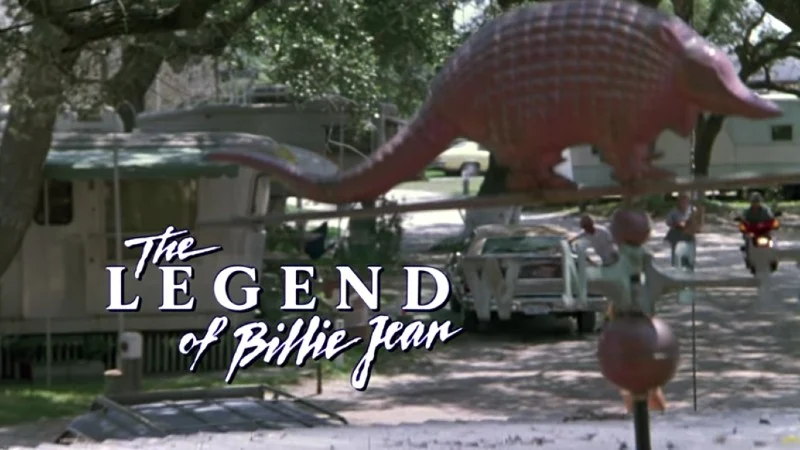
In the pantheon of 1980s cinema, certain titles serve as the load-bearing pillars of nostalgia. Films like The Goonies, Back to the Future, and The Breakfast Club are frequently cited as the definitive artifacts of the era’s youth culture. However, lurking in the periphery of these cinematic giants is a film that was born in failure, nurtured by cable television, and eventually canonized by a generation that found its "rebel yell" in a Texas trailer park.
The Legend of Billie Jean, released in the sweltering summer of 1985, is more than a mere teen adventure; it is a fascinating case study in botched marketing, gender politics, and the birth of the "viral" icon decades before the advent of social media. Directed by Matthew Robbins and starring a young Helen Slater, the film attempted to blend the grit of social realism with the gloss of an MTV music video. While critics of the time dismissed it as "bubble-gum mythmaking," modern eyes reveal a work that was arguably ahead of its time.
The Core Narrative: A Catalyst of Injustice
At its heart, The Legend of Billie Jean is a modern-day Western set against the backdrop of coastal Texas. The story follows seventeen-year-old Billie Jean Davy (Helen Slater), a resident of a local trailer park who lives with her younger brother, Binx (played by Christian Slater in his film debut). The inciting incident is deceptively small: Binx’s prized Honda Elite scooter is trashed by a local bully named Huby.
When Billie Jean seeks $608 for repairs from Huby’s father, the sleazy surf-shop owner Mr. Pyatt (Richard Bradford), the film shifts from a neighborhood dispute into a harrowing exploration of systemic corruption. Pyatt’s attempted sexual assault of Billie Jean and a subsequent accidental shooting involving Binx force the siblings onto the lam. Accompanied by two friends and eventually a "hostage" who is actually a willing participant (Keith Gordon), the group becomes the target of a statewide manhunt.
The film’s central mantra, "Fair is Fair," becomes a rallying cry for the youth of Texas. As Billie Jean eludes the authorities, she undergoes a physical and ideological transformation—cutting her hair into a Joan of Arc-style crop and recording videotaped manifestos that are distributed to the press. By the time the film reaches its fiery climax, Billie Jean has evolved from a victim of circumstance into a symbol of resistance against adult hypocrisy.
Chronology: From Box Office Bomb to Cable Staple
The journey of The Legend of Billie Jean from its 1985 release to its current cult status is a timeline of shifting media landscapes.

1. The Summer of 1985: The Competitive Vacuum
Released in July 1985, the film was immediately eclipsed by a historic slate of blockbusters. Audiences were flocking to Back to the Future, which dominated the cultural conversation, or seeking the visceral thrills of Rambo: First Blood Part II. TriStar Pictures, the film’s distributor, struggled to market a movie that didn’t fit neatly into the "John Hughes" mold of suburban angst or the "Spielbergian" mold of wonder. Consequently, the film puttered out of theaters within weeks, earning a meager domestic return.
2. The Influence of Pat Benatar and MTV
Despite the film’s theatrical failure, its lead single, "Invincible" by Pat Benatar, became a massive hit. The music video, which featured heavy rotation of clips from the film, kept the imagery of a short-haired Helen Slater in the public consciousness. For many, the song existed as a more successful entity than the film it was written for.
3. The 1990s: The Afterlife on Basic Cable
The film found its true audience in the early 1990s through frequent broadcasts on networks like USA and TBS. Relegated to the "afternoon movie" slot, it reached a generation of latchkey kids who identified with the film’s themes of youth empowerment and the defiance of corrupt adult authority. It was here that the "Legend" actually began, as the film transitioned from a failed product to a shared cultural secret.
Supporting Data: Production Origins and the Phoolan Devi Connection
To understand the film’s unique DNA, one must look at its fractured production history. While credited to Mark Rosenthal and Lawrence Konner, the script’s roots are far more radical than the final PG-13 product suggests.
According to screenwriter Mark Rosenthal, the original inspiration for the story was the life of Phoolan Devi, India’s "Bandit Queen." Devi was a woman who, after suffering years of caste-based oppression and sexual violence, led a gang of outlaws and eventually became a folk hero and politician. This high-stakes origin explains the film’s unusually heavy themes of sexual assault and class warfare.
However, the production was plagued by studio interference. Rosenthal has publicly stated that he and Konner were removed from the project early on, and the script was "simplified and dumbed down," stripping away much of the intended character depth in favor of a more marketable teen-adventure tone. Furthermore, there are lingering traces of an earlier draft by Walter Bernstein, a formerly blacklisted writer known for his communist sympathies. This ideological background likely contributed to the film’s focus on the "proletariat" trailer park residents versus the "bourgeoisie" store owners.

Official Responses: Critical Derision and Industry Skepticism
At the time of its release, the critical establishment was almost universally hostile toward The Legend of Billie Jean. The reviews reflected a disconnect between the older critical guard and the burgeoning youth culture the film aimed to represent.
Janet Maslin of The New York Times was particularly scathing, labeling the film "bankrupt beyond belief." Her review suggested that the film lacked the intellectual rigor to handle its serious themes, viewing the "Fair is Fair" slogan as a hollow marketing gimmick. Similarly, David Edelstein of The Village Voice dismissed it as "cretinous bubble-gum mythmaking," criticizing what he saw as a shallow attempt to create a teenage martyr.
The industry’s response was equally cold. Helen Slater, who had recently starred in the high-profile flop Supergirl (1984), found her "star power" questioned. The failure of Billie Jean effectively stalled her trajectory as a leading lady in major studio productions. Meanwhile, the film’s director, Matthew Robbins, who had previously worked with Steven Spielberg and George Lucas, found himself moving toward more niche projects, eventually finding success as a writer for Guillermo del Toro.
Implications: The Precursor to Modern Celebrity and Feminism
Decades later, the implications of The Legend of Billie Jean feel more relevant than they did in 1985. The film serves as a prophetic look at several cultural phenomena.
The Prototype of Viral Activism
Billie Jean’s use of home-recorded videotapes to bypass traditional media and speak directly to her "followers" is a direct precursor to the modern influencer and digital activist. In the 1980s, this was a radical concept—that a teenager could seize control of her own narrative and build a "brand" of resistance. Today, this is the standard operating procedure for social movements globally.
A Feminist Correction to the ‘Outsiders’
While films like The Outsiders (1983) explored the vulnerability of young men, Billie Jean was one of the few films of its era to center that same "outlaw" narrative on a young woman. It addressed themes of "the male gaze" directly, specifically through the character of Mr. Pyatt, who attempts to monetize Billie Jean’s image by selling posters of her. The film’s resolution—where Billie Jean literally burns down the merchandise that objectifies her—is a powerful feminist statement that predates the "Riot Grrrl" movement of the 90s.

The Aesthetic of the Underdog
The film’s visual style, characterized by the sweltering heat of Texas and the blue neon of swimming pools, created an aesthetic of "sunburned naturalism." It portrayed the trailer park not as a place of pity, but as a home worth defending. This elevation of the working-class teen experience paved the way for later films that would find beauty in the "flyover" states and the fringes of society.
Conclusion: Why ‘Fair is Fair’ Still Matters
The Legend of Billie Jean is a flawed masterpiece, hampered by the very studio system it sought to critique. Its "B" grade is a reflection of its workmanlike cinematography and occasionally clunky dialogue, but its cultural grade is far higher.
The film remains a testament to the power of the audience over the critic. While the elites of 1985 saw "bubble-gum," the youth saw a reflection of their own desire for justice in an unfair world. As Billie Jean Davy stands before the flames in the film’s final moments, she isn’t just a girl on the run; she is an enduring icon of the idea that even when the system is rigged, the demand for fairness is a fire that cannot be easily extinguished. For those looking to revisit the 80s, The Legend of Billie Jean is an essential stop—not for the nostalgia of what was, but for the radical vision of what could have been.