The Architecture of Infinite Universes: Fenris Creations Open Sources the Carbon Game Engine
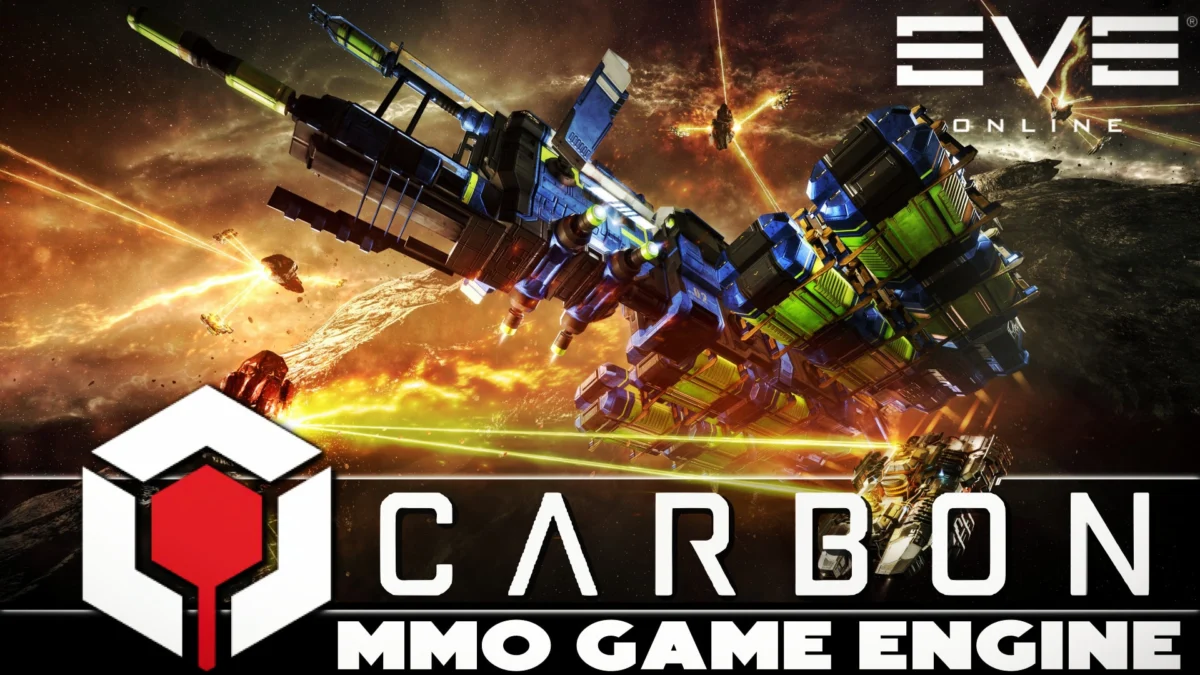
In a move that signals a paradigm shift for large-scale multiplayer architecture, Fenris Creations—the technology-focused entity formerly known as the core engine division of CCP Games—has officially released the source code for the Carbon Game Engine Framework. This is the foundational technology that has powered EVE Online, a title renowned for its longevity and its ability to host some of the most massive, player-driven battles in the history of electronic entertainment.
By transitioning Carbon to an open-source model, primarily under the permissive MIT license, Fenris Creations is offering the global development community access to a battle-tested ecosystem designed specifically for high-concurrency, persistent virtual worlds. This release includes the engine’s core rendering, physics, networking, and UI frameworks, marking one of the most significant contributions of proprietary MMO technology to the public domain.
Main Facts: A New Era for EVE’s Digital Backbone
The Carbon Engine is not a singular, "turn-key" executable in the vein of commercial engines like Unreal Engine 5 or Unity. Instead, it is a sophisticated collection of modular frameworks designed to work in concert to manage the immense data and rendering loads required by "single-shard" universes.
Licensing and Accessibility
The majority of the Carbon codebase has been released under the MIT License, which allows for free use, modification, and distribution, including for commercial purposes. Other specific modules are covered under similarly permissive open-source licenses. This strategy ensures that developers can integrate Carbon components into their own projects without the restrictive "copyleft" requirements often found in other licenses like the GPL.
Core Components
The framework is divided into several specialized pillars:
- Trinity: The high-fidelity rendering engine.
- Destiny: The physics and pathfinding simulation engine.
- CarbonIO: The networking backbone.
- CarbonUI: A specialized interface framework for complex systems.
- Scripting: A Python-based environment for rapid iteration.
Target Audience
Fenris Creations has clarified that Carbon is currently aimed at advanced developers and architectural engineers. Unlike "all-in-one" engines, Carbon provides the low-level "plumbing" for virtual worlds. It is particularly suited for developers looking to build massive-scale simulations, persistent world MMOs, or complex space-faring titles similar to EVE Frontier.
Chronology: From CCP Games to Fenris Creations
The journey of the Carbon Engine is inextricably linked to the history of EVE Online and its developer, CCP Games. Understanding the timeline of this release requires looking back at over two decades of iterative development.
2003–2010: The Foundation
When EVE Online launched in 2003, it relied on a proprietary engine that was revolutionary for its time, utilizing Stackless Python to handle the massive concurrency of its single-shard server. Over the following decade, CCP Games realized that to maintain a "forever game," the underlying technology needed to be modularized and modernized. This led to the birth of the "Carbon" initiative, an internal project to unify the tech stack across multiple planned titles (including the ill-fated World of Darkness MMO and Dust 514).
2011–2023: Refinement and Scale
Throughout the 2010s, Carbon was refined to handle unprecedented player numbers. It facilitated Guinness World Record-breaking battles, such as the "Bloodbath of B-R5RB" and the "Fury at FWST-8," where thousands of players occupied a single solar system. The engine was updated to support DirectX 11 and later DirectX 12, with the "Trinity" renderer receiving constant overhauls to keep the aging EVE Online visually competitive.
2024: The Birth of Fenris and the Open Source Pivot
In a strategic restructuring, CCP Games transitioned its core technology group into Fenris Creations. This move allowed the technology to exist independently of specific game projects. By mid-2024, the decision was made to open-source the engine. The goal was twofold: to allow the industry to benefit from decades of MMO expertise and to foster a community that could help maintain and evolve the framework as CCP focuses on the next generation of titles like EVE Frontier.
Supporting Data: The Technical Pillars of Carbon
To understand why the open-sourcing of Carbon is significant, one must look at the specific capabilities of its modular components. These are the tools that have allowed EVE Online to survive for over 20 years while other MMOs have shuttered.
Destiny: Physics at Scale
Perhaps the most critical component for MMO developers is Destiny. While most physics engines (like Havok or PhysX) are optimized for small-scale, high-precision interactions, Destiny is engineered for high-scale efficiency. It handles pathfinding and collision for thousands of entities simultaneously. This deterministic simulation is what allows the server and the client to remain in sync during massive fleet engagements, ensuring that a missile fired by a player in London registers correctly on a hull in Tokyo.
Trinity: The Aesthetic Heart
Trinity is the graphics engine responsible for Carbon’s signature look. It is optimized for "cosmic vistas"—rendering massive celestial bodies, nebulae, and thousands of ship models without collapsing under the draw-call overhead. Trinity’s strength lies in its ability to manage massive scale differences, from a tiny shuttle to a 14-kilometer-long Titan, all within the same visual field.
The Scheduler and Scripting
A unique aspect of Carbon is its heavy reliance on Python. The Scheduler is a custom Python extension that provides deterministic scheduling for "Greenlet" coroutines. This allows developers to write high-level game logic in a flexible language like Python while maintaining the performance and predictability required for a real-time simulation.
CarbonIO and Networking
Networking in a persistent world is notoriously difficult. CarbonIO serves as the backbone, ensuring data synchronization across the "living pulse" of the universe. It is designed to handle the "heartbeat" of a persistent world, where the state of an object must be maintained even when no players are present to observe it.
Official Responses: The Philosophy Behind the Release
In an extensive interview with GamesIndustry.biz, representatives from Fenris Creations explained that the decision to go open source was driven by a desire for transparency and the practical need for a broader testing environment.
One of the primary challenges identified by the team was the "onboarding" process for an engine this complex. "Carbon is by no means a turn-key game engine like Unity, Unreal, or Godot," the team noted. They acknowledged that, currently, the engine is deeply integrated with the assets of EVE Online and EVE Frontier.
To solve this, Fenris Creations is currently developing a Base Test Project. According to the core tech group:
"We are seeing the need to create a test project… an example game that is more for the testability and understanding the architecture and getting started quickly in the engine. Right now, when we make changes to the engine, we have to jump into Eve or Eve Frontier and try to test in those game examples. We don’t have our own simplified example to run through."
The official stance is that by providing a "blank slate" example, they can decouple the engine from its sci-fi roots, allowing developers to use Carbon for anything from fantasy RPGs to industrial simulations.
Implications: What This Means for the Industry
The release of the Carbon Engine Framework has several far-reaching implications for the game development landscape and the broader open-source community.
1. The Democratization of MMO Tech
For decades, the "secret sauce" of successful MMOs was guarded behind proprietary walls. Independent developers wanting to build a "single-shard" universe often had to start from scratch or try to "hack" engines like Unreal to support thousands of players. Carbon provides a blueprint for how to solve the specific problems of scale, persistence, and concurrency.
2. Longevity and Preservation
By open-sourcing the engine, Fenris Creations has ensured that the technology behind EVE Online will never truly die. Even if the commercial entities behind the game were to change, the community now has the tools to maintain the core framework. This is a significant win for digital preservation.
3. A New Competitor in the "Metaverse" Space
While the term "Metaverse" has lost some of its marketing luster, the technical requirement for such a concept—thousands of players in a shared, persistent space—remains a holy grail for developers. Carbon is perhaps the only open-source framework in existence that has already proven it can handle tens of thousands of concurrent users in a single, unbroken simulation.
4. Talent Acquisition and Education
For Fenris and CCP, this move turns the global developer pool into a giant R&D department. Students and engineers who learn the Carbon framework become "job-ready" for the companies maintaining EVE, while also potentially contributing bug fixes and optimizations back to the main repository.
5. The "Turn-Key" Hurdle
The immediate challenge for the Carbon project will be its usability. Without the "Base Test Project" mentioned by the developers, the barrier to entry remains high. The industry will be watching closely to see how quickly Fenris can provide the documentation and sample assets necessary to make Carbon a viable alternative to established engines.
Conclusion
The open-sourcing of the Carbon Engine Framework is a landmark event in the history of game engine technology. By stripping away the proprietary veil from one of the most successful virtual worlds ever created, Fenris Creations has provided a masterclass in architectural engineering. While it may not replace Unity for a simple mobile game, for those looking to build the next "great universe," the tools of the stars are now officially within reach.
Key Resources for Developers:
- Carbon Homepage: fenris.com/carbon
- GitHub Repositories: github.com/orgs/carbonengine
- Documentation: Ongoing updates are expected via the Fenris Creations portal.