The Enduring Power of Myth: Unpacking the Essence of Mythic Fiction in a Modern World
In an era saturated with information and rapidly evolving cultural landscapes, the allure of mythic and archetypal fiction continues to captivate writers and readers alike. These narratives, often perceived as carrying a profound and transformative resonance, promise stories of significance. However, the precise definition and enduring relevance of "mythic fiction" can often remain shrouded in a certain fog. This exploration delves into how contemporary storytellers engage with myth and archetype, distinguishing between the study of ancient tales and the creation of living, breathing mythic narratives for our times.
Understanding Mythic Fiction: Beyond the Familiar Tropes
The fascination with mythic fiction is not a new phenomenon, but it has arguably deepened and diversified in recent years. While the once-ubiquitous "Hero’s Journey" may have lost some of its singular dominance, the broader appeal of myths, fairy tales, cultural symbolism, and psychological archetypes has surged. This resurgence suggests a deep human need for narratives that connect us to something larger than ourselves, yet simultaneously, there’s a growing sense that we may be losing touch with the fundamental reasons these forms hold such power.
Contemporary understanding of mythic fiction often stems from several key sources. Firstly, there are the ancient stories themselves: the enduring fairy and folk tales that have been passed down through generations (such as "Beauty and the Beast" or "Vasilisa the Beautiful") and the grand mythological narratives that often explain the supernatural and the origins of the world (like the tales of Kronos and the Titans or Isis and Osiris). These stories, in their raw form, offer a glimpse into the collective unconscious of past societies.
Secondly, we encounter these narratives through an anthropological lens, significantly influenced by scholars like Joseph Campbell and Clarissa Pinkola Estés. These figures not only collected and preserved ancient stories but also meticulously studied their underlying similarities, recurring patterns, and profound symbolic messages. Their work illuminated the universal threads that bind human experience across diverse cultures and eras.

A further layer of understanding comes from archetypal psychology, particularly the theories of Carl Jung. Jung’s work posited the existence of a collective unconscious populated by archetypes – universal, primordial images and patterns of thought that influence human behavior and perception. This psychological perspective internalizes the symbolic meaning of myths, suggesting that their power lies not just in external narratives but within our very own psyches. This intellectual framework laid the groundwork for modern interpretations and applications of archetypal structures, including the popularization of the Hero’s Journey.
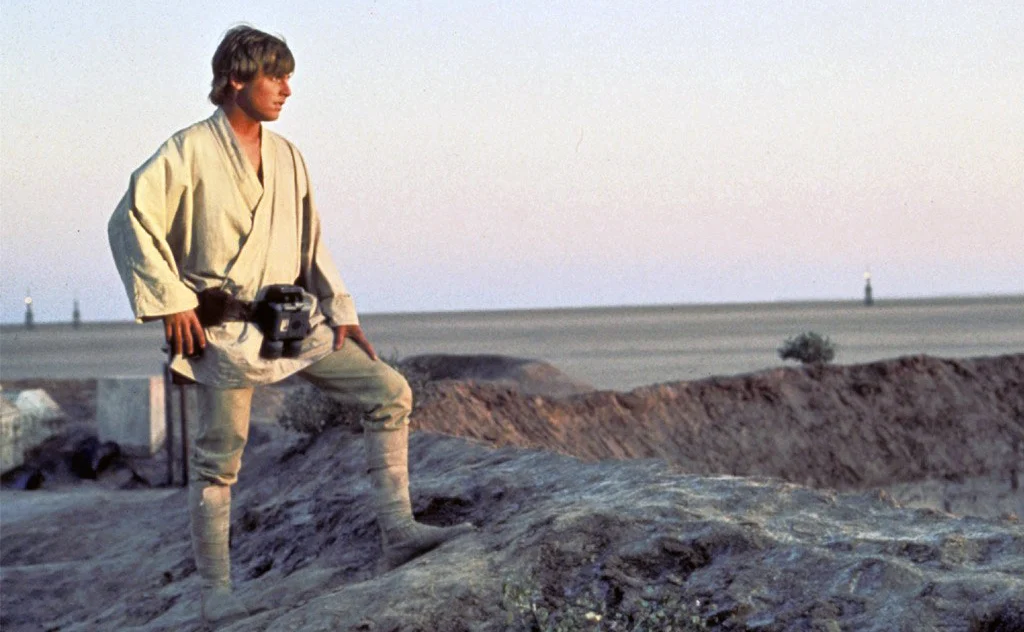
In the modern era, the interpretation of myth and archetype has also been heavily shaped by popular culture. Works like George Lucas’s Star Wars famously drew upon mythological structures, demonstrating the potent resonance these forms could achieve when reinterpreted for a contemporary audience. Since then, an ever-increasing number of stories have sought to tap into this deep well of narrative power, often explicitly referencing or reimagining ancient myths. Examples include modern retellings of Hades and Persephone, a perennially popular theme in romance, or the Percy Jackson series, which revitalizes the myth of Perseus.
However, the author cautions that not all modern retellings automatically qualify as truly "mythic fiction." The proliferation of these stories has led to a situation where some may merely be a superficial adoption of ancient characters or plots without delving into the deeper symbolic resonance of the originals. The essence of mythic fiction, it is argued, lies beyond mere "cosplay" of ancient figures; it is about tapping into something more profound and generative, even in entirely original narratives that speak to the contemporary subconscious.
The Crucial Distinction: Studying Myth vs. Crafting Mythic Fiction
As storytellers, irrespective of genre, there’s an inherent fascination with the symbolic language and structural beats of mythic narratives. The ancient stories often present mysteries that our modern intellects grapple to fully comprehend, drawing us into the liminal space between history and fantasy.

However, the author posits a critical distinction: truly mythic fiction is not simply a retelling of old stories, though such retellings can achieve mythic status. This is a nuanced point, rooted in the very nature of myth itself. Myths, through their often deliberately ambiguous symbolic language, point towards deeper, more objective truths. Yet, as with all narratives passed down through time, they are subject to the phenomenon of reconsolidation of memory.
This means that every time a memory is accessed, or an old story is retold, subtle alterations occur. These incremental changes can, over time, reshape both the explicit text and the underlying subtext of the narrative. Even when we have access to original written accounts (a rarity, given the oral traditions from which many myths arose), our ongoing engagement with these stories and symbols, both individually and collectively, actively reshapes our perception and, on a broader scale, cultural understanding.
This malleability is, in part, the secret power of myth – its capacity to evolve and become deeply personal to each individual. However, this constant "editing" of shared cultural stories can also lead to a thinning of our connection to their original power. This is exacerbated when we tend to over-intellectualize these narratives, dissecting their plot structures and character archetypes in an effort to "crack the code" and replicate their magic in our own works.
The path to writing truly mythic fiction, therefore, is not found in mere imitation of ancestral narratives. Instead, it lies in tapping into our own internal mythic wellspring to create new myths that resonate with our contemporary world.

Borrowing Symbols vs. Accessing the Source of Symbol-Making
There is undeniable value in studying, appreciating, and internalizing the symbolic wisdom passed down through ancient stories. These narratives are recognized as mythic precisely because they transcend the mundane, speaking to us across millennia with a peculiar wisdom and resonance, even when their explicit meaning remains elusive.
However, a fundamental difference exists between borrowing old myths and their symbolism and accessing our own personal relationship with the raw, untamed power of symbolism and story. In essence, the specific details of ancient stories and characters are less crucial than the internal "frisson" we experience when a narrative sparks recognition within us. This moment of connection, where our symbolic mind lights up before our conscious mind can fully grasp it, is the true hallmark of a mythic encounter.
For contemporary writers seeking to craft mythic fiction, the goal should not be to simply replicate familiar symbols. Instead, it is to access that internal space where symbol-making itself resides. This requires more than an intellectual quest to decipher plot points; it is a journey to the same primal source from which our ancestors drew inspiration, channeling stories so potent they remain foundational touchstones for humanity.
Inherited Myth vs. Living Myth: Cultivating the Inner Source
While the stories of others provide a valuable map for navigating our own mythic territory, we cannot achieve a deeper level of mythic fiction by solely looking outward for resonance. The dream space from which all stories arise is inherently mythic. It is within this space that storytellers can engage with spirits and symbols, where conscious control gives way to a deeper, intuitive flow. Writers who find themselves "in the zone," as it were, often describe following their characters, observing their actions as if from a distance – a state of being that signals proximity to the wellspring of mythology and archetype, whether consciously recognized or not.

As William Faulkner famously articulated, "It begins with a character, all I can do is trot along behind him trying to put down what he says and does." This sentiment captures the essence of allowing the story to unfold from an internal, almost unconscious, source.
The Profound Importance of Mythic Fiction in Times of Cultural Transformation
The distinctions between studying myth and writing mythic fiction are not merely academic exercises; they hold significant weight, particularly in periods of profound cultural flux. Mythic fiction, arguably the foundational level of all storytelling, possesses a unique capacity for initiating healing and growth through its potent, symbolic narrative. These stories awaken a sense of aliveness within us, drawing us in even when their meaning remains partially obscured.
In times of deconstruction and reinvention, humanity has always turned to story for more than mere entertainment; it is a vital tool for reorientation. Mythic narratives help us metabolize change, using symbolism and metaphor to process experiences that might otherwise overwhelm the conscious mind.
There are several compelling reasons why the creation of mythic fiction is particularly crucial in our current era:

1. The Fraying of Our Connection to Ancient Stories
Despite the widespread presence of mythic themes in contemporary culture, many of us have lost touch with the deeper experience of these myths. In some cultures, traditional myths have been eroded or entirely lost. Even where they persist, the passage of time and translation often reduces them to historical curiosities or superficial entertainment. The author points to films like Gods of Egypt as examples of how foundational myths can be so altered that their original power is lost. This fundamental alteration of inherited myths inevitably reshapes our relationship to them.
2. The Necessity of Integrating Intuition and Intellect
Even when writers consciously engage with ancient myths and archetypes, there’s a tendency to over-intellectualize them. Archetypes can be reduced to mere character lists (e.g., the Maiden, the Hero), and mythic story events can be analyzed solely for their plot mechanics. While studying and categorizing these elements have value, it’s crucial to recognize that archetype, symbol, and myth do not reside solely in the rational mind. When they are purely intellectualized, they become pale imitations of their true potential. The author highlights Gail Carson Levine’s observation that "Ideas are ideas, and words on paper are words on paper; they’re not the same thing," underscoring the gap between conceptual understanding and lived creative expression.
3. Reconnecting Writers to the Deep Source of Story
For many writers, the path to originality lies not in external study but in seeking inspiration from their own symbolic authority. Archetypes and myths are an innate part of the human inheritance, not exclusive gifts of genius. The true genius lies in the technical skill of translating this internal mythos onto the page. Every story, intentionally or not, contains this archetypal capacity. Writers, like other creatives working with symbolism, are the custodians of archetype. The journey of a writer, much like a mythic quest, involves confronting self-doubt and embracing the inherent magical capacity of the imagination to tap into the deep subconscious. This ability is highly individual, requiring writers to move beyond mimicry and trust their own creative flow to bring forth archetype and myth.
4. The Urgent Need for New Myths in a Transformative World
Perhaps most critically, as societies undergo profound transformations, there is an escalating need for new myths. These are not merely recycled narratives but stories that can spark something fresh within our individual and collective imaginations. Star Wars serves as a prime example of a contemporary myth that profoundly catalyzed cultural discourse. Other significant modern myths include The Lord of the Rings, Harry Potter, The Matrix, and the works of Studio Ghibli.

While many of these impactful contemporary narratives fall within speculative fiction, where symbolism naturally aligns with mythological language, the author notes that realistic stories can also possess mythic qualities. However, the techniques of realism can, in some instances, present greater challenges in translation to a mythic mode.
It is important to acknowledge that these "new" myths are unlikely to be fundamentally different in their symbolic or thematic underpinnings from those that have come before. The cyclical nature of life and story structure itself is what imbues symbolism, archetype, and myth with their enduring potency. The Hero’s Journey, the archetypal life cycle, and the symbolic resonance of ancient tales will continue to speak to us. The role of storytellers is not merely to recycle these tales but to reinvent our access point to their deeper vibrancy.
Reconnecting to Living Myth and the Symbolic Imagination
Ultimately, mythic fiction is not about imitation or the mere insertion of symbolic imagery. It is about trusting that the same symbolic wellspring from which ancient myths arose is still alive within us. The old stories matter because they help us recognize the terrain of the deep, reminding us that humanity has always navigated this dream space through narrative.
The writer’s task, therefore, is not simply to preserve mythology but to actively participate in it. This involves moving beyond an external, intellectual approach to myth and embracing the internal, symbolic imagination. The challenge for writers is to translate this connection into stories that feel alive, resonant, and uniquely mythic in their own right.

The journey to writing truly mythic fiction lies in cultivating this inner connection, understanding that the power of myth is not a historical artifact but a living force within each of us, waiting to be channeled into new narratives for a changing world. The next step for aspiring mythic fiction writers involves exploring practical methods for reconnecting with this living myth, delving into intuition, dreams, and the profound relationship between archetype and story structure itself. The adventure of being a writer is, in itself, a mythic undertaking, and the power to create new myths resides within.