Unveiling the Shadows: A Deep Dive into Grooming Gangs, Systemic Failures, and the Call for Truth in the UK
A recent independent report, sparking significant debate and controversy, has brought to light disturbing allegations of systemic failures and widespread abuse targeting young girls in the United Kingdom. The findings, compiled through extensive research and survivor testimonies, paint a grim picture of organized grooming gangs, institutional indifference, and a climate of fear that has stifled public discourse. This article delves into the core findings of the report, explores its implications, and examines the broader societal and historical context surrounding these grave accusations.
The Unfolding Crisis: A Stark Portrait of Abuse
An independent report, initiated by a Member of Parliament and independently crowdfunded, has presented deeply concerning findings regarding organized child sexual exploitation in the United Kingdom. The 219-page document, a comprehensive compilation of court records, prior inquiries, and over 200 survivor accounts spanning 149 local authority districts, estimates that a staggering 250,000 young girls, many of them white British, have suffered repeated rape, gang rape, trafficking, torture, forced pregnancy, and forced Islamic conversion at the hands of organized grooming gangs.
The report’s findings are particularly damning in their analysis of the perpetrators. It concludes that a significant majority, 87% of convicted perpetrators in group-based child sexual exploitation cases, bore distinctly Muslim names, predominantly of Pakistani heritage. These individuals allegedly operated under clan codes and cultural attitudes that, according to the report, deemed non-Muslim girls as inferior and available for exploitation.
The modus operandi of these gangs, as detailed in the report, is systematic and insidious. Grooming often commenced with the provision of alcohol, drugs, and cigarettes, followed by the abduction of victims from school gates and care homes. This initial phase was invariably succeeded by repeated group assaults, forced transportation between various locations, blackmail through recorded abuse, and, in many instances, forced religious conversion.
Perhaps one of the most chilling aspects of the report is its assertion that established institutions, including police forces, social services, schools, the National Health Service (NHS), and successive governments, are alleged to have failed to protect victims, in some cases returning them to their abusers, and suppressed crucial ethnicity data out of a perceived fear of being accused of racism.
Testimonies from the Brink: A Pattern of Neglect
The report is replete with harrowing accounts that underscore the depth of the alleged institutional failure. One particularly disturbing incident detailed in the report involved a young girl who, while being subjected to rape, sought refuge at a police station. Instead of providing assistance, the police allegedly transported her back to the very house where she was being abused, reportedly stating, "Have fun with her," before leaving. Such accounts, if substantiated, highlight a profound dereliction of duty and a systemic disregard for the safety and well-being of vulnerable children.
Another critical finding relates to the chilling effect these instances have had on victims and the wider public. The report suggests that when rape victims are themselves arrested for voicing concerns about their attackers, particularly if those concerns are framed as potentially “racist,” it creates an atmosphere of fear. This fear, the report contends, is the primary reason why public discussion about the report and the issues it raises has been so muted in the UK, with many individuals reportedly terrified of potential repercussions from their own government, including police intervention and imprisonment.
A Historical Perspective: The Roots of Systemic Failure
The reluctance of British institutions to confront these issues is, according to some analyses presented in the report and subsequent discussions, rooted in a post-colonial guilt complex and an overwhelming desire to avoid accusations of racism. This pervasive fear, it is argued, has led to a situation where the imperative to protect children has been overshadowed by a need to appear non-racist, resulting in a compromised approach to justice.
The concept of "institutional cowardice" driven by political correctness has been voiced by figures like Nigel Farage, leader of the Reform UK Party. He framed the report’s findings as evidence of a national failing, where the pursuit of ideological purity has trumped the protection of the innocent. This sentiment suggests a deep-seated societal anxiety that has, in the eyes of some, paralyzed the nation’s ability to address uncomfortable truths.
The Scale of the Atrocity: A Comparison of Horrors
The sheer scale of the reported abuse is staggering and, when placed in historical context, truly alarming. Thomas, one of the commentators, draws a stark comparison to other documented atrocities. He notes that the Rape of Nanking, considered one of the worst rape events of World War II, involved an estimated 20,000 women. The current report’s estimate of 250,000 victims is therefore approximately ten times larger than the Rape of Nanking. Furthermore, when compared to the Epstein files, which involved approximately 1,200 victims and rightly sparked widespread outrage, this report details an abuse event with over 200 times more victims.
These numbers are difficult to comprehend, and the emotional weight they carry is immense. The difficulty in processing such vast figures underscores the challenge in conveying the gravity of the situation to the public.
Recommendations and the Path Forward
The report outlines a series of recommendations aimed at preventing future abuse and holding perpetrators accountable. These include:
- Automatic deportation for every foreign national convicted of such crimes.
- Loss of citizenship and deportation for dual nationals involved in these offenses.
- Initiation of deportation proceedings for family members who supported or failed to report the crimes.
Beyond these specific recommendations, the report also calls for a fundamental re-evaluation of how institutions respond to allegations of child sexual exploitation, particularly when ethnicity is a factor. The ongoing statutory government inquiry into grooming gangs continues its work, and the National Crime Agency has already mandated police forces to re-examine hundreds of cold cases dating back to 2010, signaling a potential shift towards greater accountability.

The Echoes of History: The Law of Hospitality and Civilizational Decay
The discussion surrounding the grooming gang report extends beyond immediate policy recommendations, touching upon deeper philosophical and historical themes. The concept of the "law of hospitality," a universal principle observed across ancient civilizations and modern societies, is invoked as a lens through which to understand the breakdown of societal norms. This ancient code, encompassing the duties of both hosts and guests, is seen as a foundational element of civilization. When this law is abused, as depicted in classic literature like Homer’s Odyssey, it leads to societal disintegration.
The argument is made that a failure to uphold these fundamental principles of hospitality and respect for others has contributed to the current crisis. This is linked to a broader critique of modern Western societies, particularly in the UK, for what is perceived as a decline in moral clarity and a reluctance to confront uncomfortable truths, often out of a fear of being labeled.
The Role of Storytellers and the Power of Narrative
In the face of such widespread issues and a perceived lack of official recourse, the role of authors and storytellers is highlighted as crucial. The ability of narrative to process complex emotions, explore difficult truths, and provide a sense of catharsis is seen as a vital tool for navigating turbulent times.
The discussion pivots to historical narratives, suggesting a growing interest in events like the Crusades and the history of Islam. Some argue that a deeper understanding of these historical contexts, particularly the historical subjugation of Christian lands by Muslim forces and the widespread practice of slave trading by various groups throughout history, is necessary to contextualize current events.
A specific book pitch is offered: a medieval Taken-style story about a knight seeking to rescue his daughter from Muslim slave traders. This pitch is framed as a response to a perceived demand among readers for narratives that address contemporary anxieties and historical grievances, particularly concerning migration and the alleged actions of certain groups. The report’s connection of grooming gang behavior to specific Quranic commands is also mentioned, suggesting a framework for exploring these themes in fiction.
The historical context of the United States Navy’s founding to combat Barbary corsairs and the U.S. Marines’ engagement in the First Barbary War is brought up as an example of a historical American stance against Muslim slave traders and a refusal to pay "tribute" or "blood tax." This historical narrative is presented as a foundational American value that contrasts with what is perceived as a more accommodating approach by European nations. The "blood tax," a historical practice of the Ottoman Empire demanding young boys for military service, is also discussed as a stark example of historical abuse.
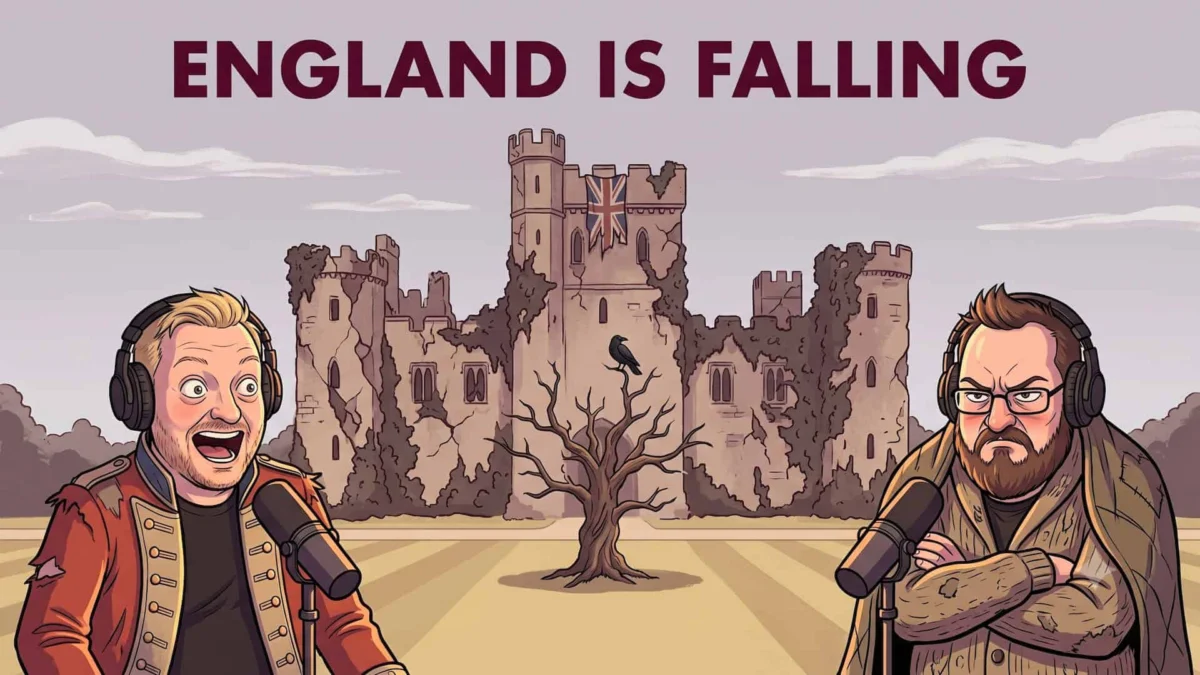
Signs and Omens: Has England Lost the Mandate of Heaven?
A fascinating, albeit unconventional, aspect of the discussion revolves around the concept of the "Mandate of Heaven," a traditional Chinese political and spiritual doctrine that grants rulers the right to rule based on their ability to govern justly and maintain harmony. The idea is explored in the context of England, with several recent events being interpreted as potential signs of a nation having lost divine favor. These include:
- The killing of a rare white stag in Bootle in 2021: The white stag is a symbol of purity and a herald of spiritual quests in Arthurian and Welsh traditions.
- The vandalism and felling of the iconic Sycamore Gap tree on Hadrian’s Wall: This tree was a prominent symbol in British culture and featured in popular media.
- The recent death of the Major Oak in Sherwood Forest: A thousand-year-old tree, historically linked to Robin Hood and representing centuries of English history.
These events, particularly the death of the Major Oak, are presented as omens, signaling a potential decline or loss of favor for the nation. This symbolic interpretation adds a layer of cultural commentary to the unfolding crisis, suggesting that the issues at hand are not merely political or social but may also be viewed through a lens of spiritual or national well-being.
Providing an Outlet for Fury: The Cathartic Power of Story
The overwhelming anger and frustration generated by the scale of the alleged abuse, particularly the lack of apparent justice and resolution in the real world, necessitates an outlet. Authors, it is argued, can provide this by crafting narratives that offer catharsis and a sense of justice, even if it is fictional.
The examples of John Wick and The Patriot are used to illustrate how audiences respond to seeing egregious wrongs addressed with decisive, often violent, retribution. The narrative arc of Reign of Fire, a film depicting a post-apocalyptic UK overrun by dragons and the arrival of American forces to combat them, is presented as a powerful metaphor for the current situation. The film’s portrayal of Americans offering a solution and confronting the "dragons" resonates with the idea of an external force bringing justice to a beleaguered nation.
Authors are encouraged to tap into this need for resolution, to create stories where justice prevails, and where the grievances of the wronged are acknowledged and addressed. This, it is argued, can offer hope and guidance to those who feel powerless and enraged by the failures of their own systems.
The Writer’s Duty: Using the Pen as a Sword
In conclusion, the discussion underscores a profound sense of urgency and a call to action, particularly for those with the power of words. The sheer scale of the alleged abuse, the systemic failures, and the stifled public discourse create a void that narrative can help fill. Authors are exhorted to use their gifts to explore these difficult themes, to provide catharsis, and to offer a path towards understanding and, ultimately, justice. The pen, it is asserted, can indeed be mightier than the sword, and in times of crisis, its power to illuminate, to console, and to inspire is more critical than ever.