Indie Publishing Roiled by Royalty Shifts, Piracy Wars, and AI Intrusion; Xbox Undergoes Major Overhaul
For Week Ending July 10, 2026
This week has been a seismic period for the independent publishing landscape, marked by significant shifts in Amazon’s Kindle Direct Publishing (KDP) royalty structure, a heated public debate surrounding book piracy, and the unsettling emergence of AI-generated content infringing on authors’ work. Beyond the literary world, the technology sector saw a monumental restructuring at Xbox, and the European Union passed controversial surveillance legislation. The K-lytics Summer Report also unveiled compelling data on the booming science fiction and fantasy genres, highlighting new strategies for author success.
Publishing News Ignites Fierce Debates and Policy Changes
The publishing industry finds itself at a crossroads, grappling with evolving reader expectations, the ethical implications of artificial intelligence, and crucial business decisions that directly impact author livelihoods.
The Resurgence of Book Piracy and Author Pushback
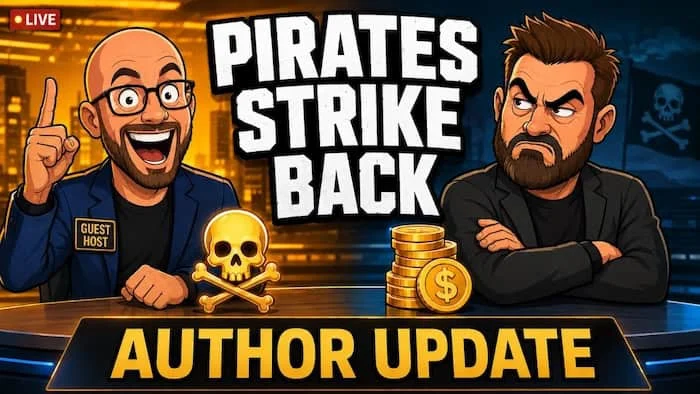
A significant online discourse erupted across social media platforms this week, reigniting the perennial battle against book piracy. The catalyst appears to have been the temporary disruption of a major piracy website, which inadvertently spurred a vocal defense of illegal downloading from some reader segments. This prompted a strong and unified backlash from independent authors, who took to platforms like X, Threads, and Instagram to defend their work and livelihoods.
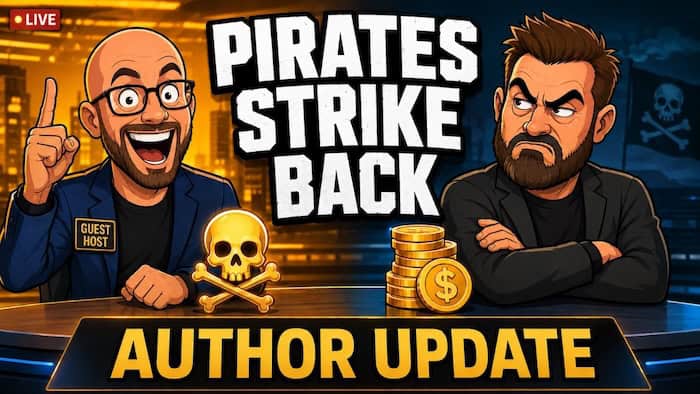
The pro-piracy arguments, as observed in discussions, often centered on the perceived high cost of books, limited library access, and the financial success of large publishing houses. Some argued that piracy serves as a discovery tool for authors, leading to future purchases. However, indie authors countered these points with forceful arguments about their financial realities. They emphasized that for many, books represent their primary income, and pirated copies generate zero revenue. The sentiment "You’re not stealing from Penguin Random House. You’re stealing from someone trying to pay their mortgage" gained considerable traction, highlighting the personal impact of piracy on individual creators.
The debate evolved from a discussion of legality to one of ethics, with authors stressing that copyright is the bedrock enabling them to continue creating. They argued that while economic hardship is understandable, it does not grant a right to unauthorized reproduction. The argument that digital theft is not "real theft" because nothing physical is lost was also challenged, with a focus on the creator’s right to control distribution and profit from their work. The direct involvement of indie authors, who can speak to their personal financial stakes, proved particularly impactful in shifting the narrative.
AI-Generated Audiobooks Hijack Author’s Work on Spotify
In a concerning development, an independent author discovered an unauthorized AI-generated audiobook version of her young adult fantasy novel, The Dawning: The Amaris Prophecies Book 1, uploaded to Spotify as a podcast. Zoe Nauman, who is in the process of producing her own legitimate audio version, described the situation as both flattering and highly irritating. The AI-generated content mimicked the book’s full description and was attributed to an anonymous user.
This incident is not isolated. Reports indicate a surge in pirated AI-generated audiobooks appearing on platforms like Spotify and YouTube, often disguised as podcasts or "slop" content. This trend is exacerbated by the accessibility of AI narration tools, which, while beneficial for legitimate self-publishers, also lowers the barrier for malicious actors to exploit copyrighted material without permission. Authors face the risk of losing control over their work’s presentation, voice, and quality, while audiences are exposed to inferior or stolen versions. Industry organizations like the Authors Guild and the Publishers Association are actively advocating for stronger enforcement measures and improved detection capabilities on these platforms.

KDP Expands 70% Royalty Rate to Higher Price Points
Amazon’s Kindle Direct Publishing (KDP) has announced a significant expansion of its 70% royalty rate for ebooks. Previously capped at books priced between $2.99 and $9.99, the 70% royalty tier now extends to ebooks priced up to $12.99. This change, effective July 7, 2026, is expected to provide authors with increased pricing flexibility and greater earning potential on premium titles.
This adjustment addresses a long-standing request from authors, particularly those creating box sets or longer works that often exceed the previous $9.99 ceiling. Under the old structure, books priced above $9.99 would revert to a 35% royalty rate, significantly impacting profitability. The extended threshold means authors can now price their works higher and still benefit from the more favorable royalty percentage, potentially leading to increased earnings per sale. Delivery fees will continue to apply under the 70% tier, but the overall gain in royalty revenue for books priced between $9.99 and $12.99 is substantial. This move also helps KDP align more closely with royalty structures offered by competing ebook platforms.
Technology and Geopolitics: Xbox Restructures, EU Passes Surveillance Bill
The technology and geopolitical spheres have also seen major developments with significant implications.
Xbox Announces Massive Restructuring, Job Cuts, and Studio Divestitures
Microsoft’s Xbox division has initiated its most significant restructuring to date, announcing the immediate layoff of approximately 1,600 employees, with a total of 3,200 roles to be eliminated throughout Fiscal Year 2027. The move also includes the transition of four studios to new management.

The impacted studios include Compulsion Games and Double Fine Productions, which will regain independent status along with their intellectual property. Ninja Theory and Undead Labs are being sold to new ownership with funding commitments to complete upcoming projects like Senua and State of Decay 3. Arkane Studios in France is undergoing consultations for potential strategic shifts.
The layoffs span across major Activision, Bethesda/ZeniMax, Blizzard, King, Mojang, and Xbox Game Studios divisions. However, no publicly announced first-party games are slated for cancellation. Mojang and King will now report directly to Xbox CEO Asha Sharma, reflecting their substantial player bases. The restructuring aims to streamline operations by reducing management layers, cutting vendor spending by 50%, and focusing on a flatter organizational structure centered on creators.
The company cited several factors for this drastic action, including a smaller install base compared to competitors at the start of the current generation, challenges in meeting growth targets despite investments in Game Pass and multi-platform releases, and the significant increase in operational costs, particularly the escalating price of console hardware due to memory chip shortages. Sharma highlighted that Xbox’s operating margins were considerably lower than industry peers.
Industry reactions have been mixed, with many acknowledging the painful necessity of the cuts while expressing shock at the scale of job losses. The move signals a shift towards greater efficiency and a potential re-evaluation of expansion strategies following the acquisition of Activision. For the broader gaming industry, this could lead to increased studio independence, a greater emphasis on return on investment, and potential supply chain pressures impacting hardware availability and pricing.

EU Parliament Approves Chat Control Extension Amidst Privacy Concerns
The European Parliament has voted to extend "Chat Control 1.0," a measure allowing platforms to voluntarily scan private messages for child sexual abuse material (CSAM). This decision has sparked considerable debate, as it passed despite a majority of MEPs present voting against it.
Chat Control 1.0, originally enacted in 2021, permits online platforms to scan unencrypted private communications, such as direct messages on various social media and communication apps. The scanning primarily uses perceptual hashing to identify known CSAM. It does not break end-to-end encryption, meaning services like Signal and encrypted WhatsApp remain exempt. However, critics argue that the measure, even in its current form, represents a significant erosion of privacy and could lead to a chilling effect on free expression and research.
The vote’s controversial nature stems from its passage under an urgent procedure on the final day before the summer recess, when many MEPs were absent. While 314 MEPs voted to reject the extension, it failed to achieve the absolute majority of 361 required for rejection. This outcome means the measure will remain in effect until April 3, 2028, or until a permanent framework replaces it.
For authors and creators, this has significant implications. Private communications on major platforms are now subject to renewed surveillance, potentially flagging sensitive research, collaborative discussions, or industry critiques. The normalization of mass scanning and its potential expansion could pose a threat to creative freedom and the protection of sources. Authors are advised to utilize end-to-end encrypted communication tools for sensitive discussions and to remain vigilant regarding evolving privacy policies.

Genre Deep Dive: Sci-Fi and Fantasy Markets Show Robust Growth Amidst Increased Competition
The K-lytics Summer 2026 report offers an in-depth analysis of the science fiction and fantasy genres, revealing a landscape of booming sales, genre resurgence, and a significant increase in competitive titles.
Fantasy Dominates, Sci-Fi Rebounds, and the Market Explodes
The latest K-lytics report paints a picture of a vibrant and growing science fiction and fantasy market. Fantasy, in particular, has achieved its strongest average sales rank ever recorded, fueled by the continued popularity of "Romantasy" and the rise of LitRPG. Science fiction, after a period of decline, is now in its 18th consecutive month of broad-based rebound, with reader interest shifting from screen adaptations to book consumption.
However, this growth is occurring alongside a dramatic increase in competition. The number of English-language Kindle titles in SF&F has surged by 18% in the past year, with approximately 179,000 new books entering the market. This influx means that while demand at the top of the genre remains strong, the average title’s share of the market is mathematically shrinking. The era of a decent book in a broad category finding its audience organically is likely over, necessitating a strategic approach to niche identification and marketing.
Financial Performance: A Tale of Two Genres
The financial data presented in the report highlights a significant disparity between the two genres. The top 100 bestsellers in Fantasy average an estimated 277 sales per day, translating to an estimated monthly revenue of $4.5 million for the genre. The floor for the Fantasy bestseller list suggests earnings that can support a mortgage.

Science Fiction, while experiencing a rebound, lags behind Fantasy in terms of average daily sales and monthly revenue. The earnings at the bottom of the Sci-Fi bestseller list are more akin to a car payment. Both genres, however, offer achievable targets for well-packaged independent author series launches, and critically, often outperform the earnings of traditionally published midlist authors.
The Rise of Hybrid Models and Niche Dominance
The report underscores the success of hybrid publishing models, exemplified by author Matt Dinniman. Dinniman’s LitRPG series, Dungeon Crawler Carl, has achieved remarkable success, with Dinniman retaining ebook and audiobook rights while licensing print rights separately. This strategy has allowed him to maintain high-margin digital sales while leveraging the broader reach of print.
The analysis of K-lytics’ niche map reveals that identifying high-sales, low-competition niches is paramount. While broad categories may host numerous bestsellers, they are also the most contested. "Cozy Fantasy" emerges as a particularly promising niche with a high sales-to-competition ratio. On the LitRPG front, the enduring popularity of successful series like Dungeon Crawler Carl creates opportunities for authors who can offer similar immersive experiences.
The Great Dilution and the Importance of Strategic Niche Identification
The most overlooked story in the K-lytics report is the "Great Dilution" caused by the massive influx of new titles. While demand at the top of the genre remains strong, the sheer volume of new competition necessitates a precise approach to market strategy. Authors can no longer rely on broad category appeal; they must actively seek out niches with a favorable demand-to-supply ratio and a clear trend line of growth. The report emphasizes that shelf counts indicate where past winners have landed, but sales-to-competition ratios and trend lines reveal open territory for new entrants.

Zeitgeist: Shifting Military Culture and the Future of Storytelling
The weekly discussion also delved into the evolving cultural perception of the U.S. military and its implications for storytelling, alongside an examination of technological and political developments.
Military Recruitment Surges Amidst Shifting Public Perception and Geopolitical Tensions
Contrary to some perceptions, U.S. military recruitment has shown a strong rebound, exceeding targets across all branches in recent fiscal years. This surge, which began in the latter years of the Biden administration and has continued under the Trump administration, has been attributed to a combination of factors including improved pay and bonuses, strategic recruitment initiatives, and a renewed emphasis on a "warrior ethos." The ongoing 2026 Iran conflict, while not directly cited as a cause for the recruitment spike, has not negatively impacted numbers, with some suggesting that demonstrated military action and strong leadership messaging contribute to sustained recruitment levels.
This shift in recruitment success coincides with a perceived change in public sentiment towards the military. The ubiquitous "Thank You for Your Service" greeting, once a near-universal expression of appreciation, appears to be waning in its broad applicability. This is partly attributed to a growing polarization in American society, where political affiliation increasingly influences perceptions of the military and its role. The military’s operational conduct and its association with political leadership are now more closely scrutinized, leading to a more segmented rather than universally positive public reception.
The Erosion of Zero-Defect Culture and its Impact on Leadership
A significant portion of the discussion focused on the concept of "zero-defect culture" within the military and its detrimental effects on leadership. This culture, which emphasizes avoiding any mistakes or negative evaluations on Officer Evaluation Reports (OERs), discourages risk-taking and promotes deflection of blame. Real leadership, it was argued, involves shielding subordinates from top-down issues and taking responsibility for team failures. In a zero-defect environment, leaders become more concerned with personal career advancement than with mission accomplishment or troop welfare, leading to a decline in effective decision-making and morale.

The consequences of this culture are far-reaching. It disincentivizes bold action, essential for military success, and can lead to the suppression of principled individuals who prioritize integrity over career progression. The experiences shared by veterans highlighted how this culture can foster disillusionment, particularly when soldiers witness their efforts undermined by bureaucratic processes or political expediency.
The Power of Storytelling in Shaping Culture and Identity
The conversation underscored the profound influence of storytelling on military culture and, by extension, on broader societal attitudes. From the adoption of specific slang and behaviors to the shaping of recruitment narratives, fiction and media have historically played a crucial role. Authors were urged to accurately portray military life, emphasizing nuance and the complex realities faced by service members, rather than resorting to simplistic or stereotypical depictions.
The discussion also touched upon the concept of "disillusionment" as a powerful narrative tool. The sacrifices made by soldiers, when seemingly invalidated by political decisions or bureaucratic inertia, can lead to profound disillusionment. This disillusionment, whether experienced by heroes, antagonists, or side characters, can resonate deeply with audiences, reflecting broader societal anxieties and the challenges of finding meaning and purpose in a complex world. The shift from a culture of "Be all that you can be" to more individualized or vague slogans reflects a broader societal trend that authors can explore and critique through their narratives.
The Zeitgeist segment concluded with a call for authors to embrace the concept of "noble dark" in their storytelling – acknowledging societal challenges while offering hope and demonstrating the importance of courage, risk-taking, and a belief in something greater than oneself. The future of military culture and its portrayal in media hinges on understanding these evolving dynamics and conveying them with authenticity and depth.