The High-Stakes Pursuit of Immortality: Michael Dowse’s ‘The Stunt Driver’ and the Legend of Ken Carter
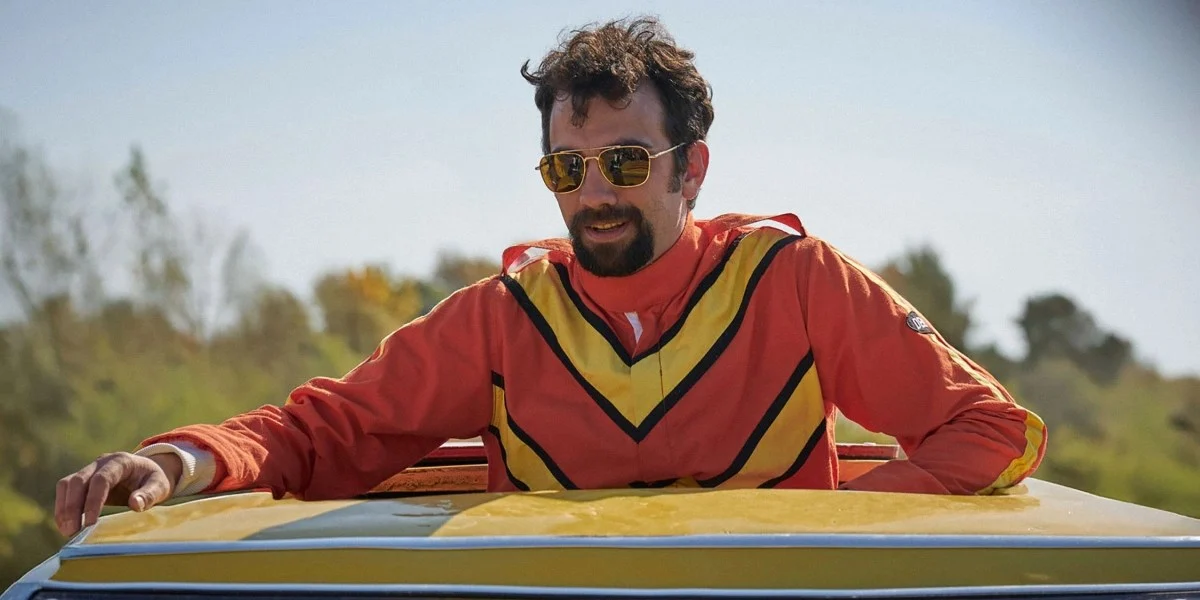
The annals of Canadian history are often painted with the brush of quiet modesty, yet few figures defy that stereotype as violently as Ken Carter. Known to the world as "The Mad Canadian," Carter was a man who viewed gravity as a suggestion and a grade-four education as no barrier to engineering a rocket-powered leap into the history books. In his latest cinematic offering, The Stunt Driver, director Michael Dowse—the architect of regional cult classics like FUBAR and Goon—revisits this stranger-than-fiction saga. Premiering at the 2026 Toronto International Film Festival (TIFF), the film serves as both a narrative companion and a loving deconstruction of the 1981 National Film Board of Canada (NFB) documentary, The Devil at Your Heels.
Main Facts: A Narrative Born of Non-Fiction
The Stunt Driver is not a traditional biopic; rather, it is a meta-textual exploration of ambition, fear, and the peculiar brand of masculine desperation that drives a man to vault a 1964 Chevy over a line of cars while his ankle is still shattered from a previous attempt. The film stars Jay Baruchel as Ken Carter, a performance that balances the real man’s peacocking bravado with an underlying, trembling vulnerability.
The central conflict revolves around Carter’s "Great River Jump"—an audacious, some might say suicidal, plan to launch a rocket-powered car across the Saint Lawrence River. The distance, a mile-long stretch of water separating Canada from the United States, represents more than just a physical gap; it is the threshold between obscurity and the "cultural immortality" Carter so desperately craved.
The production, distributed by The Independent Film Company, features an ensemble cast including Ed Helms as engineer Dick Keller, Dan Bakkedahl as promoter Bill Wilkins, and Ben Foster in a scene-stealing turn as Carter’s American rival, Evel Knievel. By utilizing the 1981 documentary The Devil at Your Heels as its skeletal structure, Dowse’s film manages to capture the grainy, desperate reality of the 1970s stunt circuit while infusing it with the comedic pathos that has become his directorial trademark.
Chronology: Five Years on the Edge of Disaster
The timeline of The Stunt Driver mirrors the agonizing five-year odyssey chronicled by Robert Fortier in the original NFB documentary. The narrative is framed through a live hypnosis session on a Montreal radio program, a device Dowse uses to peel back the layers of Carter’s psyche before diving into the chronological chaos of the stunt’s preparation.
1976–1979: The Vision and the Technical Quagmire
The film begins with Carter’s recruitment of Dick Keller (Helms), a fictionalized version of real-life dragster "Slammin" Sammy Miller. Together, they attempt to build a vehicle capable of surviving the physics of a mile-long flight. This period is marked by technical absurdity: exploding fuel tanks, uncooperative weather, and a 100-foot ramp that refuses to remain level. Carter’s confidence is high, fueled by the prospect of a massive television deal with ABC’s Wide World of Sports.
1979–1981: Financial Decay and the Japanese Pivot
As preparation drags into its fourth and fifth years, the money begins to vanish. The "ABC deal" evaporates, and promoter Bill Wilkins (Bakkedahl) is forced to scrap the idea of a live American audience. In a desperate pivot, the stunt is sold to Japanese investors as a feature film event. The pressure on Carter mounts; he is no longer just a stuntman but a financial asset being managed by men who are increasingly indifferent to his survival.

The Final Countdown
The film’s climax focuses on the weeks leading up to the jump. Here, the narrative tension shifts from the mechanical to the psychological. Carter, who famously could not swim, begins to stall. The introduction of his Québécois protégé, Danny Lafortune (Marc Beaupré), serves as the catalyst for the film’s final act, as the promoters begin to view Carter as an aging, anxious liability who might need to be replaced by a younger, hungrier model.
Supporting Data: Recreating the "Mad Canadian" Aesthetic
To achieve the film’s "B" grade-worthy authenticity, Dowse and his production team engaged in what the director calls "loving cannibalization" of the original NFB footage. The film recreates specific, iconic moments from The Devil at Your Heels with uncanny precision.
The Baruchel Transformation
Jay Baruchel’s performance is the film’s gravitational center. He adopts Carter’s specific regional tics—most notably the constant, almost subservient use of the word "sir" interspersed with coarse, ego-driven rants. The production design emphasizes the physical comedy of the era: the ill-fitting, sequined jumpsuits that Carter struggled to squeeze into, and the low-rent glamour of the 1970s Canadian fairground circuit.
Technical Specs of the "Jump"
The film provides a granular look at the absurdity of the stunt’s engineering:
- The Ramp: A 100-foot wooden structure that was notoriously unstable.
- The Vehicle: A rocket-powered car designed to reach speeds exceeding 250 mph on a short track.
- The Geography: A 5,280-foot gap over the Saint Lawrence River, a feat that ignored most contemporary understandings of aerodynamics.
One of the film’s most poignant sequences involves a "dry run" where Keller (Helms) lies to Carter about the vehicle’s speed to test his nerve. When Carter exits the car after a 250-mph dash, visibly shaken and pale, the film shifts from a comedy of errors into a meditation on the cost of "beating the boring life."
Official Responses: Critical Reception and Industry Context
Upon its premiere at TIFF, The Stunt Driver received a generally positive response, earning a "B" grade from critics who praised its heart while noting its occasionally uneven tone.
Critical Analysis
Critics have highlighted the film’s unique position in Canadian cinema. While Michael Dowse is known for "lovable, debaucherous underdogs," The Stunt Driver asks the audience to look deeper. The Independent Film Review noted that "Baruchel conveys the underlying sadness of a man so desperate to be liked that he would rather risk his life than be perceived as a coward."

However, some criticism was leveled at the film’s handling of secondary characters. The character of Gloria (Laurence Leboeuf), Carter’s wife, was described as "thin," despite Leboeuf’s valiant efforts to provide her with a grounded personality. The film’s strength clearly lies in its "masculine condition" exploration, particularly the platonic love story between Carter and his engineer, Keller.
The Knievel Factor
The inclusion of Ben Foster as Evel Knievel provided an unexpected highlight. By giving the American icon a slight Canadian accent—a nod to the provincial rivalry between the two men—Foster and Dowse created a meta-commentary on the nature of fame in North America. Knievel is portrayed not just as a rival, but as the "immortal" standard that Carter knows he can never truly reach.
Implications: The Legacy of a Dreamer
The release of The Stunt Driver on September 25, 2026, marks a significant moment for the revival of Canadian folklore. By reintroducing Ken Carter to a modern audience, the film raises questions about the nature of heroism and the "spectacle of failure."
The "Death-Defiance" Genre
The film enters a cultural landscape currently obsessed with the "daredevil" era of the 70s (seen in the success of recent documentaries like Skywalkers: A Love Story). However, Dowse’s take is uniquely Canadian in its focus on the "lovable loser." Carter is not a polished superhero; he is a man who left school at 14 and spent his life trying to prove he wasn’t "grade-four material."
Cultural Immortality
The film’s conclusion departs from the documentary by briefly touching on Carter’s final years. It avoids turning his end into a joke, instead framing his life through his own personal modus operandi: "If life is boring, risk it!"
The implication of The Stunt Driver is that Carter’s bid for immortality was successful, though perhaps not in the way he intended. He didn’t become a household name like Knievel, but through the lenses of Robert Fortier and now Michael Dowse, he has become a symbol of the relentless, often irrational, human spirit. As Gordon Pinsent’s narration in the original film suggested, Carter wanted to "amaze the world." Dowse’s film suggests that the amazement lies not in the success of the jump, but in the fact that a man like Carter had the audacity to try.
Final Grade: B
The Stunt Driver will be released in theaters by The Independent Film Company on Friday, September 25.