Siren Head Stalks the Silver Screen: How an Internet Cryptid Became Hollywood’s Next Big Horror Bet
The digital realm, a vast and often eerie landscape, has proven to be an fertile breeding ground for a new generation of horror phenomena. From unsettling images to intricate lore spun across forums and video platforms, the internet has become a crucible for modern myth-making. Following the unexpected theatrical triumph of The Backrooms, a wave of speculation rippled through the entertainment industry: were studios and streamers poised to raid the web for the next viral fright sensation? Recently, Warner Bros. delivered a resounding "yes" to that question, signaling a definitive step into this new era by greenlighting a feature film adaptation of the infamous Siren Head character. This highly anticipated project will be co-written by Zach Cregger, acclaimed for his work on Barbarian, and Brian Duffield, known for his unique genre vision in films like Spontaneous and No One Will Save You. Duffield is also slated to direct, promising a distinctive cinematic interpretation of the internet’s towering, speaker-headed menace.
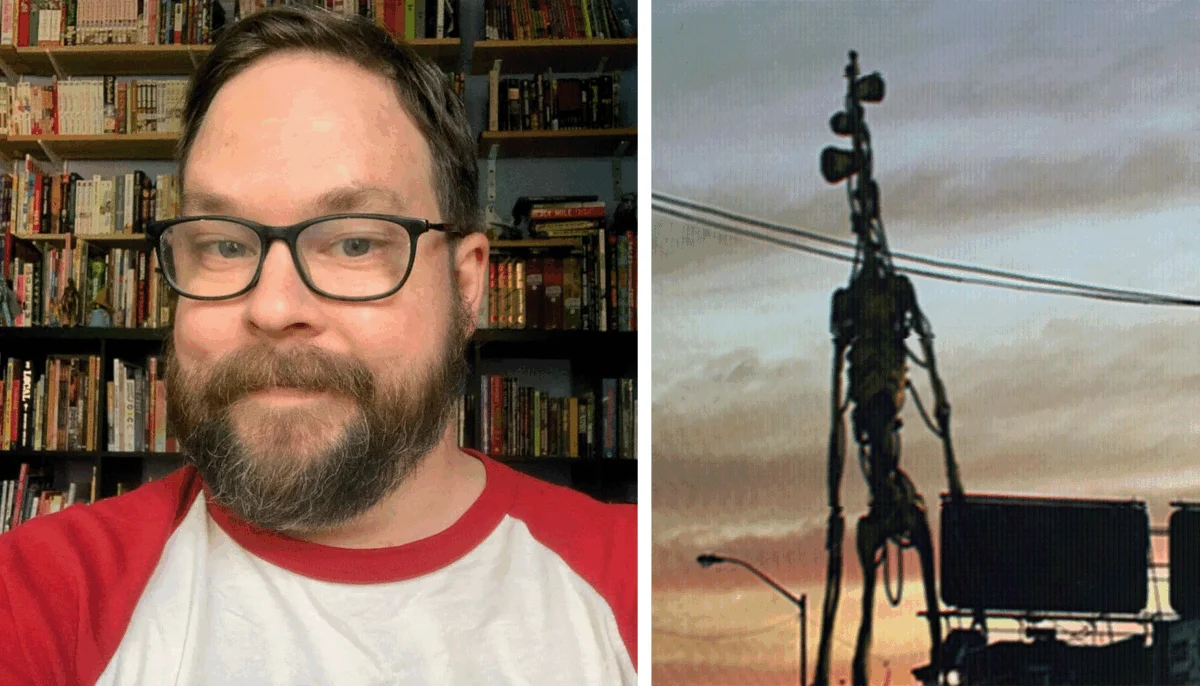
While the upcoming film may mark their inaugural encounter with Siren Head for many, the character has been a shadowy fixture on the fringes of the internet for years. This gaunt, towering creature, whose head is famously replaced by a pair of blaring sirens or megaphones that emit ominous, seemingly nonsensical phrases, has captivated a dedicated online following. Its legend has been meticulously woven and amplified through an eclectic mix of fan-generated stories, unsettling images, immersive games, and viral videos. Much like real-world cryptids, Siren Head’s narrative is fluid, its powers, age, immense height, and malevolent motivations shifting subtly from one telling to the next, personifying the organic evolution of folklore in the digital age. Yet, amidst the myriad myths and theories, one immutable truth remains: Siren Head was born from the creative mind of artist Trevor Henderson in 2018. He first introduced the entity to the world through a social media post, accompanied by a chillingly sparse yet evocative blurb:
"She was on vacation with her husband and they were scoping out graveyards on the way, as you do, when she saw it. Rising out of the old cemetery, big as an old (macabre) telephone pole. Was this some kind of bizarre art piece the authorities hadn’t gotten wise to yet? Even as she stepped out of the car, the megaphones on it’s “head” screeched to life. “NINE. EIGHTEEN. ONE. CHILD. SEVENTEEN. REMOVE. VILE.” A buzzing, doubled voice screamed random words at her. At this point, it jerked into motion, striding down the hill towards her."
The journey of Siren Head, from a single unsettling image to a mainstream cinematic endeavor, is a testament to the internet’s unparalleled power in shaping contemporary culture and spawning new icons of fear. Its remarkable ascent underscores a significant shift in Hollywood’s quest for original horror, looking beyond traditional sources to the boundless creativity of independent online artists.
Chronology: From Digital Canvas to Hollywood Greenlight
The narrative of Siren Head’s trajectory is a compelling chronicle of grassroots virality meeting mainstream ambition, illustrating how quickly a digital phenomenon can capture the attention of a global audience and, subsequently, the Hollywood machine.
Birth of an Internet Legend
Trevor Henderson’s initial creation of Siren Head in 2018 was, by his own admission, an artistic exercise. He specialized in "photobash" drawings, meticulously blending creatures into existing photographs to make them appear terrifyingly real. His goal was to evoke a "found-footage" aesthetic, creating images that felt like single, chilling snapshots from horror movies that never quite made it to the screen. Henderson’s caption for the first Siren Head drawing, recounting a harrowing encounter in a graveyard, instantly lent the creature an air of unsettling authenticity. This blend of visual realism and evocative narrative sparked imaginations, laying the groundwork for its viral spread.
The creature’s conceptual genesis stemmed from Henderson’s fascination with "number stations"—mysterious, anomalous radio signals broadcasting strange, repetitive phrases. He pondered, "What if that was coming from a thing? A creature instead of a radio station somewhere? What would that look like?" This abstract idea materialized into the tall, skeletal figure crowned with blaring speakers. From this singular image and its accompanying text, the mythos of Siren Head began to flourish. Its ambiguity was its strength; without a definitive backstory or fixed abilities, fans were free to project their deepest fears and wildest imaginings onto the entity. This collective storytelling, spanning forums, art communities, and gaming platforms, rapidly expanded Siren Head’s presence.
The Ascent to "Schoolyard Boogeyman"
Over the eight years since its inception, Siren Head’s popularity has surged in ways even its creator found astounding. It transcended niche horror communities, seeping into mainstream consciousness to become what Henderson affectionately describes as a "legitimate schoolyard boogeyman." Children, unburdened by genre conventions, embraced the creature, sharing its terrifying tales by word of mouth in playgrounds, much like classic urban legends. This organic dissemination, fueled by fan-made content—from video games to YouTube animations—was pivotal.
Henderson acknowledges this widespread adoption as a "double-edged sword." While the proliferation of fan content, particularly that geared towards younger audiences, sometimes diverged significantly from his original, darker intent, he recognizes its crucial role in Siren Head’s enduring legacy. "The amount of times I have hopped on a Zoom call with someone and they’ve been like, ‘I only found out about Siren Head through my kids because my kid was on the schoolyard at his elementary school and another kid was telling an oral scary story about Siren Head…’" he recounts. This grassroots appeal, especially among children, solidified Siren Head’s status as a contemporary folk monster, outweighing any initial concerns about interpretive shifts.
The Hollywood Gaze
The leap from internet phenomenon to Hollywood feature film was not instantaneous but gained incredible momentum following a key industry event. For years, Henderson’s representative, Josh Dove, had been actively pitching a broader portfolio of Henderson’s artwork and the unique world he had created. As Siren Head’s individual star power grew, the pitch evolved to focus specifically on the speaker-headed creature. Interest existed, but it was the groundbreaking success of A24’s The Backrooms that truly ignited the bidding frenzy for similar internet-born horror properties.
"When Backrooms did so well, the demand became overwhelming," Henderson reveals. The industry had found its proof of concept: an online horror concept, born from independent creativity, could translate into critical and commercial success on the big screen. The speed at which the Siren Head movie deal materialized was dizzying. "Everything with the movie announcement came together in like two weeks," Henderson recalls. "It was boom, boom, boom. All the way through it was like, ‘Okay, first this studio is interested. Now it’s a bidding war. Now Zach Cregger has a pitch and wants to be involved.’ It just happened incredibly fast." This rapid acceleration highlights Hollywood’s newfound eagerness to capitalize on pre-existing digital fanbases and the proven appeal of internet-sourced scares.
Supporting Data: The Anatomy of Modern Horror’s Appeal
The journey of Siren Head to the big screen is not merely a tale of viral success; it’s a profound commentary on the evolving landscape of horror, particularly the genre’s embrace of ambiguity, independent vision, and the psychological impact of the unknown.
The Backrooms Catalyst and the Indie Vision
The theatrical triumph of The Backrooms served as a critical inflection point, demonstrating to Hollywood that horror concepts originating from independent online creators could achieve mainstream success without sacrificing their unique artistic integrity. As Trevor Henderson rightly points out, it’s "hard to overstate how intrinsic Backrooms doing so well, and it being such a singular vision from a young, independent creative person, was to the wave we’re just sitting at the start of right now." Kane Parsons, the visionary behind The Backrooms short films, meticulously chiseled his online image and text into a "very, very specific" cinematic vision. The fact that A24, known for its commitment to distinctive filmmaking, brought this vision to theaters and largely maintained its core essence, resonated deeply.
Audiences, Henderson suggests, are drawn to "a competent, singular, specific vision." They appreciate narratives that are "weird, interesting, flawed, but ambitious, strange, confident" – qualities often found in independent, uncompromised creative endeavors. This preference indicates a fatigue with conventional horror tropes and a hunger for fresh, genuinely unsettling experiences that challenge expectations. The Backrooms‘ success proved that authenticity and a strong authorial voice, even from an internet-native creator, could drive audiences to theaters, paving the way for similar adaptations like Siren Head.
The Power of Ambiguity and Cosmic Dread
A cornerstone of Siren Head’s enduring appeal lies in its inherent ambiguity, a quality Trevor Henderson hopes will be carefully preserved in its cinematic adaptation. The creature’s terrifying effectiveness is rooted in its elusive nature: its ability to "blend into the background," its imposing yet "stealthy and strange" presence, and crucially, its "no clear origin." Henderson strongly advocates against demystifying the creature, believing that providing an explicit backstory "won’t do anything to help" its scare factor. He cites The Backrooms film as a prime example, noting that audiences were "completely fine" with the lack of an origin story for its central conceit. This deliberate vagueness taps into a form of cosmic horror, where the unknown and incomprehensible are far more terrifying than any definable threat.
This ambiguity extends to the very presentation of Henderson’s work. His "photobash" technique, which blends creatures into real-world photographs, is designed to trick the "hindbrain." By presenting images that remove "a lot of the movie-making conventions," he aims to create a visceral sense of reality, making the impossible feel momentarily plausible. "On a brain level, you know it’s fake because you’re seeing impossible things," he explains, "But by getting rid of a lot of the movie-making conventions, you trick your hindbrain a little bit into believing a little bit more." This quasi-found-footage quality enhances the creep factor, inviting viewers to question the boundaries of reality.
The Monstrous Physiology of Fear
Beyond its ambiguous nature, Siren Head’s physical design and auditory characteristics are meticulously crafted to evoke primal fear. Henderson breaks down the elements that contribute to its unsettling presence: "so many elements of it just do not make sense." It possesses a grotesque, "rotten human being, sort of" appearance, fused with "rusted metal elements that are fused with it, but not in a way that would make any logical sense." This incongruity creates a creature that feels fundamentally wrong, an aberration against natural order.
The most distinctive feature, its siren-like head, contributes significantly to its horror. The sounds it emits are not mere growls or roars but "pure surreal, abstract nonsense and tornado sirens." The combination of these familiar, yet terrifyingly distorted, auditory signals with nonsensical speech creates a disorienting and deeply unnerving experience. Furthermore, a crucial design choice for Henderson was the absence of eyes. Drawing inspiration from H.R. Giger’s design for the Xenomorph, Henderson notes that "when you lack that connection… you remove the eyes from anything, and it becomes completely ambiguous in terms of its intentions or goals." This lack of discernible intent, coupled with its immense size and stealth, transforms Siren Head into a truly terrifying, unknowable entity that people project their deepest fears onto, fueling its lasting resonance.
Official Responses: The Creator’s Perspective
Trevor Henderson, the artist behind Siren Head, finds himself in a unique position, navigating the transition of his independent creation into a major studio production. His responses offer invaluable insight into the hopes, anxieties, and philosophical underpinnings of this new era of horror.
Henderson’s Initial Reaction and Hopes
Upon learning of Warner Bros.’ decision to greenlight a Siren Head film, Henderson’s reaction was a complex mixture of emotions. He describes it as "a deeply anxious thing, but also a good anxiety, I guess. It’s really, really, really weird." The rapid pace of the deal, he admits, hit him "in the face like a punch," pushing him far beyond his usual artistic comfort zone. Despite the initial shock, his primary hope for the adaptation revolves around the preservation of Siren Head’s core mystique.
Henderson is adamant that the film should not attempt to demystify the creature. "I would certainly hope there’s no, ‘Here is the origin of the character, here’s where…’ because that’s completely not the point and it won’t do anything to help." He believes that much of what audiences enjoy about Siren Head—its ability to blend, its stealth, its incongruous nature, and its nonsensical vocalizations—stems from its inherent ambiguity. He expresses confidence in the creative team, Brian Duffield and Zach Cregger, to maintain this elusive quality, citing The Backrooms film’s success in avoiding explicit origin stories. For Henderson, the film represents a "great opportunity to build that out in a really interesting way" using his original art and atmosphere as a "jumping-off point" rather than a rigid blueprint.
The Importance of "Gateway Horror"
Henderson also articulates a broader philosophy regarding horror consumption, particularly among younger audiences. He passionately argues for the importance of "kids’ horror media and gateway horror media that also has stakes and isn’t talking down to them." He believes that children inherently love monsters and enjoy being scared, provided the material respects their intelligence. "When you talk down to a kid, especially with something positioning itself as ‘the scary stuff,’ they can see through it in a second," he states.
He draws a powerful connection to his own formative experiences, recalling Alvin Schwartz’s Scary Stories to Tell in the Dark books, vividly brought to life by Stephen Gammell’s terrifying illustrations. "Those three books are a dark, wonderful cloud that looms over everything I’ve done for the last twenty-five years," Henderson reflects. Such experiences, he argues, are crucial for each generation, becoming "perfect awful gem[s] in their memory" that spur immense creative growth. Siren Head’s evolution into a "schoolyard boogeyman" aligns perfectly with this belief, highlighting the universal and timeless appeal of well-crafted scares for all ages.
Siren Head as a Modern Folk Monster
When contemplating Siren Head’s deeper meaning as a contemporary folk monster, Henderson offers a compelling interpretation. For him, the creature has "always represented a general ambiguous sense of oncoming doom." Its head, shaped like an announcement siren, traditionally associated with natural disasters like tornadoes, transforms it into "a walking portent. A walking portent of both decay and disaster." This symbolism is reinforced by Siren Head’s frequent depiction in desolate, rural landscapes within Henderson’s own photography, further emphasizing a sense of isolation and impending catastrophe.
While acknowledging that Siren Head might represent different things to different individuals, Henderson’s personal interpretation anchors the creature to a pervasive, unsettling anxiety about an uncertain future. It embodies the dread of an unseen, incomprehensible force that heralds destruction, a modern-day harbinger of an existential threat.
Implications: The Future of Fright
The greenlighting of the Siren Head film marks a significant moment, not just for Trevor Henderson, but for the entire horror genre. It signals the maturation of the "internet-to-Hollywood pipeline" and sets a precedent for how future digital phenomena might be translated to the big screen.
The Internet-to-Hollywood Pipeline
The success of The Backrooms and the subsequent Siren Head adaptation firmly establish a new viable pathway for horror content. This pipeline represents a democratizing force, allowing independent artists to gain significant traction and influence without needing traditional industry connections. Before this, internet horror adaptations were often limited or less successful (e.g., the Slender Man film), but the recent string of critically and commercially successful indie-to-Hollywood horror projects suggests a shift. The appeal for studios is clear: tapping into a pre-existing, passionate fanbase reduces marketing risk and offers a built-in audience eager to see their beloved (or feared) internet creations brought to life.
This trend is likely to continue, prompting studios to actively scout platforms like YouTube, TikTok, and various online art communities for the next viral sensation. The focus will likely remain on concepts with strong visual identity, intriguing ambiguity, and a demonstrated ability to foster community-driven lore, much like Siren Head.
Challenges and Opportunities
While the internet-to-Hollywood pipeline presents immense opportunities, it also poses unique challenges. For creators like Henderson, the primary concern is maintaining the artistic integrity and core essence of their creations during the transition to a large-scale production. The inherent ambiguity that makes many internet horrors so effective often clashes with Hollywood’s traditional demand for clear narratives and explanations. The collaboration between independent artists and seasoned filmmakers, as seen with Duffield and Cregger, will be crucial in striking this delicate balance—expanding the lore without over-explaining the mystery.
Conversely, for studios, the opportunity lies in revitalizing the horror genre with fresh, original concepts that resonate deeply with contemporary audiences. By embracing the "weird, interesting, flawed, but ambitious, strange, confident" visions championed by creators like Kane Parsons and Trevor Henderson, Hollywood can deliver more authentic and impactful horror experiences. The financial incentives are substantial, as viral internet phenomena often come with a built-in marketing engine fueled by passionate fan communities.
Looking Ahead
As this new era unfolds, Trevor Henderson remains an insightful observer and a champion of innovative horror. He enthusiastically recommends other online creations that exemplify the potential of the genre, specifically mentioning "The Glendale Archives" – a newer series he loves for its human-focused, character-driven narrative about a man waking up in a world devoid of people, haunted by upsetting entities, yet interspersed with cooking segments. He praises it as "such a breath of fresh air for the analog horror scene," highlighting its ability to blend mundane reality with profound dread.
Ultimately, Henderson hopes for a synergistic relationship between the Siren Head movie and its original online mythos. He envisions the film as an opportunity to "build that out in a really interesting way," using his existing work as a "jumping-off point" to create something new without undermining the original’s impact. He believes both versions can "coexist" and "inform and help each other," creating a richer, more expansive universe for Siren Head. For Henderson and many other independent artists, this is an "unprecedented time" for "weirdo work" in horror, promising an exciting and unpredictable future for fright. The digital landscape has given birth to new monsters, and Hollywood is finally ready to let them loose.