
The Silent Symphony: Unveiling "Motional Intelligence" and its Profound Impact on Leadership and Storytelling
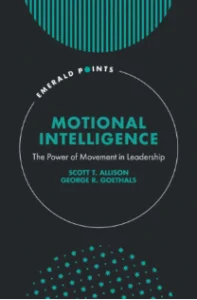
New research from University of Richmond professors emeriti, Dr. Scott Allison and Dr. George Goethals, introduces a groundbreaking concept: "Motional Intelligence" (MI). This paradigm-shifting idea posits that human perception and interaction are fundamentally driven by movement, predating and often overshadowing verbal communication and even explicit emotional cues. The implications for leadership, interpersonal dynamics, and the art of storytelling are profound, offering a new lens through which to understand human behavior and craft compelling narratives.
Introduction: Beyond Words and Emotions
In a world saturated with information and constant verbal exchange, it’s easy to overlook the silent, yet potent, language of our bodies. Spell checkers may flag "motional" as a typo, but for Dr. Scott Allison and Dr. George Goethals, professors emeriti at the University of Richmond, it represents a fundamental truth about human interaction. Their new book, Motional Intelligence: The Power of Movement in Leadership, argues that our initial impressions and understanding of others are not primarily formed by what they say or even their facial expressions, but by how they move. This concept, termed Motional Intelligence (MI), suggests that our bodies are engaged in a continuous, often unconscious, dialogue that shapes our perceptions, influences our decisions, and defines our relationships.
The authors contend that "motion is core to social interaction. Before anyone speaks, a conversation has already begun… Speech came late. Motion came first." This primal communication channel, they argue, holds immense power, particularly in leadership and in the nuanced craft of character development for writers. This exploration delves into the essence of MI, its origins, its distinction from other forms of intelligence, and its practical applications, drawing insights from an exclusive interview with Dr. Scott Allison.
The Genesis of Motional Intelligence: An Epiphany in Motion
The genesis of Motional Intelligence stemmed from a profound realization shared between Dr. Allison and Dr. Goethals. While dissecting various facets of human behavior – from heroism and leadership to empathy, influence, and conflict – they observed a recurring pattern: these phenomena were less dependent on spoken words and more intrinsically linked to the way individuals moved. This observation led to a critical question: why, in the established frameworks of psychology, was there no comprehensive understanding of this fundamental aspect of human interaction?
"One day, somewhere between burgers and coffee, my co-author George Goethals and I shared an epiphany: everything we were analyzing – heroism, leadership, empathy, influence, conflict – depended less on what people said and more on how they moved," Dr. Allison explains. "Yet psychology had no comprehensive framework for this. This book began the moment we realized that these motions are not incidental to human life; they are human life."
This realization was further underscored by evolutionary biology. As Dr. Allison elaborates, "According to evolutionary biology, speech came late, and motion came first. George and I just had to write about this!" This historical perspective highlights the deep-seated nature of motional communication, suggesting it is a foundational element of our species’ social architecture.
Defining Motional Intelligence: A Three-Pronged Framework
Dr. Allison provides a clear definition of Motional Intelligence: "MI is the capacity to use one’s body movements intentionally to communicate and influence others, to accurately perceive, decode, and interpret the body movements of others across contexts, and to regulate one’s own movements – and one’s interpretations of others – in response to shifting social demands."
This definition encompasses three crucial components:
- The Expressive Component: This refers to an individual’s ability to intentionally use their body movements to convey messages, emotions, and intentions. It’s about how we project ourselves through posture, gesture, gait, and other physical expressions.
- The Interpretive Component: This is the capacity to accurately perceive, decode, and understand the body movements of others. It involves recognizing the subtle cues that others transmit and interpreting their meaning within various social contexts.
- The Regulatory Component: This aspect highlights the ability to adjust and manage one’s own movements, as well as one’s interpretations of others’ movements, in response to evolving social demands. It speaks to the adaptive nature of MI, allowing individuals to navigate complex social landscapes effectively.
Crucially, Dr. Allison emphasizes that these three components operate "effortlessly and often without conscious awareness." This suggests that MI is not merely a learned skill but an ingrained, intuitive aspect of human interaction.
Differentiating MI from IQ and EI: A Unique Dimension of Intelligence
While concepts like IQ (Intelligence Quotient) and EI (Emotional Intelligence) are widely recognized, MI offers a distinct and complementary perspective. IQ, often associated with logical reasoning and problem-solving, focuses on cognitive abilities. EI, on the other hand, centers on the perception, regulation, and expression of emotions, primarily through facial cues, vocal tone, and affective appraisal.
Dr. Allison clarifies the distinction: "Motional intelligence (MI) is one of many aspects of overall intelligence. MI is not the same as emotional intelligence (EI). EI centers on the perception, regulation, and expression of emotions, typically through facial cues, vocal tone, and affective appraisal. MI, by contrast, isolates a different communicative channel entirely: the dynamic language of body movement."
This distinction is vital. While EI deals with the emotional landscape, MI focuses on the physical manifestation of human interaction. The question arises: is "body language" synonymous with motional signals? "Yes, in the sense that we use our bodies to communicate, to persuade, and to trigger emotional responses in others," Dr. Allison confirms. However, MI goes beyond simply "reading" body language; it encompasses the intentional use of movement for communication and influence, as well as the dynamic regulation of one’s own movements in response to social cues.
The Expressive Power of Movement: Revealing Character and Personality
The human body, through its myriad movements, offers a rich tapestry of information about an individual’s character and personality. Dr. Allison asserts that "pretty much every personality trait that humans possess can be revealed through motion."
Consider the subtle ways movement can communicate:
- Kindness: Often conveyed through a "soft posture, a smile, a tilt of the head, and the reaching out of a hand." These are gentle, inviting movements that signal openness and empathy.
- Dominance: Expressed through a "very different posture, facial expression, and use of limbs." This might involve a more upright, expansive stance, direct eye contact, and decisive, controlled movements.
The profound impact of movement is evident even before words are exchanged. Dr. Allison illustrates this with vivid examples: "Before anyone speaks, a conversation has already begun. A stranger’s shoulders soften as you approach; a friend leans in before offering a word; a colleague’s foot angles toward the door long before they admit they’re late for another meeting." These are instances of unconscious MI at play, demonstrating how our bodies communicate our intentions, attitudes, and emotional states without explicit verbalization.
"We live inside a constant choreography of meaning – signals given and received, often without our awareness," Dr. Allison concludes, highlighting the pervasive nature of this silent language.
The Writer’s Toolkit: Animating Fictional Characters with MI
For fiction writers, understanding and employing Motional Intelligence offers a powerful avenue for bringing characters to life in a way that transcends mere dialogue and descriptive prose. Dr. Allison suggests that authors can leverage MI to reveal character traits, motives, status, intentions, and inner conflicts through the nuanced patterns of movement.
This includes:
- Posture and Gait: A character’s stance and how they walk can instantly convey confidence, insecurity, weariness, or determination.
- Gesture and Rhythm: The way a character uses their hands, the pace of their movements, and their overall rhythm can reveal their emotional state, personality quirks, and level of engagement.
- Stillness and Spatial Orientation: Moments of stillness can be as communicative as movement, conveying contemplation, tension, or authority. How a character occupies space, their proximity to others, and their orientation can signal dominance, submission, or discomfort.
- Bodily Timing: The precision or awkwardness of a character’s movements, their responsiveness to others, and their adherence to social timing can reveal their social awareness and psychological state.
Dr. Allison provides specific examples of how writers can utilize MI:
- Building Trust: A character with high MI might subtly mirror another person’s posture to establish rapport and build trust.
- Regulating the Emotional Climate: Calm and deliberate movements can be used to de-escalate tension and create a more positive atmosphere.
- Communicating Dominance: This can be achieved through economy of motion rather than overt aggression, projecting control and authority through deliberate, unhurried actions.
Conversely, low MI can manifest as:
- Awkward Timing: Movements that are out of sync with the social context.
- Invasive Spatial Behavior: Disregarding personal space or encroaching on others’ territory.
- Rigid Posture or Excessive Fidgeting: Indicating anxiety, discomfort, or an inability to relax.
- Inability to Interpret Others’ Signals: Leading to social missteps and misunderstandings.
Furthermore, MI can be a powerful tool for character development over time. A character’s evolving movement patterns can symbolize their psychological transformation, growing confidence, moral corruption, deepening intimacy, or heroic maturation. In essence, "bodily motion becomes a narrative language that conveys character identity and relational dynamics at a pre-verbal level, making fictional people feel vividly alive and authentic."
Showing, Not Telling: MI in Revealing Relationships and Conflicts
The adage "show, don’t tell" is a cornerstone of effective writing, and MI offers a rich toolkit for writers to implement this principle, particularly in depicting relationships and conflicts. Dr. Allison highlights how bodily movement can serve as a nonverbal narrative language, conveying complex dynamics without explicit explanation.
Revealing Relationships:
- Movement Synchrony: Characters who mirror each other’s posture, walk in step, share relaxed rhythms, anticipate each other’s actions, or comfortably occupy shared space signal trust, intimacy, affection, and familiarity.
- Romantic Attraction: Subtle orientation cues, lingering gestures, or softened, flowing movements can suggest romantic interest.
- Friendship: Playful physical ease, unguarded posture, and a shared sense of rhythm often characterize friendships.
Depicting Conflicts:
Conflict, conversely, often manifests as a disruption of bodily coordination. This can be shown through:
- Avoidance: Characters physically distancing themselves or averting their gaze.
- Rigid Posture: A tense, unyielding stance that signals defensiveness or resistance.
- Pacing and Competing Rhythms: Characters moving erratically or their movements clashing, indicating agitation or disagreement.
- Territorial Spacing: An increase in physical distance or the assertion of personal space as a defensive measure.
- Emotional Stillness: A lack of fluid movement or animation, which can signify suppressed anger, withdrawal, or emotional shutdown.
By altering these movement patterns over the course of a narrative, writers can effectively depict the evolution of relationships, from burgeoning intimacy to growing distance, or from harmony to discord. This nonverbal storytelling allows for a deeper, more visceral connection between the reader and the fictional world.
MI in Motion Pictures: Cinematic Examples of Movement as Narrative
Dr. Allison’s expertise extends to film, and he draws upon cinematic examples to illustrate the instrumental role of MI in driving plots and shaping characters. Film, being an inherently movement-based medium, provides fertile ground for observing MI in action.
- The Dark Knight (Heath Ledger’s Joker): Ledger’s portrayal of the Joker is a masterclass in the dark application of MI. His "erratic gestures, invasive proximity, asymmetrical posture, and sudden stillness" were meticulously employed to psychologically destabilize his adversaries, generating tension and fear that fueled the film’s emotional chaos. The Joker’s movements were not random; they were a deliberate, calculated strategy of psychological warfare.
- The Devil Wears Prada (Meryl Streep’s Miranda Priestly): In stark contrast, Miranda Priestly embodies a highly regulated form of MI. Her "economy of motion, precise pacing, controlled stillness, and minimal gestures" projected an aura of unassailable authority and dominance, shaping every interaction within her sphere. Her movements were a testament to her absolute control and unwavering confidence.
- Napoleon Dynamite: The titular character’s social awkwardness is profoundly communicated through his movements. His "stiff posture, delayed reactions, unusual gait, and poor synchrony with peers" created both comedic moments and a palpable sense of his emotional isolation. Napoleon’s bodily presentation served as a visual shorthand for his outsider status and his struggles to connect.
These examples underscore how directors and actors, often intuitively, utilize MI to convey character, build suspense, and drive narrative arcs, demonstrating its power in visual storytelling.
Conclusion: The Enduring Power of the Silent Language
The concept of Motional Intelligence offers a compelling new perspective on human interaction, leadership, and creative expression. By recognizing the profound influence of movement, we can begin to decipher the silent symphony that constantly plays out around us. For leaders, understanding MI can lead to more effective communication, stronger relationships, and greater influence. For writers, it provides a rich and nuanced toolkit for creating characters that resonate with authenticity and depth.
As Dr. Allison and Dr. Goethals’ work suggests, the language of movement is not merely an addendum to our communication; it is a fundamental, primal force that shapes our perceptions, defines our relationships, and ultimately, tells our stories. The exploration of Motional Intelligence is an invitation to become more attuned to this silent language, unlocking new levels of understanding and connection in both our personal and professional lives, and enriching the narratives we consume and create.
Where to Find Motional Intelligence: The Power of Movement in Leadership
Readers interested in delving deeper into the concept of Motional Intelligence can find the book by Dr. Scott Allison and Dr. George Goethals available on major online retailers, including:
- Amazon: Available in both Kindle and print editions.
- Barnes & Noble: Also offering both digital and physical formats.
The authors encourage readers to explore this fascinating topic and consider its implications for their own lives and work.




Leave a Comment