Bridging the Gap Between Infrastructure and Community: The Strategic Rebranding of Open Point
In an era where large-scale infrastructure projects are met with both urgent necessity and heightened public scrutiny, the tools used to facilitate dialogue between developers and the citizenry have become critical components of democratic health. Recently, the London-based creative agency 20(Something) unveiled a comprehensive new identity and integrated digital platform for Open Point, a leading civic technology company. This move represents more than a mere cosmetic update; it is a strategic unification of two industry-standard tools—Social Pinpoint and Consultation Manager—into a single, cohesive masterbrand designed to navigate the complex intersection of institutional rigour and public participation.
The rebrand signals a maturation of the civic tech sector, moving away from fragmented software solutions toward holistic platforms that manage the entire lifecycle of community engagement and stakeholder management. By synthesizing these services under the Open Point banner, the company aims to provide a "unified identity" that serves both the high-stakes requirements of state agencies and the accessibility needs of the everyday resident.
Main Facts: A Unified Vision for Civic Tech
The centerpiece of this announcement is the launch of the Open Point integrated platform. For years, the company operated with two distinct products that served different but overlapping functions:
- Social Pinpoint: A tool primarily focused on community engagement, allowing the public to provide localized feedback on maps and digital forums.
- Consultation Manager: A backend system designed for project managers to track stakeholder relationships, manage data, and ensure regulatory compliance.
The new identity, crafted by 20(Something), merges these into a single "connected system." Currently, the platform is utilized by more than 750 organizations globally, ranging from local government councils to multi-national infrastructure developers. Its primary application lies in managing the consultation processes for large-scale projects—such as new rail lines, urban housing developments, and renewable energy grids—where the stakes for both the environment and the community are exceptionally high.
The rebranding effort covers every digital and physical touchpoint, including a new website, product interface, motion graphics, and a series of brand films. The goal was to create a visual and functional language that appeals to two historically divergent audiences: the "regulators" (developers and state agencies) and the "participants" (the communities impacted by these developments).
Chronology: From Fragmented Tools to a Masterbrand
The evolution of Open Point reflects the broader trajectory of the digital consultation industry. To understand the significance of this rebrand, one must look at the timeline of digital civic engagement:
- The Early 2010s: The Rise of Digital Feedback: As social media changed expectations for communication, the first iterations of Social Pinpoint emerged. These tools were designed to replace or augment the traditional "town hall" meeting, which often suffered from low attendance and skewed demographics.
- The Mid-2010s: Regulatory Tightening: As infrastructure projects grew in complexity, the need for robust data management became apparent. Consultation Manager grew as a response to the legal and regulatory requirements for developers to prove they had adequately consulted with stakeholders.
- The 2020-2022 Pivot: The COVID-19 pandemic acted as a massive catalyst. With physical gatherings impossible, digital consultation moved from an "optional extra" to a mandatory core function for government and industry. During this period, the limitations of using separate tools for "engagement" and "management" became a friction point for users.
- 2024–2025: The Birth of Open Point: Recognizing that the data gathered during public engagement (Social Pinpoint) needed to flow seamlessly into stakeholder management systems (Consultation Manager), the decision was made to integrate the two. 20(Something) was brought in to create an identity that reflected this integration—moving away from product-specific branding toward a masterbrand that represents a "point of truth" for civic processes.
Supporting Data: The Scale of Modern Engagement
The scale at which Open Point operates underscores the necessity of a sophisticated brand identity. With over 750 organizations on the roster, the platform facilitates thousands of active consultations at any given time.

Data from the civic tech sector suggests that digital-first engagement can increase participation rates by up to 300% compared to traditional methods. However, this increase in volume brings a corresponding increase in "noise." The challenge for Open Point was to create a system that could process vast amounts of public sentiment while maintaining the institutional authority required by government auditors.
The sectors served by Open Point—local government, infrastructure, and development—are currently facing unprecedented pressure. In the UK and Australia (Open Point’s primary markets), "Net Zero" initiatives and housing crises are driving a wave of construction that requires deep community buy-in. Without the "institutional rigour" mentioned by the agency, projects often face legal challenges or "NIMBY" (Not In My Backyard) opposition that can stall multi-billion-dollar investments for years.
Official Responses: The Philosophy of "The Chisel"
Will Thacker, founder and creative partner at 20(Something), highlighted that the project’s difficulty lay in the dual nature of the audience. “The challenge wasn’t simply combining two products under one name,” Thacker explained. “It was creating a brand that could speak to organisations managing high-stakes infrastructure projects without losing the accessibility required for genuine public participation.”
To solve this, the agency moved away from the "clichés of collaboration." In the world of civic tech, visual shorthand often involves soft shapes, speech bubbles, or bright, "friendly" colors that can sometimes feel patronizing or insufficiently serious for major engineering projects.
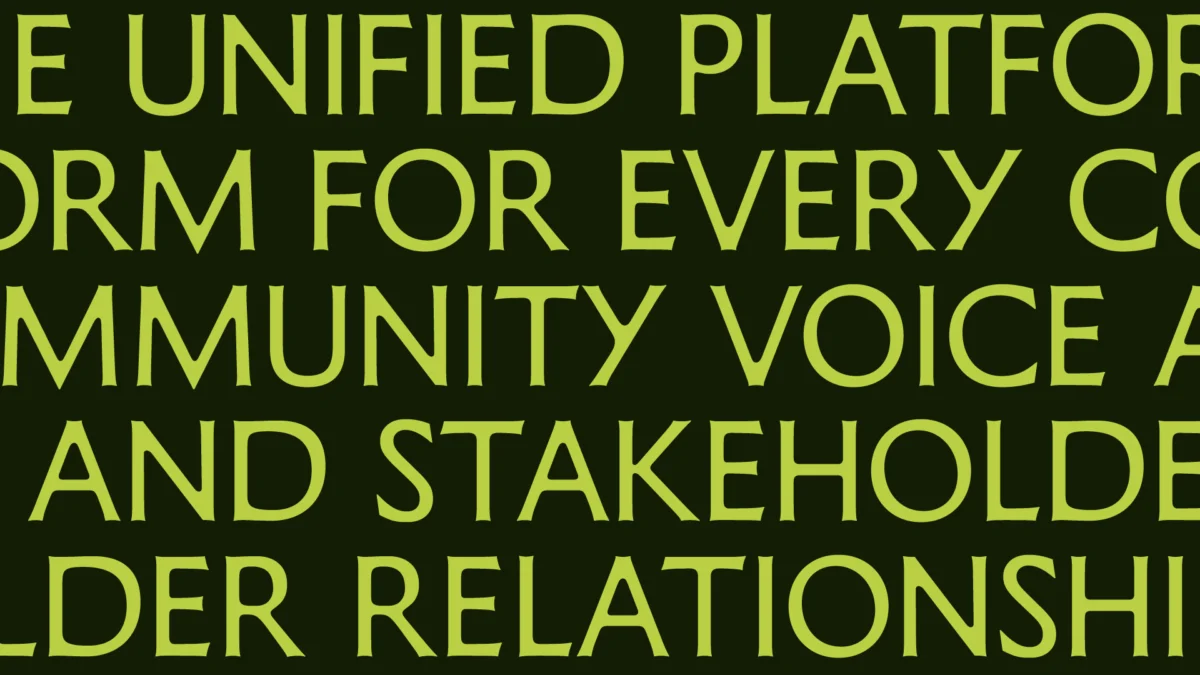
Instead, 20(Something) turned to the Chisel. The creative concept is rooted in the origins of early Latin letterforms. Historically, these characters were carved into stone—into the very civic architecture and public institutions they represented.
By referencing this typographic heritage, the brand draws a direct line between the ancient systems of public decision-making (the Roman Forum, the Greek Agora) and the digital tools of today. The "chisel" metaphor signifies:
- Permanence and Trust: Words carved in stone are intended to last and be respected.
- Precision: The act of carving requires intent and accuracy, reflecting the "rigour" required in stakeholder management.
- The Environment: Just as a chisel shapes stone, the tools of Open Point help shape the physical environments—the parks, roads, and buildings—where people live.
This aesthetic choice allows Open Point to feel "authoritative" to a government official while appearing "established and trustworthy" to a skeptical citizen.

Implications: The Future of Digital Democracy
The rebranding of Open Point has significant implications for the future of urban planning and civic engagement. It represents a shift from "consultation as a checkbox" to "engagement as an ecosystem."
1. Reconciling Rigour with Accessibility
For too long, there has been a divide between the "boring" software used by bureaucrats and the "engaging" apps used by the public. Open Point’s unified identity suggests that these two things must be one and the same. If the public doesn’t trust the tool, the data is useless; if the government can’t use the data, the engagement is performative. By bridging this gap, Open Point is setting a new standard for how civic tech companies position themselves—not just as software providers, but as facilitators of trust.
2. The Democratization of Infrastructure
The "organizing idea" of participation mentioned by 20(Something) addresses a core flaw in modern development: the barrier to entry. Traditional consultations often require people to travel to a physical location at a specific time, naturally excluding those with full-time jobs, childcare responsibilities, or mobility issues. A unified digital platform like Open Point democratizes this process, allowing for "asynchronous democracy" where a citizen can contribute to the shaping of their neighborhood at any time.
3. Design as a Bridge for Scrutiny
As infrastructure projects come under increasing public scrutiny—due to environmental concerns or economic costs—the "visual language" of the platforms managing these conversations matters. The use of the "chisel" and Latin-inspired typography provides a sense of "civic weight." It reminds both the developer and the citizen that these conversations are not just "digital noise" but are part of the long-standing tradition of building a society together.
Conclusion
The work of 20(Something) for Open Point is a masterclass in strategic rebranding. It moves beyond the surface level to address the deep-seated tensions inherent in civic life: the need for order versus the need for voice; the requirements of the state versus the desires of the community.
By unifying Social Pinpoint and Consultation Manager under a brand that values both institutional authority and public accessibility, Open Point is positioning itself as the essential infrastructure for the projects that will define the next century. In an increasingly polarized world, tools that can reconcile these two sides are not just convenient—they are vital for the continued functioning of a collaborative society.