A Cosmic Tapestry Woven: Jo Miles Unveils "The Final Chronicle of Yeneh," a Genre-Bending Odyssey
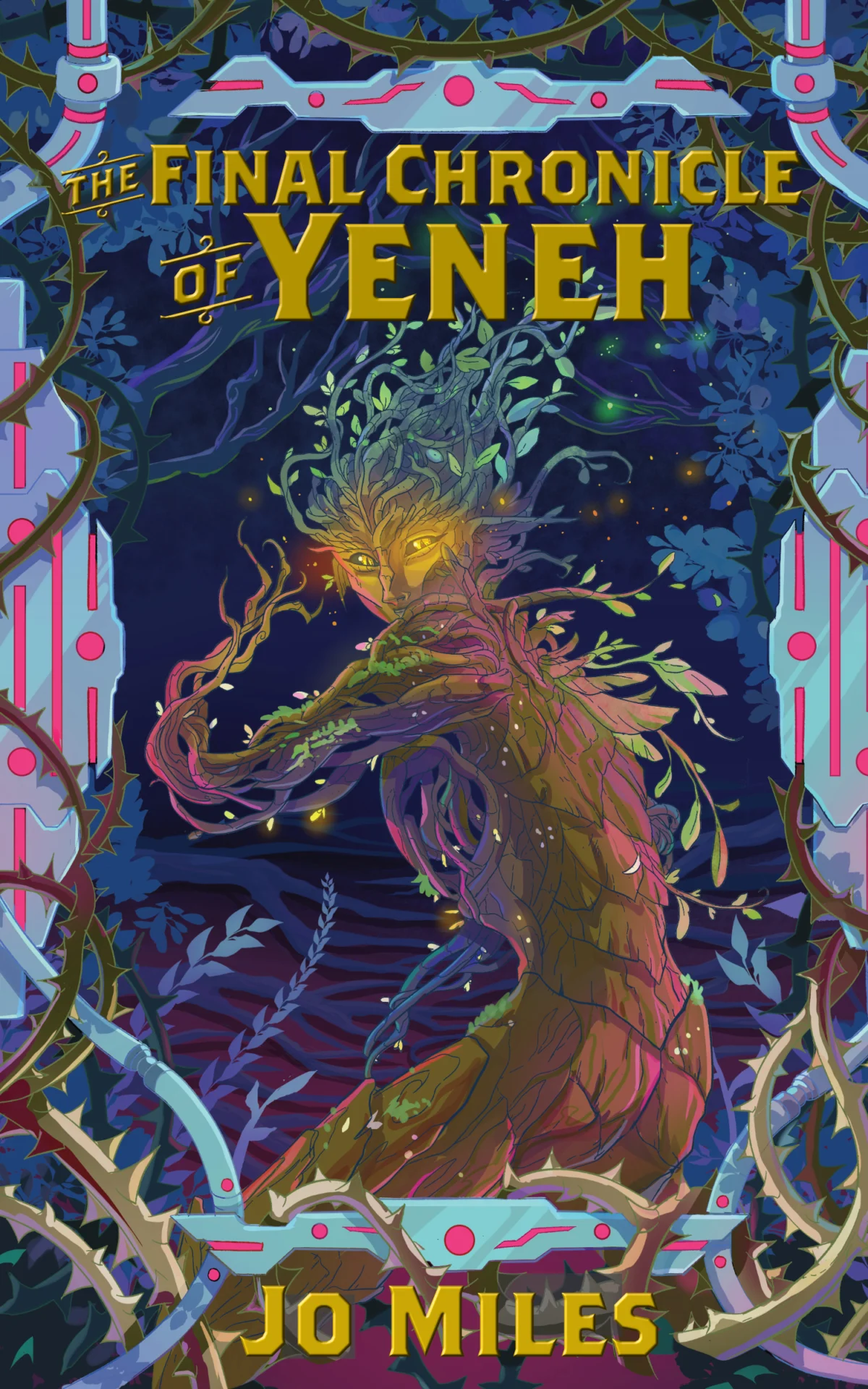
In an era often dominated by singular narrative focus, author Jo Miles has boldly challenged convention with their latest release, The Final Chronicle of Yeneh. This ambitious novel intricately weaves the threads of alien first contact science fiction with the enchanting allure of portal fantasy, creating a narrative tapestry that promises to captivate readers who yearn for both interstellar exploration and the magic of other realms. Miles, known for their optimistic approach to speculative fiction and a career dedicated to leveraging the internet for social good, sat down to discuss the genesis of this unique story, revealing five profound lessons learned during its creation.
The Genesis of a Genre-Bending Masterpiece
The Final Chronicle of Yeneh plunges readers into a future where humanity has ventured beyond Earth, but the promise of a new beginning is fraught with the echoes of the past. Lady Ada Quintrall, the protagonist, finds herself at the nexus of this complex future. As the heir to her family’s fortune, her immediate concern is the successful terraforming of a newly colonized planet, a project vital for their financial survival and the establishment of a stable future. This pragmatic imperative forces Ada to suppress her more whimsical inclinations, including her deep affection for The Chronicles of Yeneh, a beloved children’s portal fantasy series penned by one of her ancestors.
However, Ada’s carefully constructed world begins to unravel with the arrival of Dr. Zamora, a passionate xenobiologist. Zamora champions the preservation of the planet’s indigenous life, pleading for its study before the invasive terraforming process drives it to extinction. Ada’s own experiences with the planet’s native inhabitants have been far from benign; they are described as "vicious and unsettling." Yet, when Zamora transgresses into a restricted "Infested Zone," Ada is compelled to pursue him. It is within this forbidden territory that she uncovers a truth that shatters her perceptions: the planet is not merely home to indigenous life, but to sentient beings who share an ancient, profound, and deeply personal connection with her family, a bond far more intricate than she could have ever imagined.
Five Pillars of Insight: Jo Miles’ Creative Journey
Miles’ exploration of this rich narrative landscape was not without its revelations. They have distilled their writing experience into five key learnings, offering a window into their creative process and the thematic underpinnings of The Final Chronicle of Yeneh.
1. The Art of the Unexpected Sundae: Genre Blending as a Creative Playground
Miles articulates their passion for genre-blending through a delightful analogy of ice cream flavors. While classic genres like science fiction (chocolate) and fantasy (strawberry) hold their own appeal, Miles finds profound satisfaction in crafting unexpected combinations. "Picking flavors that go together, sometimes unexpectedly, is its own sort of fun," they explain. "Genre-blending, if done well, is like the most surprisingly delicious ice cream sundae."
For The Final Chronicle of Yeneh, the deliberate fusion of "bold excitement of a space adventure" and the "thought-provoking politics of a good first contact story" with the "whimsy and nostalgia of a portal fantasy" was a conscious artistic choice. Miles identified compelling parallels between the vastness of space exploration and the imaginative scope of portal fantasies. Both genres, in their view, offer the allure of venturing into wondrous new worlds. However, they highlight a crucial distinction: while portal fantasies often allow for a more idealized, world-saving narrative, effective first-contact science fiction compels readers to confront the often-unforeseen and detrimental impact of human encounters on new environments and species.
By juxtaposing these sensibilities, Miles aimed to explore both the awe-inspiring wonder of discovery and the profound weight of planetary-scale consequences. The inclusion of "light historical vibes" through Ada’s aristocratic lineage and a "dose of plantpunk"—a subgenre that often emphasizes organic, biological elements within a technological or futuristic setting—further enriched this complex flavor profile, making the writing process "a delight."
2. The Underrated Power of Platonic Bonds: Beyond the Romance Trope
In a literary landscape where romance often takes center stage, Miles champions the often-overlooked significance of friendship. They recount an anecdote from a convention where a reader confidently assumed a romantic entanglement between Ada and Dr. Zamora. While Miles acknowledges the prevalence and appeal of romantasy, their creative process for The Final Chronicle of Yeneh led them in a different direction.
"Every time I tried to include romantic moments or lingering glances, it fell flat," Miles admits. Despite prior experience writing romance subplots, Ada’s character proved to be persistently focused on more pressing matters: initially, supporting her family’s terraforming project, and later, the imperative to protect the native Yeheneh. Zamora, characterized by his intellectual sparring with Ada, never quite crossed into flirtatious territory.
This realization led Miles to conclude that a romance would be inauthentic to Ada’s core motivations. Instead, the narrative organically evolved to highlight Ada’s need for a friend, and Zamora emerged as the ideal companion. "I think there’s a dearth of friendship stories, especially male-female friendship, especially where neither of them are gay," Miles observes, underscoring the rarity and value of such portrayals. For The Final Chronicle of Yeneh, the strength and evolution of Ada and Zamora’s friendship proved to be a more resonant and impactful narrative choice than a romantic subplot.

3. Earth’s Botanical Wonders: Fueling Alien Imagination
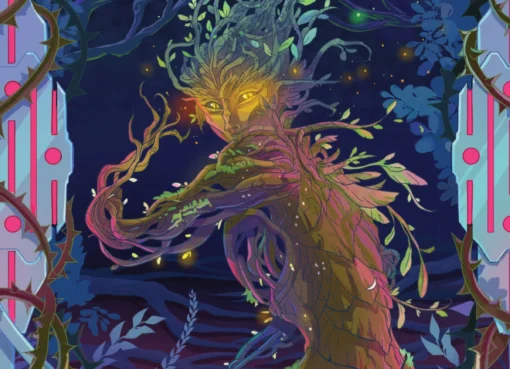
Miles draws a compelling parallel between the strangeness of imagined alien life and the often-unseen marvels of Earth’s own flora. When seeking to create truly alien entities, their go-to strategy is to delve into scientific research on terrestrial species, finding that reality frequently surpasses speculative fiction. In The Final Chronicle of Yeneh, the indigenous beings, the Yeheneh, were conceived as having a plant-like appearance yet possessing intelligence and the capacity for endearment. This posed the question: how would such beings move, communicate, and perceive the world?
Miles highlights the constant stream of discoveries in botany that challenge conventional understanding. They cite several key inspirations for the Yeheneh, including:
- Mycoheterotrophy: Plants that derive nutrients from fungi, highlighting a reliance on interconnected subterranean networks.
- Plant Communication: The ability of plants to send chemical signals to warn each other of danger or attract pollinators, demonstrating a sophisticated form of interaction.
- Slime Molds: Organisms that exhibit remarkable problem-solving abilities and can form complex networks, blurring the lines between single-celled and multicellular life.
- Carnivorous Plants: Species that have evolved unique and often startling mechanisms for survival, showcasing extreme adaptations.
These scientific observations served as a fertile ground for Miles’ imagination, coalescing into the unique and compelling nature of the Yeheneh, beings who are far more than they initially appear.
4. The Complexities of Rewilding: Harmony Over Replication
The concept of "rewilding" served as a foundational spark for The Final Chronicle of Yeneh. Miles acknowledges that this practice, while appealing to their environmentalist sensibilities, is far more intricate and less straightforward than its name might suggest. While more prevalent in the UK and Europe than in the US, rewilding involves the deliberate restoration of ecologically degraded landscapes to their former, or at least a more robust, natural state. Miles draws a poignant contrast between the idea of restoring Earth’s past forests and the human-driven imperative of terraforming in their novel.
The process of rewilding entails reintroducing plant species that regulate drainage and erosion, attract essential pollinators, provide sustenance for birds, and offer shelter for a myriad of insects and other small creatures. This, in turn, necessitates the presence of insects for birds to feed upon, and predators to maintain a balance among smaller animals. The inclusion of "keystone species" like beavers and wolves is crucial, as Miles emphasizes the intricate, interconnected web of relationships within an ecosystem—a complexity that humans, despite extensive study, still struggle to fully comprehend. The most effective approach, they suggest, is to facilitate the fundamental necessities for natural systems to self-correct.
Miles draws a parallel to the terraforming process Ada’s family undertakes. While starting with a "blank slate" might seem simpler, an artificially constructed ecosystem would inevitably be a vastly simplified version of Earth’s biodiversity. The term "rewilding" implies a return to a previous state. However, Miles learned that an exact replication is impossible; the precise balance and full spectrum of species and relationships are irretrievably lost. Yet, this impossibility does not diminish the value of the endeavor. Nature is in constant flux. If rewilding results in a new, vibrant ecosystem, it is still a profound improvement over barren landscapes. The ultimate goal, Miles concludes, is to discover ways to coexist harmoniously with nature, rather than attempting to eradicate the aspects we find inconvenient.
5. Preserving Wonder in the Face of Cynicism: The Enduring Appeal of Childhood Dreams
The genesis of The Final Chronicle of Yeneh coincided with the COVID-19 pandemic, a period that Miles notes did little to inspire optimism about humanity’s trajectory. This backdrop, coupled with the lingering memories of lockdown, amplified the allure of weaving portal fantasy into the fabric of their science fiction narrative. Portal fantasy, for Miles, represents nostalgia and a much-needed escape from the mundane. Regardless of age, the prospect of experiencing fantastical new worlds continues to bring them joy.
While some adult portal fantasies retain this sense of wonder, others adopt a darker, more jaded perspective, tinged with the harsh realities of the world. The Final Chronicle of Yeneh grapples with significant themes such as colonization, genocide, and ancestral guilt. However, Miles was committed to infusing the narrative with "light, hope, and joy." Ada’s deep connection to the portal fantasies she consumed as a child, particularly the in-world Chronicles of Yeneh written by her ancestor, fuels her enduring dream of embarking on her own portal fantasy adventure. Miles aimed to fulfill this desire for Ada by providing her with a genuine adventure upon encountering the native Yeheneh, inviting readers to share in this extraordinary journey.
A Look Ahead: The Implications of "The Final Chronicle of Yeneh"
Jo Miles’ The Final Chronicle of Yeneh arrives at a time when readers are increasingly seeking stories that offer both intellectual stimulation and emotional resonance. The novel’s daring fusion of genres not only pushes the boundaries of speculative fiction but also encourages a re-evaluation of how seemingly disparate narrative elements can coalesce into a powerful and cohesive whole.
The exploration of complex themes such as environmental stewardship, the ethics of colonization, and the enduring power of interspecies connection, all filtered through the lens of both cutting-edge science and timeless fantasy, positions the novel as a significant contribution to contemporary literature. By championing platonic relationships and celebrating the persistent spark of childhood wonder in the face of adult cynicism, Miles offers a hopeful and deeply humanistic perspective on the challenges and triumphs of existence, both on Earth and across the vast expanse of the cosmos. The Final Chronicle of Yeneh is not merely a story; it is an invitation to explore, to question, and ultimately, to believe in the possibility of wonder, even in the most unexpected of places.