DC Universe Unlocks New Tabletop Adventures: D20 Culture Announces Justice League Unlimited The Roleplaying Game, Co-Authored by Mark Waid
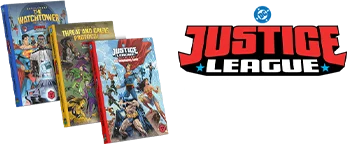
MIAMI, USA – April 30th – A new era for tabletop roleplaying in the DC Universe is set to dawn this July, as Brazilian game publisher D20 Culture, in collaboration with Warner Bros. Discovery Global Consumer Products (WBDGCP), prepares to launch the crowdfunding campaign for Justice League Unlimited The Roleplaying Game. Hosted on Gamefound, this ambitious project marks the first official tabletop RPG to fully immerse players in the rich tapestry of the DC cosmos in nearly two decades, promising an unparalleled narrative experience co-authored by the legendary DC creator, Mark Waid.
The announcement has sent ripples of excitement through both the tabletop gaming community and legions of DC Comics fans. Justice League Unlimited The Roleplaying Game is designed as a narrative-driven experience, inviting players to step into the boots of their own unique heroes or embody iconic established characters, forging new legends within a universe ripe with peril, heroism, and profound moral choices. This initiative represents a significant commitment to bringing the depth and complexity of DC’s storytelling to the interactive, collaborative medium of roleplaying games, offering a fresh perspective on what it means to be a hero in a world of gods and monsters.
Main Facts: A New Dawn for DC Tabletop
At its core, Justice League Unlimited The Roleplaying Game is more than just a game; it’s an invitation to co-create stories within one of the most beloved fictional universes ever conceived. The crowdfunding campaign, scheduled for July on Gamefound, is poised to reintroduce a dedicated, official DC tabletop RPG after a prolonged absence, a fact that has amplified anticipation.
The game distinguishes itself through its narrative-first approach, emphasizing player agency and collaborative storytelling. Players aren’t merely rolling dice; they’re crafting sagas, making difficult decisions, and defining what heroism means to them. This emphasis is further cemented by the involvement of Mark Waid, a writer whose career has been synonymous with insightful and character-driven narratives across the DC spectrum. His deep understanding of the DC canon is expected to imbue the game with authenticity and a compelling narrative framework that resonates with long-time fans while welcoming new ones.
Set against a backdrop influenced by the recent events of the Absolute Power comic series – specifically, the actions of the enigmatic Amanda Waller – the game presents an "Unlimited" Justice League. This iteration of the iconic team operates from a newly established satellite, the Watchtower, a beacon for all heroes willing to join its ranks. This premise offers a dynamic starting point, allowing for both familiar and fresh narrative possibilities, as players navigate a world reshaped by significant cosmic events.
A central pillar of the game experience is character creation, which offers unparalleled freedom. Players can envision and bring to life heroes from a vast array of races and philosophical backgrounds. Whether aspiring to be an Amazonian champion, a Kryptonian struggling with their alien heritage, a technologically advanced Cyber Construct, or a genetically altered Meta-Human, the possibilities are expansive. This freedom extends to crafting intricate backstories, defining motivations, and shaping individual approaches to conflict, ensuring that each hero feels unique and deeply personal. Archetypes like "The Champion of Tomorrow," inspiring hope, or "The Dark Knight," wielding fear from the shadows, provide evocative starting points, but the system encourages boundless creativity.
Beyond raw power and villainous takedowns, the game delves into the profound responsibilities that come with bearing the mantle of a hero. The narrative challenges players to confront ethical dilemmas and define their moral compass through "Tacit Clauses" – five fundamental questions that shape each character’s moral code. This innovative mechanic promises to integrate character ethics directly into gameplay, making every decision carry narrative weight.
The game’s underlying system, meticulously designed by D20 Culture, serves as a robust yet flexible tool for facilitating these heroic sagas. It fosters a collaborative environment between players and the "Editor" (the game master), encouraging interpretation and the narration of epic deeds. Character progression is handled through Ascension Points (PAX), which allow players to customize Attributes such as Potency, Agility, and Mind, and to acquire an impressive array of powers. These powers, ranging from Super Strength and Flight to the Speed Force, Magic, Telepathy, technological Exoskeletons, and even Lantern Rings, are designed to evolve, eventually allowing heroes to wield magic on a planetary scale, embodying the truly limitless potential of the DC Universe.
Chronology: A Legacy Reimagined
The announcement of Justice League Unlimited The Roleplaying Game is particularly significant given the history of DC Comics in the tabletop RPG space. While DC has a rich legacy across various media, its presence in official, dedicated tabletop roleplaying games has been sporadic in recent decades.
A Brief History of DC TTRPGs: The golden age for DC TTRPGs arguably peaked with Mayfair Games’ DC Heroes in the 1980s, a system celebrated for its innovative character creation and comprehensive approach to the DC Universe. Later, West End Games released the DC Universe Roleplaying Game in the late 1990s. While other systems like Green Ronin’s Mutants & Masterminds have offered frameworks adaptable to superhero settings, including official DC supplements, a standalone, officially branded DC RPG line with ongoing support has been largely absent. This prolonged hiatus makes D20 Culture’s initiative a landmark event, filling a void that many fans have felt for years. The "first official RPG in almost two decades" is not just a marketing claim but a reflection of a genuine demand within the community.
Mark Waid’s Enduring Influence: The involvement of Mark Waid is a cornerstone of the project’s credibility. Waid is a titan in the comic book industry, renowned for his extensive work on iconic DC characters. His legendary runs on titles like The Flash, Kingdom Come, JLA, and more recently, Batman/Superman: World’s Finest and the ongoing Shazam! series, demonstrate a profound understanding of DC’s lore, character psychology, and the epic scale of its universe. Waid’s ability to craft compelling narratives that respect established continuity while pushing boundaries makes him an ideal architect for a game that aims to give players the tools to tell their own stories within this expansive canon. His commitment to authenticity ensures that the game will feel intrinsically "DC" from its deepest mechanics to its overarching narrative themes.
D20 Culture’s Ascendancy: D20 Culture, though a Brazilian publisher, has rapidly established itself as a significant player in the global tabletop gaming market. Their portfolio already boasts adaptations of major global IPs, including The Lord of the Rings and Ben 10, showcasing their expertise in translating complex fictional worlds into engaging game mechanics. This partnership with Warner Bros. Discovery Global Consumer Products for the DC Universe represents a substantial leap, affirming their growing reputation for delivering high-fidelity gaming experiences with premium production values and deep, lore-accurate mechanics. Their trajectory from a boutique publisher to a collaborator on such a high-profile IP highlights a strategic growth focused on quality and fan engagement.
The Absolute Power Context: The game’s setting, "influenced by Amanda Waller’s actions in the DC comic book series Absolute Power," grounds it firmly in contemporary DC continuity while offering a fresh narrative landscape. Absolute Power, a significant event in recent DC comics, sees Amanda Waller taking extreme measures against the superhero community, stripping many of their powers and challenging the very concept of heroism. This creates a compelling backdrop for the Justice League Unlimited game, where the "Unlimited" League operates from a new Watchtower, perhaps out of necessity, welcoming all heroes as a unified front in a world potentially wary or fractured. This narrative setup provides fertile ground for player characters to rise as symbols of hope and justice in a turbulent era, making their choices and actions feel all the more impactful.
Evolution of the TTRPG Landscape: The decision to launch this game now also reflects the broader evolution and resurgence of tabletop roleplaying. With platforms like Gamefound making crowdfunding more accessible and sophisticated, and a global community eager for immersive storytelling, the timing is opportune. Modern TTRPGs often prioritize narrative depth, character development, and collaborative play, aligning perfectly with the stated goals of Justice League Unlimited The Roleplaying Game. This release is positioned to capitalize on a vibrant and expanding market of players looking for rich, interactive experiences beyond traditional digital media.
Supporting Data: Unpacking the Heroic Experience
The detailed mechanics and narrative philosophy outlined for Justice League Unlimited The Roleplaying Game reveal a system designed for both flexibility and profound thematic exploration.
Unparalleled Character Creation: The emphasis on freedom in character creation is a cornerstone. Players are not just choosing a class; they are defining an entire heroic identity.
- Races and Philosophies: Imagine crafting a Kryptonian who, rather than immediately embracing the mantle of Superman, is a hesitant newcomer, grappling with the weight of their powers and seeking to understand humanity. Or an Amazonian diplomat, sent to bridge gaps between cultures, whose strength lies as much in wisdom as in combat. A Cyber Construct might explore themes of artificial intelligence and what it means to possess a soul, while a Meta-Human could be a prodigy struggling with unpredictable powers or a seasoned veteran who has seen too much.
- Archetypes: While "The Champion of Tomorrow" and "The Dark Knight" are mentioned, the system likely allows for a spectrum of archetypes: "The Tactician" who outsmarts foes, "The Paragon" who inspires hope and leads by example, "The Gadgeteer" who relies on ingenuity and technology, "The Mystic" who channels ancient energies, or "The Speedster" who blurs the lines of time and space. Each archetype provides a narrative lens through which players can approach challenges, defining their motivations (justice, vengeance, redemption, discovery) and their methods (direct confrontation, stealth, diplomacy, scientific solutions).
The Weight of the Mantle: Tacit Clauses: The concept of "Tacit Clauses" is particularly intriguing. By answering five fundamental questions at the outset, players are forced to confront their character’s core moral code. These aren’t just background details; they are likely dynamic elements that will be challenged throughout the campaign. For example:
- Is lethal force ever justified? (Influencing combat decisions and ethical dilemmas).
- Whose authority do you ultimately answer to? (Impacting interactions with governments, the League, or even personal codes).
- What defines a ‘win’ beyond defeating the villain? (Encouraging players to consider collateral damage, public perception, or long-term societal impact).
- What personal sacrifices are you willing to make for the greater good? (Leading to difficult choices between personal life and heroic duty).
- How do you respond to public fear or distrust? (Shaping how a hero interacts with civilians and handles PR).
These clauses can become narrative hooks, providing "Editor" with scenarios that test these boundaries, forcing players to roleplay their convictions and grapple with the consequences.
The Ascension System (PAX) and Power Progression: The Ascension Points (PAX) system appears to be the engine of character growth.
- Attribute Customization: Players can invest PAX into Potency (strength, resilience), Agility (speed, reflexes, acrobatics), Mind (intelligence, willpower, perception), and likely other attributes, tailoring their hero’s fundamental capabilities.
- Powers: The breadth of powers mentioned – Super Strength, Flight, Speed Force, Magic, Telepathy, technological Exoskeletons, Lantern Rings – suggests a comprehensive ability list covering the vast array of DC powers. The idea that powers "evolve over time eventually allowing them to wield magic on a planetary scale" is incredibly exciting. This implies a significant power curve, where a hero might start with basic control over their abilities and gradually unlock their true potential, perhaps culminating in world-altering feats reminiscent of cosmic DC events. Imagine a burgeoning magic-user whose initial spells are defensive, gradually learning to conjure elemental forces, and eventually mastering rituals that can alter weather patterns or banish extra-dimensional threats on a global scale. Or a speedster who first masters super-speed, then learns to run across water, then to phase through objects, and ultimately to manipulate the Speed Force to travel through time or dimensions.
The "Editor" and Collaborative Storytelling: The role of the "Editor" (GM) is highlighted as facilitating heroic sagas, fostering interpretation and collaboration. This suggests a more narrative-focused game, where the Editor acts as a guide and world-builder rather than a strict rule enforcer. The emphasis on players narrating their heroes’ deeds points towards a system that prioritizes descriptive storytelling and player input in shaping the ongoing narrative, moving beyond simple success/failure outcomes to explore the how and why of heroic actions.
Dynamic Scenes: The Heart of the Adventure: The empty bullet point for "dynamic scenes" offers a canvas to imagine the core gameplay loop. A typical session might unfold through a series of interconnected scenes, each presenting a unique challenge:
- Crisis Intervention: A sudden metropolitan threat (a villainous attack, a natural disaster exacerbated by super-science) requires immediate League response. Players might engage in high-stakes combat, rescue civilians, or contain collateral damage.
- Moral Dilemmas: The Watchtower detects a difficult situation – perhaps a villain with sympathetic motives, or a choice between two outcomes, both with severe consequences. Heroes must debate, investigate, and make a difficult ethical call.
- Investigation and Espionage: A shadowy conspiracy is brewing. Heroes might need to infiltrate a villain’s lair, gather intelligence, or track a mysterious artifact, requiring stealth, deductive reasoning, and social skills.
- Team Dynamics and Internal Conflicts: Not all threats come from without. Heroes might face internal disagreements, personality clashes, or trust issues that need to be resolved through roleplaying and diplomacy, impacting team cohesion.
- Public Relations and Advocacy: In a world wary of super-powered beings, heroes might need to win over skeptical citizens, testify before a government body, or address public concerns, showcasing their ability to inspire and lead.
- Exploration of the Watchtower: The new Watchtower itself could be a source of adventure, with new technologies to discover, hidden sections to unlock, or even internal threats to neutralize.
- Interactions with Established Heroes/Villains: Players will undoubtedly cross paths with iconic DC characters, forming alliances, seeking guidance, or confronting long-standing adversaries, creating memorable narrative moments within the established canon.
Target Audience and Platform: The game is clearly aimed at a broad audience: seasoned TTRPG players looking for a fresh superhero system, long-time DC fans eager for a new way to engage with their favorite universe, and potentially even newcomers to TTRPGs drawn in by the familiar IP. Gamefound, known for its user-friendly interface and focus on quality tabletop projects, provides an ideal platform for reaching this diverse global audience, allowing backers to directly support the development and unlock exclusive content.
Official Responses: Voices from the Creative Core
The enthusiasm for Justice League Unlimited The Roleplaying Game is palpable in the statements from the key figures behind its creation.
Peterson Rodrigues, CEO at D20 Culture, articulated the profound respect and ambition driving the project: "For over 85 years, DC has been the home of the world’s greatest superheroes with incredible stories. Working with comic legend Mark Waid to create something new in this universe has been such an honor. With the Justice League Unlimited Roleplaying Game we are really pushing our work to new heights to create an original and bold system for players to immerse themselves in the tales of the Justice League, we cannot wait to bring this to audiences across the world."
Rodrigues’ statement underscores D20 Culture’s reverence for DC’s storied history while highlighting their commitment to innovation. The phrase "pushing our work to new heights" suggests that this isn’t just another licensed game, but a flagship project that embodies their best development efforts. The emphasis on an "original and bold system" points to mechanics designed specifically to capture the essence of the DC Universe, moving beyond generic superhero tropes to create an experience uniquely tailored to its source material. His excitement for bringing this to a global audience reflects D20 Culture’s international aspirations and the universal appeal of DC heroes.
Mark Waid, co-author of the project and long-time DC comic writer, shared his perspective on the unique opportunities presented by the tabletop medium: "Table top games have such an amazing opportunity to bring new stories to fans and allow them to experience these beloved worlds and characters in a whole new way. Approaching Justice League Unlimited Roleplaying Game my priority has been to set up a new story that fits authentically into this canon and builds upon it to provide a narrative playground for players to make their own. I can’t wait to reveal more so stay tuned."
Waid’s words resonate with the core philosophy of TTRPGs: enabling players to craft their own narratives within established universes. His priority of creating a "new story that fits authentically into this canon" reassures fans that the game will respect the integrity of the DC Universe, rather than offering a detached or superficial experience. The concept of a "narrative playground" perfectly encapsulates the game’s design intent – providing robust tools and a compelling setting for players to explore their creativity without feeling constrained. Waid’s genuine enthusiasm for player-driven storytelling, coming from a writer celebrated for his character development, adds immense weight to the project’s narrative ambitions.
Warner Bros. Discovery Global Consumer Products’ Role: While not providing a direct quote for this announcement, WBDGCP’s involvement is crucial. As part of Warner Bros. Discovery’s Revenue Strategy division, WBDGCP is tasked with extending the company’s vast portfolio of entertainment brands and franchises into the lives of fans globally. Their partnership with D20 Culture signifies a strategic move to diversify DC’s presence in the consumer products market, recognizing the growing influence and profitability of the tabletop gaming sector. This collaboration ensures brand consistency, access to official assets, and the robust marketing support necessary for a global launch, underscoring WBDGCP’s commitment to delivering high-quality, authentic experiences across all fan engagement touchpoints.
Implications: Shaping the Future of DC Tabletop and Beyond
The launch of Justice League Unlimited The Roleplaying Game carries significant implications for the tabletop RPG market, the DC fandom, and the future trajectory of D20 Culture.
Impact on the TTRPG Market: This game has the potential to reignite interest in the superhero RPG genre, a category that, while consistent, hasn’t seen a high-profile, official DC entry in recent memory. A successful launch could attract a wave of new players to TTRPGs, drawn in by the immense appeal of the DC brand. It might also inspire other major intellectual property holders to explore similar ventures, fostering a healthier and more diverse landscape for licensed tabletop games. The narrative-driven approach, coupled with accessible mechanics and rich character options, could set a new standard for how beloved universes are adapted for collaborative storytelling.
Impact on DC Fandom: For millions of DC fans, this game offers an unprecedented level of immersion and agency. Beyond simply reading comics, watching films, or playing video games, they can now become a part of the DC Universe, shaping its future through their own heroic choices. This deep engagement fosters a more personal connection to the brand, allowing fans to explore "what if" scenarios, develop unique interpretations of heroism, and forge lasting memories with friends. The game becomes a living, evolving narrative that belongs to the players as much as it does to the creators, enriching the overall DC experience. The setting influenced by Absolute Power also allows fans to explore a contemporary, relevant corner of the DC lore that is fresh and exciting.
Future Prospects for D20 Culture: A successful crowdfunding campaign and subsequent release of Justice League Unlimited The Roleplaying Game would significantly elevate D20 Culture’s global profile. It would solidify their position as a premier publisher capable of handling major IPs with creativity and fidelity. This success could lead to further expansions for the Justice League Unlimited line, including new sourcebooks, campaign modules, or even additional DC-themed RPGs or board games, establishing a long-term relationship with WBDGCP. It also validates their strategy of bridging the gap between massive global IPs and high-fidelity gaming experiences, potentially attracting more licensing opportunities.
Significance of a Brazilian Publisher: D20 Culture’s origin as a Brazilian publisher highlights the increasingly global nature of the tabletop gaming industry. It demonstrates that innovation and quality game development are not confined to traditional publishing hubs. This international collaboration brings diverse perspectives and creative approaches to the beloved DC Universe, proving that great games can emerge from anywhere.
Long-Term Vision and Community Building: The success of Justice League Unlimited The Roleplaying Game will depend not only on its initial launch but also on the strength of its community. Gamefound will serve as a hub for early backers, fostering a sense of ownership and collaboration that can shape the game’s evolution through feedback and shared experiences. This community-driven approach is vital for the longevity of any TTRPG, ensuring that the game remains fresh, supported, and continually engaging for years to come.
As July approaches, the anticipation for Justice League Unlimited The Roleplaying Game continues to build. With a legendary writer at the helm, an innovative system designed for narrative depth, and the full backing of Warner Bros. Discovery Global Consumer Products, D20 Culture is poised to deliver not just a game, but a gateway to boundless heroic adventures within the DC Universe. Fans are encouraged to sign up to be notified of the official launch on Gamefound and prepare to forge their own legends.
For more information, please contact:
Georgina Vincent, Associate Director at Swipe Right
[email protected]
About Warner Bros. Discovery Global Consumer Products
Warner Bros. Discovery Global Consumer Products (WBDGCP), part of Warner Bros. Discovery’s Revenue Strategy division, extends the company’s powerful portfolio of entertainment brands and franchises into the lives of fans around the world. WBDGCP partners with best-in-class licensees globally on award-winning toy, fashion, home decor, and publishing programs inspired by the biggest franchises from Warner Bros. film, television, animation, and games studios, HBO, Discovery, DC, Cartoon Network, HGTV, Eurosport, Adult Swim, and more. With innovative global licensing and merchandising programs, retail initiatives, and promotional partnerships, WBDGCP is one of the leading licensing and retail merchandising organizations in the world.
About DC
DC, part of Warner Bros. Discovery, creates iconic characters and enduring stories and is one of the world’s largest publishers of comics and graphic novels. DC’s creative work entertains audiences of every generation around the world with DC’s stories and characters integrated across Warner Bros. Discovery’s film, television, animation, consumer products, home entertainment, games, and themed experiences divisions, and on the DC Universe Infinite digital comic subscription service. Learn more at DC.com.
About D20 Culture
D20 Culture is a high-growth boutique tabletop game publisher and development studio specializing in bringing world-class entertainment franchises to the gaming table. We bridge the gap between massive global IPs and high-fidelity gaming experiences, combining premium production values with deep, lore-accurate mechanics. An Official Warner Bros Discovery partner, D20 Culture develops board games and RPGs for The Lord of the Rings, DC, Ben 10 and much more, bringing these iconic worlds to gamers everywhere.