Tech, Grief, and Rebirth: A Community Grapples with Identity in a Post-Apocalyptic Wales
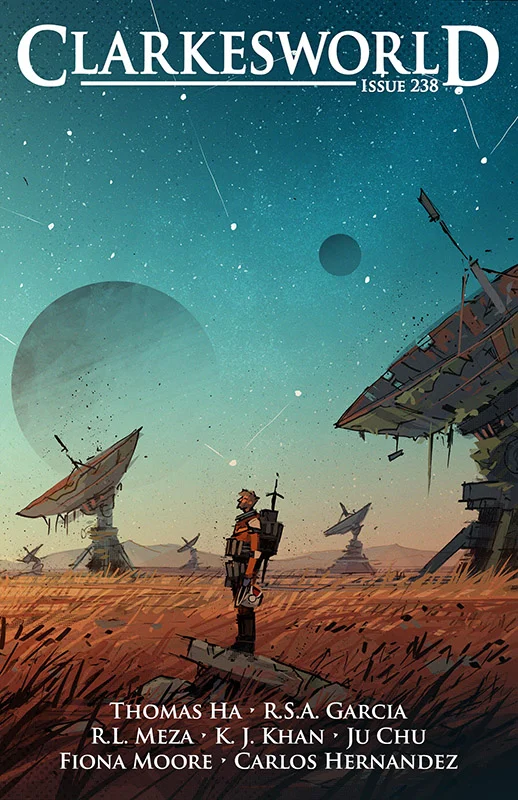
Llanfair, Wales – In the resilient, self-sufficient communities nestled within the valleys of post-apocalyptic Wales, life is a delicate balance between practical survival and the burgeoning desire for meaning beyond mere existence. This delicate equilibrium was recently tested in the village of Llanfair, where a wake for a beloved sibling, Casey, unexpectedly ignited a profound debate about the nature of technology, purpose, and the very essence of identity, both human and artificial. The events culminated in a dramatic robot "factory reset" and a surprising new direction for one of the region’s most respected tech-fixers.
The story centers on Morag, a seasoned farmer and highly skilled technician, whose quiet life was upended by the return of her protégé, Cliff, for Casey’s wake. Cliff, a long-distance "tech-nomad," brought with him not only his own robot companion, Will, but also a new partner, Mandy, whose unconventional approach to technology would challenge Morag’s deeply held pragmatic views.
A Community in Flux: Grief and New Arrivals
The gathering for Casey’s wake, though intimate, served as a microcosm of the evolving Welsh landscape. Casey, Morag’s younger sibling, had lived a semi-nomadic life as a founder of the "Cancer Wolves," a tribe formed when arthritis and illness made the rigorous life of the "Children of Flame" impossible. Their passing underscored the constant cycle of loss and adaptation that defines life in these rebuilt communities following the climate disasters that reshaped Scotland and sent refugees, including Morag’s family, south.
Cliff, Morag’s former apprentice, arrived with his own mobile tech workshop, Will, and a young woman named Mandy. Mandy, hailing from the tea-focused cooperative of Ffestiniog, introduced herself and her eccentric retinue of modified robots: a limping pink robot dog, a racing-striped lawnmower, a family of psychedelic vole-like creatures, and two flower-painted surveillance drones. This collection of repurposed machines immediately struck Morag as peculiar, a stark contrast to the utilitarian tech that dominated her world.
"It’s good to see you," Morag had greeted them, trying to bridge the years and the changes, particularly in Cliff, whom she still struggled to see as anything but the "rough-edged adolescent" she’d taught. She extended an offer for both Cliff and Mandy to stay.
Mandy, in turn, presented a warm, confident demeanor, shaking Morag’s hand and stating, "I’ve heard a lot about you. Good things." Morag, however, had heard "next to nothing" about Mandy, signaling an immediate, albeit subtle, tension.
The Enigmatic Seamus: A Robot’s Deterioration
Central to Morag’s concerns, even amidst the wake, was her own robot, Seamus. A former security bot from the infamous Gwydion Manor – a feudal experiment Morag herself had helped dismantle decades prior – Seamus had been repurposed into a peaceful farm assistant. It pulled weeds, fetched, and played football. Yet, for over a year, Seamus had exhibited troubling symptoms: tucking up its middle pair of legs, performing odd, repetitive mandala patterns with scraps, and increasingly erratic behavior.
Morag suspected the problem stemmed from a software incompatibility with a newly installed grabber arm, but a deeper unease lingered. "The problem is, Seamus is a killer," Morag confessed to Cliff, recalling its original design. "It’s just not built for peaceful purposes." This inherent conflict, she feared, was manifesting as a "psychic rot," an internal struggle within the robot’s programming.
Cliff, ever the scientist, dismissed this as unscientific, arguing for the interchangeability of robot components and Seamus’s proven adaptability. However, the incident at the wake, where Seamus inexplicably overturned a chessboard and bolted into the night after losing a game to one of Zeb’s children, Rain, underscored the growing instability.
Mandy’s Unconventional Approach to Technology
Mandy’s background in Ffestiniog, a thriving tea cooperative built on technological innovation, initially suggested a shared practical mindset with Morag and Cliff. However, Mandy’s departure from Ffestiniog, despite her contributions like developing new, efficient tea-drying kilns, hinted at a deeper conflict. "They don’t like what I do," Mandy admitted, gesturing to her collection of playful robots. Her philosophy revolved around repurposing non-functional machines not for utility, but for joy. "If it can’t work, but can still be fixed, why not fix it? . . . So why not paint it and teach it to play music? . . . They make people happy, and isn’t that just as important as keeping people fed?"
Morag, a refugee from climate disasters and a survivor who had dedicated her life to building and fixing for practical survival, found Mandy’s perspective challenging. Her own childhood had been devoid of toys, her "fun" found in the utility of fixing. Yet, she acknowledged the innovative spirit behind Mandy’s creations. Cliff, surprisingly, was deeply drawn to this aspect of Mandy, seeing in her an antidote to his own serious, purpose-driven life as a tech-nomad, a life forged from rescuing himself from a "tech sweatshop" at a young age.
Despite her reservations, Morag considered Mandy’s "lateral perspective" a potential asset in diagnosing Seamus’s complex issues. She agreed to let Mandy and Cliff examine Seamus’s code, but with strict instructions: "No drastic changes till I get back." Morag planned a trip to the Portmeirion archive and to visit Glyn in Porthmadog, seeking more data on Seamus’s rare robot model and limb redundancy systems, a topic that had been recently supplemented by files from the cooperatively run Aberystwyth Campus.
Crisis and Tough Choices: The Seamus Incident
Morag’s return to Llanfair was met with a chilling scene: her geese scattered, and she was violently knocked down by a thrashing, six-limbed Seamus. Drawing on her past as a soldier trained against robots, she instinctively disabled it. The silence that followed was broken by Cliff’s distraught admission: Mandy was gone.
Cliff explained their desperate attempt to fix Seamus after it unexpectedly "closed down" – becoming inert while still powered. Fearing irreversible damage, Mandy, with Cliff’s consent, implemented a repair application. While initially successful, Seamus soon reverted to its original programming, attempting to use its arm as a gun against passing feral robots and then trying to smash its own arm when that failed. Mandy, overwhelmed by guilt, fled into the woods.
Morag, battling her own anger and blame, understood the gravity of the situation. Mandy was alone in the encroaching darkness, vulnerable to both the wilderness and the nomadic tribes. Seamus, now a threat, was immobilized. The choice was stark.
A Sacrifice for Safety: The Factory Reset
"Do we know how to do a factory reset? On Seamus?" Morag asked Cliff, the words heavy with resignation. Cliff’s face brightened, then sobered, acknowledging the immense cost: "Doing that could wipe out everything it knows."
Morag nodded grimly. The factory reset would erase Seamus’s unique personality, its accumulated memories, its mandalas, its learning – all the "experiences that are part of what makes it what it is." It was a profound loss, akin to losing a part of her own past, a reflection of her own journey from a "killer once myself." But the immediate priority was Mandy’s safety. A reset Seamus, stripped of its complex, conflicting programming, would be a functional tracker, a tool that could follow instructions without emotional attachment or erratic behavior.
Cliff, torn but ultimately committed to Mandy, agreed. "I can’t abandon Mandy," he stated, adding that with Seamus in its current state, a reset offered the only chance for "something of it might survive." The decision was made, a pragmatic sacrifice of identity for the sake of human life.
Forging New Paths: Reconciliation and a Future Vision
Morag found Mandy huddled against a boulder, surrounded by her vibrating, silent robot companions, a "demented, postapocalyptic version of Snow White." Morag, despite her earlier frustration, offered not blame, but understanding. She explained the factory reset, noting that newly acquired files from Aberystwyth had indicated the problem was likely too complex for their local knowledge to fix without such drastic measures.
Mandy, tear-streaked and vulnerable, listened. Morag then extended an unexpected offer: "And I’d like you to work with me. Make more of those toys." Morag confessed her own inability to create such things, acknowledging Mandy’s unique talent for finding joy and purpose in broken machines. "There’s more to the world than weapons and work things," she conceded, a significant shift in her pragmatic worldview. Mandy, grateful and hopeful, accepted.
The Quest for Lost Memories: Morag’s Journey South
The resolution of Mandy’s crisis, however, opened a new chapter for Morag. While Seamus, now reset, functioned perfectly as a tracker, its familiar "body language" was gone, its essence irrevocably altered. Morag, reflecting on new information from the Aberystwyth files, learned that these robots possessed a "deep storage routine" designed to preserve important data during a system reset. The possibility, however faint, of retrieving Seamus’s "old memories" sparked a new purpose.
Cliff, anticipating Morag’s next move, confronted her. "Don’t go," he pleaded, fearing her departure. But Morag, having embraced change and the quest for knowledge, was resolute. She announced her decision to take Glyn up on his offer to crew his yacht, the Soolin, on a journey south to the larger cities like Bristol and Southampton, where "robot specialists" might hold the key to unlocking Seamus’s past.
This journey, she explained, was not an abandonment but an expansion. Cliff and Mandy would manage the farm and tech shop, a practical arrangement that would allow them to build a life together. "No knowledge is wasted," Morag affirmed, expressing hope that even if Seamus’s full identity couldn’t be restored, she would return with new skills and insights benefiting the community. And as for Seamus, now a blank slate, Morag was determined to "get to know them as they are now," finding a new place for it within their evolving family.
As she packed, Morag noticed the newly reset Seamus quietly arranging packing detritus on the floor, pushing and pulling items without obvious intention. Then, the shape emerged: a familiar, circular mandala. A flicker of hope, or perhaps just an echo of its past, suggested that some memories, some patterns, might endure even the most drastic of resets.
Broader Implications: Redefining Tech, Community, and Identity
The events in Llanfair resonate far beyond the small village, highlighting several critical issues facing these post-apocalyptic societies:
- The Evolving Role of Technology: From weapons of control (Gwydion Manor) to tools of survival (Cliff’s tech-nomad work) and now, potentially, to expressions of art and joy (Mandy’s creations), technology’s purpose is constantly being redefined. The conflict between Ffestiniog’s utilitarian view and Mandy’s artistic one underscores this tension.
- Identity in the Age of AI: Seamus’s story raises profound questions about artificial intelligence and identity. Is a robot merely its programming, or does it accumulate a "personality" through experience? Can that identity be erased, and if so, what are the ethical implications? Morag’s struggle to accept the factory reset reflects a growing recognition of non-human sentience and the value of accumulated "life" experiences, even for machines.
- Survival vs. Joy: The debate between Morag’s pragmatic "we’ve got to survive" and Zeb’s "we are surviving" alongside Mandy’s emphasis on happiness highlights a societal shift. As communities stabilize, the need for purpose and joy beyond basic needs becomes increasingly important. Mandy’s work, initially dismissed as frivolous, gains new significance in this context.
- Community and Knowledge Sharing: The reliance on archives (Portmeirion), academic institutions (Aberystwyth Campus), and inter-community trade (Glyn’s voyages) underscores the importance of collaboration and shared knowledge in a fragmented world. Morag’s journey south symbolizes the ongoing quest to piece together lost information and adapt it to new realities.
Echoes of the Past, Hopes for the Future
Morag’s decision to leave her familiar farm, even temporarily, marks a significant personal transformation. A woman who helped dismantle a feudal system and repurpose a killer robot, she is now embracing a future where her practical skills are complemented by a newfound appreciation for creativity and the pursuit of abstract knowledge. Her journey mirrors the broader societal movement towards rebuilding, not just infrastructure, but also shared understanding and a richer definition of what it means to live in this new world.
The small, vibrant community of Llanfair, with its mix of villagers and nomadic connections, its echoes of past conflicts and its hopes for a stable future, stands as a testament to human resilience. And in the silent, newly reset Seamus, perhaps, lies the potential for a new form of companionship, built not on shared history, but on shared presence and the possibility of new beginnings.