Star Trek: Strange New Worlds Season 4 Soars with "Valles Marineris," Marking a Resurgent Return to Core Exploration
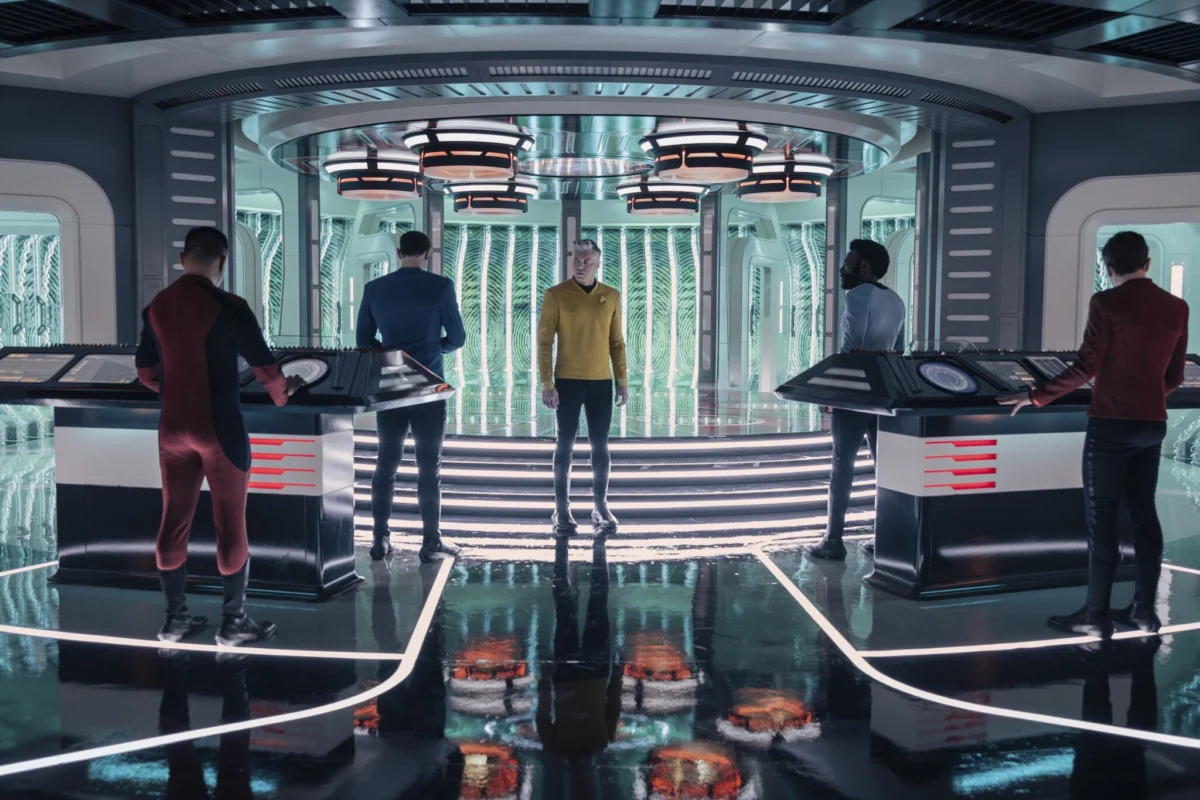
STARFLEET HEADQUARTERS, Earth, Sol System – The highly anticipated fourth season of Star Trek: Strange New Worlds has launched with a resounding success, delivering an episode critics are hailing as a triumphant return to the franchise’s foundational principles. The premiere, titled "Valles Marineris," debuted today, immediately distinguishing itself from its predecessor and signaling a potentially stellar trajectory for the season ahead. Following a third season that drew mixed reactions for its inconsistent tone and frequent reliance on fan service, this opening installment has been widely lauded as a superb demonstration of Star Trek at its finest: bold, ethical, and deeply rooted in the spirit of exploration.
A Return to Form: Embracing the Core Ethos of Exploration
"Valles Marineris" wastes no time in re-establishing the Enterprise as a vessel of discovery, deliberately steering clear of the "prequel landmines" that have, at times, hampered Strange New Worlds. Previous seasons occasionally veered into overly intricate fan theories, "hey-this’ll-be-cool" moments, and repetitive sub-referencing, sometimes overshadowing the narrative imperative of telling compelling, standalone stories about a starship venturing into the unknown. This premiere, however, emphatically prioritizes scientific inquiry and ethical dilemma over gratuitous callbacks, grounding itself firmly in the very essence of Star Trek.
The Enterprise is assigned to investigate a rare and enigmatic phenomenon: an interstellar squall that has materialized inexplicably around a distant star. Commander Spock notes the fleeting nature of such occurrences, underscoring the urgency of their mission. Chief Engineer Pelia, portrayed by the inimitable Carol Kane, offers a characteristically eccentric insight, claiming to have encountered a similar phenomenon while "in a phone box." While a clear, albeit subtle, nod to the iconic Doctor Who universe—further fueling theories about Pelia’s mysterious past—this moment serves more as a charming character beat than a narrative crutch, swiftly folding back into the primary mission of exploration. This judicious balance of lore and original storytelling highlights the episode’s successful pivot.
Peril and Discovery: A Multi-Front Crisis
True to Star Trek tradition, what begins as a scientific observation mission quickly devolves into a multifaceted crisis. The Enterprise detects a faint distress signal emanating from a buoy within the squall. Upon investigation, the anomaly expands, trapping the starship and rendering it almost entirely powerless. Critical systems fail, warp engines are inoperable, and the ship finds itself adrift without the crucial uridium needed to reignite its propulsion. Worse still, their navigational systems are compromised, leaving the crew disoriented in an uncharted region of space.
With the Enterprise severely crippled, a landing party consisting of Number One (Rebecca Romijn), La’an Noonien-Singh (Christina Chong), and Erica Ortegas (Melissa Navia) is dispatched via shuttlecraft to a nearby M-class planet, one of three identified in the system, in search of the vital uridium. This mission immediately injects a palpable sense of urgency and danger, separating the crew and setting the stage for parallel narratives of survival and diplomacy.

Simultaneously, the beleaguered Enterprise faces an external threat. A technologically advanced vessel, utilizing a sophisticated tractor beam, ensnares the starship and declares it salvage. The captain of this ship, Battle Commander Cassell, masterfully portrayed by Saffron Burrows, presents a formidable challenge to Captain Pike. Their subsequent interactions form the ethical backbone of the episode.
One of the more persistent, yet often unfounded, criticisms leveled against contemporary Star Trek productions is a perceived misunderstanding of the franchise’s core tenets. "Valles Marineris" offers compelling counter-evidence, showcasing magnificent exchanges between Anson Mount’s Captain Pike and Burrows’s Cassell. Pike, embodying the quintessential Star Trek captain, consistently advocates for communication over conflict, understanding over violence. Cassell’s people, a Vulcanoid species, are locked in a generations-long conflict with the insectoid Dol’Drm from a neighboring planet. Despite their impressive technological prowess—including the ability to phase through solid matter—they lack faster-than-light travel and universal translators, hindering any meaningful dialogue with their adversaries. Pike seizes this opportunity, offering Starfleet’s expertise to facilitate proper communication, an offer that holds the promise of unprecedented peace.
The Unveiling of History: A Sol System Revelation
The complex situation takes an astonishing turn when Spock, meticulously analyzing the Enterprise‘s predicament, determines not only their spatial coordinates but also their temporal displacement. The shocking revelation: they are not in a distant, unknown star system, but rather the Sol system itself, a staggering 65 million years in Earth’s past. Cassell’s homeworld, the planet she so fiercely defends, is Mars, and the M-class planet where the landing party is desperately searching for uridium is none other than prehistoric Earth.
This revelation immediately amplifies the stakes for both narratives. On Earth, Number One, La’an, and Ortegas find themselves confronting the planet’s apex predators: dinosaurs. The episode cleverly evokes the spirit of Ray Bradbury’s "A Sound of Thunder," as the landing party operates under the implicit, yet ever-present, imperative to avoid altering the timeline. Their mission becomes a thrilling exercise in ingenuity, as they navigate a primeval landscape, seeking non-lethal solutions to formidable biological threats. Highlights include Number One’s precise phaser stun to a Tyrannosaur’s soft palate and La’an’s surprisingly effective punch to a raptor’s head—a moment of unexpected humor and character development.
The Weight of Foreknowledge: Pike’s Impossible Choice
Pike’s diplomatic efforts on board the Enterprise are ultimately undone by the harsh realities of historical foreknowledge. Cassell discovers Pike’s deliberate omission regarding the Enterprise‘s future origin and the devastating fate of Mars. In the future Pike inhabits, Mars is a desolate, dead world, terraformed into habitability only by Pike’s own people. The colossal canyon known as Valles Marineris, a defining feature of the Martian landscape, was not naturally formed but carved by a Dol’Drm weapon, an act of war that cost millions of lives and left an indelible scar on Mars. This brutal truth, coupled with Pike’s lie-by-omission, shatters any fragile trust Cassell had begun to place in him, burning away her nascent interest in peace.
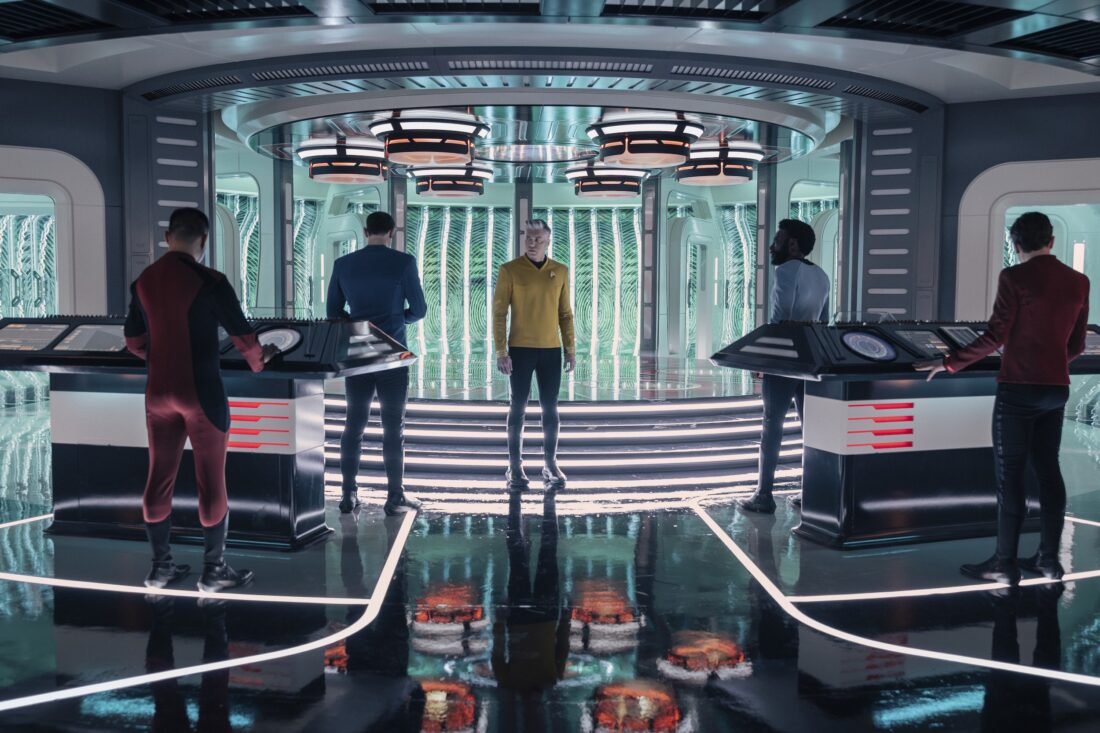
Driven by vengeance and a desperate desire to prevent her future, Cassell’s forces steal the Enterprise‘s primary antimatter containment unit, intending to weaponize it and obliterate the Dol’Drm homeworld. Just as despair sets in, the landing party returns, having successfully procured uridium—ironically, from a crashed Dol’Drm ship—allowing the Enterprise to restore auxiliary power. A brief, yet gratifying, digression for long-time science fiction fans: the Enterprise‘s ability to power up stems from the presence of a backup antimatter containment unit, a refreshing touch of realism that addresses a common logistical oversight in genre storytelling.
With sensors back online, Spock makes a final, crucial discovery: the Dol’Drm homeworld is not one of the familiar planets, but a previously unknown fifth planet situated between Mars and Jupiter, roughly the size of Mars. The Enterprise races to intercept Cassell’s ship, intent on preventing the catastrophic destruction of an entire civilization.
In a moment of profound moral gravity, Pike orders his crew to stand down. The revelation of the fifth planet fundamentally alters his understanding of the timeline. He knows that in 65 million years, the region between Mars and Jupiter will host a vast asteroid belt. The horrifying realization dawns: the destruction Cassell is about to unleash is not merely an act of war, but a predetermined historical event—the very cataclysm that forms the asteroid belt.
The episode unflinchingly portrays the visceral agony of Pike’s decision. His crew, visibly affected, are forced to bear witness as an entire world, an entire civilization, is annihilated before their eyes. Cassell’s ship, caught in the inferno, is also destroyed, her desperate suicide mission becoming a tragic, inevitable part of cosmic history. This act of non-intervention, a grim adherence to the Prime Directive’s temporal implications, allows the catastrophic explosion to generate the necessary energy displacement, propelling the Enterprise back to the 23rd century. In a cyclical paradox, they realize the interstellar squall they were sent to investigate was, in fact, the residual energy of their own return, and the distress buoy, their own. Spock further confirms that the Dol’Drm homeworld is now the asteroid belt, and that a piece of debris from the explosion struck Earth, triggering the extinction-level event that wiped out the dinosaurs and irrevocably altering Mars’s orbit and atmosphere.
The episode refuses to soft-pedal the moral weight of Pike’s choice. While inaction can often be the most culpable course, here, it is a necessary, albeit horrific, duty. Pike, intimately aware of his own tragic future, understands the profound inevitability of certain historical events, even when they involve unimaginable loss.

Crafting a Stellar Narrative: Performances, Pacing, and Production
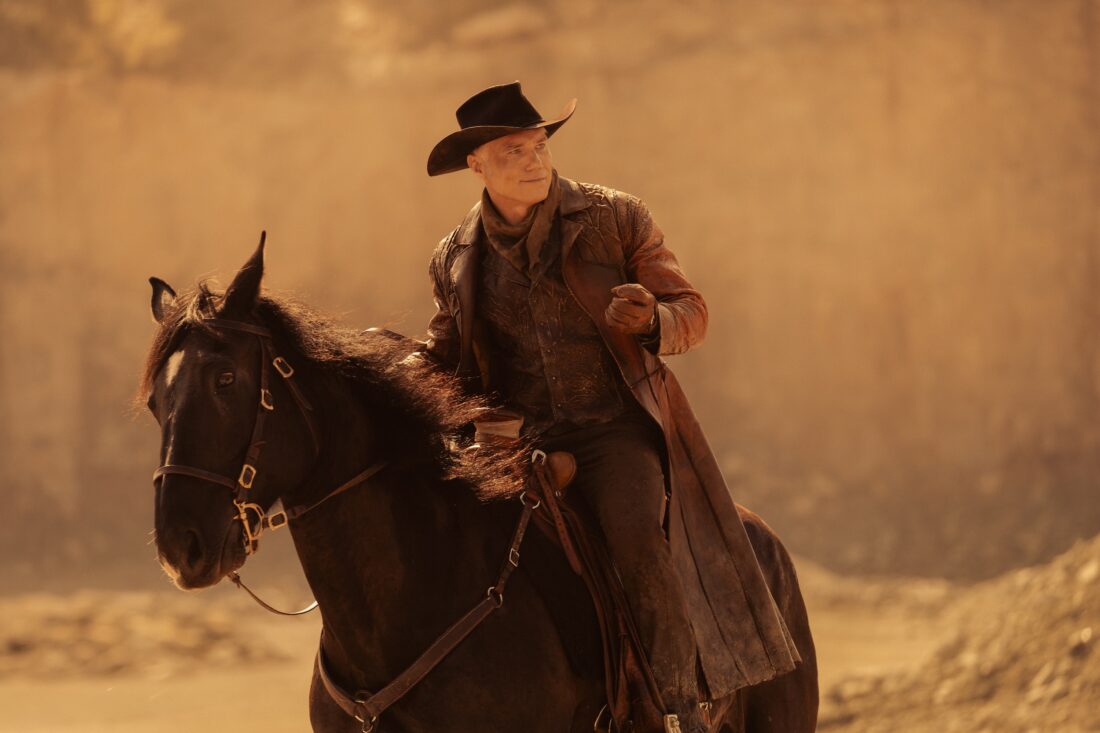
"Valles Marineris" truly has everything: the cool CGI adventure of the landing party battling dinosaurs, Pike’s quintessentially Trek-like appeal for communication and peace, and Cassell’s internal struggle between a lifetime of war and the fleeting hope of dialogue. Saffron Burrows imbues Cassell with remarkable dignity and gravitas, greatly aided by a superlative script credited to executive producers Akiva Goldsman & Henry Alonso Myers, from a story by Myers and co-executive producer Alan B. McElroy. The episode even delivers a touch of "space cowboy" fun in its opening, featuring Pike, M’Benga, and La’an covertly delivering supplies on an alien planet, a delightful nod to Anson Mount’s equestrian skills honed during his time on Hell on Wheels.
The pacing is masterful, expertly weaving together the diplomatic tension on the Enterprise with the prehistoric survival drama on Earth. The visual effects are top-tier, rendering both the interstellar squall and the majestic, terrifying dinosaurs with convincing detail. The sound design amplifies the drama, from the creaks and groans of a dying starship to the thunderous roars of a Tyrannosaur.
Deep Cuts and Future Foundations: Continuity and Character Arcs
Beyond its compelling narrative, the episode is peppered with delightful, subtle touches for long-time fans. The Vulcanoid appearance of Cassell’s people subtly references early Star Trek concepts where Spock was originally envisioned as Martian. Furthermore, M’Benga’s observation that the DNA detected in Cassell’s people is present in many Alpha Quadrant species is a clever continuity callback to Star Trek: The Original Series‘s "Return to Tomorrow," where Spock muses about Vulcan’s potential origins on another planet. This suggests a grander, shared lineage across the galaxy, potentially linking these ancient Martians to the very fabric of known species.
The series continues its excellent work in portraying younger versions of beloved characters. We see a nascent Scotty, already laying the groundwork for his legendary engineering career by installing alert lights for when Ortegas pushes the Enterprise‘s engines beyond their specifications. This depiction of a more conservative, yet equally brilliant, young engineer adds depth to a character previously known for his miraculous, often reckless, solutions. This evolutionary character development is a hallmark of Strange New Worlds, effectively bridging the gap between its prequel status and the established canon.
While overwhelmingly positive, the episode does feature a couple of minor quibbles. Admiral April’s offer of a commodore promotion to Pike, and Pike’s subsequent refusal, treads familiar Trek cliché territory. However, this predictable beat is somewhat mitigated by the welcome promotion of Number One to full commander. Additionally, Uhura’s mentorship of a Vulcan cadet, whose spectacularly snotty demeanor and propensity for speaking out of turn go unaddressed, struck some viewers as a missed opportunity for character-building or disciplinary realism.
Conclusion: A Promising Trajectory for Season Four
Despite these minor points, "Valles Marineris" stands as a powerful statement of intent for Star Trek: Strange New Worlds. It successfully recalibrates the series, reaffirming its commitment to the core tenets of exploration, ethical quandaries, and character-driven storytelling that define the Star Trek legacy. The episode delivers high-stakes action, profound philosophical dilemmas, and stellar performances, all while deepening the rich tapestry of the Star Trek universe. It is a confident, compelling premiere that not only revitalizes the show’s critical standing but also sets a high bar for the adventures that undoubtedly lie ahead. For fans eager for a return to true, unadulterated Star Trek exploration, the fourth season of Strange New Worlds is, indeed, back, and not a moment too soon.