Traps & Treachery: A Seminal D20 Sourcebook That Defined Fiendish Encounters
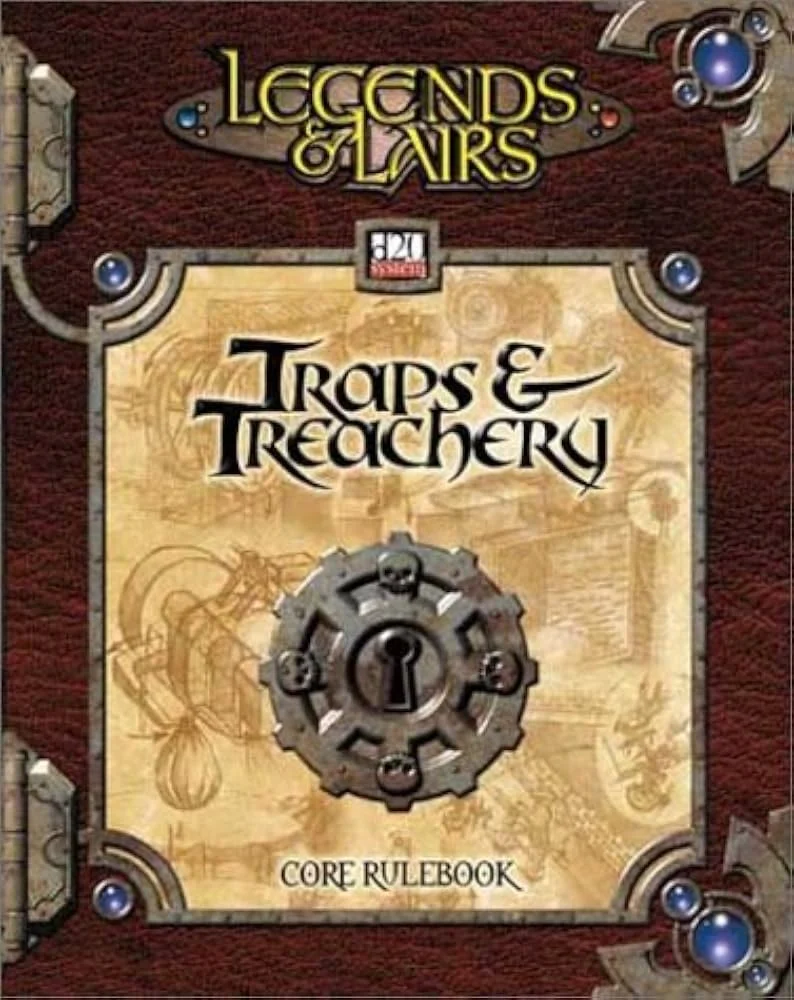
More than two decades after its initial release, Traps & Treachery, a D20 supplement from Fantasy Flight Games, continues to be lauded as an indispensable resource for Dungeon Masters and a comprehensive guide for players venturing into the shadowy world of rogues and cunning challenges. Originally published on March 14th, 2002, this 172-page hardback book quickly carved out a reputation for its unparalleled detail and practical utility, earning a place on many gaming tables right alongside the core rulebooks.
Authored by a team comprising Greg Benage, Kurt Brown, Mark Chance, Brian Ferrenz, Lizard, David Lyons, and Brian Patterson, Traps & Treachery retailed for $24.95. Its black-and-white presentation belied the rich tapestry of content within, offering a depth of material comparable to core monster compendiums. The book’s critical reception was overwhelmingly positive, with reviewers often proclaiming it a definitive work that set a new standard for specialized D20 supplements.
The D20 Era and the Quest for Specialized Content
The early 2000s marked a vibrant period for tabletop role-playing games, spearheaded by the widespread adoption of Wizards of the Coast’s D20 System. The Open Game License (OGL) had unleashed a torrent of creativity, allowing third-party publishers to develop and release content compatible with Dungeons & Dragons 3rd Edition. This era saw an explosion of specialized sourcebooks, moving beyond generic monster manuals and adventure modules to focus on specific aspects of gameplay, world-building, and character development.
Fantasy Flight Games (FFG) emerged as a prominent player in this burgeoning market, known for its high-quality production and innovative design. Traps & Treachery was a testament to FFG’s ambition to provide GMs and players with tools that were not only mechanically sound but also narratively inspiring. Prior to its release, while some trap-focused books existed (notably the Grimtooth’s Traps series), they often leaned heavily into the whimsical or outright absurd, prioritizing comedic effect over practical, integrated challenges. Traps & Treachery arrived to fill a perceived gap, offering sophisticated, well-thought-out obstacles designed to enhance gameplay rather than simply frustrate players. It sought to provide a definitive answer to the question of how to incorporate traps and treachery into a campaign in a meaningful and engaging way.
The book’s success demonstrated a clear market demand for such focused, high-quality content. GMs were hungry for resources that could save them preparation time while simultaneously elevating the quality of their encounters. Players, particularly those drawn to the rogue class, sought ways to deepen their characters’ engagement with the game world and expand their mechanical options. Traps & Treachery aimed to serve both masters, albeit with some inherent design challenges.
An In-Depth Look at Its Contents
Traps & Treachery is meticulously structured, dedicating significant portions to both the challenges themselves and the characters best equipped to navigate or deploy them. The book’s comprehensive nature is arguably its greatest strength, offering a wealth of information that can be immediately dropped into any D20 campaign.
The Architect of Peril: Deconstructing the Traps Chapter
Undoubtedly the cornerstone of the book, the "Traps" section spans seventy pages, offering a diverse array of mechanical and magical contraptions. What distinguishes these traps is their focus on more than just raw damage; many are designed for strategic purposes, such as imprisonment, party manipulation, or presenting moral dilemmas. This breadth of design allows GMs to deploy challenges that resonate with various narrative goals and player skill levels.
Consider some of the illustrative examples provided:
- Blackstone’s Clever Cage: This trap exemplifies a shift from lethal encounters to tactical ones. Designed to imprison trespassers rather than kill them, it offers a welcome change of pace, particularly for lower-level parties. Such traps can serve as minor encounters, testing resourcefulness and problem-solving without draining significant combat resources, thereby adding depth to dungeon exploration.
- Devilish Dungeon Double Slide: This ingenious design aims to split parties, moving characters to different, often more dangerous, areas of a dungeon. While demanding careful management from the GM running two groups simultaneously, it can yield significant narrative and strategic dividends, creating tension and forcing players to adapt to unforeseen separations.
- One Last Coin: Sometimes, the most profound consequences arise from the simplest temptations. This trap utilizes a single coin, not as a direct threat, but as a magical lynchpin sealing away a demon. Discovering its true purpose presents players with a moral quandary: claim the coin and face the demon, or leave it and forgo a potential treasure?
- Blackstone’s Confining Conundrum: This highly imaginative trap involves characters shrinking as they fall down a diminishing shaft, only to be returned to full size at the bottom, effectively trapping them in the room they land in. It’s an environmental puzzle as much as a trap, requiring clever thinking and potentially unconventional solutions.
- Deep Dwarf Darknetter: Triggered by the presence of light, this trap is perfectly tailored for subterranean environments and the creatures that inhabit them. It encourages DMs to think about the ecology of their dungeons and how traps can interact with the natural habits and senses of different races, adding a layer of realism and immersion.
The traps presented in Traps & Treachery are meticulously detailed, not only describing their effects but also providing explicit guidelines for their detection and disabling. This attention to mechanical clarity is a boon for Dungeon Masters, significantly reducing preparation time and ensuring consistent rulings at the table.
Beyond the Snare: Puzzles and the Art of Design
While shorter than the traps section, the "Puzzles" chapter should not be underestimated. It offers a variety of mental challenges, including logic puzzles, math puzzles, word puzzles, and chess puzzles, alongside unique challenges and tests. These elements provide a crucial counterpoint to purely mechanical traps, engaging players’ intellects and offering different avenues for problem-solving within an adventure.
Perhaps even more critical is the "Trap Design" chapter. This section, which some contemporaries dismissed as "worthless," was passionately defended by reviewers as one of the book’s high points. It goes far beyond the basic guidelines found in the Dungeon Master’s Guide, delving into the nuanced elements of trap creation. More importantly, it discusses the various ways traps can be implemented during the course of an adventure, emphasizing their narrative function rather than just their mechanical effect. The chapter also provides invaluable clarification on the mechanics of "detecting" and "disabling" traps, resolving common ambiguities that often arose at gaming tables. For DMs seeking to integrate traps seamlessly and logically into their campaigns, this chapter provides an essential framework.
The Rogue’s Arsenal: Mastering the Way of Thievery
Kicking off the book (and somewhat counter-intuitively placed before the traps themselves), the "Way of the Rogue" chapter serves as a comprehensive resource for players and GMs focused on the arts of stealth, subterfuge, and thievery. It opens with rich discussions of trap lore, which not only adds flavor but also provides valuable insights for describing the detection and disabling of traps in-game.
The chapter then delves into the "business of thievery," exploring the intricate workings of guilds, the practice of extortion, the nuances of smuggling, and a variety of other rackets. This section provides GMs with excellent hooks for urban adventures and complex NPC organizations.
For character development, the book introduces a handful of compelling prestige classes:
- Discreet Companion: Focuses on social infiltration and manipulation.
- Guildmaster: For those who wish to command a network of rogues and criminals.
- Roofrunner: Specializes in urban parkour and infiltration from above.
- Trapmaster: An obvious choice for those who wish to master the creation and deployment of traps.
Additionally, a new NPC class, the "Thug," provides GMs with a versatile template for various low-level adversaries or allies. The chapter also expands the mechanical options available to rogues and other characters through new skills, feats, and equipment. A particularly valuable inclusion is the detailed rules for making and using poisons, complete with new poison types, adding a gritty, strategic layer to combat and infiltration. The chapter is rounded out with a few new arcane and divine spells, and even a "Thievery" domain for clerics, demonstrating a holistic approach to integrating roguish themes across different character classes. This "catch-all" approach, while broad, ensures that players and GMs have ample tools to flesh out characters and encounters related to cunning and stealth.
The Dual Nature: Strengths and Strategic Considerations
Traps & Treachery is a book of immense utility, yet it also presents certain design choices that warrant discussion, reflecting the inherent complexities of producing a specialized D20 supplement.
Unparalleled Information Density
The overwhelming consensus regarding Traps & Treachery‘s strengths boils down to one word: Information. The book is packed with "crunchy stuff" – mechanics, lore, and ready-to-use content – waiting to be integrated into campaigns. For any DM with a penchant for injecting fiendish traps into their scenarios, it is an essential reference.
One of its most praised features is the meticulous attention to detail. Every single trap in the book not only describes its effects but also provides specific guidance on what it means to detect and disable it. This level of clarity is invaluable for DMs, significantly streamlining game preparation and ensuring consistent rulings during play. It removes the guesswork, allowing DMs to focus on narrative and player interaction.
Moreover, the book’s utility extends beyond the confines of traditional dungeon crawls. Its principles and specific traps can be adapted to a wide array of settings. As noted by one reviewer, the book was successfully used to replace an "absurd" trap in a city adventure (Terror in Freeport), demonstrating its adaptability. Whether for a DM building a sprawling dungeon, designing a city heist, or crafting a wilderness ambush, the book provides relevant and inspiring material. Even for players of rogues, the initial chapters offer a treasure trove of character options, lore, and mechanical enhancements. In essence, it offers something valuable for nearly every participant in a D&D game.
Navigating the Compromises
Despite its strengths, Traps & Treachery faced some critique, primarily concerning its dual focus. The reviewer expressed a preference for a narrower scope, suggesting that either 172 pages of pure trap content or 172 pages of thief-oriented information would have been more ideal. The reasoning behind this is pragmatic: as a DM, one primarily desires trap information, which players should ideally not see. Conversely, players interested in rogue mechanics have little need for the detailed, GM-facing trap descriptions. This creates a natural tension, as the book contains content that players shouldn’t read alongside content specifically designed for them. This structural dilemma is a common challenge for supplements attempting to cater to both sides of the DM screen.
Another point of contention, albeit less frequent, was the inclusion of a few "over-the-top" or elaborately engineered traps. While rare within the book, examples such as a trap that turns a victim into a mouse to be hunted by housecats, a treadmill leading into spinning blades, or a corridor that shoots buzzsaws, were cited as potential "atmosphere killers" that could deflate suspension of disbelief for some DMs. This highlights a fundamental difference in design philosophy regarding the tone and realism of challenges in TTRPGs.
However, it’s crucial to contextualize this criticism. Reviewers often noted that compared to other trap-focused books of the era, such as Grimtooth’s Traps (which reveled in the ludicrous and ridiculous), Traps & Treachery maintained a much higher standard of grounded, plausible, and narratively integrated challenges. The occasional outlier did not detract from the overall quality and practicality of the vast majority of its content. For DMs who found Grimtooth’s conceptually appealing but practically unusable due to its excesses, Traps & Treachery was indeed a "dream come true."
The Publisher’s Vision and Market Impact
Fantasy Flight Games’ decision to publish Traps & Treachery was a bold one, reflecting a strategic vision to corner a specific niche within the D20 market. The goal was clearly to create a definitive, comprehensive resource for GMs and players alike, one that transcended previous attempts at trap-centric supplements. The success of the book, as evidenced by its critical acclaim and enduring popularity, validated this comprehensive approach.
The inherent challenge of balancing GM-facing and player-facing content within a single volume was a calculated risk. While some reviewers noted the awkwardness of having both sets of information in one book (given that players shouldn’t spoil the traps for themselves), the sheer volume and quality of the content seemed to outweigh this structural concern for many. It allowed FFG to offer a complete package, appealing to a broader audience than a purely GM-focused or player-focused book might have. The commercial viability and long-term impact of Traps & Treachery suggested that the publisher’s gamble paid off, proving that a well-executed, deep dive into a specific game mechanic could achieve significant market penetration and critical success.
Implications: A Lasting Legacy in Tabletop Gaming
More than two decades on, Traps & Treachery stands as a benchmark for how specialized TTRPG supplements can be executed effectively. Its influence can be seen in subsequent trap design in D&D and other role-playing games, where the emphasis shifted towards more narratively integrated, strategically diverse, and clearly defined challenges. The book taught a generation of DMs that traps could be more than just damage-dealing obstacles; they could be narrative devices, environmental puzzles, and catalysts for role-playing.
Its enduring relevance is a testament to its foundational principles. Even with newer editions of Dungeons & Dragons, the core ideas for traps, the concepts of rogue guilds, and the detailed approach to detecting and disabling challenges remain highly adaptable and valuable. GMs playing D&D 5th Edition, for instance, can easily convert the mechanical effects of Traps & Treachery‘s content, drawing upon its rich wellspring of ideas to populate their own campaigns. The focus on detailed explanations for detection and disabling, a hallmark of the book, continues to be a desirable feature in modern design, as it empowers GMs to run these encounters smoothly and fairly.
The ultimate testament to Traps & Treachery‘s legacy comes from the passionate endorsement of those who used it. Its ability to inspire DMs to constantly jot down notes for campaign integration and its propensity to earn a permanent spot in a GM’s gaming bag, used in "every single game session," speaks volumes. As one reviewer eloquently concluded, "Traps & Treachery sits right next to my PHB, DMG, and MM every single time I sit down to the gaming table." This places it in the pantheon of truly essential tabletop gaming resources, securing its place in the history of Dungeons & Dragons supplements. It remains a masterclass in providing the tools for Dungeon Masters to craft truly fiendish, yet fair, challenges, and for players to navigate them with cunning and skill.
Review Details:
- Style: 5
- Substance: 5
- Authors: Greg Benage, Kurt Brown, Mark Chance, Brian Ferrenz, Lizard, David Lyons, Brian Patterson
- Publisher: Fantasy Flight Games
- Line: D20
- Price: $24.95
- ISBN: 158994020-2
- Product Code: DD17
- Pages: 172