"The Worst Survive": A Gritty Dive into a Dystopian 2042 with A.R. Wise’s Anti-Hero
FOR IMMEDIATE RELEASE
Main Facts
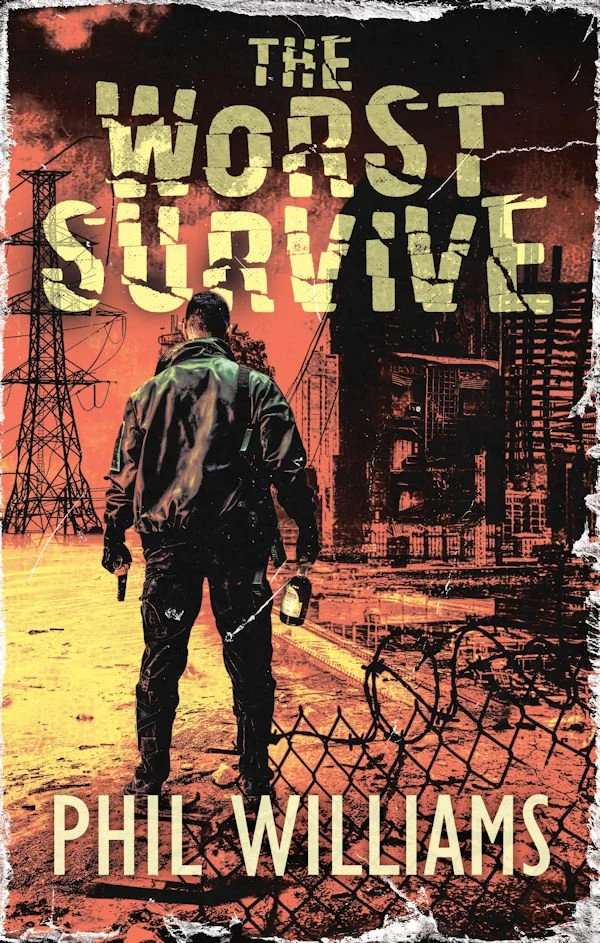
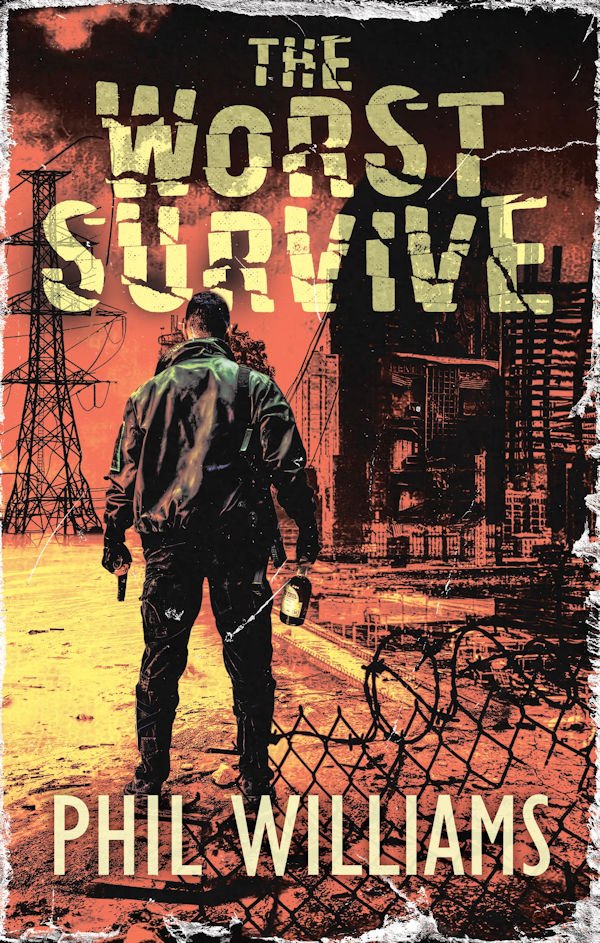
A.R. Wise is set to unleash a visceral new novel, The Worst Survive, plunging readers into a bleak, action-packed future. Scheduled for release on July 28th, this hard-boiled narrative introduces Scully, a jaded Englishman operating as a mercenary in the shattered landscape of the American Remnant in 2042. The book promises a relentless journey through a world dominated by "New Industry politics," brutal gang wars, and the moral ambiguities of survival.
At its core, The Worst Survive follows Scully, a man whose primary motivations are the next drink and enough coin to secure it. He possesses a profound disinterest in the grander machinations of his dystopian society, be it political intrigue or world-altering scientific endeavors. However, his mercenary skills are in high demand, particularly at a notorious bar known for connecting those with coin to those with capabilities. An irresistible offer of substantial "drinking money" draws Scully into a mission far grander and more perilous than his usual fare: protecting Laine Faergrowe, an unconventional scientist whose work represents a fragile glimmer of hope in a relentlessly corrupt world. The catch? Countless factions are determined to see Faergrowe dead.
Early critical reception, particularly from Julia Kitvaria Sarene of Fantasy Faction, heralds The Worst Survive as an unyielding and immersive experience. Sarene, a seasoned bookseller and reviewer, praises the novel for its immediate immersion into a "wreckage" of a world and its morally complex protagonist. She describes Scully as neither hero nor villain, but a compelling figure inhabiting a "mean, bruising place," whose survival instincts and brutal wit make him an unlikely, yet ultimately rootable, protagonist. The novel is set to challenge readers with its relentless pace, unflinching violence, and deeply flawed, yet undeniably charismatic, lead.
Chronology
The narrative of The Worst Survive is meticulously constructed to throw readers directly into a hostile future, demanding their immediate engagement with its grim realities.
The World of 2042: A Shattered American Remnant
The year 2042 paints a stark picture of a world in disarray, specifically within what is known as the "American Remnant." The promise of progress has fractured, replaced by the brutal pragmatism of survival. The vestiges of formal governance have been supplanted by the shadowy influence of "New Industry politics," where corporate power likely dictates societal structures and resources. This corporate control is perpetually challenged by the rampant "gang wars" that carve out territories and enforce their own savage laws across the dilapidated urban sprawl of places like New Oak City. This is a landscape where trust is a luxury, loyalty a rare commodity, and every individual is ostensibly "out to screw you." The societal fabric has frayed, leaving behind a moral vacuum where the ends often justify the most ruthless means. Science, rather than being a beacon of advancement, is either a tool for the powerful or a dangerous pursuit for those daring to dream of change, as exemplified by the perilous "science projects that could change the world" – and attract lethal attention.
Scully’s Origins: A Disillusioned Mercenary
Our protagonist, Scully, is introduced as an "Englishman" who has demonstrably "been through the wars." While the specifics of his past remain shrouded, the implication is clear: he is a veteran of untold conflicts, scarred both physically and psychologically by the brutality he has witnessed and participated in. This history has forged him into a cynical, world-weary mercenary. His primary coping mechanism and ultimate goal in life is simple: a drink, and enough "coin for another round." This singular focus underscores his detachment from the larger political and social struggles of 2042. He is not a revolutionary; he is a survivor, seeking only to numb the pain of existence with alcohol and the fleeting satisfaction of a well-executed, well-paid job. His mercenary status and significant "body count" suggest a past replete with morally compromising actions, placing him firmly in the anti-hero mold from the outset.
The Inciting Incident: A Bar, A Scientist, and a Promise of Hope
The catalyst for Scully’s unwilling plunge into a mission of world-altering significance occurs in a "special" bar – a nexus where the desperate and the dangerous converge to hire help for the very "things" Scully wishes to avoid. It is here that an offer too lucrative to refuse is laid before him: "a lot of drinking money." This enticement, appealing directly to Scully’s base desires, pulls him into the orbit of Laine Faergrowe. Faergrowe is no ordinary scientist; he is the "mark" who needs protecting, and more importantly, he embodies "a little piece of hope" in this corrupt wasteland. This detail immediately elevates the stakes beyond a simple protection detail. Faergrowe represents potential change, a threat to the established order of chaos and corruption. The magnitude of this mission is conveyed with stark clarity: "The consequences of this particular encounter—they’re big. Soil-your-pants big." This sets the stage for a high-octane narrative where the pursuit of hope is met with fierce, deadly opposition.
The Journey Unfolds: Escalation, Ambiguity, and Brutality
Once Scully accepts the job, the narrative accelerates, dropping the reader directly into a maelstrom of violence and moral uncertainty. The mission to protect Faergrowe quickly escalates into a frenetic chase across the American Remnant, where every encounter is fraught with peril. The reviewer notes that "some books ease you in. This one drops you straight into the wreckage and dares you to keep up." This rapid pace is punctuated by frequent, brutal fight scenes, underscoring the constant threat to Faergrowe and, by extension, Scully.
Crucially, the story extends beyond a simple protector-and-protectee dynamic. It delves into Scully’s "ragtag bar-family" and a growing circle of individuals whose true allegiances are constantly shifting. Lena, a character introduced as potentially kidnapped and dragged along, exemplifies this pervasive ambiguity. Her role is fluid: "a hostage, an ally, or running her own game entirely." This uncertainty is a deliberate narrative choice, ensuring that "nobody gets to sit still in one box for long." As Scully navigates this treacherous landscape, his journey becomes less about a clear-cut mission and more about survival, deciphering shifting loyalties, and confronting the ever-present threat of betrayal in a world where everyone fights for themselves.
Supporting Data
The Worst Survive constructs its compelling narrative through a potent combination of character depth, immersive world-building, and a distinctive stylistic voice.
Character Deep Dive: Scully – The Unlikely Guardian
Scully is the undisputed gravitational center of The Worst Survive, a protagonist who defies easy categorization. As the reviewer aptly puts it, he’s "not a good man. He’s not the villain either." This moral tightrope is precisely where the book thrives, exploring the "mean, bruising place" of his existence. His flaws are immediately apparent: a crippling "drinking problem," an irritable disposition, and a body hardened by violence ("barely a noble bone in his vicious body"). His initial "running commentary on women" is noted by the reviewer as a personal challenge, highlighting a character who is intentionally unlikable in some aspects. However, this is presented as Scully’s voice, not the author’s, an important distinction that allows for a deeper understanding of the character.
Beyond the swagger and crude remarks, a complex individual emerges. The reviewer observes that "once you push past it there’s a loyal, sharp, protective man underneath the swagger. Protective of those he likes that is. The rest can get a bullet to the head." This duality is key to Scully’s appeal. He operates on a brutal, yet discernible, code of loyalty, fiercely defending his chosen few while demonstrating ruthless efficiency against adversaries. His capacity for violence is matched by a sharp wit, allowing him to "put the punch in punchline," a crucial element that humanizes him amidst the brutality and adds a layer of dark humor to the narrative.
World-Building and Atmosphere: A Dystopian Reality
The setting of New Oak City in 2042 is rendered with stark, unflinching detail. It’s a place where "everyone’s out to screw you," creating an atmosphere of pervasive paranoia and self-interest. The world is a "corrupt wasteland," a description that resonates through every interaction and environment. The novel’s depiction of violence is explicit and unapologetic, serving to reinforce the harsh realities of this future. The quoted scene, where a character is "remarkably unmoved by the four corpses with dish-sized bullet-holes" and the car dropping "shook all the carnage up, fresh splatters on the windows," exemplifies the casual brutality and desensitization that pervades this society.
The narrative’s pace is described as "barely lets up," a relentless forward momentum that mirrors Scully’s own frantic existence. It is "hard-boiled and looking-back-on-it-all in exactly the right way," suggesting a narrative voice that is both immediate in its action and reflective in its cynicism. The dialogue, as showcased by the "degenerate broader argument of tits vs arse" and Scully’s expletive-laden retort, is raw, authentic, and reflective of the characters’ rough-hewn personalities. This unfiltered language contributes significantly to the immersive, gritty atmosphere, ensuring that readers feel fully embedded in Scully’s chaotic world.
Secondary Characters and Their Ambiguity: A Web of Uncertainty
While Scully is the central figure, the supporting cast is crucial in building the novel’s intricate web of uncertainty. Laine Faergrowe, the scientist, is more than just a MacGuffin; he is "really just the parcel here," meaning his immediate role is to be protected, but his significance lies in the "piece of hope" he embodies. His vulnerability and the hope he represents make him a magnet for both salvation and destruction.
Lena, introduced as a character caught in the crossfire, serves as a prime example of the pervasive ambiguity that permeates the narrative. Her status as "kidnapped and dragged along" immediately raises questions, which are then compounded by the possibility of her being "a hostage, an ally, or running her own game entirely." This deliberate blurring of lines ensures that readers, much like Scully, are constantly questioning motives and allegiances. This uncertainty is not limited to Lena but extends to "basically everyone in this book," creating a dynamic and unpredictable narrative where no character can be easily categorized, and betrayal always lurks just beneath the surface. Scully’s "ragtag bar-family" further complicates this network, introducing a layer of personal connection and potential vulnerability that challenges his otherwise solitary existence.
Genre Conventions and Subversion: The Anti-Hero in a Bleak Future
The Worst Survive firmly establishes itself within the dystopian and potentially cyberpunk genres, utilizing their conventions of societal decay, corporate dominance, and technological undercurrents. However, it subverts certain expectations, particularly concerning its protagonist. Scully is the quintessential anti-hero, a character far removed from traditional heroic archetypes. He is driven by self-interest and base desires, yet compelled by circumstance and a latent sense of loyalty to undertake a mission of grander importance. This subversion of the hero’s journey allows for a more nuanced exploration of morality in a world where clear-cut good and evil have ceased to exist. The grimdark aesthetic is palpable, not just in the violence but in the pervasive cynicism and the struggle for even a sliver of hope. The novel offers a character-driven take on these genres, focusing less on grand technological marvels and more on the raw human struggle for survival and meaning in a broken world.
Official Responses
While a formal press release from a major publisher might be forthcoming, the primary official response and critical endorsement for The Worst Survive comes from the insightful advance review by Julia Kitvaria Sarene of Fantasy Faction. Her perspective, informed by years of experience in the literary world, offers a compelling glimpse into the author’s intent and the book’s potential impact.
Author’s Vision: A.R. Wise’s Crafting of a Gritty Reality
Though the article does not directly quote A.R. Wise, the detailed review allows for strong inferences about the author’s creative vision. It’s clear that Wise set out to craft a narrative that is unflinchingly real, even within its speculative fiction framework. The choice of Scully as a protagonist suggests a deliberate exploration of moral decay and the blurred lines of ethics in a post-apocalyptic society. Wise appears to challenge the traditional hero archetype, instead presenting a character who is deeply flawed but undeniably effective and, in his own brutal way, honorable to those he deems worthy.
The pervasive cynicism, the relentless pace, and the visceral action point to an author committed to delivering a high-impact, character-driven story that doesn’t shy away from the ugliness of human nature when pushed to the brink. The nuanced portrayal of characters like Lena, whose allegiances are never quite clear, indicates Wise’s desire to keep readers on edge, mirroring the constant uncertainty faced by the characters themselves. The emphasis on Scully’s voice, even with its potentially off-putting elements, demonstrates a commitment to authentic character portrayal, prioritizing realism over comfort. Wise seems to be inviting readers not just to witness a story, but to inhabit a truly unforgiving world through the eyes of its most hardened survivor.
Early Critical Reception: Julia Kitvaria Sarene’s Endorsement
Julia Kitvaria Sarene’s review for Fantasy Faction serves as a powerful early endorsement for The Worst Survive. Her background as a "veritable wizard of book recommendations" from her 21 years as a bookseller lends significant weight to her judgment. Her expertise in guiding "countless customers to their next literary adventure" means her recommendation is not merely a personal opinion but an informed professional assessment.
Sarene’s review highlights several key strengths:
- Immersive Opening: "This one drops you straight into the wreckage and dares you to keep up." This points to the novel’s immediate, gripping nature.
- Complex Protagonist: Her initial struggle with Scully’s "running commentary on women" and subsequent appreciation for the "loyal, sharp, protective man underneath the swagger" underscores the character’s depth and the author’s successful portrayal of a morally ambiguous figure.
- Relentless Pacing: The description of the pace as "barely lets up" and "frenetic" signals a high-octane reading experience.
- Atmospheric World-building: Phrases like "New Oak City, 2042, everyone’s out to screw you" and the graphic depiction of violence illustrate the novel’s success in creating a tangible, dangerous setting.
- Overall Recommendation: Her concluding statement that "Scully’s the kind of bastard you end up rooting for anyway" despite the "frenetic, foul-mouthed ride" serves as a compelling call to action for readers seeking a unique and challenging experience.
Sarene’s review is not just a summary; it’s an analysis that frames The Worst Survive as a significant entry in its genre, particularly for its unflinching portrayal of an anti-hero in a truly bleak future. Her professional insight provides invaluable context for potential readers, guiding them on what to expect from this intense literary journey.
Implications
The release of The Worst Survive carries several implications, both for the literary landscape and for readers seeking new, challenging narratives.
Impact on the Genre: Redefining Dystopian Anti-Heroes
The Worst Survive appears poised to make a notable impact within the dystopian, cyberpunk, and grimdark subgenres. In an era saturated with tales of broken futures, A.R. Wise’s novel distinguishes itself by doubling down on the anti-hero archetype, pushing the boundaries of what readers expect from a protagonist. Scully is not a reluctant hero, nor is he a villain with a hidden heart of gold; he truly occupies a "mean, bruising place." This unyielding commitment to a morally ambiguous lead character could set a new benchmark for authenticity in grimdark narratives, encouraging other authors to explore even more complex and ethically challenging figures. The novel’s focus on character-driven grit over pure technological spectacle also offers a refreshing take on cyberpunk, grounding its future in human depravity and resilience rather than just flashy tech. It suggests a move towards more psychologically intricate dystopian narratives where the struggle is as much internal as it is external.
Reader Experience: A Challenging Yet Rewarding Ride
For readers, The Worst Survive promises a "frenetic, foul-mouthed ride through a world that won’t let you get comfortable." This implies a reading experience that is intense and perhaps even unsettling at times. Those accustomed to clear-cut heroes and predictable plots may find themselves challenged by Scully’s abrasive personality and the constant moral ambiguity. However, for enthusiasts of hard-boiled fiction, gritty sci-fi, and complex character studies, the novel offers a deeply rewarding journey. The fast pace and frequent action scenes, while potentially "a touch too thick" for some, will undoubtedly appeal to readers who devour action scene by scene, providing a constant adrenaline rush. The novel’s success hinges on its ability to make readers root for a character who is far from perfect, illustrating the enduring appeal of the flawed protagonist who, despite his vices, possesses a core of loyalty and effectiveness that makes him compelling.
Future Prospects: A Larger Universe Awaits
The review’s closing remark that "the job’s done and the bigger picture’s cracked wide open" strongly hints at the potential for The Worst Survive to be the first installment in a larger series. This open-ended conclusion suggests that while Scully’s immediate mission may be resolved, the overarching conflicts of the American Remnant, the "New Industry politics," and the implications of Laine Faergrowe’s "hope" are far from over. This tantalizing prospect offers readers the promise of continued exploration within this richly imagined, brutal world. A.R. Wise appears to have laid the groundwork for a sprawling narrative, allowing for further development of Scully’s character, the expansion of his "ragtag bar-family," and a deeper dive into the machinations that govern this broken future. The initial success of this novel could pave the way for a compelling series that continues to explore themes of survival, morality, and the search for meaning in a world teetering on the brink.
The Enduring Appeal of the Anti-Hero
Ultimately, The Worst Survive taps into the enduring appeal of the anti-hero in contemporary fiction. In increasingly complex and often cynical times, audiences often find more resonance with characters who reflect the messiness of reality rather than idealized heroism. Scully, with his drinking problem, his violent tendencies, and his gruff exterior, embodies a certain truth about survival in harsh environments. His loyalty to his chosen few, despite his overall misanthropy, makes him relatable on a fundamental human level. This novel reaffirms that even in the most desolate futures, it is often the "worst" among us—those who have nothing left to lose and everything to fight for—who possess the unique capability to navigate the darkness and, perhaps inadvertently, safeguard the last vestiges of hope.
For those eager to dive into this brutal yet captivating world, The Worst Survive is available for pre-order now and releases on July 28th.