AutoRemesher – Free & Open Source Retopology Tool
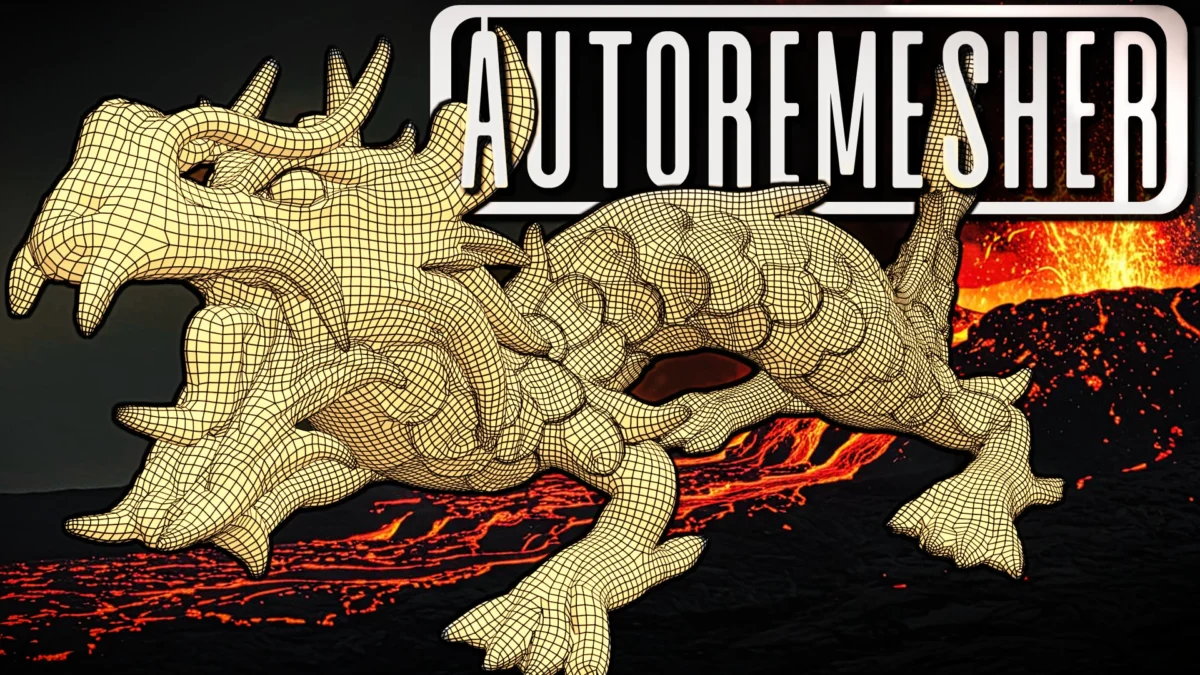
AutoRemesher 1.0: Revolutionizing 3D Model Retopology with Open-Source Innovation
[City, Date] – The landscape of 3D modeling has been significantly reshaped with the official release of AutoRemesher 1.0, a powerful and accessible new tool designed to streamline the complex and often time-consuming process of retopology. Developed by the visionary behind the popular Dust3D application, AutoRemesher promises to empower 3D artists, game developers, and digital creators with an efficient, one-click solution for transforming messy triangle-based meshes into clean, edge-loop-friendly quad topology. Available for Windows, macOS, and Linux, this open-source utility has not only reached a major milestone with its version 1.0 release but has also embraced a more permissive MIT license, further enhancing its appeal and utility within the broader creative community.
The Genesis of AutoRemesher: Addressing a Critical Workflow Bottleneck
For decades, 3D artists have grappled with the challenge of retopology – the process of rebuilding a high-polygon, often sculpted or scanned, 3D model with a cleaner, more optimized mesh structure. This is crucial for a multitude of reasons, including efficient animation, better UV unwrapping, improved performance in real-time applications like video games, and easier editing. Traditionally, manual retopology is a painstaking, labor-intensive task requiring significant skill and time. AutoRemesher emerges as a direct response to this industry-wide pain point, offering an automated approach that dramatically reduces the barrier to entry and accelerates workflows.
The creator of AutoRemesher, who also brought the innovative Dust3D modeling application to the forefront, has a proven track record of developing user-friendly yet powerful tools for the 3D art community. Dust3D itself is renowned for its intuitive approach to rapid 3D modeling, allowing users to quickly generate base meshes from rough sketches. AutoRemesher builds upon this ethos of accessibility and efficiency, targeting a fundamental step in the 3D asset creation pipeline that has long been a source of frustration for many.
Core Functionality: From Triangle Soup to Quad Perfection
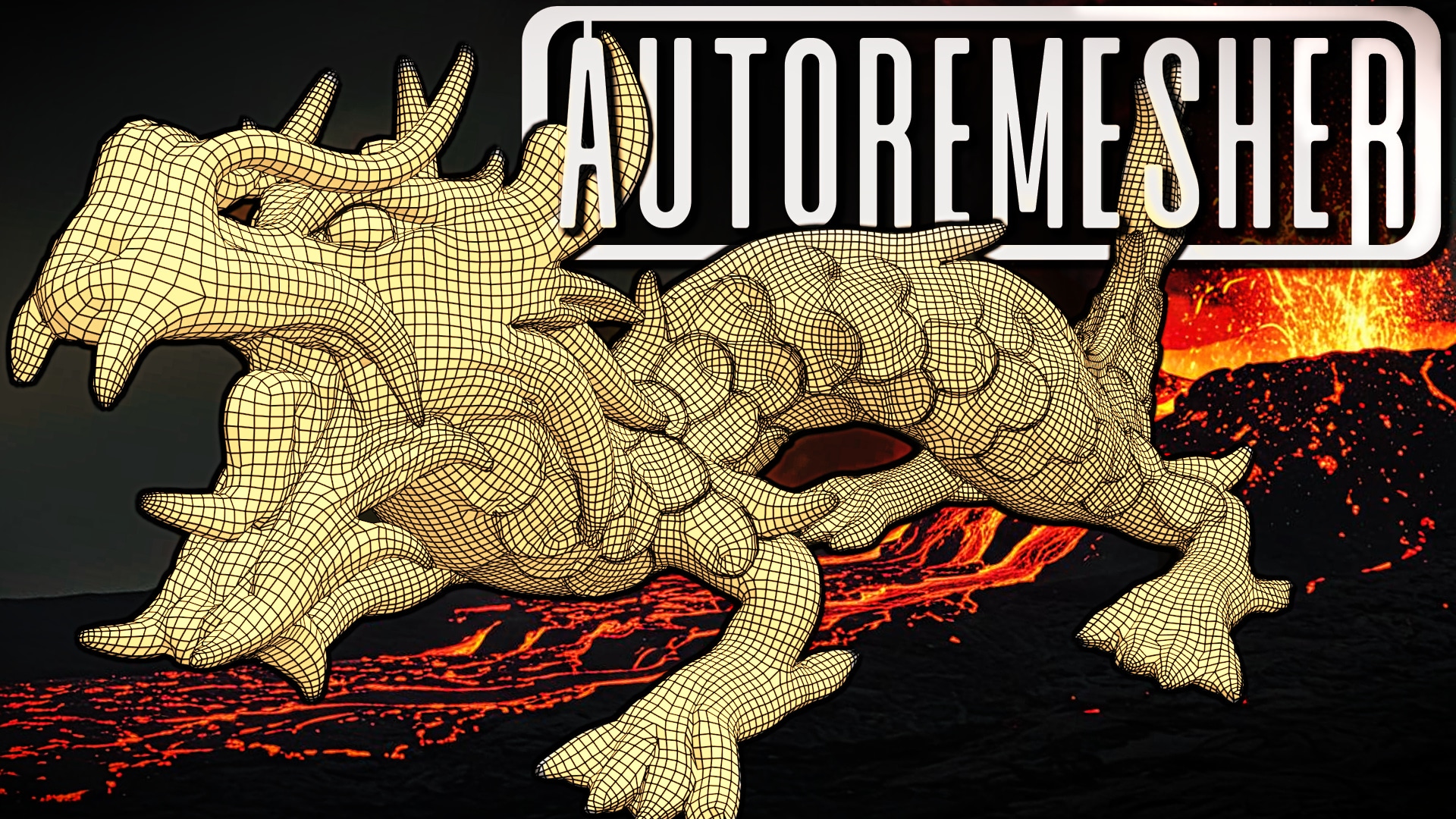
At its heart, AutoRemesher is an automatic quad remeshing tool. Its primary function is to take a 3D model that is composed of an intricate network of triangles – often referred to as "triangle soup" – and reconstruct it into a mesh composed predominantly of quadrilaterals (quads). This transformation is not merely aesthetic; it has profound implications for how the model behaves in subsequent stages of production.
The process, as described by the developers, is remarkably straightforward. Users can typically import their high-polygon models and, with minimal intervention, generate a new mesh with clean edge loops. These edge loops are essential for rigging and animation, allowing for natural deformations without pinching or undesirable artifacts. The "one or two clicks" promise suggests a highly intuitive user interface, designed to be accessible even to those who may not be seasoned retopology experts.
The technical underpinnings of AutoRemesher are robust, drawing upon a suite of well-regarded libraries in the computational geometry and computer graphics space. The project explicitly acknowledges its reliance on:
- Geogram: A C++ library for computational geometry, often used for mesh processing and analysis.
- libigl: A C++ library for geometry processing, widely utilized in research and development for tasks like mesh editing, remeshing, and surface reconstruction.
- isotropicremesher: This likely refers to algorithms and implementations focused on generating isotropic remeshing, a technique that aims to create uniform quad element sizes, leading to more predictable and high-quality results.
The integration of these powerful libraries allows AutoRemesher to perform sophisticated mesh analysis and reconstruction, ensuring that the generated quad topology is not only clean but also adheres well to the original surface’s curvature and details.
Chronology of Development and Licensing Evolution
While the recent release of version 1.0 marks a significant public milestone, the development of AutoRemesher has been an ongoing process. The transition from a more restrictive open-source license to the MIT license is a noteworthy development that deserves particular attention.
Initially, AutoRemesher was likely released under the GNU General Public License version 3 (GPLv3). The GPLv3 is a strong copyleft license, meaning that any derivative works or software that incorporates GPLv3-licensed code must also be released under the GPLv3. While this ensures that the software and its modifications remain free and open, it can sometimes pose limitations for commercial use or for developers who wish to integrate the code into proprietary projects.
The move to the MIT license represents a significant shift towards greater flexibility. The MIT license is a permissive open-source license that allows users to use, copy, modify, merge, publish, distribute, sublicense, and/or sell copies of the software, with very few restrictions. The only significant requirement is that the original copyright and license notice must be included in all copies or substantial portions of the software. This liberalization of the licensing is a strategic move that is likely to encourage wider adoption, integration, and even commercial application of AutoRemesher’s technology. It signals a commitment from the developers to foster broader innovation and collaboration around their tool.
The version 1.0 release signifies that the core functionality is considered stable and mature enough for widespread use, marking the end of a significant development phase and the beginning of a new era of community engagement and potential feature expansion.
Supporting Data and Technical Specifications
While the provided text does not include detailed performance benchmarks or specific polycount reduction statistics, the underlying libraries used by AutoRemesher are known for their efficiency and capability. Tools built on Geogram and libigl are often capable of handling complex meshes with millions of polygons. The effectiveness of an automatic remeshing tool is typically measured by several factors:
- Quality of Topology: The degree to which the generated quads form clean, predictable edge loops and avoid excessive triangles or N-gons (polygons with more than four sides).
- Fidelity to Original Shape: How well the remeshed model retains the original shape and details of the input mesh.
- Performance: The speed at which the remeshing process completes, especially for high-polygon models.
- Controllability: The extent to which users can influence the remeshing process (e.g., by guiding edge flow or specifying target polygon counts).
The description of AutoRemesher as a "click or two" operation suggests a high level of automation and likely prioritizes ease of use over granular control, though further details on advanced options would be beneficial. The video link provided in the original article is crucial for demonstrating these capabilities in practice, allowing potential users to see the tool’s performance firsthand.
Official Statements and Developer Vision
The core vision behind AutoRemesher, as inferred from its origin and licensing choice, appears to be democratizing advanced 3D modeling techniques. By providing a free and open-source tool that automates a complex and often expensive part of the workflow, the developers are enabling a wider range of individuals and teams to create higher-quality 3D assets.
The move to the MIT license is a clear indication of the developer’s desire to foster a collaborative ecosystem. By making the source code more readily available for integration into other projects, they are encouraging innovation and allowing the community to build upon their work. This approach is common among successful open-source projects and can lead to rapid advancements and broader adoption.
The creator’s prior success with Dust3D further solidifies their commitment to the open-source 3D creation space. This suggests a long-term dedication to providing valuable tools that address real-world challenges faced by digital artists.
Implications for the 3D Industry
The release of AutoRemesher 1.0 carries significant implications for various sectors within the 3D industry:
- Indie Game Development: Independent game developers often operate with limited budgets and smaller teams. Tools like AutoRemesher can drastically reduce the time and cost associated with asset creation, allowing them to compete with larger studios by producing higher-quality, more optimized game assets.
- 3D Printing: For 3D printing enthusiasts and professionals, converting complex scanned models into manifold, watertight meshes with cleaner topology can be essential for successful printing and post-processing.
- Virtual and Augmented Reality (VR/AR): The demand for efficient and performant 3D assets is paramount in VR/AR applications. AutoRemesher’s ability to optimize meshes directly addresses this need, enabling smoother rendering and more immersive experiences.
- Animation and VFX: While manual retopology may still be preferred for highly specific animation needs, AutoRemesher can serve as a powerful starting point or a tool for quickly retopologizing background assets or static elements, freeing up artists for more critical tasks.
- Education and Learning: The accessibility of AutoRemesher as a free and open-source tool makes it an invaluable resource for students and educators looking to learn and teach 3D modeling techniques without the barrier of expensive software licenses.
The shift to the MIT license is particularly impactful. It opens the door for commercial software developers to integrate AutoRemesher’s technology into their own pipelines and products, potentially leading to even more innovative applications and a wider reach for the core technology. This could spur the development of new workflows and specialized tools built upon AutoRemesher’s robust remeshing engine.
In conclusion, AutoRemesher 1.0 represents a significant advancement in the field of automated 3D model retopology. Its blend of powerful underlying technology, user-friendly design, and a liberal open-source license positions it as a critical tool for the modern 3D artist. The commitment to providing this technology freely and openly, coupled with the strategic move to the MIT license, signals a bright future for AutoRemesher and its potential to shape the way 3D models are created and utilized across a multitude of industries.