Mesh2Motion Evolves: Open-Source Animation Tool Expands Beyond Humanoids, Offering New Possibilities for Game Developers
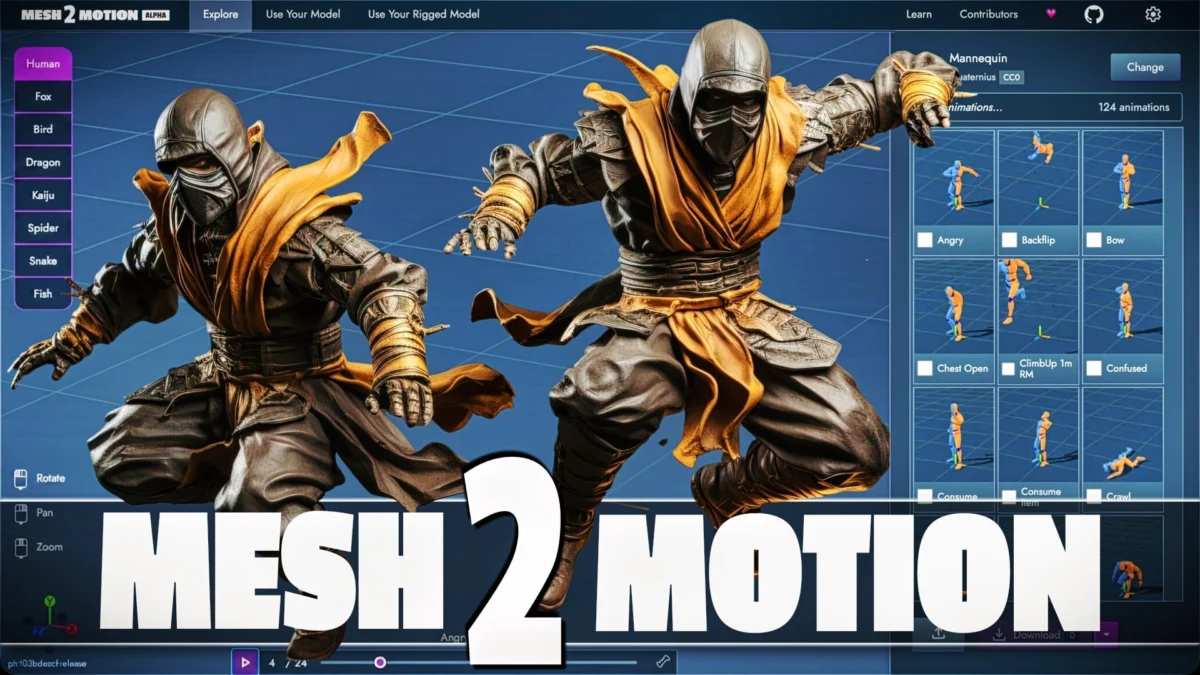
[City, Date] – Mesh2Motion, the innovative open-source animation tool that has been steadily gaining traction as a powerful alternative to commercial solutions like Mixamo, has announced a significant expansion of its capabilities. Originally focused on animating bipedal characters, the platform has now broadened its scope to include a diverse array of non-humanoid rigs, including birds, snakes, and even fantastical creatures like dragons. This development promises to unlock new creative avenues for independent game developers and 3D artists, offering a free and accessible pathway to bring a wider range of animated assets into their projects.
First highlighted by GameFromScratch.com last year, Mesh2Motion has consistently impressed with its user-friendly interface, robust feature set, and unwavering commitment to open-source principles. The latest update signifies a pivotal moment in its development, demonstrating a clear roadmap towards becoming a comprehensive animation solution for a broad spectrum of 3D content creation.
From Bipeds to Beasts: A New Era of Animation Possibilities
The core strength of Mesh2Motion has always been its ability to simplify the complex process of character animation. Its intuitive workflow allows users to import 3D models, apply a skeleton rig, pose the character, and then generate animations, all within a single, streamlined application. The previous focus on bipedal characters made it an ideal tool for creating human or humanoid animations, a staple in many game genres.
However, the recent expansion to include rigs for birds, snakes, dragons, and other creatures marks a dramatic leap forward. This move directly addresses a common challenge faced by developers working with non-humanoid characters. Creating convincing animations for creatures with unique anatomies and movement patterns can be time-consuming and technically demanding, often requiring specialized software or extensive manual keyframing. Mesh2Motion’s introduction of pre-built rigs and associated animation libraries for these diverse forms significantly lowers the barrier to entry.
For independent game studios and solo developers, this means the ability to populate their game worlds with a richer and more varied cast of characters without incurring significant licensing fees or investing in expensive software. The implications for genres like fantasy, adventure, and even abstract or stylized games are substantial, allowing for greater creative freedom and a more immersive player experience.
A Deep Dive into Mesh2Motion’s Enhanced Feature Set
Mesh2Motion’s ongoing development has consistently prioritized a user-centric design, ensuring that its powerful features are accessible to users of all skill levels. The platform’s core philosophy revolves around a seamless "Import, Rig, Animate, then Export" workflow, further enhanced by the recent additions.
Import, Rig, Animate, then Export: The Foundation of Efficiency
The fundamental workflow of Mesh2Motion remains a key selling point. Users can import their 3D models, which can be created in any standard 3D modeling software. The application then provides tools for applying a full skeleton rig, allowing for precise control over the character’s structure. The intuitive positioning of bones ensures that even complex rigs can be set up efficiently.
Crucially, Mesh2Motion incorporates a full undo/redo history. This feature is invaluable for experimentation, allowing users to confidently explore different posing and animation options without fear of losing their work. This iterative approach to animation creation is vital for achieving polished results.
Modifying and Importing Animations: Unlocking Creative Control
A significant aspect of Mesh2Motion’s open-source nature is its transparency and extensibility. The project provides all the source Blender model and animation files. This means that users are not merely consumers of pre-made assets; they can also delve into the underlying structure, study how animations are created, and even modify them to suit their specific needs.
This open access empowers developers to:
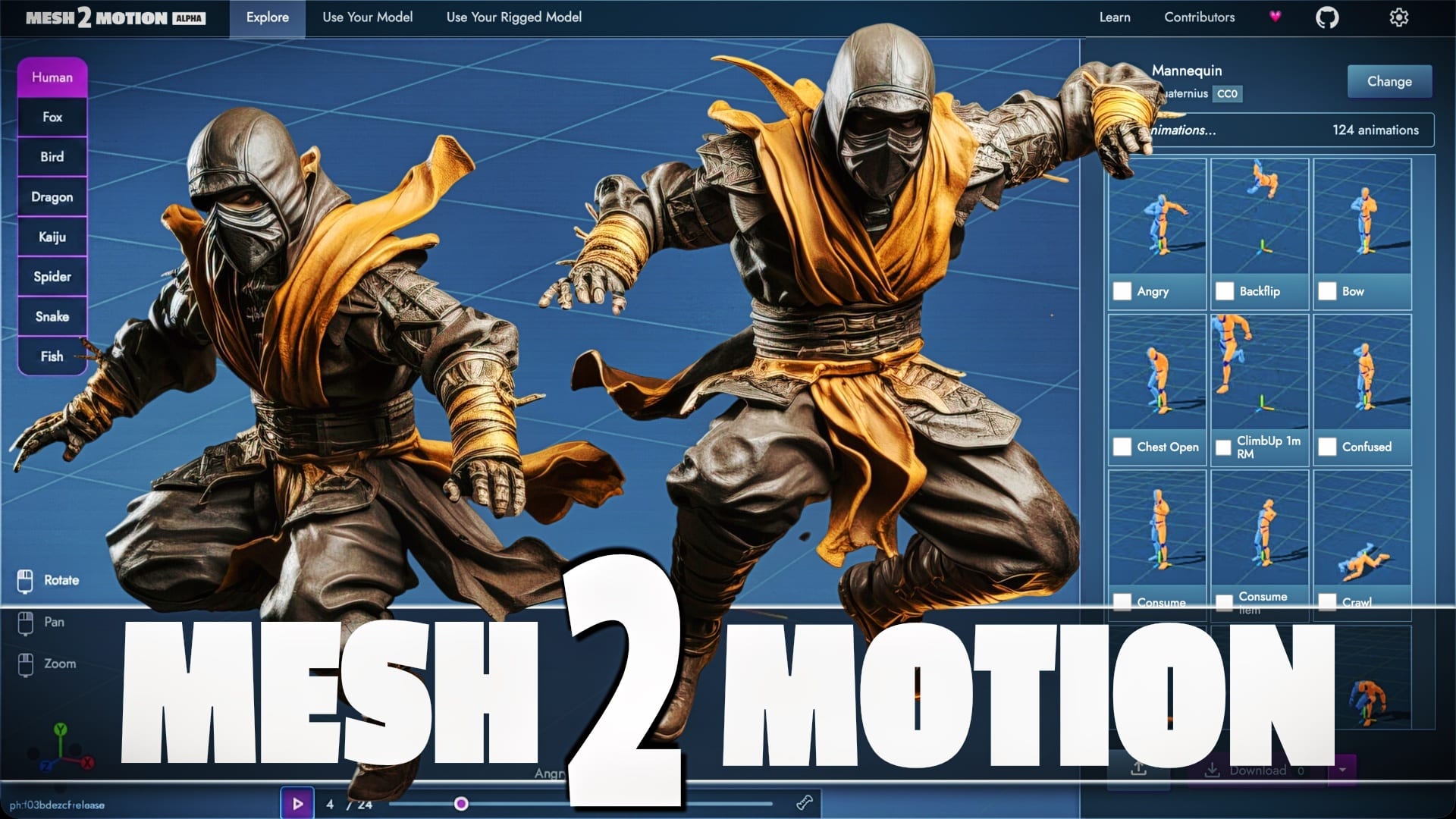
- Customize Existing Animations: Users can take the provided animations and tweak them to achieve subtle variations or entirely new movement styles. This is particularly useful for adding unique idle animations, combat moves, or environmental interactions.
- Learn Animation Techniques: For aspiring animators, the ability to dissect and study the source files offers a valuable learning resource. Understanding the rigging and animation process from a functional perspective can accelerate skill development.
- Integrate Custom Content: While Mesh2Motion provides its own rigs and animations, its open nature suggests future possibilities for users to integrate their own custom rigs and animation libraries, further expanding its versatility.
Exporting Bundled Animation Files: Seamless Integration with Game Engines
The final stage of Mesh2Motion’s workflow is the efficient export of animated assets. The platform excels at exporting multiple animations at once, consolidating them into a single GLB (GL Transmission Format) file. This format is increasingly becoming the industry standard for 3D assets due to its efficiency and widespread support.
The GLB format offers several advantages for game development:
- Native Game Engine Support: Major game engines like Unity, Unreal Engine, and Godot Engine have robust support for GLB files, allowing for straightforward import and integration of animated models.
- Web 3D Technologies: For web-based applications and experiences, GLB is the go-to format for libraries like Three.js and Babylon.js, enabling high-performance 3D rendering directly in the browser.
- Modern 3D Pipelines: The format’s efficiency and versatility make it a valuable asset in broader 3D production pipelines, from asset creation to final deployment.
By bundling multiple animations into a single file, Mesh2Motion simplifies asset management and reduces the overhead associated with importing numerous individual animation clips. This is a significant time-saver for developers working with character-heavy projects.
A Chronological Perspective on Mesh2Motion’s Growth
The journey of Mesh2Motion from its initial introduction to its current expanded state highlights a consistent trajectory of improvement and responsiveness to user needs.
- Initial Release and Focus (Year Ago): Mesh2Motion first gained attention as a promising open-source alternative to Mixamo, primarily for animating bipedal characters. Its ease of use and free accessibility immediately resonated with the indie development community.
- Continuous Feature Enhancement: Since its initial spotlight, the developers have been actively refining the platform, introducing new tools, improving the user interface, and optimizing performance. This ongoing development has been a key factor in its growing popularity.
- Expansion to Non-Humanoids (Recent Update): The recent announcement of support for a wider range of creature rigs marks a significant expansion. This strategic move broadens the tool’s applicability and addresses a critical demand for animating diverse character types. This expansion signifies a maturation of the project, moving beyond a niche tool to a more generalized animation solution.
Supporting Data and Community Engagement
The success and evolution of an open-source project are often underscored by its community engagement and the availability of supporting resources. Mesh2Motion excels in this regard, providing clear pathways for users to learn, contribute, and access necessary assets.
Key Links for Developers and Artists:
- Mesh2Motion Homepage: The central hub for information, news, and updates regarding the project. It serves as the primary gateway for new users to discover the tool and its capabilities. (https://mesh2motion.org/)
- Mesh2Motion GitHub Repository: As an open-source project, the GitHub repository is crucial. It hosts the project’s source code, allowing for community contributions, bug reporting, and detailed technical exploration. This transparency fosters collaboration and accelerates development. (https://github.com/Mesh2Motion/mesh2motion-app)
- Skeleton Model Used in Demo: For users looking to replicate the demonstrations or understand the rigging process, access to the specific models used in promotional materials is invaluable. This provides a practical starting point for learning. (https://www.fab.com/listings/8350bcac-ce96-4ce6-bae0-c2ea62258a9b)
Visual Demonstrations and Tutorials:
The article highlights the importance of visual learning, specifically mentioning a video demonstration. These video resources are critical for showcasing the tool’s functionality in action. Seeing how easily users can animate a 3D model and then export it to a popular game engine like Godot provides tangible proof of Mesh2Motion’s effectiveness. Such tutorials are instrumental in onboarding new users and demonstrating the practical application of the software.
Official Responses and Future Outlook
While no direct "official responses" in the traditional sense are available from a decentralized open-source project, the ongoing development and feature expansion speak volumes. The proactive addition of diverse creature rigs indicates a clear understanding of market needs and a commitment to evolving the tool based on user demand and industry trends.
The future outlook for Mesh2Motion appears exceptionally bright. As the tool continues to mature and expand its library of rigs and animations, it is poised to become an indispensable resource for:
- Independent Game Developers: Offering a cost-effective and powerful solution for character animation, enabling them to compete with larger studios by creating visually rich experiences.
- 3D Artists: Providing a flexible and accessible platform for creating animated assets for various purposes beyond gaming, such as architectural visualization, explainer videos, and more.
- Educators and Students: Serving as an excellent learning tool for understanding character rigging and animation principles due to its open-source nature and user-friendly interface.
The expansion into non-humanoid animation is not just an incremental update; it’s a strategic pivot that significantly broadens Mesh2Motion’s appeal and utility. By democratizing access to sophisticated animation tools for a wider range of characters, Mesh2Motion is empowering creators and fostering a more vibrant and diverse landscape of 3D content. The continued support and evolution of this open-source project will undoubtedly be a closely watched development within the game development and 3D art communities.