The New Vanguard of Alternative Comics: Andrew Alexander and the Rise of Cram Books
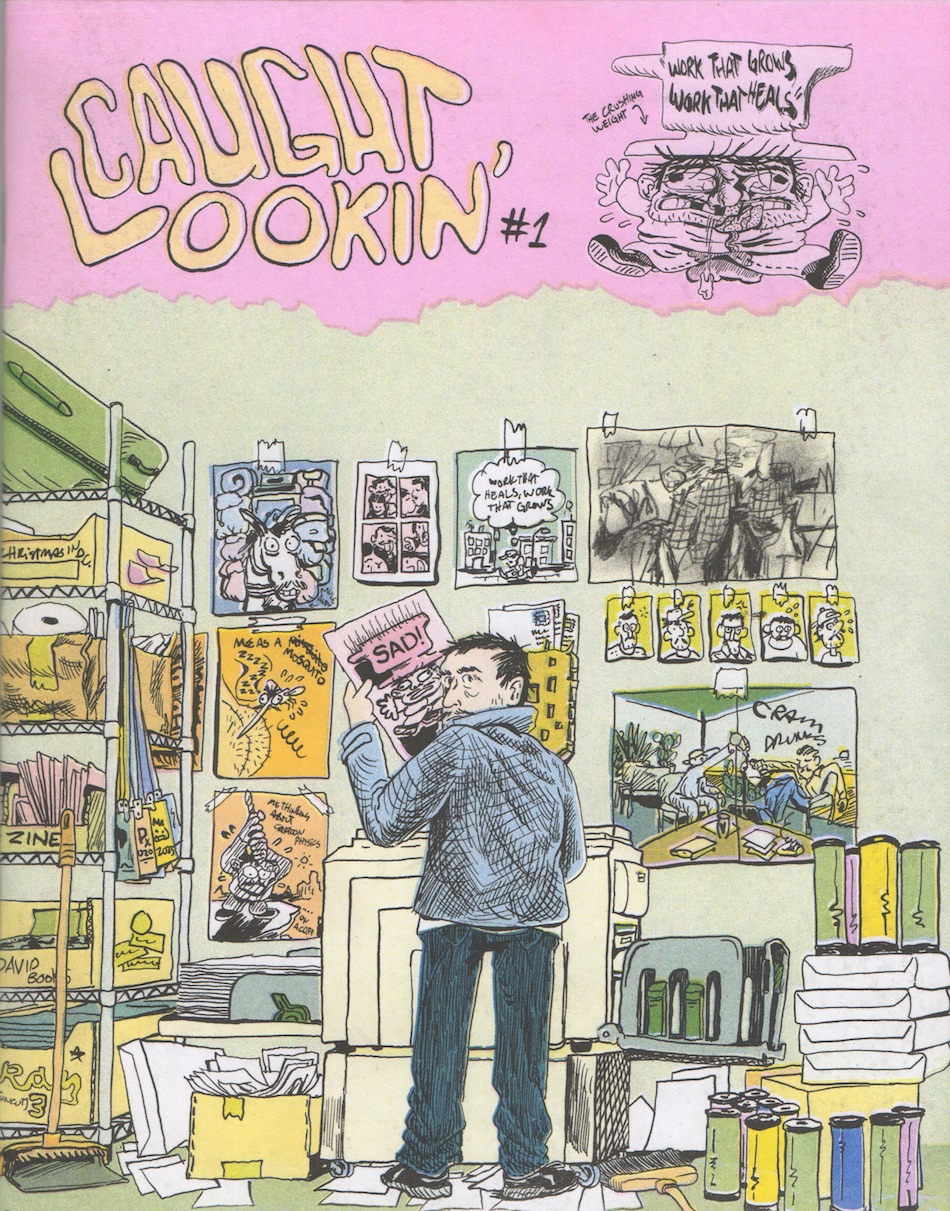
The landscape of contemporary independent comics is often characterized by its fragmentation—a constellation of small-press zines, risograph experiments, and digital-first narratives that rarely find a centralized voice. However, with the release of Caught Lookin’ #1, Andrew Alexander, the architect behind the influential Cram anthology, has signaled a significant shift in the medium’s trajectory. By transitioning from the role of a visionary curator to a solo auteur, Alexander is not merely contributing to the scene; he is attempting to redefine the structural possibilities of the "one-man anthology."
This transition comes at a pivotal moment for the industry. As legacy publications fade, the mantle of the "alternative" is being picked up by boutique publishers like Cram Books. Alexander’s latest offering, Caught Lookin’ #1, serves as both a showcase for his evolving draftsmanship and a manifesto for a new generation of cartoonists who prioritize dense, intellectually demanding narratives over the accessible minimalism that has dominated the 2010s.
Main Facts: The Debut of Caught Lookin’ #1
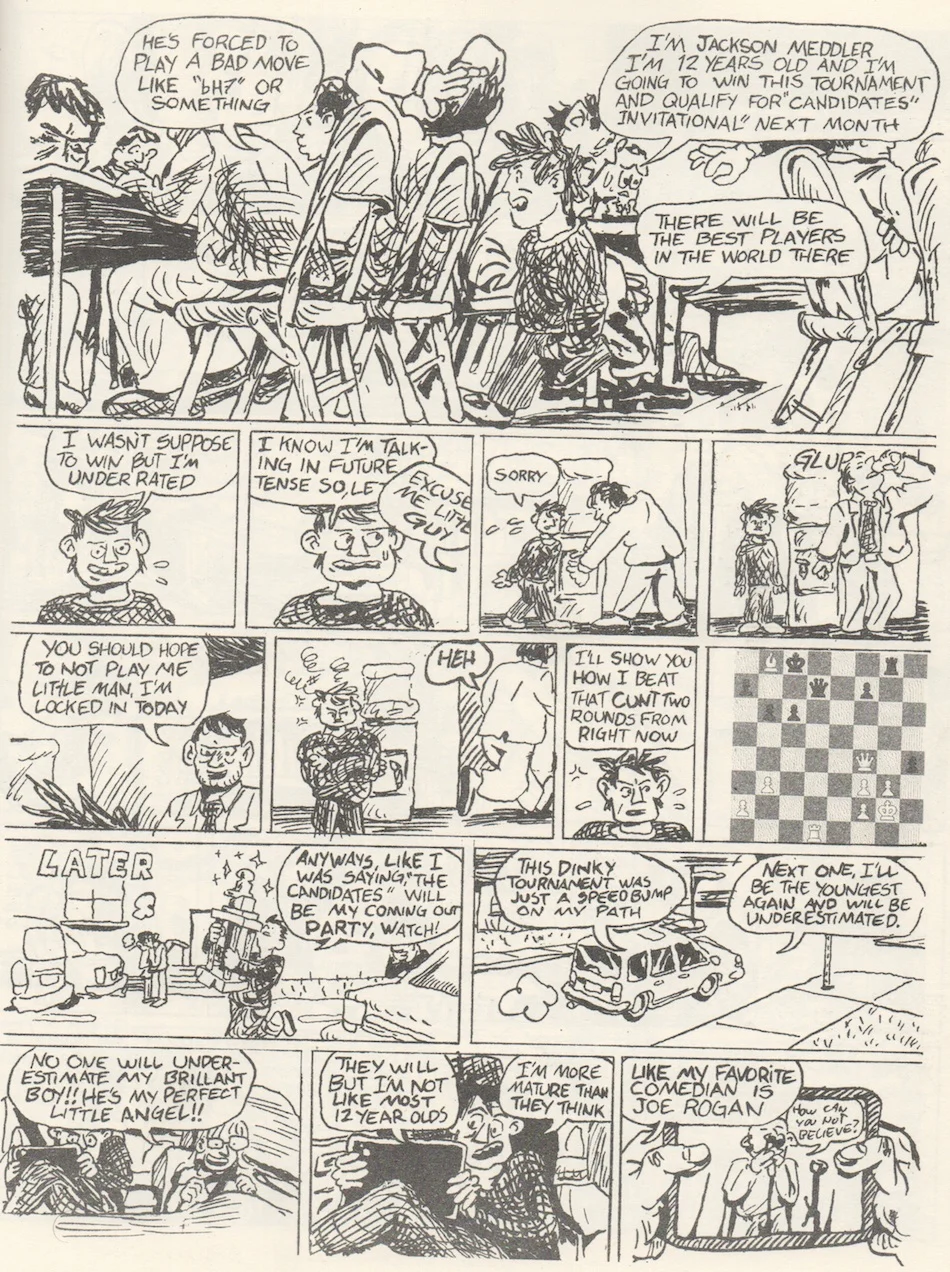
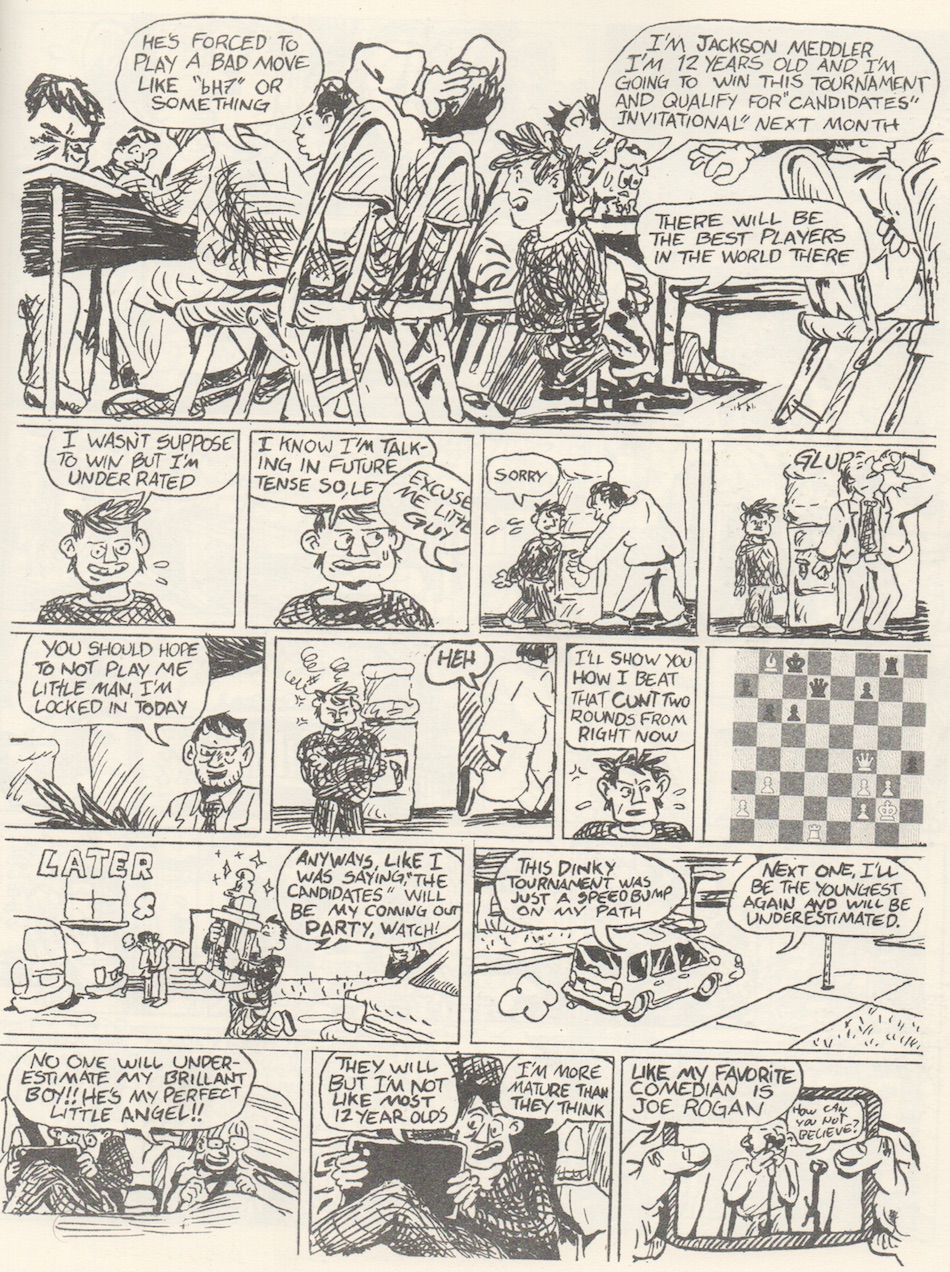
At the heart of Caught Lookin’ #1 is the debut chapter of a serialized graphic novel titled "The Candidates." Set against the high-stakes, psychologically grueling world of competitive chess, the story positions Alexander as a formidable narrative architect. While Alexander’s previous work with Cram Books established him as a premier talent scout—bringing together diverse voices ranging from the legendary Kim Deitch to emerging talents like Allee Errico—Caught Lookin’ shifts the spotlight onto his own creative output.
The publication is a risograph-printed artifact, a choice that reflects Alexander’s roots in the DIY ethos while pushing the boundaries of the medium’s aesthetic. The issue contains a mixture of serialized fiction, autobiographical vignettes, and experimental color work. Despite its "one-man" designation, the book functions as a microcosm of the current alternative comics zeitgeist: messy, ambitious, and deeply concerned with the intersection of personal history and professional obsession.
Chronology: From Cram to the Solo Spotlight
To understand the significance of Caught Lookin’, one must first examine the rapid ascent of Cram Books. Under Alexander’s editorial direction, the flagship anthology Cram became an essential entry point for readers seeking the pulse of emerging cartooning.
- The Curation Phase: Alexander’s editorial strategy with Cram was defined by a "broad spectrum" approach. He successfully bridged the gap between disparate cohorts, featuring the impenetrable, avant-garde styles of Floyd Tangeman (Tinfoil, Cowlick) alongside the more grounded, precise work of Audra Stang (Rust Belt Review).
- The Generational Bridge: A key milestone in Alexander’s career was his ability to court veteran artists. By publishing Kim Deitch—whose contribution to Cram was later collected in the seminal How I Make Comics—Alexander established Cram Books as a legitimate successor to legendary anthologies like Kramers Ergot.
- The Solo Pivot (July 2026): With the release of Caught Lookin’ #1, Alexander moved into a new phase of his career. Influenced by the serialized success of works like Sammy Harkham’s Blood of the Virgin, Alexander began his own long-form narrative journey, leveraging his experience as an editor to self-regulate a complex, multi-threaded plot.
Supporting Data: Narrative Complexity and Artistic Evolution
The strength of Caught Lookin’ #1 lies in its dense, almost frantic narrative layering. "The Candidates" does not merely tell the story of a chess tournament; it constructs a temporal mosaic.
The Chess Metaphor
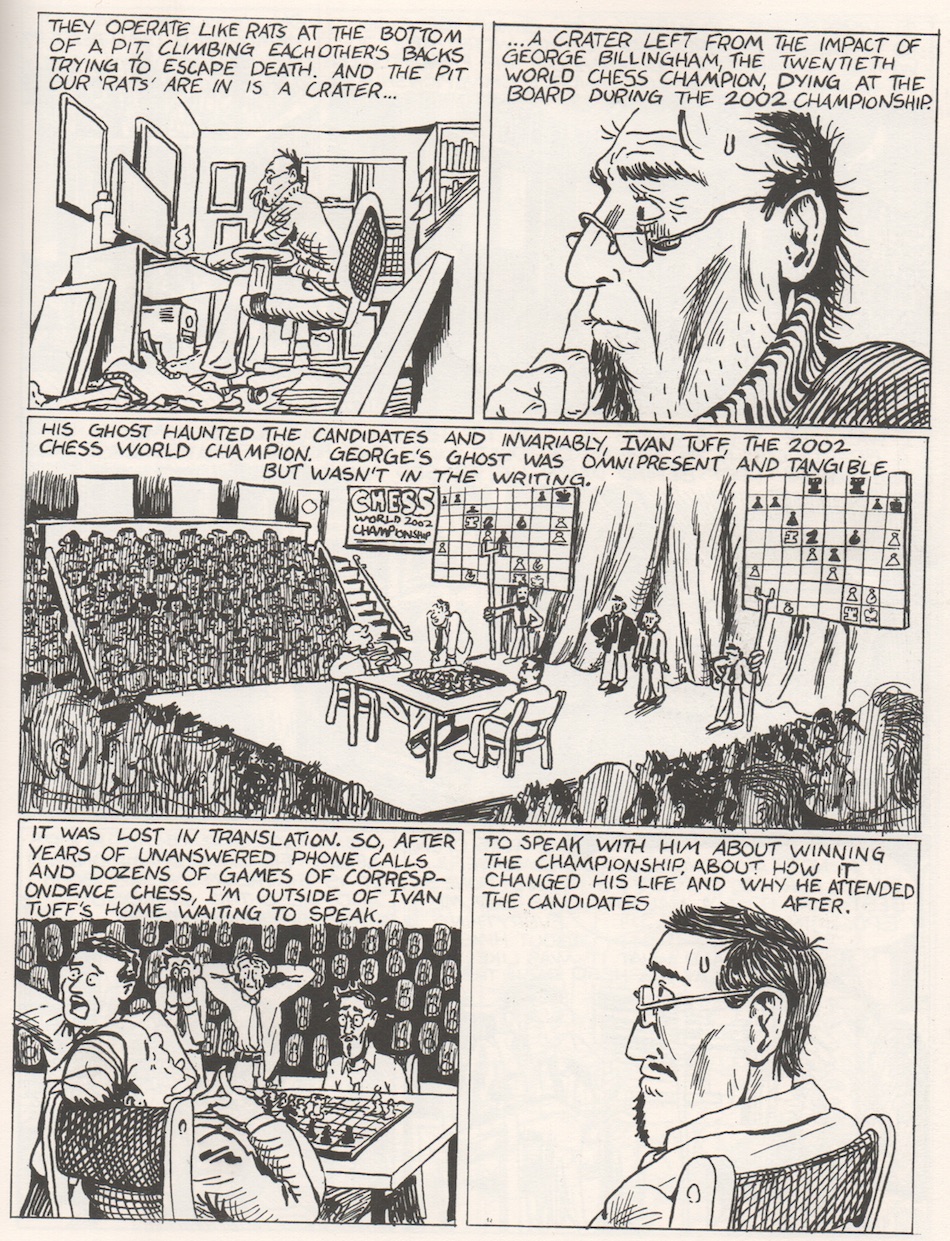
The story utilizes a "bevy of narrators" to provide a 360-degree view of the tournament’s history. These include:
- The Historian/Journalist: Salazar Berumen, who writes from a future perspective about a "conspiracy" that occurred twenty years prior.
- The Competitors: Characters like Ivan Hoff, a former winner struggling with trauma, and Kayla Agapov, the granddaughter of a Russian legend.
- The Spectators: Alexander uses innovative perspectives—such as a diner waitress whose point of view becomes the reader’s—to ground the high-level intellectualism of chess in everyday reality.
Alexander’s depiction of chess is notable for its technical accuracy. He avoids the "spectacle" of action, instead focusing on the "current of electricity of firing synapses." The comic alternates between three-dimensional renderings of boards and the two-dimensional shorthand of computer screens, capturing the way modern players experience the game.
Visual Style: The "Cigarette Detritus" Aesthetic
Critically, Alexander’s drawing style has been described as a "flurry of different marks." His line work evokes the textures of a smoke-filled room: ash, stubbed butts, and the hazy atmosphere of obsession. Comparisons have been drawn to the buoyant cartooning of Blutch and the frantic, detail-oriented "chicken fat" style of Will Elder. This aesthetic serves the subject matter perfectly, portraying "coffee-drinkers and forehead-sweaters" with a visceral, almost tactile intensity.
Official Responses and Critical Reception
While the critical response to Caught Lookin’ #1 has been largely positive, particularly regarding Alexander’s growth as an artist, professional reviewers have noted several "editorial missteps" that highlight the challenges of self-publishing.
Technical and Editorial Critiques
Critics from The Comics Journal and other industry outlets have pointed out that while Alexander is a brilliant curator, his solo work suffers from a lack of traditional oversight.
- The "Ending" Problem: Similar to his work with authors like Max Burlingame, Alexander shows an aversion to standard narrative signposts. "The Candidates" ends abruptly without a "To Be Continued" or "The End" notice, leading to reader confusion regarding whether the story is a self-contained short or a chapter of a larger work.
- Proofreading Issues: The first issue has been criticized for persistent misspellings and grammatical errors, which some argue detracts from the professional "boutique" feel the publisher aims for.
- The Color Experiment: The weakest segment of the book, according to critics, is the four-page color story "Peter Saul Beckmann’s A Hard Day’s Night." Reviewers noted that the color work felt "less present" and lacked the intellectual rigor of the black-and-white segments.
The Publisher’s Perspective
Though Alexander has not issued a formal "rebuttal," his previous statements on the industry provide context. He has often remarked that "every cartoonist makes all their own problems, without exception." This philosophy suggests that the "rough edges" of Caught Lookin’ are a deliberate choice—a rejection of the sanitized, over-edited polish of mainstream graphic novels in favor of a more raw, "sketchbook" intimacy.
Implications: The Future of the "Solo Anthology"
The release of Caught Lookin’ #1 has broader implications for the economics of the alternative comics market.
The Risograph Economy
Alexander’s reliance on risograph printing is a calculated move. In an era where traditional offset printing is becoming prohibitively expensive for small runs, the hand-printed, folded-and-stapled model allows for a direct-to-consumer relationship. However, as critics have noted, the demand for Alexander’s work may soon exceed his capacity to produce it by hand. The success of Caught Lookin’ may force Cram Books to choose between its DIY identity and the need for a more scalable, "lay-flat" printing method.
The Cultural Shift
More importantly, Alexander is proving that there is a hungry audience for "difficult" comics. By blending autobiography (allusions to his own work as a chess tutor) with complex political fiction (the subplot involving a targeted political leader in 2023), he is pushing the medium away from simple escapism.
As Caught Lookin’ continues, the primary question will be whether Alexander can maintain the "high state of awareness" he has established. If he can reconcile his visionary cartooning with more rigorous editorial standards, he is positioned to become one of the most influential figures in the next decade of American comics. For now, he remains the "coffee-drinker’s cartoonist"—an artist whose work is as much about the struggle of creation as it is about the story on the page.
The "murder and conspiracy" of the 2003 tournament in his story may be the hook, but the real draw is Alexander himself: an editor-turned-artist who is currently "caught lookin’" at the very heart of the medium’s future.