Unearthing the Mycelial Network of Myth: Zoe Gilbert on Herne the Hunter and the Living Tapestry of Folklore

London, UK – Beneath the surface of our everyday lives, a vast and intricate network of stories, myths, and tales quietly thrives, feeding the cultural landscape that sprouts above. Author Zoe Gilbert eloquently likens this phenomenon to mycelium, the hidden fungal mesh underpinning forests, a "gigantic, intricate system of connection that feeds and informs the trees and plants that sprout above the surface whilst quietly spreading, putting out feelers, thriving." This profound analogy forms the bedrock of her exploration into folklore, particularly as she delved into the enigmatic figure of Herne the Hunter for her latest novel, Mischief Acts.
Gilbert’s work illuminates how these ancient narratives, much like the visible oak trees in a forest, appear as distinct entities – an English oak here, a sessile oak there – yet are fundamentally interconnected by a shared, unseen root system. For those who choose to "dig beneath the leaf mulch," the thrill of tracing these folkloric threads is as compelling as any modern discovery.
Main Facts: The Subterranean Symphony of Stories
Folklore and traditional tales are not merely relics of the past but form a dynamic, living web woven into the fabric of human societies and cultures. This complex interweaving, as conceptualized by author Zoe Gilbert, mirrors the biological marvel of mycelium—the underground fungal networks that connect trees and plants, facilitating nutrient exchange and communication across an entire ecosystem. This metaphor suggests that individual stories, like the distinct trees of a forest, draw sustenance and context from a vast, unseen matrix of shared cultural memory.
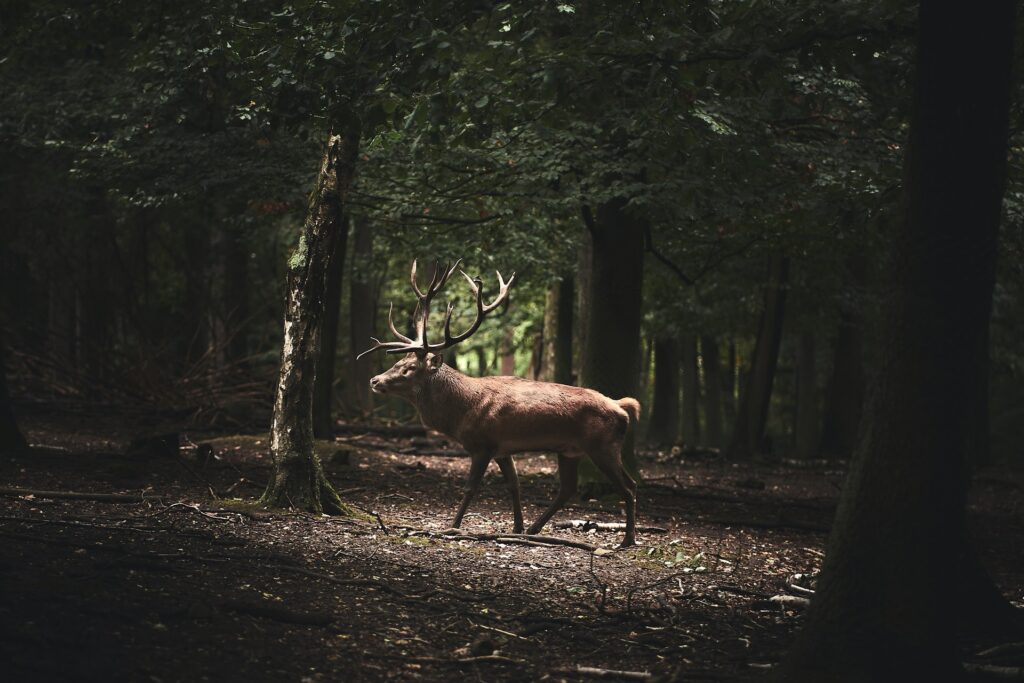
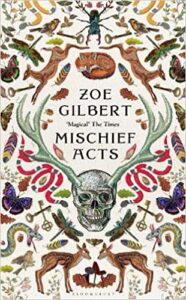
Gilbert’s recent literary endeavour, the novel Mischief Acts, necessitated a deep dive into this very network. Her research led her to the elusive figure of Herne the Hunter, a character she describes as "mushroomy" – present if one looks, but rarely taking centre stage in the grand diorama of woodland lore. Herne, for Gilbert and many other writers and readers, has long been a peripheral presence, lurking at the edges of folkloric vision, often appearing in tales belonging to other characters. This understated yet persistent presence is a hallmark of many ancient archetypes, whose influence is felt more as a resonance than a direct narrative thrust.
Herne’s appearances in seminal works of literature underscore his enduring, albeit often supporting, role. He emerges as the wise mentor to Kay Harker in John Masefield’s classic The Box of Delights. In Susan Cooper’s celebrated The Dark is Rising, he takes on a more menacing aspect, haunting Will Stanton with his piercing owl eyes. More recently, Nick Hayes contemplates breaking the law to touch Herne’s Oak in The Book of Trespass, highlighting the character’s indelible link to specific, sacred landscapes. His most famous moment, however, arguably arrived through the pen of William Shakespeare in The Merry Wives of Windsor, where he is depicted as a horned hunter haunting Windsor Forest. A more elaborate "origin story" was later provided by William Harrison Ainsworth in his 1842 novel, Windsor Castle. Gilbert aptly compares Herne to the fly agaric mushroom: "arresting when spotted, gorgeous and dangerous, courting the human footways but rarely sought to fill a whole foraging basket." This vivid imagery captures Herne’s striking, memorable nature, even if he typically doesn’t dominate a narrative.
What Gilbert discovered during her research was not just Herne himself, but a sprawling "mycelial network" of connections radiating outwards from him. Initially, as expected, she found links to Odin, another mythic force who famously hung himself from a sacred tree and led the Wild Hunt. But beyond this anticipated connection, the network proliferated, revealing an astonishing array of intertwined figures. This exploration confirmed that Herne is not an isolated entity but a nodal point in a vast, interconnected web of archetypes, reflecting shared human experiences and cultural expressions across diverse traditions.

Chronology: Tracing the Ancient Footprints Across Time
The figure of Herne the Hunter, while seemingly rooted in ancient British folklore, reveals a complex and evolving history through various literary and cultural interpretations. His earliest significant appearance in documented literature is often attributed to William Shakespeare’s The Merry Wives of Windsor, first published in 1602. Here, Herne is presented as a ghostly, horned hunter who haunts Windsor Forest, a local legend used by Mistress Page to trick Falstaff. This portrayal cemented Herne’s association with Windsor and its ancient woodlands, establishing him as a potent, if somewhat shadowy, genius loci.
Centuries later, in 1842, William Harrison Ainsworth substantially enriched Herne’s lore with his novel, Windsor Castle. Ainsworth provided Herne with a more elaborate and tragic origin story, depicting him as a royal hunter who, after a fall from favour and a pact with the devil, hangs himself from an oak tree and returns as a spectral, horned huntsman leading a ghostly retinue. This novel significantly expanded Herne’s narrative, imbuing him with greater depth and a more explicit connection to themes of wildness, despair, and the supernatural. Ainsworth’s romanticized gothic narrative undoubtedly influenced subsequent perceptions of the character.
As the centuries progressed, Herne continued to surface in literature, often playing roles that underscored his archetypal qualities. John Masefield’s The Box of Delights (1935), a beloved children’s fantasy novel, features Herne as a wise, ancient mentor figure, guiding the young protagonist, Kay Harker. This interpretation softened Herne’s more fearsome aspects, repositioning him as a benevolent, if still mysterious, guardian of ancient magic and woodland wisdom.
Later, in Susan Cooper’s The Dark is Rising (1973), Herne reappears with a more ominous presence. He menaces the protagonist, Will Stanton, with his "owl eyes," aligning him once more with the darker, wilder forces of nature and the supernatural, evoking a sense of ancient, untamed power that can be both protective and threatening.
In more contemporary works, Herne’s symbolic resonance persists. Nick Hayes’s The Book of Trespass (2020) references Herne’s Oak, highlighting the enduring connection between the mythical figure, specific natural landmarks, and broader discussions around land rights and access. This shows Herne’s ability to transcend pure fantasy and enter socio-political discourse, becoming a symbol of natural autonomy and resistance against enclosure.
Zoe Gilbert’s current work, Mischief Acts, stands as the latest chapter in this long chronology. Her research not only traces Herne’s established literary lineage but also delves deeper into his mythological ancestors and kin. She observes the clear parallels between Herne and figures like Odin, both associated with hanging from sacred trees and leading spectral hunts across the sky. This chronological tracing reveals that Herne is not a static figure but a dynamic archetype, continually reinterpreted and reshaped by successive generations of storytellers, reflecting their contemporary concerns and understanding of the wild and the mystical. Gilbert’s novel, by deliberately transplanting Herne to a new urban woodland, further extends this tradition of adaptation, proving that folklore, far from being confined to dusty archives, remains a living, evolving narrative force.
Supporting Data: The Proliferating Threads of Myth
The analogy of folklore to a "mycelial network" is not merely poetic; it accurately reflects the interconnected and generative nature of cultural narratives. Just as mycorrhizal fungi form symbiotic relationships with plant roots, exchanging nutrients and information across vast underground systems, folkloric motifs and characters intertwine, drawing strength from shared archetypes and influencing new stories. When Gilbert "dug beneath her fly agaric" (Herne), the expected links to Odin – both mythic forces associated with sacred trees and leaders of the Wild Hunt – quickly proliferated into a much broader, complex web.
This expansion revealed dozens of Wild Hunt leaders beyond Odin, from the legendary King Herla, said to ride through the Herefordshire sky, to the Welsh underworld king Gwynn ap Nudd. These figures, while distinct, share a core thematic identity: spectral huntsmen leading a ghostly retinue, often portending doom or marking significant transitions. Their widespread presence across European folklore underscores a deeply embedded cultural memory of primal, untamed forces.
Furthermore, Gilbert discovered characters who had carved out their own intricate "ecosystems of lore." Harlequin, for instance, in his iconic diamond-patterned finery, emerged from the Italian Commedia dell’arte as Arlecchino, a mischievous trickster and servant. His theatrical lineage, rooted in improvisation and subversive humour, connects him to the broader tradition of playful, disruptive figures. The Erl-king, a sinister, alluring entity from German folklore, looms from the shadows, embodying a darker, more dangerous aspect of the wild that preys on human souls. The Green Man, a pervasive motif in medieval art and architecture, with his leafy grin, represents the raw, regenerative power of nature, a spirit of fertility and verdancy.
The threads of this network led Gilbert not just to psychopomps (guides of souls to the afterlife) and cursed ghosts, but also to a vibrant cast of entertainers, mischief-makers, and spirits of bacchanal and the woods. Each attempt to isolate a thread led to further interweavings: into Fairyland, Tudor history, or Roman mythology. Figures like Oberon, the king of the fairies; Robin Goodfellow (Puck), the quintessential trickster; the Woodwose (wildman of the woods); and the Lord of Misrule, who presided over festive inversions of social order, all emerged, "laughing from the earth." This "familia herlechini" – a term Gilbert uses to encompass this unruly family of wild, mischievous figures – was widespread, demonstrating a universal human need to personify transgression and the untamed.
While one might expect to find Cernunnos, the ultimate horned god revered in contemporary pagan and Wiccan practice, at the very centre of this "wood-wide web," Gilbert found that such a simple, singular solution didn’t quite fit Herne and his rascally kin. The sheer range of forms and territories these figures occupied defied a neat hierarchical structure. Their wildness, mischief, and embodying of life, death, freedom, and lust seemed to erupt wherever and whenever people needed them, reflecting diverse cultural expressions of universal human experiences.
This sprawling, mycorrhizal network, spanning both space and time, became the "secret source of so many sprouting tales." It was this deep understanding of folklore’s dynamic, adaptable nature that gave Gilbert "permission" for a significant creative act: transplanting Herne from his traditional haunt of Windsor to the Great North Wood in South London for her novel. The Great North Wood, though fragmented today into smaller woodlands like Sydenham & Dulwich Woods, once stretched across a vast area. Gilbert, living near this "slender, seductive strip of woodland," knew of its rich history – from charcoal burners and famous gypsies to eccentric hermits, and even a modern-day resident named Solomon who received mail by hanging an old house number from a tree. This history suggested that the wood, regardless of size, always possessed a genius loci, a protective spirit. By introducing Herne, the wildman and spirit of the forest, into this urban wood, Gilbert sought to explore if Herne, a figure representing the universal need for "mischief, transgression, wildness in landscape and soul," would indeed "come along for the ride" to defend a cherished contemporary green space.
Expert Perspectives/Official Responses: Authors as Custodians and Innovators of Lore
In the dynamic realm of folklore, the role of authors extends beyond mere documentation; they act as vital conduits, custodians, and innovators, ensuring the continuous evolution and relevance of ancient narratives. Zoe Gilbert’s work, particularly her exploration of Herne the Hunter, exemplifies this crucial function. Her insights, while personal, offer a significant "response" to the prevailing understanding of folklore—challenging the notion of it as a static, historical artifact and instead presenting it as a living, breathing cultural organism.
Gilbert articulates a profound tension inherent in folklore: its deep rootedness in specific places versus its universal appeal and thematic applicability. "Folklore is so often rooted in place," she observes, acknowledging how "local lore can reconnect us with landscapes, even re-enchant us." This perspective aligns with folklorists who emphasize the importance of context and geographical specificity in understanding the nuances of local traditions. The spirit of a particular river, a unique tree, or a specific forest often gives rise to distinct tales and guardian figures, fostering a strong sense of identity and belonging within a community. Herne, for example, is intrinsically linked to Windsor Forest, his spectral presence defining its ancient boundaries and mysteries.
However, Gilbert also champions the universal resonance of these figures. She believes "that the need for mischief, transgression, wildness in landscape and soul, is universal." This assertion speaks to the enduring power of archetypes, concepts explored by psychologists like Carl Jung, who posited the existence of a collective unconscious from which universal patterns and images emerge across cultures. Herne, with his myriad likenesses—the wildman, the hooligan, the trickster, the spirit of the forest—embodies these primal human urges and connections to the untamed.
From a literary and anthropological standpoint, authors like Gilbert are not simply borrowing from folklore; they are actively participating in its perpetuation and transformation. Their creative interpretations serve as "official responses" to the enduring questions and challenges of their time, filtered through the lens of ancient myth. By taking Herne from Windsor and transplanting him into the Great North Wood, Gilbert is engaging in a process of re-contextualization, asking if an ancient guardian can adapt to a modern, urban-encroached landscape. This act is a deliberate artistic choice that reflects a broader societal need to find meaning and wildness even in domesticated environments.
Leading folklorists and literary critics often acknowledge that folklore is not a closed system. It is constantly being "re-storied" and reinterpreted by successive generations, particularly through the medium of fiction. Every novel, poem, or play that draws upon traditional tales contributes to the ongoing life of that lore, demonstrating its adaptability and resilience. The "official response" of the creative community is thus one of continuous engagement, ensuring that these narratives remain pertinent and resonant. This active engagement is critical, as it allows ancient myths to address contemporary anxieties – environmental degradation, societal fragmentation, the loss of connection to nature – by offering archetypal frameworks through which to understand and respond to them.
Gilbert’s conclusion reinforces this dynamic interplay: "Fiction has always played a role in extending and morphing folklore, even as lore feeds fiction." This symbiotic relationship ensures that, like the real mycorrhizal network, the folkloric web never truly reaches its edges. Authors, by engaging with these deep-seated cultural narratives, become essential partners in their ongoing renewal, ensuring that the "forest of stories forever renews itself, in beautiful symbiosis with the web of folklore beneath it." They don’t just tell stories; they help stories live, breathe, and adapt, offering fresh perspectives on timeless themes of wildness, transgression, and the enduring magic found at the fringes of civilization.

Implications: The Enduring Resonance of Wildness and Story
The profound exploration undertaken by Zoe Gilbert into the "mycelial network" of folklore and the character of Herne the Hunter carries significant implications for our understanding of culture, human psychology, and the enduring power of narrative. It underscores that what we perceive as discrete stories or isolated mythical figures are, in fact, deeply interconnected, forming a vast, invisible tapestry that shapes our collective consciousness.
One primary implication is the interconnectedness of human culture and ancient myths. Gilbert’s research vividly demonstrates that figures like Herne, Odin, Harlequin, and the Green Man are not disparate entities but nodes within a global web of shared archetypes. This suggests a universal human tendency to articulate fundamental experiences—life, death, transformation, rebellion, and the untamed—through similar narrative forms, regardless of geographical or temporal separation. These connections highlight a deep-seated cultural memory, a collective inheritance that transcends superficial differences.
Secondly, the study emphasizes the enduring power and relevance of folkloric figures. Despite their ancient origins, characters like Herne continue to appear in contemporary literature, art, and even socio-political discourse. They embody primal energies and ideas—mischief, wildness, transgression—that remain deeply resonant in modern society. In an increasingly structured and urbanized world, the longing for untamed spaces, for moments of wild abandon, and for challenging established norms finds expression through these persistent archetypes. They offer a psychological outlet, a means of exploring the boundaries of acceptable behaviour and connecting with a more primal self.
A crucial implication for literary studies and cultural heritage is the role of fiction in renewing and expanding folklore. Gilbert’s act of transplanting Herne from Windsor to the Great North Wood is a powerful example of how authors actively participate in the evolution of folklore. Fiction is not merely a passive recipient of ancient tales; it is a dynamic force that reinterprets, re-contextualizes, and revitalizes them for new generations. This symbiotic relationship ensures that folklore remains a living tradition, adaptable to contemporary concerns, rather than a museum piece. It allows ancient myths to address modern issues, such as environmentalism or the preservation of urban green spaces, as seen in Mischief Acts.
Furthermore, Gilbert’s work brings into sharp focus the tension between local identity and universal archetypes. While folklore is often deeply rooted in specific places, providing a genius loci that enchants landscapes and connects communities, the themes it explores are often universal. The need for mischief or wildness is not confined to Windsor Forest; it is a fundamental human drive. This duality allows folklore to simultaneously celebrate local distinctiveness and resonate with a global audience, making it a powerful tool for understanding both individual cultures and shared humanity.
Finally, the overarching implication is the continuous renewal of stories, mirroring natural ecosystems. Just as a forest regenerates itself through cycles of growth and decay, with "beech mast sprouts into new saplings and wood anemones expand their territory," the forest of stories perpetually renews itself. The "mycelial network" of folklore ensures that narratives do not die but adapt, evolve, and sprout anew. This perspective offers a hopeful outlook on the future of storytelling, affirming that the wellspring of human imagination, nourished by ancient roots, will continue to flow, creating new tales and re-enchanting the world around us. Works like Zoe Gilbert’s Mischief Acts and her earlier novel Folk stand as testament to this ongoing process, proving that the wild, untamed spirit of folklore remains an inexhaustible source of inspiration, perpetually intertwining with the human experience.