Reclaiming the Everyday: Why Folklore is More Than Just Ancient History
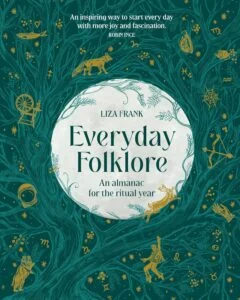
LONDON, UK – Often dismissed as quaint relics of a bygone era or whimsical tales spun for children, folklore is undergoing a quiet, yet profound, re-evaluation. Far from being confined to academic texts or distant, exotic cultures, the rituals, traditions, and customs that shape our daily lives – from the simple act of brewing a cup of tea to the grand celebrations of the year – are, in essence, living folklore. This perspective is at the heart of a compelling new work, Everyday Folklore: An Almanac for the Ritual Year, by author Liza Frank, who posits that consciously integrating folklore can enrich modern existence in surprisingly tangible ways.
Frank’s book emerges from her personal odyssey, a dedicated year-long immersion in the ritual calendar, from St Distaff’s Day 2020 to Twelfth Night 2021. Her experiences, meticulously documented, challenge the notion that folklore is "something other people do," instead arguing for its universal applicability and profound benefits. For many, folklore might conjure images of antler-wearing men in Abbotts Bromley or the arcane practice of wart charming, or perhaps the more common, yet unexamined, rituals surrounding Christmas trees, birthday cards, or the contentious jam-or-cream-first scone debate. But Frank contends that whether recognized or not, folklore permeates our very being, offering a framework for navigating time, fostering community, and sparking joy.
This article delves into Frank’s persuasive argument for embracing a folkloric sensibility, exploring how such engagement can serve as a vital antidote to the accelerating pace of contemporary life, offering pathways to deeper connection, greater celebration, and a renewed sense of wonder.
The Author’s Journey: A Year Lived Folklorishly
Liza Frank’s Everyday Folklore is not merely a theoretical exploration but a practical guide born from personal experimentation. Her "Everyday Lore Project" saw her commit to practicing ritual year folklore daily for a full calendar year. This immersive journey, documented on her website and culminating in her new book, provides a unique chronology of engagement, demonstrating the feasibility and rewards of such a commitment.
"Between St Distaff’s Day 2020 and Twelfth Night 2021, I practiced ritual year folklore every day," Frank recounts, highlighting the dedicated period that formed the bedrock of her research and writing. This sustained interaction with the ebb and flow of traditional practices allowed her to move beyond a passive appreciation of folklore to an active, lived experience. Her work serves as a testament to the idea that folklore is not static but dynamic, a living tradition that can be adopted, adapted, and celebrated in the modern era. The book, therefore, stands as an almanac, a practical companion designed to empower readers to embark on their own journeys through the ritual year, offering actionable insights and inspiration for year-round engagement.
The Five Pillars of Folkloric Engagement: Supporting Data for a Richer Life
Frank’s work outlines five compelling reasons why everyone should consciously incorporate folklore into their lives, moving from passive interest to active participation. These points serve as a powerful "call to action," designed to dismantle the barriers between individuals and the rich tapestry of tradition.
1. Slowing Down the Unrelenting Pace of Modernity
In an age defined by speed and digital acceleration, folklore offers a powerful counter-narrative: the opportunity to slow down and reconnect with the rhythms of the natural world. While folklore cannot literally stop time, its practices are inherently tied to seasonal shifts, lunar cycles, and agricultural patterns, compelling participants to be more present. "Observing the ritual year can help you be more present," Frank asserts. It’s a mindful antidote to the pervasive feeling that "days slide into weeks, slip into months and before you know it, the daffs are dead, the nights encroaching, and you’re tutting about how fast the year has gone."
By engaging with practices intrinsically linked to specific dates, months, or seasons, individuals gain a heightened awareness of the year’s progression. Wassailing in January, for instance, transforms the abstract concept of an apple harvest into a tangible, shared experience, investing participants in the outcome. Counting fogs in August becomes a playful, yet grounding, prediction for winter snowfalls. These acts, seemingly small, foster a deeper appreciation for the environment and the cyclical nature of existence. Observing lunar plantings, or simply witnessing the hedgerows transition from barren to budding, fecund, and then sparse again, cultivates a sense of connection to the earth. This conscious observation carves out moments of stillness in busy lives, allowing for a slower pace, which in turn "allows yourself to be open to possibility and wonder." It’s a return to a more embodied way of living, where time is experienced not as a linear rush but as a rich, unfolding narrative.
2. Cultivating a Culture of Celebration and Joy
Beyond the conventional calendar of birthdays, anniversaries, and religious or secular holidays, the ritual year presents an astonishing array of excuses for celebration. Frank highlights folklore’s "endless capacity for marking the passage of time with excuses for joy." This expansive view of celebration transforms the mundane into the meaningful, offering myriad opportunities for collective and individual delight.
Want to celebrate the majesty of trees? The ritual year offers multiple dedicated days. Fascinated by human anatomy? Entire festivals in June and July are dedicated to belly buttons. For those who appreciate a good tipple, specific days are designated for raising a glass to wine (August 19), gin (the second Saturday of June), and rum (July 31). Beyond these, modern cultural phenomena have also found their place, with dedicated days for Back to the Future, Star Trek, and the ubiquitous Star Wars Day ("May the Fourth be with you"). Folklore even embraces the celebration of non-events, such as the relief when it doesn’t rain on St Swithin’s Day, or the personal triumph of completing a folkloric task like counting seven stars on seven consecutive nights to have a wish granted. This expansive embrace of celebration combats the monotony of routine, injecting regular doses of festivity and gratitude into life. It’s a reminder that joy can be found in the unexpected, the quirky, and the deeply traditional.
3. An Active Antidote to Boredom and Ennui
In an era where passive consumption often leads to a sense of unfulfillment, engaging with folklore offers a dynamic remedy for boredom and ennui. Frank’s experiences during her "year of living folklorishly" demonstrate an inexhaustible wellspring of activities, ranging from culinary adventures to daring physical challenges.
Leftover Christmas cake, for instance, can be transformed into a spirited January tradition by staging a "Great Fruitcake Toss," as seen in Manitou Springs, Colorado. The kitchen becomes a laboratory for recreating ritual year recipes like Heg Peg Dumps, Harvest shot, or knotting-sowins, or simply baking a batch of scones for National Cream Tea Day. (Though Frank humorously advises caution with "plum duffs," especially when involving vegetarian suet and cherished tea towels). For those with a flair for the dramatic, folklore offers ample opportunity for costume and character, from becoming the King for a weekend at the Porthcawl Elvis Festival in September to embodying a badger for St Piran’s Day in March.
The more adventurous can seek thrills in events like the Cooper’s Hill Cheese-Rolling in May, or the Dorking Wife Carrying Race in March, demonstrating the physical and communal aspects of traditional revelry. Even for the less outwardly daring, folklore provides unique, introspective activities, such as "conducting an exorcism at midnight by spitting black beans and walking backwards" during Lemuralia. These practices are not just pastimes; they are active engagements that challenge the mind, body, and spirit, offering a powerful counter-narrative to the passive entertainment that often defines modern leisure.
4. Unexpected Knowledge and Pub Quiz Prowess
Beyond personal enrichment, folklore is a veritable treasure trove of peculiar and fascinating facts, offering an unexpected intellectual payoff. Delving into folklore can significantly boost one’s general knowledge, turning ordinary conversations into captivating exchanges and potentially securing victory at the next pub quiz.
Frank provides intriguing examples: Did you know that studies suggest spiders prefer classical music to techno? This curious fact, supported by research (Frings & Frings, 1966), not only offers a quirky insight into the arachnid world but also carries a folkloric implication: an uptick of indoor spiders in March augurs rain. Similarly, the long-standing tradition among Baikonur cosmonauts, who watch the 1970 Russian Civil War comedy The White Sun of the Desert for luck before space missions (Hollingham, 2014), reveals the potent role of ritual even in cutting-edge science.
Furthermore, folklore illuminates the often-misunderstood natural world. While bats are often associated with demonic messengers in folklore, they are also crucial pollinators of agave plants (Menchaca et al., 2020). Without these "winged wonders," the very existence of tequila – and thus Margaritas – would be threatened, forcing a switch to Manhattans. This intersection of folklore, natural science, and cultural history offers a rich vein of knowledge, transforming casual interest into a deep dive into the interconnectedness of belief, environment, and human ingenuity. The "folklore rabbit hole" is a journey filled with endless "pub quiz nuggets."
5. Weaving Richer Personal Narratives and Tales to Tell
Perhaps one of the most enduring gifts of engaging with folklore is the acquisition of unique personal stories and anecdotes. "Let’s face it, some folklore is just bonkers," Frank admits, acknowledging the often-eccentric nature of traditional beliefs while affirming their validity for those who hold them. This engagement naturally leads to a collection of memorable experiences, ripe for sharing.
Whether it’s the peculiar sensation of detecting "demonic sulphur" while nutting in the woods in September, or the subjective experience of a boil diminishing after the application of a cabbage leaf, these encounters become part of one’s personal mythology. The pursuit of folklore can even lead to visions of "one true love" after slipping a sprig of rosemary and a crooked sixpence under a pillow on St Luke’s Eve (Frank humorously recounts seeing Mark Hamill, though noting "He’s not rung though"). These moments, whether seemingly mundane or bordering on the supernatural, provide a distinctive texture to life. They become the unique "tales to tell" that differentiate one’s experiences from the conventional.
However, Frank offers a pragmatic word of caution: while one might find their failure to detect vampire activity in gardening implements (Vukanovic, 1958) to be an impressive anecdote, some tales might be best reserved for "the second date." This highlights the social dimension of folklore – its capacity to generate shared stories, laughter, and a sense of shared humanity, even if some of the narratives are delightfully absurd.
Expert Perspectives and Cultural Significance
The academic community has long recognized the profound significance of folklore, moving far beyond its early characterization as mere "flim flam." Scholars like G. E. Warshaver (1991) have explored "Postmodern Folklore," demonstrating its contemporary relevance and adaptability, acknowledging that folklore is not static but continually evolving. The references provided in Frank’s book underscore this academic legitimacy, showing that the quirky facts and ancient practices she highlights are often subjects of serious scholarly inquiry, from the acoustic ecology of spiders to the conservation of tequila bats.
Folklore is increasingly understood as a vital component of cultural heritage, a repository of collective memory, values, and identity. Institutions globally are dedicated to its preservation, study, and promotion, recognizing its role in fostering community cohesion and understanding diverse cultural narratives. From national archives collecting oral histories to local societies reenacting ancient festivals, there is a concerted effort to ensure these traditions continue to thrive. Frank’s work aligns with this broader movement, translating academic understanding into accessible, actionable guidance for the everyday individual. Her approach demystifies folklore, making it not just an object of study but a living practice.
Implications for a Connected Future
The implications of consciously incorporating folklore into daily life extend far beyond individual enrichment. At a societal level, a renewed engagement with folklore can foster stronger community bonds, enhance cultural literacy, and provide a vital anchor in an increasingly globalized and often disorienting world.
By participating in shared rituals, whether ancient or newly created, individuals connect with their neighbors, their history, and their environment. Wassailing, cheese-rolling, or simply baking traditional seasonal treats can become focal points for local gatherings, strengthening social networks and fostering a sense of belonging. This collective engagement helps to preserve intangible cultural heritage, ensuring that the wisdom, humor, and unique character of traditions are passed down through generations.
Furthermore, a folkloric perspective encourages a deeper connection to the natural world. Seasonal rituals inherently link human activity to the cycles of nature, fostering environmental awareness and a sense of stewardship. In an era grappling with climate change and ecological disconnection, these practices can serve as powerful reminders of our intrinsic relationship with the earth.
Finally, in a world often defined by division, folklore reminds us of our shared humanity. While specific traditions vary wildly across cultures, the underlying human need to create meaning, celebrate life, mark time, and tell stories is universal. Engaging with folklore, both local and global, can thus cultivate empathy and understanding, highlighting the rich tapestry of human experience.
A Resolution for a Richer Year
In closing, Liza Frank issues a clear challenge: "make it your New Year’s resolution to consciously add a bit of folklore into your life." This isn’t about rigid adherence to archaic rules, but rather an invitation to "be more curious, try new things, make new traditions, challenge yourself." It’s an encouragement to embrace an active, participatory approach to culture and personal well-being.
While January 19 is often cited as the day when New Year’s resolutions are most likely to falter, Frank offers a comforting folkloric perspective: "given the ritual year has a multitude of New Year’s Days throughout, I shouldn’t worry too much as there’ll be plenty of opportunities for a do over should you need one." This cyclical view of time, inherent in folklore, offers grace and resilience, reminding us that every day can be a fresh start, a new opportunity to feel the folklore fear and do it anyway.
Everyday Folklore: An Almanac for the Ritual Year is out now, poised to inspire a new generation to discover the magic and meaning hidden in plain sight, all around us.