"Valhalla Burning": Michael Pogach Unveils a Dark Viking Saga Fueled by Gaming, Old English, and Unwavering Patience
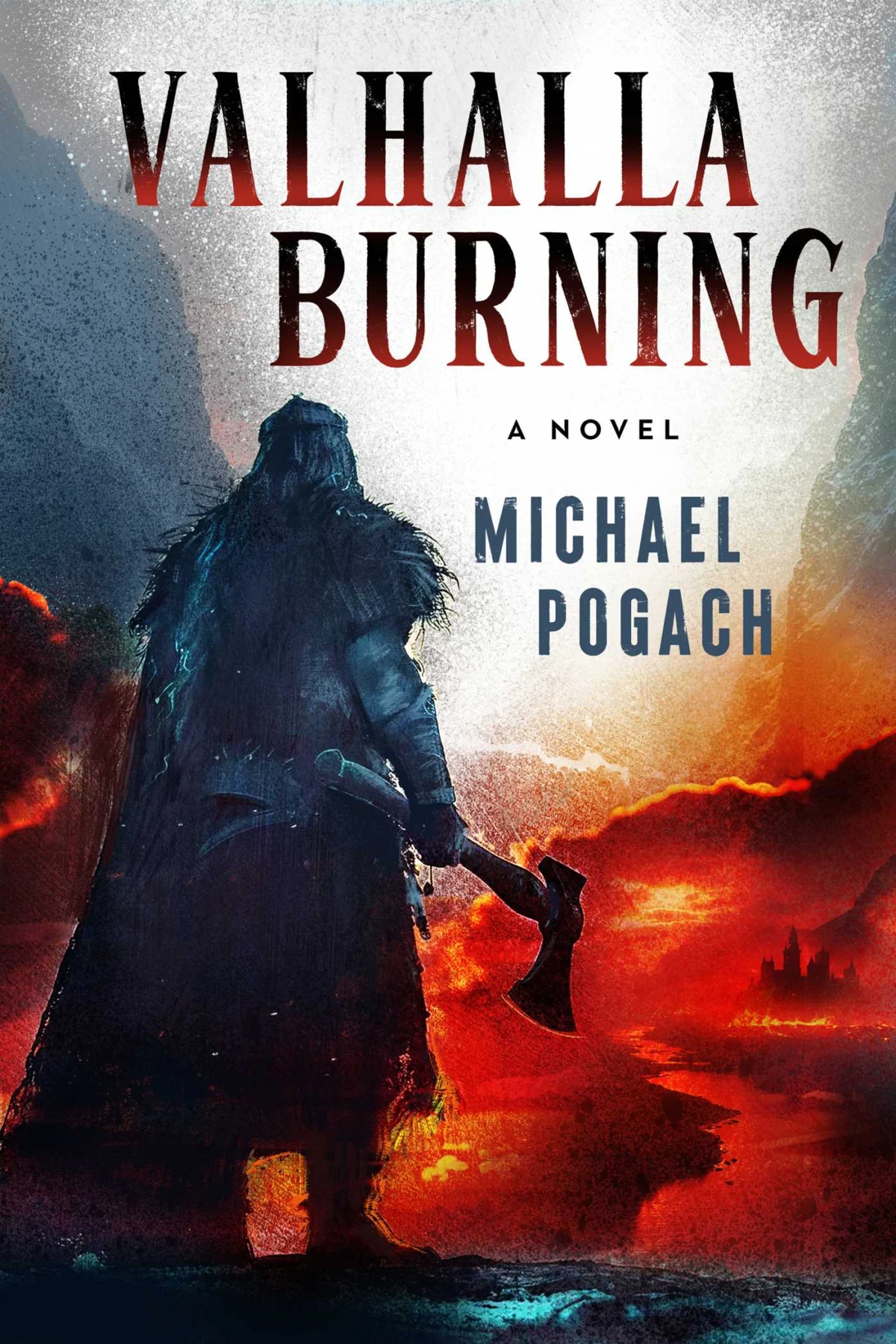
New novel by Michael Pogach draws inspiration from unexpected sources, exploring themes of vengeance, fatherhood, and the enduring human spirit against a brutal 9th-century backdrop.
[City, State] – [Date] – Author Michael Pogach is set to release his latest novel, Valhalla Burning, a gripping dark Viking adventure that plunges readers into the heart of 9th-century Norway. The novel centers on Rúnr Njálsson, a Berserkr gifted with supernatural warrior abilities, whose life is shattered when his daughter, Yrsa, is lost during a rival clan’s raid. Driven by a desperate quest for vengeance and a yearning to secure his daughter’s passage to Valhalla, Rúnr embarks on a perilous journey that will test his bonds, his rage, and his very soul.
Pogach, known for his Gothic thriller Slip and the dystopian Rafael Ward series, reveals that the genesis of Valhalla Burning is as unconventional as the narrative itself. In a candid exploration of his creative process, Pogach details how the inspiration for this epic tale emerged not only from a deep dive into historical and literary sources but also from the immersive worlds of video games and the challenging translation of ancient texts.
The Genesis of a Saga: From Digital Realms to Ancient Tongues
The narrative of Valhalla Burning unfolds with Rúnr Njálsson, a chosen Berserkr of Odin, whose formidable powers have made him a figure of both awe and terror. However, his invincibility is brutally tested when his daughter Yrsa becomes a casualty of a vicious raid. Haunted by visions and tormented by Yrsa’s spectral presence, Rúnr’s path leads him to a seeress who foretells a journey to a mysterious red temple, where he must confront Yrsa’s killer to save her soul from the clutches of Hel. This quest propels him across vast landscapes, from the shadowed forests of the Slavs and Rus to the opulent city of Constantinople. Along the way, he gathers a motley crew of Viking raiders, each with their own complexities: the ferocious Captain Garmr, the secretive merchant Erasmus, the hot-tempered warrior Ingimar, and the formidable shieldmaiden Ingirid, who proves capable of piercing Rúnr’s hardened exterior. As Rúnr’s feelings for Ingirid deepen, his Berserkr rage intensifies, pushing the crew’s loyalty to its limits and forcing him towards an unthinkable sacrifice.
Pogach’s journey to this visceral tale began, surprisingly, with the digital world. "Video games are legit storytelling," Pogach asserts, pushing back against traditional gatekeeping in the literary world. He recalls his childhood immersion in early video games like Super Mario Brothers and The Legend of Zelda, recognizing even then their nascent storytelling capabilities. The profound emotional impact of modern games like The Last of Us solidified his conviction. It was, in fact, the release of Assassin’s Creed Valhalla that reignited his creative fire during a period of writer’s block. "BOOM: inspiration," he states, highlighting the pivotal role this digital experience played in motivating him to write again.
This unconventional muse is not the only unconventional element fueling Valhalla Burning. Pogach, an English professor by profession, also delved into the challenging, yet rewarding, endeavor of personally translating sections of the epic poem Beowulf. Inspired by acclaimed translations by Edwin Morgan, Seamus Heaney, and Maria Dahvana Headley, Pogach undertook the arduous task of rendering approximately 25 lines of Old English, focusing on the poem’s central battles. "It was difficult. Frustrating. Recursive. Dull. Sometimes exciting," he admits, underscoring the immense effort involved. This deep dive into the linguistic and thematic intricacies of Beowulf undoubtedly enriched the historical and mythological texture of Valhalla Burning.
The Unfolding Narrative: Vengeance, Loss, and the Bonds of Brotherhood
Valhalla Burning is more than just a tale of Viking prowess; it’s a profound exploration of fatherhood, loss, and the complex tapestry of human relationships. Rúnr’s journey is not merely a physical one but an internal odyssey grappling with immense grief and the destructive nature of his own power. The introduction of a diverse ensemble cast, from the gruff Garmr to the intriguing Ingirid, allows Pogach to explore the dynamics of trust, loyalty, and burgeoning romance within the harsh realities of Viking life. The growing affection between Rúnr and Ingirid offers a glimmer of hope and humanity amidst the pervasive violence, but it also serves to further complicate Rúnr’s internal conflict, as his Berserkr nature threatens to consume everything he holds dear.
The novel promises a "rich and brutal dark Viking adventure," inviting readers to immerse themselves in a world where the lines between hero and monster, vengeance and justice, are perpetually blurred. Pogach’s commitment to authenticity, while allowing for dramatic license, is evident in his exploration of the dual nature of Viking society – its capacity for both immense brutality and profound beauty.
The Creative Crucible: Lessons Learned in the Long Road to Publication
Pogach shares five key insights gleaned from the arduous process of bringing Valhalla Burning to fruition, offering a candid look at the realities of authorship.
H2: Lesson 1: Video Games are Legit Storytelling
As previously detailed, Pogach champions the narrative power of video games, challenging the elitism that often dismisses them as mere entertainment. His personal experience with Assassin’s Creed Valhalla underscores his belief that diverse forms of media can serve as potent catalysts for creative inspiration. He advocates for artists to embrace all sources of inspiration, urging aspiring writers to "feed your creativity in every other way you can."

H2: Lesson 2: Embrace the Voices in Your Head
Pogach emphasizes the importance of intuition and creative instinct, referring to it as the "little voice" that guides the artistic process. He recounts how this inner voice prompted significant structural changes to Valhalla Burning, from altering the initial title to shifting the narrative’s point of view and even reshaping planned plotlines. His advice to fellow creators is clear: "shut up and listen." This trust in one’s muse, he argues, is essential for producing authentic and impactful art.
H2: Lesson 3: Patience is a Virtue, Even When You Lack It
The journey from manuscript to published book is a marathon, not a sprint, and Pogach openly admits his struggle with patience. He meticulously details the protracted timeline of Valhalla Burning‘s publication, from its inception in late 2020 to its release in July 2024, a process spanning nearly five years. The emotional toll of querying agents, waiting for publisher responses, and navigating the labyrinthine editing process is palpable. "Every day querying made me sad and angry and frustrated and hopeful and even a bit depressed," he confesses. Despite his personal aversion to waiting, Pogach perseveres, highlighting that the publishing world demands an extraordinary level of fortitude and resilience.
H2: Lesson 4: Vikings Were Brutal, But Also Beautiful
Pogach addresses the common, often romanticized, perception of Vikings, urging a more nuanced understanding. He clarifies that "Viking" was more a profession than a singular ethnic identity, a term popularized in the Victorian era with roots in the Old Norse phrase fara í víking (to go raiding). While acknowledging the undeniable brutality of the Viking Age, he stresses the existence of real people with multifaceted lives – farmers, priests, artisans, and families – who contributed to a rich and diverse culture. Valhalla Burning, he explains, aims to explore these complexities, focusing on themes of fatherhood, family, friendship, trauma, and humanity within the historical context of Viking endeavors.
H2: Lesson 5: The Value of Doing What You Want
Pogach concludes his reflections with a powerful encouragement to pursue one’s creative desires, even when they seem impractical or unnecessary. His personal translation of Beowulf, a project undertaken "for shits and giggles," exemplifies this philosophy. He draws a parallel to the character Chuck Noland in Castaway, exclaiming, "Look what I’ve created!" His overarching message is one of empowerment: "So go do the thing you want to do. And then tell all the people about it. Because you can. Because you’re human." This intrinsic human drive to create, he argues, is fundamental.
Supporting Data and Official Responses
The release of Valhalla Burning is supported by the author’s established literary credentials. Michael Pogach is also the author of the Gothic thriller Slip, a 2023 PenCraft Award runner-up, and the dystopian Rafael Ward series, which includes the Kindle Book Award finalist The Spider in the Laurel. His background as a literature and creative writing professor further lends weight to his literary endeavors.
A notable endorsement comes from the lead writer of Assassin’s Creed Valhalla, who reportedly read and loved Valhalla Burning, a fact Pogach shares with palpable excitement. This connection to the very video game that inspired him adds an interesting meta-narrative to the book’s release.
Implications for Readers and the Literary Landscape
Valhalla Burning arrives at a time when historical fiction, particularly stories set in the Viking Age, continues to capture the public imagination. Pogach’s approach, blending historical research with supernatural elements and deeply human themes, promises a fresh perspective on a well-trodden genre. The novel’s exploration of fatherhood, vengeance, and the struggle against inner demons offers universal resonance, while its immersive depiction of 9th-century Norway provides a compelling historical backdrop.
Pogach’s candid reflections on his creative process also serve as a valuable insight for aspiring writers. By demystifying the journey from inspiration to publication and sharing both the triumphs and the struggles, he offers encouragement and practical advice. His advocacy for diverse forms of inspiration, particularly video games, may also encourage a broader acceptance of unconventional creative sources within the literary community. Furthermore, his nuanced portrayal of the Vikings challenges simplistic stereotypes, inviting readers to engage with the period on a more complex and human level.
The book’s availability across multiple platforms, including Doylestown Bookshop, Bookshop.org, Amazon, and Barnes & Noble, ensures accessibility for a wide readership. As Valhalla Burning makes its debut, it stands as a testament to the power of diverse inspirations, the resilience of the creative spirit, and the enduring allure of epic storytelling.