Unraveling the Cosmos: Gillian Anderson Narrates Animated Exploration of Universe Origins
A new animated series, "How Did Everything Begin?", delves into humanity’s most profound questions about cosmic origins, featuring the captivating narration of actress Gillian Anderson.
[City, State] – July 23, 2026 – The enduring human quest to understand our place in the universe has taken a compelling new form. Open Culture, in collaboration with The Open University, has released a series of animated shorts titled "How Did Everything Begin?", offering accessible yet insightful explorations of various theories concerning the origins of the cosmos. Adding a distinctive layer of gravitas and intrigue, the series is narrated by the acclaimed actress Gillian Anderson.
This latest installment builds upon the success of Open Culture’s previous "A History of Ideas" series, which similarly employed animation and expert narration to demystify complex philosophical and scientific concepts. While the earlier series introduced audiences to thinkers like Simone de Beauvoir and Edmund Burke, and explored abstract notions such as free will and the problem of evil, "How Did Everything Begin?" tackles the grandest question of all: the genesis of everything we know.
The series promises to traverse a vast intellectual landscape, from the intricate philosophical speculations of medieval theologian Thomas Aquinas to the rich mythological narratives of Hindu cosmology. It also juxtaposes historical arguments for intelligent design with the prevailing scientific paradigm of the Big Bang theory, offering a nuanced perspective on how humanity has grappled with these fundamental inquiries across millennia.
A Tapestry of Cosmic Narratives
The two featured videos within the "How Did Everything Begin?" series, as presented in this report, offer a fascinating counterpoint between theological and astrophysical explanations for the universe’s inception. The first prominently features an exploration of William Paley’s influential "watchmaker analogy," a cornerstone of natural theology. Paley, in his 1802 work Natural Theology, posited that just as finding a watch implies a watchmaker, the intricate design of the universe points to a divine creator. This argument, though challenged by David Hume decades prior and later by Charles Darwin’s theory of evolution, continues to resonate in certain intellectual circles, particularly within the modern intelligent design movement.
The second video, meanwhile, delves into the Big Bang theory. Coined by its prominent critic Fred Hoyle, this scientific model offers a purely naturalistic account of the universe’s origins, positing a singular, explosive event from which space, time, matter, and energy emerged. Unlike the teleological implications of Paley’s argument, the Big Bang theory operates without presupposing inherent purpose or design, relying instead on observable evidence and mathematical frameworks.
The juxtaposition of these two perspectives within the animated shorts is not merely for historical comparison. It highlights the ongoing dialogue and tension between scientific inquiry and teleological reasoning that has characterized humanity’s attempts to comprehend the universe’s beginnings. While proponents of intelligent design may publicly distance themselves from Paley’s direct methodology, the underlying principle of inferring design from complexity often echoes his foundational arguments.
The Art of Accessible Explanation
The scripting of these illuminating animations is the work of Nigel Warburton, the esteemed host of the "Philosophy Bites" podcast. Warburton has a proven talent for distilling complex ideas into digestible and engaging content, a skill honed through years of interviewing leading thinkers in philosophy and beyond. His ability to translate abstract concepts into accessible language is crucial for a series aimed at a broad audience, including those with little prior background in philosophy or cosmology.
The choice of Gillian Anderson as the narrator is particularly inspired. Known globally for her iconic role as Agent Dana Scully in the science fiction phenomenon The X-Files, Anderson possesses a voice that evokes both intelligence and a sense of profound mystery. While many may initially associate her with the familiar cadence of her most famous character, in "How Did Everything Begin?", Anderson adopts a distinct British accent, a reflection of her upbringing and current life in the UK. This nuanced vocal performance adds an intimate and authoritative presence to the animations, drawing listeners into the intricate narratives of cosmic origins. Her past roles in acclaimed British period dramas, crime thrillers like The Fall, and even Michael Winterbottom’s eccentric adaptation of Tristram Shandy demonstrate her versatility and capacity for engaging storytelling.
The series’ thematic resonance with fans of The X-Files is undeniable. The very premise of questioning the unknown, of seeking answers to fundamental mysteries about existence, aligns perfectly with the spirit of Chris Carter’s seminal work. Whether the animations inspire viewers to "believe" in a grander design or to remain steadfast in their skepticism, they offer a platform for contemplation and critical engagement with these enduring questions. The mention of the forthcoming director’s cut of X-Files: I Want to Believe further underscores the cultural connection to themes of belief, skepticism, and the search for truth.
A Chronological and Thematic Journey
The "How Did Everything Begin?" series is structured to provide a chronological and thematic overview of humanity’s attempts to understand cosmic origins. The included videos showcase this approach:
-
Thomas Aquinas and the First Mover Argument: This segment likely explores Aquinas’s philosophical efforts to prove God’s existence through cosmological arguments, particularly his concept of the "First Mover" – an unmoved mover necessary to initiate the chain of causality in the universe. This delves into medieval scholasticism and its blend of Aristotelian philosophy and Christian theology.
-
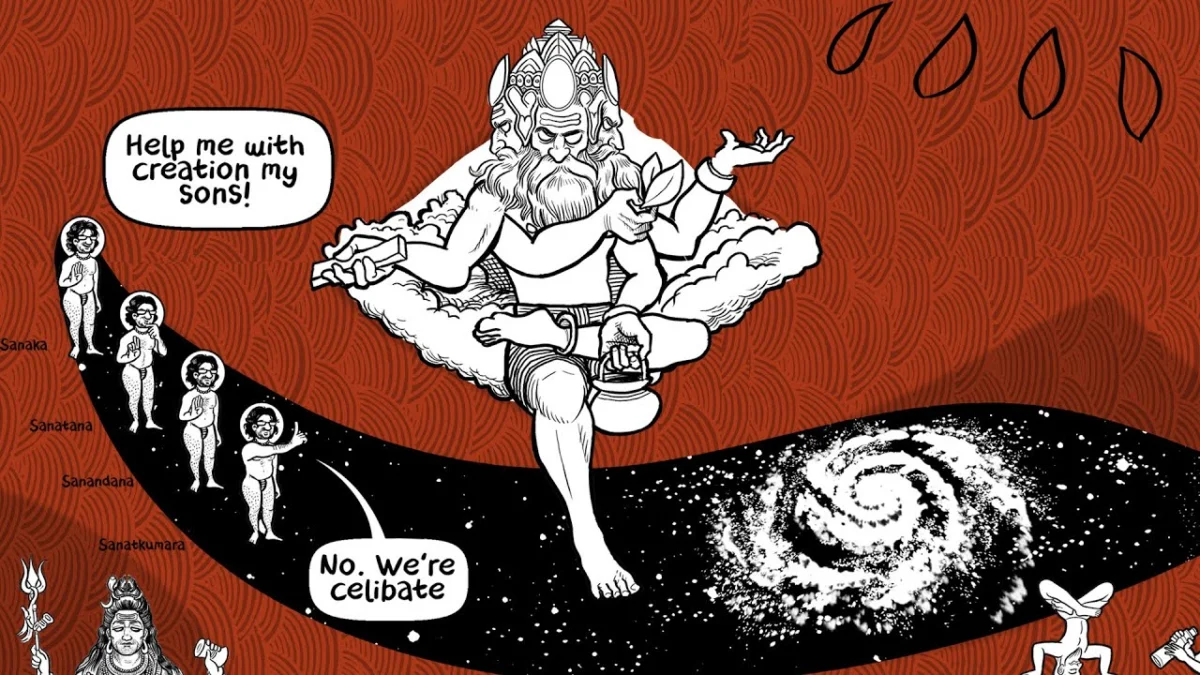
Hindu Creation Stories: This video plunges into the diverse and often cyclical cosmologies found within Hinduism. It will likely present narratives involving deities like Brahma, Vishnu, and Shiva, exploring concepts of cosmic cycles of creation, preservation, and destruction, offering a stark contrast to linear Western scientific or theological models.
-
William Paley’s Design Argument: As previously discussed, this segment focuses on the analogical reasoning that sees the universe as a complex mechanism requiring an intelligent designer. It highlights the theological implications and the historical impact of this argument on Western thought.
-
The Theory of the Big Bang: This animation presents the prevailing scientific model, detailing the expansion of the universe from an extremely hot and dense initial state. It emphasizes the observational evidence, such as cosmic microwave background radiation and the redshift of distant galaxies, that supports this theory.
The inclusion of these distinct perspectives underscores the multifaceted nature of human inquiry into origins. From ancient myths to rigorous scientific theories, each approach offers a unique lens through which to view our existence.
Supporting Data and Intellectual Foundations
The series draws upon a rich intellectual history, referencing key figures and texts that have shaped our understanding of the universe.
-
Thomas Aquinas (c. 1225-1274): His Summa Theologica remains a foundational text in Catholic theology and philosophy, extensively detailing his arguments for God’s existence, including the Five Ways, which encompass the cosmological argument.
-
Hindu Cosmology: The vast body of Hindu scriptures, including the Vedas, Upanishads, and Puranas, offers numerous accounts of creation, often emphasizing the cyclical nature of time and the interconnectedness of all existence.
-
William Paley (1743-1805): His Natural Theology (1802) is a seminal work in natural theology, popularizing the design argument and profoundly influencing subsequent generations of thinkers.
-
David Hume (1711-1776): A key figure in the Scottish Enlightenment, Hume was a staunch empiricist and skeptic who critically examined religious and philosophical arguments, including those for design, in works like Dialogues Concerning Natural Religion.
-
Charles Darwin (1809-1882): His theory of evolution by natural selection, articulated in On the Origin of Species (1859), provided a powerful naturalistic explanation for the apparent design in biological organisms, directly challenging the premises of Paley’s argument.
-
Fred Hoyle (1915-2001): A distinguished astronomer and mathematician, Hoyle coined the term "Big Bang" in a BBC radio broadcast in 1949, initially with a dismissive tone, but the theory he helped to deride eventually became the dominant cosmological model.
The series thus provides a curated journey through centuries of intellectual endeavor, showcasing the evolution of thought on a subject that has captivated humanity since the dawn of consciousness.
Official Responses and Academic Reception
The Open University’s involvement in this project signifies a commitment to public education and the dissemination of knowledge. By partnering with Open Culture, they aim to leverage the power of digital media to make complex academic subjects accessible to a global audience. The series is expected to be met with positive reception from educators, students, and general viewers alike, offering a valuable resource for understanding diverse perspectives on cosmic origins.
Academics in the fields of philosophy, theology, and astrophysics are likely to view the series as a valuable tool for introducing fundamental concepts and historical debates. The clear and engaging animated format, coupled with Anderson’s compelling narration, has the potential to spark interest and encourage further study. The series’ balanced approach, presenting both scientific and theological viewpoints without overt bias, is also likely to be appreciated in academic circles.
Implications for Understanding Our Place in the Universe
"How Did Everything Begin?" has profound implications for how we understand our place in the cosmos. By exploring the multitude of theories, from ancient myths to cutting-edge science, the series encourages viewers to:
- Appreciate the Diversity of Thought: It highlights that the human quest for understanding is not monolithic, but rather a rich tapestry woven from diverse cultural, religious, and intellectual traditions.
- Engage with Complex Ideas: The animated format makes abstract concepts more tangible, fostering critical thinking and intellectual curiosity.
- Reconsider Foundational Questions: The series prompts introspection about our own beliefs and assumptions regarding existence, purpose, and the nature of reality.
- Recognize the Ongoing Nature of Inquiry: The exploration of historical theories alongside contemporary scientific models underscores that our understanding of the universe is constantly evolving.
In an era often characterized by rapid technological advancement and information overload, "How Did Everything Begin?" offers a much-needed pause for reflection. It invites viewers to step back from the immediate and contemplate the grandest questions that have occupied human minds for millennia. With Gillian Anderson’s captivating voice guiding the way, this animated journey promises to be both enlightening and deeply engaging, reminding us of the enduring wonder of the universe and our persistent desire to comprehend its origins.