
From Fab Four to Fluent Latin: A Teacher’s Ingenious Method to Make the Ancient Tongue Sing
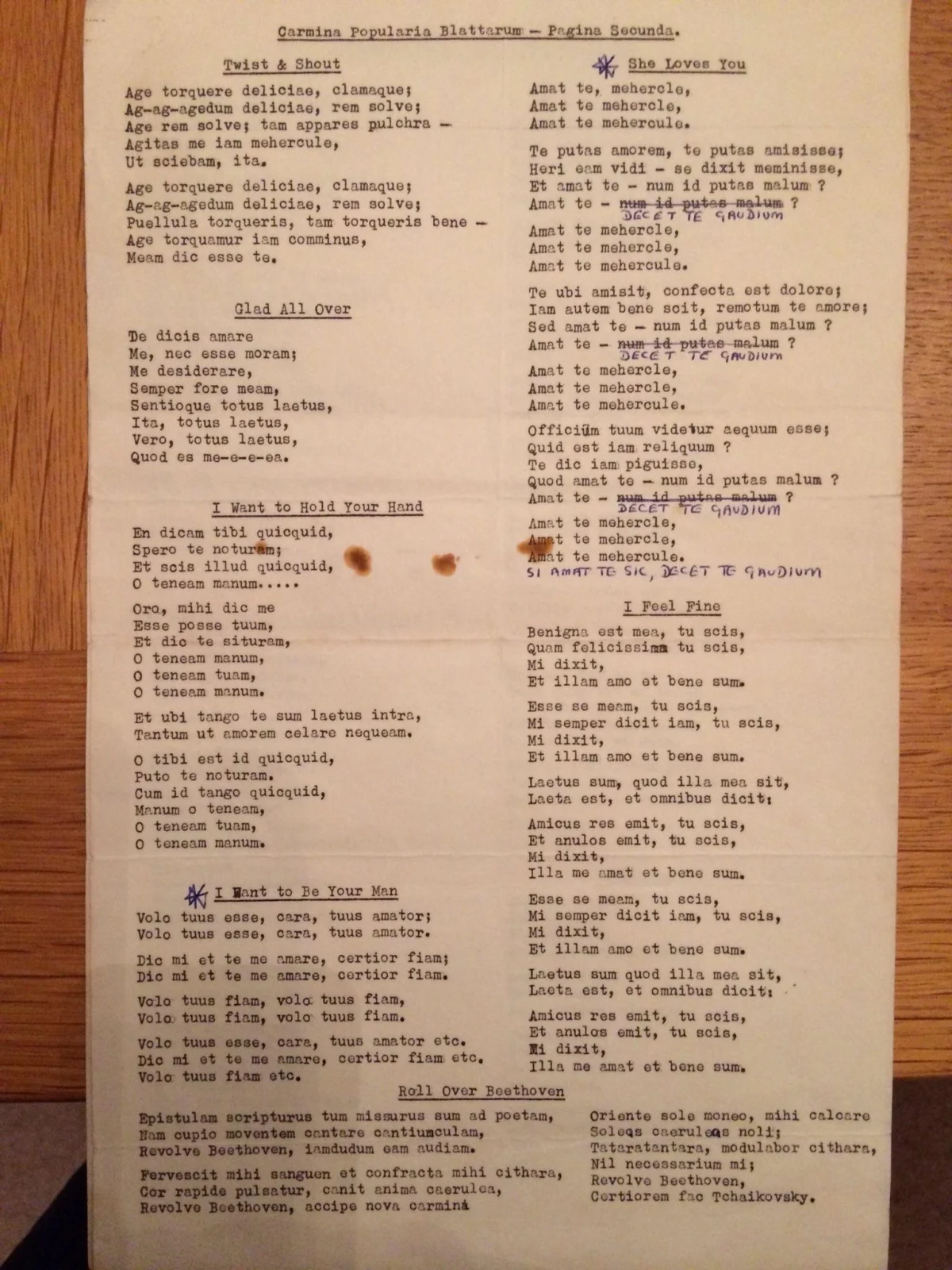
London, UK – June 1, 2026 – In an era where engaging students with classical languages can feel like an uphill battle against the tide of modern entertainment, one educator’s unconventional approach has resurfaced, offering a potent reminder of how pop culture can breathe life into the most venerable of subjects. Eddie O’Hara, a former British Labour Party MP and dedicated classics teacher, developed a unique pedagogical tool in the 1960s: translating the timeless hits of The Beatles into classical Latin for his students. This innovative strategy, revealed posthumously by his son, Terry O’Hara, offers a compelling case study in making the "dead" language vibrantly relevant to contemporary learners.
The challenge of teaching classical languages like Latin and Ancient Greek is a perennial one. While the literary and rhetorical brilliance of figures like Virgil, Ovid, Horace, Cicero, and Julius Caesar is undeniable, their dense prose and intricate grammatical structures can often feel remote and intimidating to young minds accustomed to the immediacy of modern media. The struggle to master counter-intuitive pronunciations, parse complex grammar, and memorize endless noun genders can render the learning process arduous and, at times, disheartening. This is particularly true when compared to the accessibility of learning modern languages through everyday cultural touchstones like ministries in Spanish or comic books in French.
The Enduring Appeal of Classical Texts and the Need for Accessibility
For centuries, the study of Latin has been the bedrock of a classical education, prized for its role in shaping Western thought, literature, and law. The ability to engage directly with the original works of Roman antiquity offers unparalleled insights into history, philosophy, and the evolution of language. However, the very rigor that makes these texts so profound can also be a significant barrier to entry. Many students, even those with a genuine interest, find themselves bogged down by the sheer difficulty of translation, often struggling with the extensive annotations and glossaries that accompany classical texts, which can sometimes raise more questions than they answer.
While the appreciation for the literary and rhetorical genius of these ancient masters is crucial, a balanced approach to language education acknowledges the need for breaks from the more demanding aspects of study. This is where O’Hara’s inspired method shines. By leveraging the universal appeal of The Beatles, a cultural phenomenon that transcended borders and generations, he sought to bridge the gap between the ancient world and the vibrant, contemporary lives of his students.
Eddie O’Hara: A Statesman and Educator
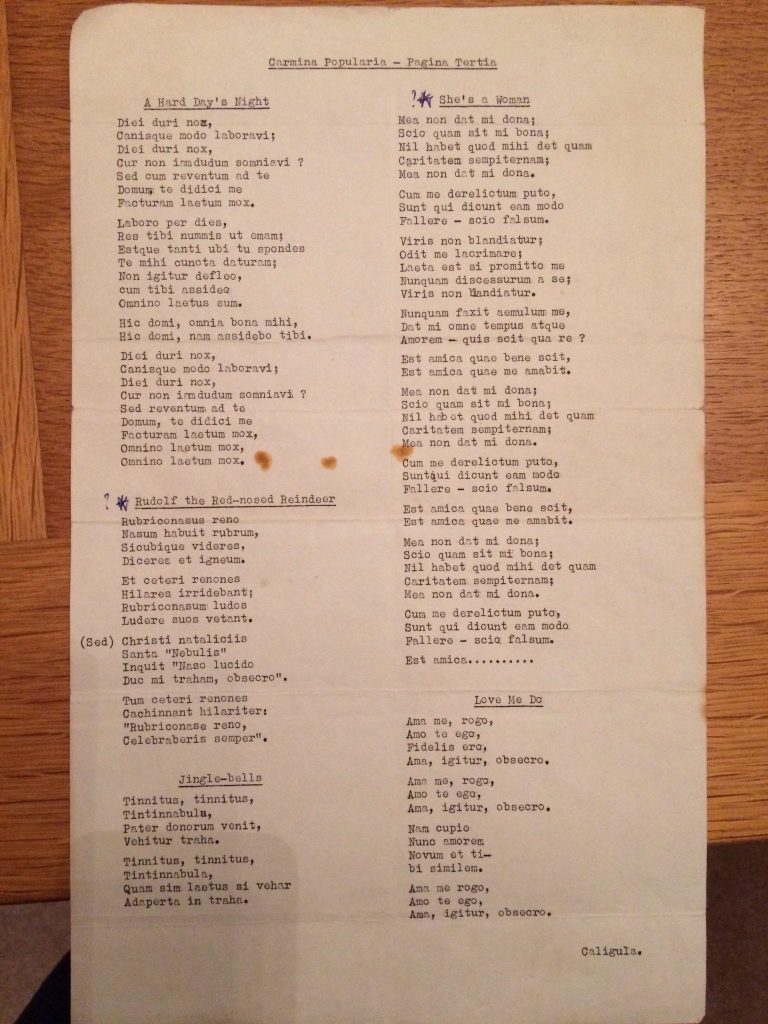
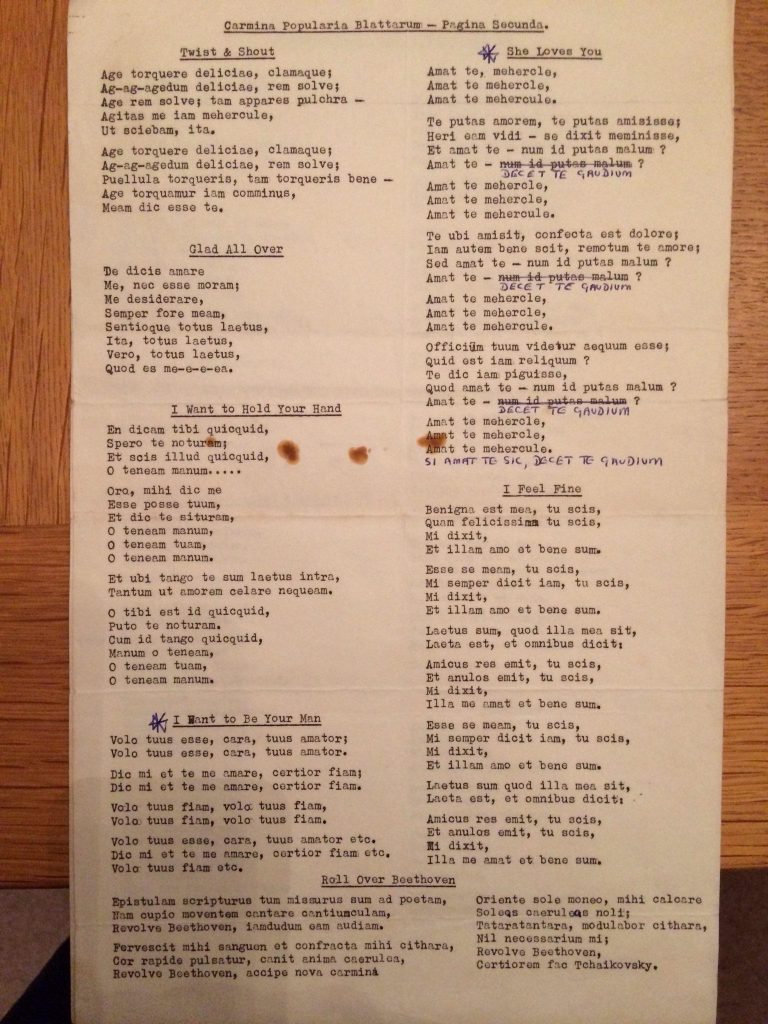
Eddie O’Hara, who passed away in May 2016, was a man of diverse talents and passions. Beyond his distinguished career in politics, he was a lifelong classicist with a deep commitment to education. His son, Terry O’Hara, shared his father’s remarkable translations of Beatles songs into Latin via Twitter in early 2017, sparking renewed interest in this unique pedagogical approach. These translations, crafted in the 1960s, represent a period when The Beatles were at the zenith of their cultural influence, making them an ideal vehicle for engaging students.
O’Hara’s son remembers him as "a born educator," who "was a teacher and classicist by background and he had a strong interest in educational matters and Greek cultural heritage." Educated at Magdalen College, Oxford, O’Hara taught at Perse School, Cambridge, Birkenhead School, and, in the early 1970s, C.F. Mott College in Liverpool – the very city that spawned The Beatles. His dedication to bringing classics to life was recognized by the Liverpool Echo, which remembered him as "a popular teacher who brought classes to life translating Beatles lyrics into Latin."
The Translations: A Bridge Between Worlds
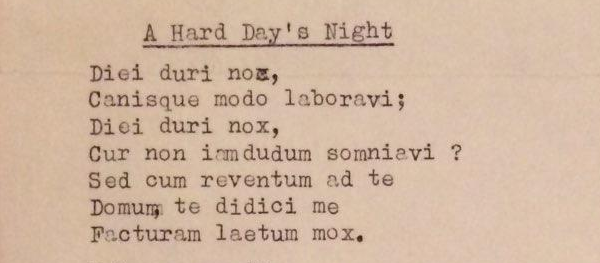
The translations themselves, while not subject to immediate verification for absolute linguistic precision by the author of the original article (whose own Latin skills had "fallen into such a state"), are indicative of O’Hara’s sensitivity to the original meter and rhythm of the songs. The prospect of hearing iconic lyrics rendered in the formal language of ancient Rome is undeniably intriguing. For instance, the heartfelt chorus of "All My Loving" might transform into "Ita totum amorem dabo, Tibi totum, numquam cessaba" ("Thus I will give all my love, all to you, I will never cease"), and the catchy refrain of "She Loves You" could become "Amat te, mehercle" ("She loves you, by Hercules!").
These Latin renditions, while a far cry from the epic narratives of the Aeneid, offer a playful and accessible entry point into the language. They demonstrate that Latin is not merely an academic exercise confined to dusty textbooks but a dynamic linguistic system capable of expressing the emotions and experiences of modern life. This approach combats the perception of Latin as a cold and imposing language, instead presenting it as a tool for creative expression and connection.
Supporting Data and Pedagogical Innovation
The efficacy of such methods lies in their ability to connect with students on a personal level. By translating familiar and beloved songs, O’Hara tapped into existing cultural capital, making the learning process less about rote memorization and more about engaging with a language in a meaningful context. This aligns with broader trends in language education that emphasize communicative competence and cultural relevance.
While the original article notes that Beatles lyrics from the 1960s might not resonate as strongly with students in 2017 (and by extension, in 2026), the principle remains sound. The key is to identify contemporary pop culture touchstones that capture the imagination of today’s youth. This could include popular music, film dialogues, or even internet memes, all of which could be reimagined in classical languages to foster engagement. The article itself poses a pertinent question to classics teachers: "what pop cultural material would you translate today… to reach the bemused, bewildered, and the bored?"
The success of O’Hara’s method is further evidenced by the broader trend of contemporary artists and educators exploring the use of Latin in creative contexts. The article points to related content such as Nirvana’s "Smells Like Teen Spirit" performed in classical Latin, a YouTuber testing modern Italians’ understanding of the language on the streets of Rome, and John Linnell of They Might Be Giants releasing an EP of songs in Latin. These examples underscore a growing recognition of Latin’s potential beyond traditional academic settings.
Implications for Modern Language Education
Eddie O’Hara’s innovative approach offers several critical implications for modern language education, particularly for classical languages:
- Enhanced Student Engagement: By linking classical languages to popular culture, educators can significantly boost student interest and motivation. Familiarity with the source material makes the translation process less daunting and more enjoyable.
- Deeper Linguistic Understanding: Translating song lyrics, even seemingly simple ones, requires a nuanced understanding of grammar, vocabulary, and syntax. Students must grapple with verb conjugations, noun declensions, and idiomatic expressions to accurately convey the meaning and spirit of the original.
- Cultural Bridge-Building: This method not only makes Latin accessible but also fosters an appreciation for the enduring influence of classical culture. It demonstrates that the principles and structures of ancient languages can be applied to modern forms of expression.
- Creative Pedagogical Strategies: O’Hara’s work serves as an inspiration for educators to think outside the box and develop creative teaching methods. The challenge lies in identifying relevant and engaging contemporary content that can be effectively translated.
- The Enduring Relevance of Classical Languages: By showing that Latin can be used to express the themes and emotions found in popular music, O’Hara’s translations subtly argue for the continued relevance of these languages in understanding human experience across time.
The author’s call to readers to share their own innovative teaching methods in the comments section highlights the ongoing quest for effective ways to teach classical languages. The idea of seeing O’Hara’s Latin Beatles songs set to music and visualized in a video is a compelling testament to the creative potential unlocked by this unique pedagogical approach.
Ultimately, Eddie O’Hara’s Latin Beatles translations stand as a testament to the power of imagination and the enduring connection between language, culture, and music. They offer a powerful reminder that even the most ancient tongues can be revitalized and made relevant through clever, engaging, and culturally resonant pedagogical practices. As educators continue to seek ways to inspire the next generation of scholars and enthusiasts, O’Hara’s harmonious fusion of The Beatles and classical Latin provides a timeless lesson in the art of making learning sing.




Leave a Comment