Unveiling the Enchanted Mind: Ioan P. Couliano’s "Eros and Magic in the Renaissance" Challenges Modernity’s Foundations
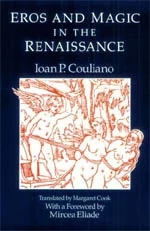
A groundbreaking work by the late scholar and magician Ioan P. Couliano, "Eros and Magic in the Renaissance," offers a profound re-evaluation of Western intellectual history, fundamentally challenging modern assumptions about the nature of reality, desire, and the human imagination. Published posthumously, this seminal text excavates a forgotten epoch where subjective experience held tangible sway over the objective world, presenting a compelling argument that our contemporary, mechanistic worldview is not a triumph of reason but a historically contingent "aberration."
Couliano’s magnum opus delves into the rich tapestry of Renaissance thought, where magic, animism, and a nuanced understanding of the human psyche flourished, only to be systematically dismantled by the forces of the Protestant Reformation and the subsequent rise of mechanistic science. Far from being a mere historical account, the book functions as a potent philosophical treatise, inviting readers to reconsider the very premises upon which our understanding of science, spirituality, and human agency is built. It is a work that promises to forever alter how one perceives the intricate dance between belief, perception, and the construction of reality.
Main Facts: A Paradigm Shift in Historical Understanding
"Eros and Magic in the Renaissance" by Ioan P. Couliano is much more than an academic study; it’s an intellectual journey into a worldview radically different from our own, yet profoundly influential in shaping it. At its core, the book posits that the modern Western separation of subjective experience (imagination, desire) from objective reality is a relatively recent development, lacking the historical depth and philosophical sophistication of earlier eras.
Couliano, a unique figure who was both a rigorous scholar trained under the famed historian of religions Mircea Eliade and an acknowledged practitioner of magic, brings an unparalleled perspective to his subject. This dual insight imbues his analysis with a vitality and depth often absent in purely academic treatises. He argues that during the Renaissance, concepts like vis phantastica (the imaginative faculty) and eros (desire) were understood not as mere internal states, but as potent forces capable of shaping and influencing the external world. This perspective stands in stark contrast to the prevailing post-Renaissance view, which largely confined these capacities to the realm of the individual mind, devoid of any genuine bearing on external reality.
The book meticulously traces the intellectual lineage of this enchanted worldview through the lives and works of pivotal Renaissance figures such as Marsilio Ficino, Pico della Mirandola, and most notably, Giordano Bruno, whose profound treatise "On Bonding in a General Sense" serves as a cornerstone for Couliano’s analytical framework. These thinkers saw a universe alive with interconnected forces, where human will and imagination could actively participate in the cosmic dance, influencing events and bridging the gap between the material and the spiritual.
Couliano then delineates the dramatic historical rupture that severed this connection. He controversially portrays the Protestant Reformation not as a liberalizing movement, but as an ultraconservative force that sought to purge Christianity of its remaining animistic vestiges. This fundamentalist impulse cast a shadow of suspicion over any worldview that embraced an "enchanted" understanding of the world, paving the way for the ascendance of a mechanistic paradigm. The book ultimately reveals how the triumph of this mechanistic view was not due to its inherent rationality or empirical superiority, but rather its congruity with the puritanical sentiments and cultural shifts of the era, illustrating a clash between two fundamentally different "mythologies" or ways of perceiving and engaging with the world.
Chronology: From Enchantment to Disenchantment
Couliano’s work meticulously charts a crucial intellectual and spiritual trajectory in Western history, moving from an era of profound enchantment to one of radical disenchantment.
The Renaissance Enchantment: Imagination as an Active Force
The Renaissance, often celebrated for its artistic and scientific innovations, was also a period of intense spiritual and philosophical exploration. Couliano reveals how, in this vibrant intellectual landscape, magic was not merely superstition but a sophisticated philosophical system intimately intertwined with Neoplatonism, Hermeticism, and Kabbalah. Central to this worldview was the belief in the active power of the human psyche, particularly the imagination (vis phantastica) and desire (eros).
- Marsilio Ficino (1433–1499): As the head of the Florentine Platonic Academy, Ficino was instrumental in translating Plato and the Hermetic Corpus Hermeticum, reintroducing these ancient texts to Western thought. He believed in a universe permeated by divine love (amor divinus) and astral influences, where human imagination, through music, talismans, and ritual, could draw down beneficial celestial energies. For Ficino, the soul was a microcosm mirroring the macrocosm, and thus, human thought and desire possessed a real, albeit subtle, power to interact with the cosmos. His concept of spiritus (a subtle intermediary between soul and body) was crucial in explaining how internal states could affect external reality.
- Pico della Mirandola (1463–1494): A polymath and syncretist, Pico famously championed the "Dignity of Man," asserting humanity’s unique capacity to shape its own destiny and ascend the chain of being. He integrated diverse traditions, including Jewish Kabbalah, into his philosophy, seeing magic as the "highest wisdom" that allowed humans to understand and manipulate the hidden forces of nature. For Pico, magic was not illicit sorcery but a profound knowledge of the interconnectedness of all things, enabling the magician to "marry the earth to the heavens." His belief in the transformative power of human intention and understanding underscored the Renaissance view of an active, participatory consciousness.
- Giordano Bruno (1548–1600): Perhaps the most radical and tragic figure among them, Bruno expanded on these ideas with audacious philosophical rigor. His work, particularly "On Bonding in a General Sense" (De vinculis in genere), forms a conceptual cornerstone for Couliano’s analysis. Bruno posited a universe of infinite worlds and panpsychic interconnectedness, where the human mind, through its imaginative and volitional faculties, could establish "bonds" (vincula) with other beings and forces. These bonds were not merely metaphorical but real energetic connections, allowing for influence, persuasion, and the shaping of reality. Bruno’s system of mnemonics, for instance, was not just about memory recall, but a method for structuring the mind to align with cosmic forces, thereby gaining power over them. His vision of an animated, living universe, where spirit and matter were inextricably linked, directly challenged the emerging mechanistic paradigm and ultimately led to his execution for heresy.
The Reformation’s Censor: Stripping Away Enchantment
The vibrant intellectual freedom of the Renaissance, particularly its embrace of magic and animism, collided head-on with the ascetic and puritanical impulses of the Protestant Reformation. Couliano argues that far from being a purely theological or liberalizing movement, the Reformation acted as a profoundly conservative force that sought to strip Christianity of what it perceived as pagan remnants and "superstition."
The Reformers, driven by a desire for a "pure" and unmediated relationship with God, viewed many traditional Catholic practices—from saint veneration to elaborate rituals—as idolatrous and superstitious. This zeal for purification extended to any worldview that suggested an immanent spirituality or a porous boundary between the divine and the mundane. Magic, in all its forms, whether philosophical or folk, became suspect, often demonized as the work of the devil. The Protestant emphasis on God’s absolute transcendence and omnipotence left little room for human agency in manipulating cosmic forces, effectively disempowering the human imagination as an active force in reality. This theological shift created an intellectual climate hostile to the very notion of an enchanted world, forcing magical practices underground and recasting them as dangerous heresy.
The Rise of Mechanism: A World Devoid of Spirit
In the wake of the Reformation’s spiritual cleansing, the intellectual landscape was ripe for the emergence of a new scientific paradigm: mechanism. Couliano highlights the crucial division within the sciences of the period:
- Natural Magicians: Figures like Paracelsus (1493–1541) still represented a vitalistic, animistic approach to nature. They believed in a living, organic universe where alchemical processes, sympathies, and antipathies governed interactions. The physician, for instance, was not merely a mechanic of the body but an understanding of cosmic forces influencing human health. This tradition saw nature as imbued with active principles and inherent spiritual qualities.
- Proto-Mechanists: This camp, laying the groundwork for the scientific revolution, began to conceive of the world as essentially a giant machine. Thinkers like René Descartes, Galileo Galilei, and later Isaac Newton, sought to explain natural phenomena through quantifiable laws of motion and matter. In this emerging worldview, the world was devoid of inherent will, spirit, or consciousness. These qualities were increasingly confined solely to the human brain (often seen as a separate, immaterial mind in Cartesian dualism) or relegated to a remote, dualistic Christian spirit world entirely separate from the physical realm.
Couliano’s most provocative assertion is that the victory of this mechanistic worldview over the magical, animistic one was not a triumph of pure reason over unreason. Instead, he argues, it was a victory of cultural congruence. The mechanistic paradigm, with its emphasis on order, predictability, and a distant, watchmaker God, aligned perfectly with the puritanical sentiments of the age. It offered a seemingly rational and controlled alternative to the perceived chaos and moral ambiguity of an enchanted world. The debate, therefore, was not between rationality and irrationality, as partisans of mechanism often framed it, but between two distinct and incompatible "mythologies"—two fundamental sets of premises about how the world works, how meaning is made, and what constitutes valid knowledge. The mechanistic narrative, bolstered by theological shifts and social anxieties, simply gained greater public favor and institutional support.
Supporting Data: Couliano’s Unique Lens and Enduring Legacies
Couliano’s work is distinguished not only by its content but by its unique methodology and the profound implications it draws for understanding modern society.
Couliano’s Methodology and Influence
The author’s background as both a scholar and a magician lends an exceptional depth to "Eros and Magic." His extensive collaboration with Mircea Eliade, a titan in the history of religions, undoubtedly shaped Couliano’s understanding of myth, ritual, and the sacred. Eliade’s morphological approach, which sought to identify recurring patterns and structures across diverse religious phenomena, provided a framework for Couliano to analyze the underlying "mythologies" of magic and mechanism. However, Couliano pushed beyond Eliade’s focus on the archaic, applying a similar structural analysis to the intellectual shifts of the Renaissance and early modern period.
Crucially, Couliano’s "magician-scholar" perspective allowed him to approach his subject from an empathetic, almost experiential standpoint, rather than a purely detached, academic one. He wasn’t just studying historical texts about magic; he understood the principles of magic – how it aims to influence, persuade, and reshape reality through symbolic action and focused intention. This internal understanding allowed him to perceive the continuities between Renaissance magical practices and contemporary social phenomena that other scholars might overlook. While scholars like Frances Yates illuminated the intellectual currents of Hermeticism and Neoplatonism in the Renaissance, Couliano’s contribution lies in explicitly tracing their decline and transformation, particularly through the lens of vis phantastica and eros, and linking this historical narrative directly to the psychological underpinnings of modern life.
The Concept of "Mythologies": Beyond Reason and Unreason
One of Couliano’s most powerful insights is his re-framing of the historical debate between magic and science. He argues vehemently that it was not a simple victory of "reason" over "unreason." Instead, it was a conflict between two distinct "mythologies" – foundational worldviews, each with its own set of unquestioned assumptions about reality, causality, and human potential.
A "mythology" in Couliano’s sense is not a collection of false stories, but a comprehensive framework through which a culture understands and interacts with the world. The Renaissance magical mythology presumed an animated, interconnected cosmos, where subjective states (imagination, desire) had objective efficacy. The mechanistic mythology, which ultimately prevailed, posited a dead, inert universe governed by impersonal laws, with consciousness and will confined solely to the human brain, isolated from the external world. This shift represents a fundamental change in ontological premises, not merely an advancement in empirical knowledge. The mechanistic worldview, in its "triumphalist" narrative, often presents itself as the only rational approach, thereby obscuring its own mythological foundations and historical contingencies.
The Enduring Legacy of Magic: Resurfacing in Modern Guise
Perhaps the most compelling aspect of Couliano’s work for contemporary readers is his argument that magic, far from disappearing, merely went "underground," resurfacing under new, ostensibly secular names. He identifies modern phenomena like "psychology," "marketing," "advertising," and "personal development" as direct descendants of Renaissance magical principles.
- Psychology: The exploration of the human mind, its desires, fears, and potential, parallels the Renaissance fascination with vis phantastica and eros. Therapies that focus on visualization, affirmations, or reframing thoughts to alter reality bear a striking resemblance to ancient magical techniques aimed at shaping subjective experience to achieve desired outcomes.
- Marketing and Advertising: These industries are essentially sophisticated systems of persuasion and influence. They aim to create desire, shape perception, and forge emotional "bonds" (echoing Bruno’s vincula) between consumers and products. The careful crafting of narratives, images, and emotional appeals to induce specific behaviors in large populations is a direct, albeit secularized, application of the principles of effective magical influence.
- Personal Development: The self-help industry, with its emphasis on mindset, manifestation, goal-setting, and positive thinking, explicitly teaches individuals to harness their internal states (imagination and desire) to shape their external realities. This echoes the Renaissance magician’s quest for self-mastery and the ability to project their will onto the world.
Even the scientific phenomenon of the placebo effect, where belief alone can trigger physiological changes, offers a modern, scientifically acknowledged glimpse into the power of the vis phantastica – the imagination’s ability to exert tangible influence over the body and, by extension, reality. Couliano argues that these modern practices, despite their scientific or commercial veneer, operate on the same fundamental principles of psychological influence and reality-shaping that characterized Renaissance magic.
Official Responses: A Seminal Work’s Impact
"Eros and Magic in the Renaissance" has been widely recognized as a seminal and transformative work within academic circles, particularly in the fields of intellectual history, the history of religions, and esotericism studies. While Couliano’s untimely and tragic death prevented him from fully engaging with the book’s reception, its influence has steadily grown since its publication.
Scholars have lauded Couliano for his audacious thesis and his ability to synthesize vast amounts of historical and philosophical material into a coherent and compelling narrative. Reviewers have praised its academic rigor, despite its unconventional subject matter, acknowledging the depth of Couliano’s research and his nuanced interpretations of complex historical figures. The book is often cited as a crucial text for understanding the intellectual fault lines that shaped the modern world, offering a critical counter-narrative to the standard triumphalist accounts of the scientific revolution.
Its impact extends beyond a mere re-interpretation of the Renaissance; it has stimulated further research into the role of magic and esotericism in the development of Western thought, prompting a reconsideration of the boundaries between science, religion, and philosophy. While some specialists might quibble with specific interpretations or the broad strokes of his historical argument, the overall consensus acknowledges the book’s profound contribution to understanding the transition from a participatory, animated cosmos to a disenchanted, mechanistic one. It stands as a testament to Couliano’s genius and his ability to challenge ingrained intellectual assumptions with both scholarly authority and a deeply insightful perspective.
Implications: Re-enchanting Modernity’s Gaze
The implications of Couliano’s "Eros and Magic in the Renaissance" extend far beyond the confines of historical scholarship, offering profound insights into the nature of our contemporary world and the future of human understanding.
Re-evaluating Modernity: The Limits of Mechanistic Science
Couliano’s work compels us to critically re-examine the "triumphalist idea" that the mechanistic worldview won out solely because it was inherently better or more rational. By demonstrating its historical contingency and its alignment with specific cultural and theological biases, he invites us to question the absolute authority often ascribed to scientific materialism. This perspective does not invalidate scientific achievements but rather contextualizes them, revealing the underlying philosophical assumptions that shape scientific inquiry.
The book implicitly critiques reductionism, the tendency to explain complex phenomena by breaking them down into simpler, material components, often overlooking emergent properties or the role of consciousness. By showing how an earlier era conceived of a more integrated reality, Couliano opens up avenues for contemplating the limitations of a purely materialist science in explaining phenomena like consciousness, subjective experience, and the intricate web of meaning that defines human existence. It suggests that our current scientific paradigm, while powerful, might be inherently limited by its foundational "mythology."
The Resurgence of the Subjective: A Renewed Quest for Meaning
In an era grappling with ecological crises, mental health challenges, and a pervasive sense of spiritual emptiness, Couliano’s insights into the power of the subjective resonate deeply. There is a growing contemporary interest in consciousness studies, mind-body connection, holistic health, and even spiritual practices that emphasize personal transformation and the "manifestation" of desires. These movements, whether explicitly or implicitly, echo the Renaissance understanding of the active human imagination and will.
The book challenges the modern dichotomy between objective fact and subjective value, suggesting that this separation has impoverished our experience of the world. By demonstrating that our current worldview is a historical construct, it opens the door to imagining alternative frameworks where human consciousness, intention, and desire play a more integral role in shaping reality. This encourages a renewed exploration of non-Western epistemologies and ancient wisdom traditions that never fully embraced the mechanistic disenchantment.
A Call for a More Nuanced Worldview: Bridging the Divide
Ultimately, "Eros and Magic in the Renaissance" is a powerful call for a more nuanced and expansive worldview. It doesn’t advocate for a return to historical magic in a literal sense, but rather for an appreciation of the complexity and richness of human understanding across different epochs. It urges us to recognize that different "mythologies" offer different ways of perceiving and experiencing the world, each with its own strengths and limitations.
By exposing the hidden magical roots of modern psychology, marketing, and personal development, Couliano prompts us to consider the ethical implications of these powerful tools. If these are indeed secularized forms of influence and reality-shaping, then understanding their historical lineage can lead to a more conscious and responsible application of their principles.
Reading "Eros and Magic in the Renaissance" is a transformative intellectual experience. It dismantles deeply ingrained assumptions, forcing readers to question the very foundations of what they consider "real" and "rational." It re-enchants the past and, in doing so, offers a profound lens through which to critically examine and potentially re-envision the future of human consciousness and our place within an interconnected cosmos. You’ll never see magic or science in the same way again.