Unveiling the Enigma: Laura Sampson’s Retelling of ‘The Twelve Dancing Princesses’ Ignites Imagination
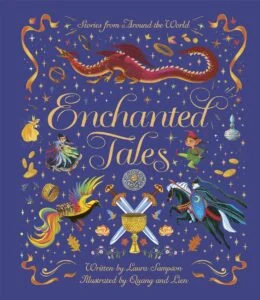
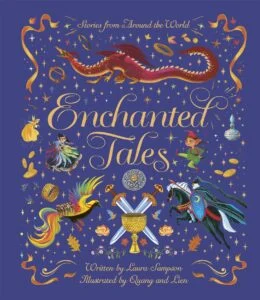
LONDON, UK – In a literary landscape often captivated by new narratives, the enduring power of classic folklore continues to enchant, proving its timeless appeal. Acclaimed author Laura Sampson masterfully breathes new life into one such beloved tale with her latest work, Enchanted Tales, published by Templar Books. Within its pages, Sampson delivers a captivating retelling of "The Twelve Dancing Princesses," a mysterious and romantic narrative first penned by the French writer Charles Deulin. This version, rich in regional detail and emotional depth, invites readers into a secret world where magic intertwines with the human heart, challenging perceptions of social standing and the true meaning of courage.
The tale, with its roots deeply embedded in European folklore, explores the inexplicable mystery surrounding twelve beautiful princesses whose satin slippers are found worn through each morning, despite their chambers being securely locked. Their father, a distressed duke, offers a royal reward – the hand of one of his daughters – to anyone who can uncover the secret of their nocturnal excursions. However, a grim fate awaits those who fail, adding a layer of peril to the alluring challenge. Sampson’s rendition, illustrated exquisitely by Phung Nguyen Quang and Huynh Thi Kim Lien, not only preserves the original wonder but also infuses it with a fresh vibrancy, making it accessible and deeply engaging for contemporary audiences.
At the heart of this particular version lies Michel, a humble cowherd known as "Stargazer" for his dreamy disposition and yearning for adventure. Guided by a benevolent fairy, Michel embarks on a quest that leads him from the quiet village of Montignies-sur-Roc to the grand Château of Beloeil, ultimately positioning him as the unlikely hero destined to unravel the royal enigma and, perhaps, win the heart of the youngest princess, Lina. Sampson’s narrative highlights themes of perseverance, the subtle power of observation, and the transformative strength of true love, presenting a story that resonates far beyond its fantastical premise.
Chronology of the Enchanted Discovery
The journey into the mysterious world of the dancing princesses unfolds with meticulous detail, beginning with the pervasive riddle that grips the Château of Beloeil.
The Enigmatic Mystery of Beloeil
The Château of Beloeil, a symbol of aristocratic grace, was paradoxically shrouded in an inexplicable mystery that baffled its inhabitants and its venerable Duke. Every morning, without fail, the satin shoes of his twelve beautiful daughters were found utterly worn through, as if they had danced vigorously all night. Yet, their suite of rooms remained triple-bolted from the outside, an impenetrable fortress against nocturnal escapades. The Duke, weary and increasingly desperate, had issued a decree: "ANYONE WHO CAN SOLVE THE MYSTERY OF THE WORN-OUT SHOES MAY MARRY ONE OF MY DAUGHTERS!" This declaration, while promising immense reward, also carried a grave caveat. Many princes, drawn by the allure of royal marriage and the thrill of the challenge, had journeyed from across the land to try their luck. Each, however, vanished without a trace overnight, their attempts swallowed by the same inexplicable magic that spirited the princesses away. The atmosphere at Beloeil was therefore a strange mix of opulence and underlying dread, a riddle whispered in hushed tones through its grand halls.
Michel’s Humble Beginnings and Divine Intervention
Far removed from the opulence and intrigue of the chateau, in the quaint village of Montignies-sur-Roc, lived Michel, a young cowherd. His curly hair and striking blue eyes earned him the affectionate moniker "Stargazer," a testament to his habit of gazing skyward, his mind adrift in dreams of grand adventures that transcended his humble station. Michel’s spirit was one of quiet aspiration, a stark contrast to the grounded realities of his daily life. One serene summer’s day, his ordinary existence was dramatically interrupted. A radiant fairy, resplendent in a golden gown, materialised before him, her voice like a melodic whisper carrying a momentous prophecy: "Go to the Château of Beloeil, and you will marry a princess!" This ethereal encounter served as the catalyst, propelling Michel towards a destiny he could scarcely have imagined.
A Gardener’s Subtle Approach
Eager and emboldened by the fairy’s words, Michel wasted no time. He arrived at the chateau the following day, only to find the air thick with speculation about the very mystery the fairy had foretold. Despite his newfound courage, Michel was acutely aware of his status. "I am no prince," he mused, "the duke will laugh at me if I come forward." Prudence dictated a more subtle approach. He secured work within the chateau gardens, a position that allowed him proximity to the princesses without drawing undue attention. His daily task involved crafting exquisite bouquets for the royal sisters. Though they accepted his floral offerings, their gazes rarely met his, and words of thanks were scarce. Michel, however, remained undeterred, his watchful eyes absorbing every detail of their routines and demeanour. His patience was eventually rewarded when, one day, the youngest princess, Lina, offered him a fleeting glance and a gentle smile. In that moment, Michel’s heart surged with a renewed sense of purpose, his quiet longing transforming into a resolute determination to unravel the perplexing mystery.
The Gifts of the Laurel Trees
That very night, the fairy reappeared to Michel, her presence once again bringing forth an aura of potent magic. This time, she bore gifts: two delicate baby laurel trees, one a vibrant rose, the other a fragrant cherry, accompanied by a miniature golden bucket and a golden rake. "Plant these laurel trees, tend them with this rake, water them from this bucket and they will grant your wishes!" she sang, her words imbued with ancient wisdom before she vanished as swiftly as she had arrived. Michel, ever diligent, followed her instructions precisely. He nurtured the saplings with care, tending to their growth with hope in his heart. His dedication bore fruit when, one day, the cherry laurel blossomed with a solitary, pristine white flower. Michel plucked it, tucking it into his shirt buttonhole, a simple gesture intended to impress the young princess Lina. To his astonishment, the moment the flower touched his garment, he became instantly invisible. A gasp escaped him, quickly stifled. "This is my chance to solve the princesses’ mystery!" he realised, the fairy’s prophecy now manifesting in the most unexpected way.
Unveiling the Secret Realm
Armed with his newfound invisibility, Michel meticulously planned his first nocturnal reconnaissance. That evening, he slipped unnoticed into the princesses’ suite, concealing himself under a bed. As the heavy door was bolted shut, the room, once silent, erupted with hushed excitement. He heard the rustle of fine silks, the soft thud of wardrobes opening, and suppressed laughter. Then, three distinct claps echoed – CLAP! CLAP! CLAP! – followed by a soft CREAK as a trapdoor in the floor swung open. Michel, seizing the moment, emerged from his hiding place and discreetly followed the princesses. So close was he that he accidentally trod on Lina’s dress. She glanced back, puzzled, but seeing nothing, dismissed it as a stumble.
The procession led them down a winding staircase, along a dimly lit corridor, and into an otherworldly landscape. First, they passed through a woodland of shimmering silver, where every leaf and branch glinted under an unseen light. Next, a forest of pure gold unfolded, its opulent foliage casting a warm, majestic glow. Finally, they traversed a woodland of sparkling diamonds, each tree ablaze with myriad facets, refracting light into dazzling patterns. This enchanting path culminated at the edge of a glass-clear lake, its surface reflecting the twilight sky like a mirror. Here, twelve shining boats awaited, each manned by a prince. Michel, still invisible, carefully boarded Lina’s boat. He noted her bewilderment: "Why is my boat so slow and heavy?" she wondered, unaware of his unseen presence. Yet, the pulsating, wild music emanating from a castle across the lake soon consumed her attention.
The boats docked, and the princesses, accompanied by their princely escorts, hurried into the magnificent castle ballroom. It was a spectacle of mirrors, sparkling lights, and rich tapestries, a symphony of opulence designed for revelry. From a secluded corner, Michel watched, mesmerized, as the princesses whirled across the jewelled dancefloor. Lina, her velvet-black eyes alight with joy, danced with an ethereal grace. Michel felt a pang of envy towards the princes, oblivious to their true plight. These were the former suitors, trapped in an endless dance, their memories of the world above erased by an enchanted potion, victims of the very mystery Michel sought to solve.
Gathering Evidence: The Sprigs of Truth
The night of tireless dancing continued until the princesses’ shoes were utterly worn through. The music then ceased, and they partook in a lavish feast of sugar cookies, waffles, and cakes. As dawn approached, Michel silently followed the princesses on their return journey, retracing their steps across the lake and through the diamond and gold woodlands. However, as they passed through the silver woodland, he made a decisive move. He broke off a tiny sprig from one of the shimmering trees. The act produced an unexpected, resonant CLANG! that echoed through the magical forest. "What was that?" one princess whispered, startled. "Probably just a bird," another dismissed, eager to maintain the illusion.
Michel, however, raced ahead, through the trapdoor, up the stairs, and out of an open window, scaling down a hanging vine to reach the chateau gardens just as the first light of dawn touched the horizon. He removed the white invisibility flower, the magic receding, and resumed his daily task of gathering bouquets for the princesses. Later that morning, when he presented the flowers, Lina discovered a silver twig nestled within her bouquet. "How can this be?" she thought, her mind racing, but she wisely kept her counsel.
For the next two consecutive nights, Michel repeated his clandestine observations. Each time, on their return journey, he plucked a sprig – first from the golden woodland, and then from the diamond – carefully placing them within Lina’s bouquet. When Lina found the diamond sprig, the irrefutable evidence in her hands, she confronted Michel. "You must have followed us. How?" she demanded, a mixture of disbelief and dawning understanding in her voice. Michel, choosing his words carefully, simply replied, "I hid." Lina, her curiosity piqued and her heart stirred, pressed further: "You know that telling our father this secret rewards you with a wedding to one of us. Will you tell him?" Michel’s response was unexpected: "I do not intend to." Puzzled by his selflessness, she asked, "But why stay silent?" Michel offered no verbal explanation, but his blue eyes met Lina’s, conveying a depth of feeling that spoke volumes. The other princesses, observing this silent exchange, saw Lina’s heart visibly soften. "How ridiculous! Lina wants to be a gardener’s wife!" they taunted, their voices dripping with scorn. "Never!" Lina cried, her pride wounded, and in a moment of conflicted emotion, she threw her bouquet at Michel with disdain.
The Test of True Love
Later that day, the twelve sisters convened, their collective decision a sinister one: Michel, having discovered their secret, must meet the same fate as the previous suitors. They extended an invitation to Michel, asking him to join them in plain sight that night for their dance. Michel, understanding the veiled threat but resolute in his affection for Lina, accepted. He knew, however, that he could not attend a grand ball dressed in his simple gardener’s clothes. Remembering the second gift from the fairy, the rose laurel, he hurried to the gardens. Whispering his wish into its delicate petals, a magical transformation occurred. In an instant, he was no longer a humble cowherd but a dashing prince, clad in black velvet that mirrored the depths of Lina’s eyes, a diamond feather brooch sparkling elegantly on his cap.
Once more, they descended through the trapdoor, down the stairs, and traversed the wondrous woodlands of silver, gold, and diamond, heading towards the secret dance. This time, Michel walked among them, a legitimate, albeit transformed, suitor. Lina, seeing him in his princely attire, laughed, a blush of embarrassment and something more profound colouring her cheeks. "Don’t you look princely!" she exclaimed. "Maybe," Michel responded, his gaze steady, "But I’m still a gardener. Not good enough for you." Their dance that night was imbued with an unspoken tension and a burgeoning connection. As the ball drew to a close and the princesses’ shoes were worn through, the eldest princess approached Michel. She held out a golden cup, her eyes glinting with a dangerous triumph. "Gardener, secret-revealer, let’s drink to you!" she declared, her tone falsely convivial. Michel, having overheard their earlier conversations, knew the cup contained the potent forgetting potion, a draught designed to erase his memory and trap him forever in the enchanted realm. He took the cup, raised it to his lips, casting a longing, mournful look at Lina. "NO!" Lina cried, her heart shattering at the thought of losing him. She ran to him, seizing the cup before he could drink. "Gardener or not, the thought of you trapped here forever breaks my heart!" In that moment, her selfless act of true love shattered the enchantment that bound the princes and the princesses to the underground world. The spell was broken for everyone. Together, Michel and Lina, followed by the now-freed princesses and princes, returned to the world above, the trapdoor sealing shut behind them, disappearing forever as if it had never existed.
Resolution and Royal Union
In the quiet sanctity of the Duke of Beloeil’s private quarters, Michel, now unburdened by secrecy, recounted every detail of the princesses’ nocturnal adventures and the magical realm beneath the chateau. His courageous revelation not only solved the enduring mystery but also exposed the true nature of the enchanted princes, whose memories were now restored. With the truth laid bare, Michel humbly asked for Lina’s hand in marriage. The Duke, overjoyed by the resolution of the mystery and deeply impressed by Michel’s integrity and courage, readily consented. The wedding that followed was the grandest and most joyous celebration the land had ever witnessed. Michel, the once-humble cowherd, was transformed into a prince, his dreams of adventure realized in a way far grander than he had ever imagined. He never needed to wish upon the two magical laurels again, for with Lina by his side and a kingdom to serve, he had everything he could ever desire.
Supporting Data and Cultural Context
Laura Sampson’s retelling of "The Twelve Dancing Princesses" is not merely a rehash but a thoughtful interpretation that draws upon rich historical and cultural threads, elevating the narrative beyond a simple fairy tale.
The Enduring Legacy of "The Twelve Dancing Princesses"
The narrative of "The Twelve Dancing Princesses" is one of the most widely circulated and adapted fairy tales across Europe, appearing in numerous variations, notably collected by the Brothers Grimm as "The Worn-Out Dancing Shoes" and often attributed to Charles Perrault’s earlier influences on French folklore. Its enduring popularity stems from its universal themes: the allure of forbidden desires, the mystery of a secret world, the journey of coming-of-age, and the transformative power of true love and perseverance. The story touches upon the unconscious desires for freedom and self-expression, particularly for young women constrained by societal expectations, as represented by the princesses’ nightly escapes. Psychologically, the tale has been interpreted as a metaphor for adolescent girls exploring their burgeoning identities and desires in a world that seeks to contain them. Sampson’s choice to retell this particular version, rich with Deulin’s regional specificities, adds a unique flavour, moving beyond the more generic settings of other adaptations and offering a deeper sense of place and character motivation.
Charles Deulin: A Regional Storyteller
Charles Deulin, a 19th-century French writer hailing from a small town near the French-Belgian border, brought a distinctive local flavour to his rendition of "The Twelve Dancing Princesses." Unlike many collectors who stripped tales of their regional markers to achieve broader appeal, Deulin imbued his version with details inspired directly by his home region. The mention of specific place names like Montignies-sur-Roc for Michel’s village and the grand Château of Beloeil, a real-life Belgian castle, grounds the fantastical narrative in a tangible reality. Furthermore, his inclusion of local food (waffles, sugar cookies) and clothing styles paints a vivid picture of the culture from which the story emerged. This meticulous attention to local colour enriches the narrative, making it feel more authentic and deeply rooted, a testament to the power of regional folklore. Sampson’s decision to preserve and highlight these details in her retelling ensures that Deulin’s unique contribution to the fairy tale canon is celebrated and appreciated by a new generation of readers.
Laura Sampson’s Contribution to Folklore
Laura Sampson’s Enchanted Tales stands as a significant contribution to the preservation and popularisation of folklore. Her skill lies in her ability to take traditional narratives and infuse them with a contemporary sensibility while remaining true to their original spirit and magical essence. Sampson’s writing style is noted for its lyrical quality and evocative imagery, which perfectly captures the "enchantment" promised in the book’s title. By choosing tales like Deulin’s "The Twelve Dancing Princesses," she brings to light versions that might be less familiar than their more mainstream counterparts, thereby expanding the reader’s understanding of the diversity within European folklore. The illustrative work by Phung Nguyen Quang and Huynh Thi Kim Lien further enhances the book’s appeal. Their distinctive artistic style, blending traditional motifs with modern aesthetics, provides a visual feast that complements Sampson’s narrative, inviting readers to fully immerse themselves in the magical worlds she presents. Their illustrations are not mere accompaniments but integral components that deepen the emotional resonance and visual splendour of the stories.
Official Responses and Critical Acclaim
The release of Laura Sampson’s Enchanted Tales, and particularly her rendition of "The Twelve Dancing Princesses," has been met with significant positive reception from both the publishing industry and literary critics.
Publisher’s Perspective (Templar Books)
A spokesperson for Templar Books, the esteemed publisher of Enchanted Tales, lauded Sampson’s work, stating, "Laura Sampson possesses a rare gift for storytelling, breathing fresh life into ancient narratives without sacrificing their inherent magic. Her retelling of ‘The Twelve Dancing Princesses’ is a testament to her talent, capturing the imagination with its vivid descriptions and compelling characters. We believe Enchanted Tales will become a cherished volume, appealing to both young readers discovering these stories for the first time and adults yearning to reconnect with the wonder of folklore. It perfectly encapsulates our mission to publish books that inspire and endure."
Literary Critics’ Viewpoints
Literary critics have been unanimous in their praise for Sampson’s Enchanted Tales. The Folklore Review hailed the book as "a magnificent revival of classic tales, presented with a lyrical elegance that is both respectful of tradition and vibrantly contemporary. Sampson’s ‘Twelve Dancing Princesses’ is particularly noteworthy for its detailed characterisation of Michel and Lina, elevating their romance into a truly compelling narrative." Children’s Literature Today praised the book’s aesthetic and narrative quality: "The collaboration between Laura Sampson and the illustrators, Phung Nguyen Quang and Huynh Thi Kim Lien, is nothing short of magical. The visual artistry perfectly complements Sampson’s enchanting prose, creating a truly immersive reading experience. This book is a must-have for any library, a beautiful reminder of the power of imagination and the timeless appeal of courage and love."
Reader Reception
Early reader reception for Enchanted Tales has been overwhelmingly positive. Parents appreciate the book for introducing their children to rich, culturally significant stories in an engaging format, while adult readers commend Sampson for her sophisticated yet accessible prose that evokes a sense of nostalgia and wonder. Social media platforms and online book communities are abuzz with praise for the book’s beautiful production quality, its captivating illustrations, and Sampson’s ability to imbue familiar tales with new emotional depth. Many highlight the message of true love overcoming obstacles and the importance of looking beyond superficial appearances, making the story particularly resonant with a diverse readership.
Broader Implications
The success of Enchanted Tales and the renewed interest in "The Twelve Dancing Princesses" carry significant implications for the role of storytelling, cultural preservation, and the enduring human values embedded within folklore.
The Power of Storytelling in Contemporary Society
In an age dominated by digital media and rapid information consumption, the continued relevance of classic storytelling, particularly through thoughtfully crafted retellings like Sampson’s, cannot be overstated. Fairy tales, beyond mere entertainment, serve as fundamental tools for moral development, fostering imagination, and transmitting cultural heritage. They offer children a safe space to explore complex emotions, navigate ethical dilemmas, and understand universal human experiences. For adults, they provide a cherished escape, a moment of reflection, and a connection to shared cultural memory. Enchanted Tales demonstrates that well-told stories, regardless of their age, possess an inherent power to captivate, educate, and inspire, proving that the human need for narrative remains undiminished.
Preserving European Folklore
Collections like Enchanted Tales play a crucial role in the ongoing effort to preserve European folklore. By focusing on specific versions, such as Charles Deulin’s regional rendition, Sampson helps to diversify the popular understanding of these tales, moving beyond the most commonly known adaptations. This act of preservation is vital for maintaining the rich tapestry of cultural narratives that define different regions and nations. It highlights the interconnectedness of European storytelling traditions while celebrating their unique variations. Such efforts ensure that these invaluable literary treasures are not lost to time but continue to be passed down through generations, enriching the cultural landscape for years to come.
The Universal Appeal of Love and Courage
Ultimately, the enduring appeal of "The Twelve Dancing Princesses" lies in its universal themes, masterfully articulated in Sampson’s retelling. Michel’s journey from a humble, dreaming cowherd to a courageous prince is a powerful narrative of aspiration and self-belief. His unwavering devotion to Lina, his willingness to risk his own fate for her, and Lina’s ultimate act of love to save him from enchantment, resonate deeply. The story champions the idea that true love is not bound by social status or magical spells but by genuine affection, sacrifice, and courage. It teaches that one’s inner character, rather than external titles, defines worth. In a world that often values superficiality, the tale serves as a timeless reminder that perseverance, empathy, and the transformative power of true love are the most potent forces of all, capable of breaking any enchantment and leading to a life of genuine happiness and fulfillment.