The 15/70mm Frontier: Why Christopher Nolan Stands Alone in the IMAX Revolution
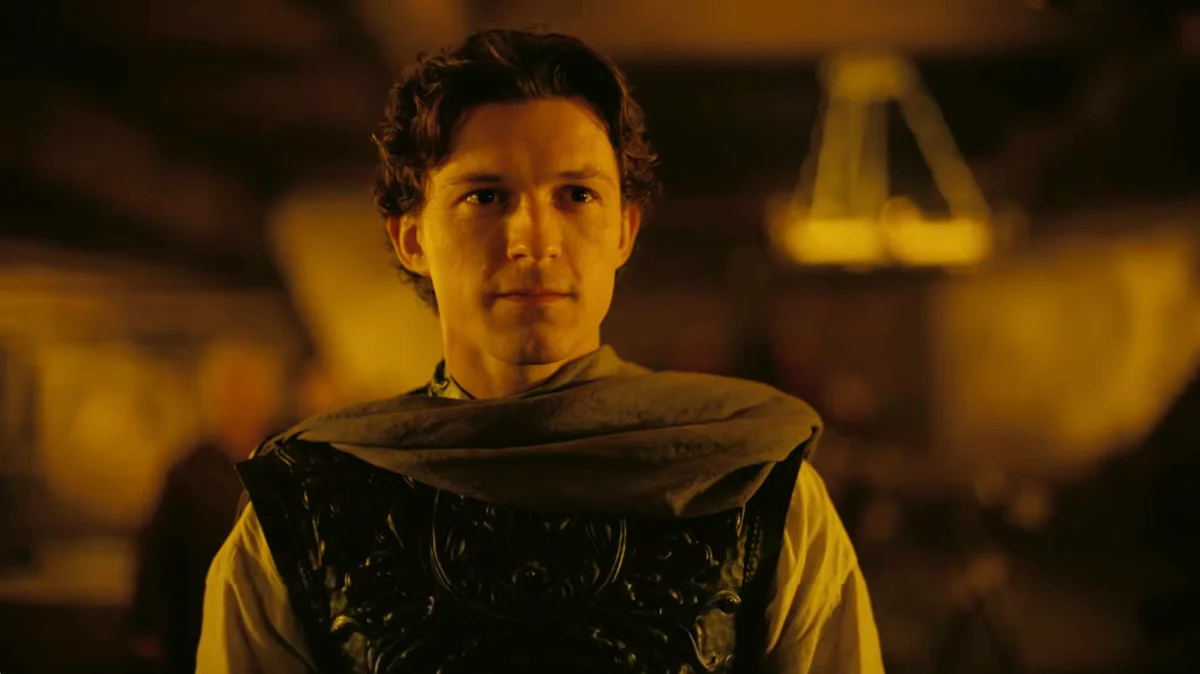
The global box office has a new titan, and its name is The Odyssey. As Christopher Nolan’s 173-minute adaptation of Homer’s epic poem enters its third week of release, it has already amassed a staggering $700 million worldwide. With an "A" CinemaScore and the kind of "long-tail" box office legs usually reserved for James Cameron sequels, the film has solidified Nolan’s status as the most influential filmmaker of the 21st century.
However, the conversation surrounding The Odyssey isn’t just about its narrative sweep or its polarizing reception among classicists like Emily Wilson; it is about the medium itself. For the first time in cinema history, a feature film has been shot entirely using IMAX 70mm cameras. While the results are visually peerless, the production has highlighted a widening gap in Hollywood. Despite the format’s overwhelming success, the rest of the industry remains hesitant to follow Nolan into the celluloid deep end.
Main Facts: The Technical Pinnacle of "The Odyssey"
To understand why The Odyssey looks unlike anything else on a screen, one must understand the distinction between "Filmed for IMAX" and "Shot with IMAX." The former often involves digital cameras with large sensors that are later upscaled or formatted for IMAX screens. The latter—Nolan’s preferred method—utilizes 15-perforation, 70mm film cameras.
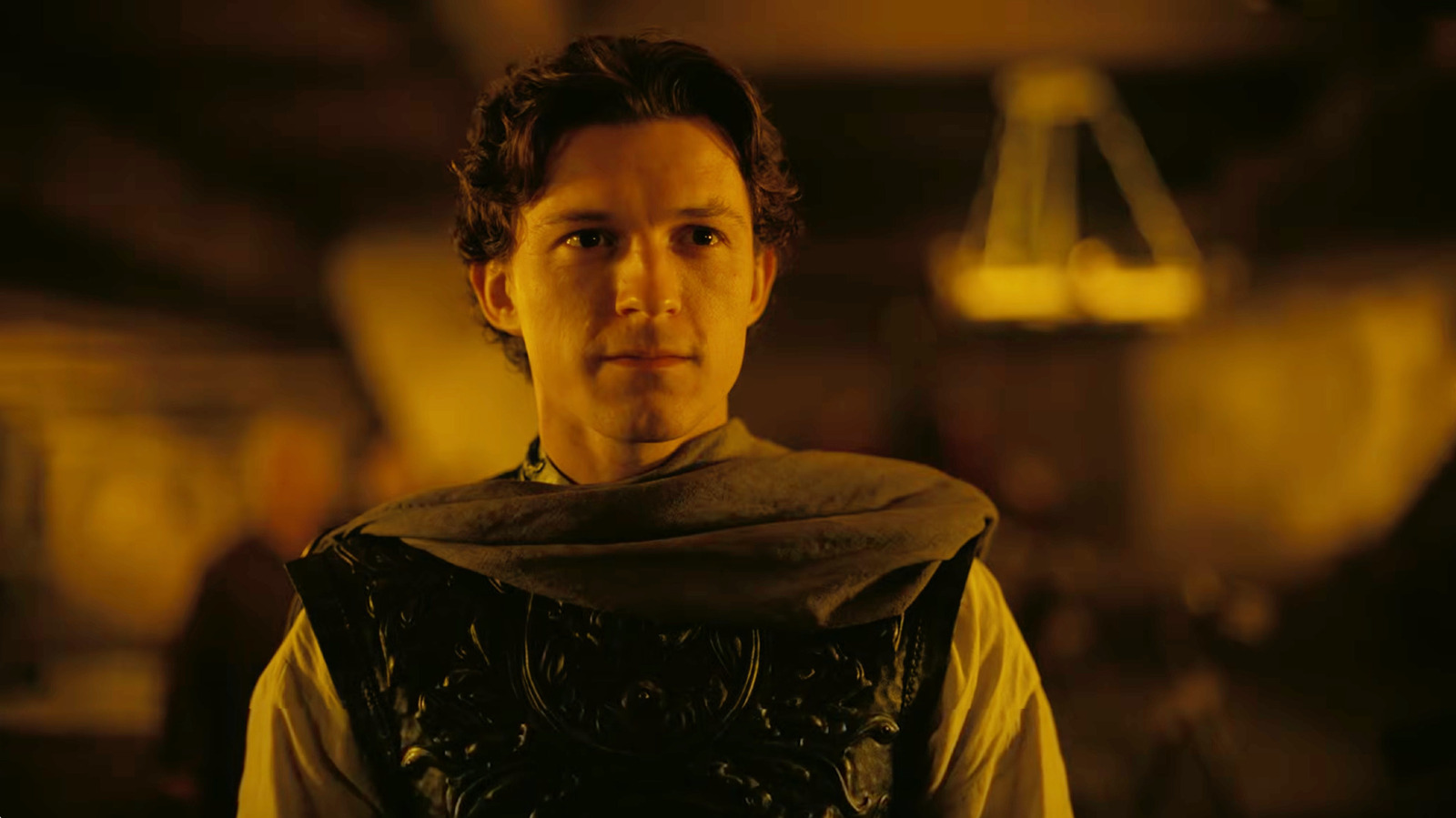
The resolution of an IMAX 70mm frame is theoretically equivalent to 18K, providing a level of clarity, depth, and color saturation that digital sensors have yet to replicate. In The Odyssey, this translates to a visceral experience: the churning Aegean Sea, the weathered lines on Telemachus’s (Tom Holland) face, and the towering scale of the Cyclops’s cave are rendered with a tactile reality that feels three-dimensional without the need for glasses.
However, this visual fidelity comes at a massive premium. The Odyssey carried a production budget of $250 million, a significant portion of which was dedicated to the logistics of operating these specialized cameras. Currently, Nolan is the only director with the "final cut" authority and the commercial track record to convince a major studio like Universal Pictures to greenlight a project with such high technical overhead and physical risk.
Chronology: The Evolution of the Large-Format Spectacle
The journey to an all-IMAX feature film has been decades in the making. To find the DNA of Nolan’s approach, one must look back to the mid-20th century and the "Roadshow" era of cinema.
The Lean Influence (1960s)
Directors like David Lean redefined the "epic" using formats like Super Panavision 70. When Lean filmed Lawrence of Arabia (1962), he used 70mm film to capture the vastness of the desert in a way that made the audience feel the heat and the scale. Nolan has frequently cited Lean as his primary North Star, aiming to marry Lean’s "prestige" sensibilities with modern blockbuster technology.
The Dark Knight Breakthrough (2008)
The modern IMAX era began when Nolan shot 28 minutes of The Dark Knight using 15/70mm cameras. It was a proof-of-concept that changed the industry. For the first time, audiences saw the aspect ratio of a Hollywood film expand vertically to fill a six-story screen. The success of that film triggered an "IMAX craze," but most directors opted for the easier route of post-production conversion rather than using the actual cameras.
The Incremental Push (2014–2023)
With each subsequent film—Interstellar, Dunkirk, and Oppenheimer—Nolan increased the percentage of IMAX footage. Dunkirk was nearly 70% IMAX, but dialogue-heavy scenes still necessitated smaller, quieter 65mm or 35mm cameras. Oppenheimer pushed the boundaries further by inventing black-and-white IMAX film stock.
The Odyssey (2026)
Finally, with The Odyssey, Nolan achieved the "holy grail": a 100% IMAX 70mm production. This required solving decades-old problems regarding camera weight, film capacity, and, most importantly, acoustic interference.
Supporting Data: The Physical and Financial Barriers
If the visual payoff is so high, why isn’t every Marvel movie or Dune sequel shot entirely on IMAX 70mm? The data suggests three primary deterrents: weight, runtime, and noise.
1. The Weight and Logistics
An IMAX 70mm camera weighs between 42 and 100 pounds depending on the rig. This makes handheld shooting nearly impossible without specialized exoskeletons or cranes. For a director like Ryan Coogler or Paul Greengrass, whose styles rely on kinetic, mobile camera movements, the IMAX "beast" is a hindrance. Furthermore, a 1,000-foot roll of 70mm film—which is massive and heavy—only provides about three minutes of footage. This necessitates frequent breaks in filming to reload the "mags," slowing down the production schedule significantly.
2. The Sound Problem
The most significant hurdle is noise. An IMAX camera functions by pulling massive strips of film through a gate at high speeds. The internal mechanism creates a sound often compared to a lawnmower or a "Cuisinart." In a recent interview, Matt Damon described the experience of filming close-ups for The Odyssey as having "a kitchen appliance screaming in your face" while trying to deliver an intimate monologue.
While Nolan and his long-time cinematographer Hoyte van Hoytema have developed "blimps" (sound-dampening housings) to muffle the noise, they are not 100% effective. This often requires actors to re-record their dialogue in post-production (ADR), a process many directors and actors feel strips the performance of its spontaneity.
3. The Financial Risk
A single roll of IMAX film, including development and processing, costs thousands of dollars. When a film is shot entirely on this format, the "burn rate" of the budget is astronomical. Most studios prefer the safety of digital, where "film" is essentially free once the equipment is rented, and data can be backed up instantly.
Official Responses and Industry Perspectives
The industry’s reaction to the "Nolan Method" is a mix of awe and practical dismissal.
An internal source at IMAX Corporation, speaking on the condition of anonymity, noted that while they are thrilled with the success of The Odyssey, they do not expect it to become the industry standard. "Christopher Nolan is a unicorn," the source stated. "He has a specialized crew that has worked with these cameras for twenty years. You can’t just hand an IMAX 70mm camera to a first-time director and expect a masterpiece. It’s like asking a commuter driver to handle a Formula 1 car."
Denis Villeneuve, another champion of the large format, has taken a different path. While he utilized IMAX cameras for Dune: Part Two and the upcoming Dune: Part Three, he has leaned heavily into the Alexa 65 digital system. Villeneuve has argued that for the harsh conditions of desert shooting—where sand and heat can destroy delicate film mechanisms—digital offers a reliability that 70mm cannot match.
Meanwhile, actors have expressed a "love-hate" relationship with the format. While they appreciate the prestige of appearing in a Nolan film, the technical requirements are grueling. "You aren’t just acting for the camera; you are acting against the camera," one Odyssey cast member remarked. "You have to project over the mechanical whirring while maintaining the emotional nuance of a scene from 3,000 years ago."
Implications: The Future of the Spectacle
The success of The Odyssey creates a complex dilemma for Hollywood. On one hand, it proves that "event cinema" is the only reliable way to draw audiences away from streaming services and back into theaters. On the other hand, the barrier to entry for making such a film is becoming impossibly high.
The Great Divide
We are seeing a bifurcation of the medium. On one side is "Content"—movies shot digitally, designed for flexibility, and intended for multi-platform consumption. On the other side is "Cinema"—large-format, celluloid-based experiences that can only be fully appreciated in a handful of specialized theaters worldwide (of which there are fewer than 50 capable of showing The Odyssey in its native 15/70mm glory).
The Succession Problem
As the "Old Guard"—Spielberg, Scorsese, and Coppola—move into the twilight of their careers, the question of who will inherit the mantle of the "Grand Spectacle" looms large. While Ryan Coogler showed ambition with the IMAX-shot portions of Sinners, and Jordan Peele has experimented with the format, no one has yet demonstrated Nolan’s singular obsession with the physical medium of film.
Conclusion
The Odyssey is more than a box office hit; it is a technical manifesto. It argues that the "magic of the movies" is tied to the physical properties of light hitting silver halide crystals on a massive scale. However, the sheer difficulty of the undertaking suggests that for the foreseeable future, IMAX 70mm will remain a "rarefied field."
Hollywood may continue to chase Nolan’s box office numbers, but few have the stomach—or the budget—to chase his methods. For now, the "lawnmower" of the IMAX camera will remain a sound heard only on a Christopher Nolan set, a noisy reminder that true greatness often requires an agonizing level of friction.