The Architecture of Uncanniness: Analyzing Kit Anderson’s ‘Safer Places’ and the Evolution of Modern Magical Realism
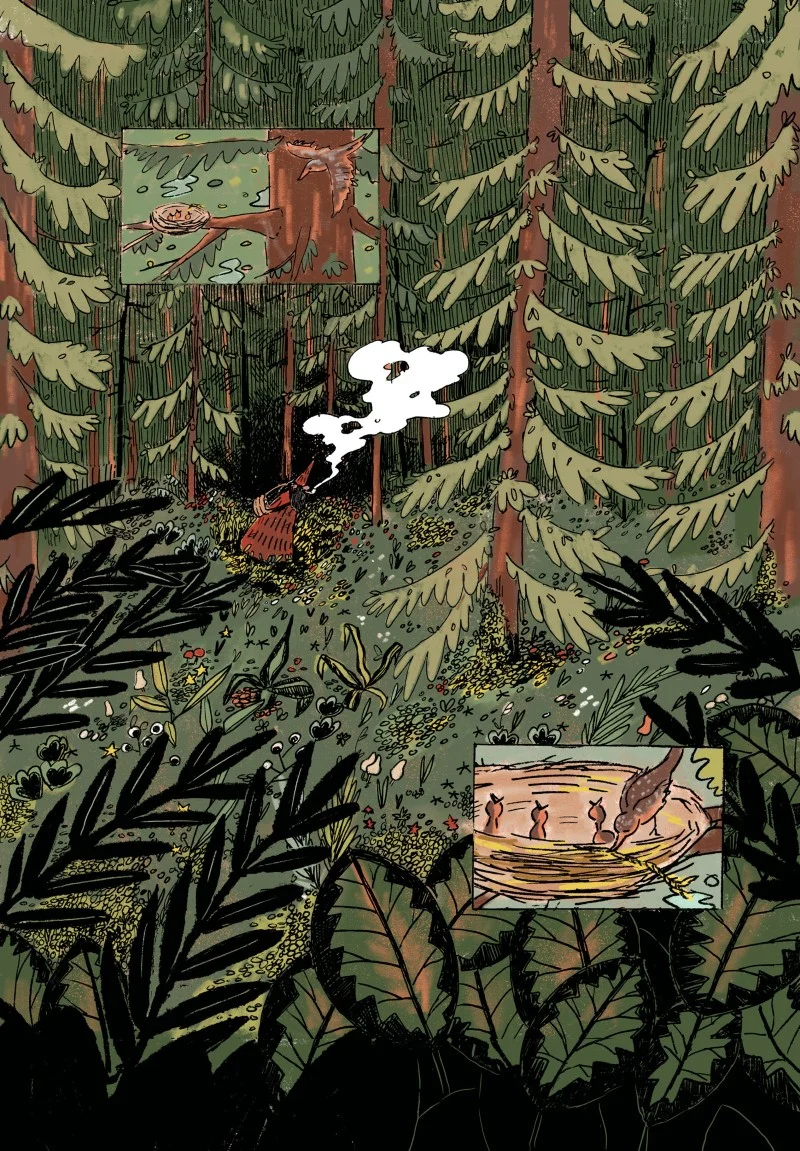
The landscape of independent comics is frequently defined by its ability to subvert traditional narrative structures in favor of atmospheric exploration. Few recent releases exemplify this trend more poignantly than Safer Places, the latest graphic anthology from Kit Anderson, published by the critically acclaimed Avery Hill Publishing. Recently designated as "Required Reading" by industry critics, the work represents a significant milestone in Anderson’s career, blending technological enchantment with rustic melancholy to create a "chapter-book of dreams."
As the medium of graphic storytelling continues to bridge the gap between fine art and literature, Safer Places emerges as a pivotal text that challenges the reader’s perception of safety, agency, and the cyclical nature of existence.
Main Facts: The Release and Reception of ‘Safer Places’
Safer Places, written and illustrated by Kit Anderson, is a curated collection of short stories and fragments that operate within the realms of magical realism and speculative fiction. Published by Avery Hill Publishing—a London-based press known for championing avant-garde and experimental creators—the book retails for $19.99 (£14.99) and has quickly garnered attention for its sophisticated visual language.
The core of the work revolves around a series of interconnected vignettes: journeys with wizards, memories of post-apocalyptic landscapes, and domestic scenes where the mundane is punctured by the impossible. Critics have noted that while the title suggests a sanctuary, the content itself is "haunted" and "eerie," focusing on the reconciliation of nature’s finality with the stubborn longevity of human-made debris.
The book’s inclusion in DoomRocket’s "Required Reading" series places it alongside seminal works like James O’Barr’s The Crow and Zuo Ma’s Night Bus, signaling its importance as a foundational text for contemporary indie comics enthusiasts. Anderson’s ability to shift tone—moving from the suburban to the cosmic without breaking the reader’s immersion—is the hallmark of the collection.
Chronology: From Fragmented Dreams to a Visual Symphony
The narrative progression of Safer Places does not follow a linear timeline; instead, it adheres to what psychologists might call "dream logic." The structure of the book mirrors the experience of slipping in and out of consciousness, with the chapters organized to build a cumulative emotional resonance rather than a singular plotline.
The Initial Walk
The journey begins with an invitation to "walk with the wizard." This opening serves as a thematic anchor, establishing the book’s interest in guides and the act of traversal. This segment introduces the reader to Anderson’s "technological enchantment," where the remnants of the old world—broken machines and abandoned structures—are reclaimed by a nature that is both beautiful and terrifying.
The Mid-Point: Dissolution of Form
As the reader progresses into the middle chapters, the stories become increasingly fragmented. Here, Anderson experiments with "dream submersion," inverting the traditional black-and-white color palette. This inversion signals a departure from the conscious world into the "basement of memory." It is in this phase that the book introduces its most surreal elements: talking cats, stairs that lead to nowhere, and hillsides that rise up and walk away.

The Final Rebirth
The concluding sections of the book return to the theme of rebirth. However, this is not a traditional happy ending. It is a "rebirth like the farm torn down," a stark acknowledgment that for new life to emerge, the old must be utterly dismantled. The final stories act as a "symphony," revisiting motifs introduced earlier—the fox, the cat, the plastic, and the stars—and reimagining them through different artistic "instruments."
Supporting Data: Artistic Vision and Technical Execution
Kit Anderson’s mastery of the comic medium is evidenced by her fluid use of visual mechanics. Her work is often compared to the rustic melancholy of Ted Stearn or the transformative, visceral reveries of Julie Doucet and Inés Estrada. However, Safer Places distinguishes itself through its specific use of "ineffability"—the depiction of things that cannot be easily put into words.
Visual Contrast and Inversion
One of the most striking technical aspects of the book is the use of inverted panels. By switching the relationship between light and shadow, Anderson visually represents the transition into the subconscious. This isn’t merely an aesthetic choice; it serves as a narrative tool that informs the reader they are no longer in a world governed by physical laws.
The Influence of Buk Ulreich
While much of the book maintains a precise, deliberate line, Anderson’s "dream art" breaks form entirely in specific sequences. These moments resemble the paintings of Buk Ulreich, particularly his depictions of dream horses. Using abstract splashes of white against a "cosmic night," Anderson creates shapes that are felt rather than seen. A pony is inferred through negative space, showcasing a cartoonist who is comfortable enough with the mechanics of the page to let the imagery breathe.
Poetic Timing and Page Composition
The book utilizes the "full page" as a unit of measure rather than just the individual panel. Words cascade over images, creating a poetic timing that forces the reader to slow down. The movement through space and time is often implied through the formal arrangement of the panels, even when the content itself remains obscured or abstract. This creates a "delightful" tension between what is shown and what is hidden.
Official Responses and Literary Lineage
The critical consensus surrounding Safer Places highlights its position within a specific lineage of alternative comics. By examining the comparisons made by industry analysts, we can better understand the book’s cultural footprint.
The "Symphonic" Comparison
Critics have drawn direct parallels between Anderson’s work and Zuo Ma’s Night Bus. Both creators use a "symphonic" approach to storytelling, where themes are introduced by one "instrument" (a character or visual motif) and later reimagined by another. In Safer Places, the recurring presence of animal guides—the Cat and the Fox—serves this purpose. They are the "reeds" and "strings" of the narrative, providing a sense of continuity across disparate stories.
The Gothic vs. Folk Horror Debate
While many modern indie comics lean into "folk horror" when dealing with nature, Anderson’s work is categorized more accurately as "Gothic Fantasy" or "Magical Realism." Unlike folk horror, which often relies on a sense of dread derived from ancient traditions, Safer Places finds its uncanny elements in the "longevity of plastic" and the "suburban rituals." It is a domestic gothic, where the hole in the wall or the cat’s advice represents a higher consciousness flowing through the mundane.

Industry Context: Avery Hill’s Curation
Avery Hill Publishing’s decision to back Anderson’s vision aligns with their history of releasing challenging, high-concept works like Raven Lyn Clemens’ The Paradox of Getting Better. By providing a platform for Safer Places, the publisher reinforces its reputation as a home for "thoughtful, deliberate artists" who prioritize vision over commercial tropes.
Implications: The Philosophy of “No Safer Places”
The most profound implication of Anderson’s work lies in its thematic subversion of its own title. As the narrative progresses, it becomes clear that there are, in fact, no "safer places."
The Paradox of Healing
The book suggests that "nature’s cycle means even when you’re led out of the wilderness, you will need to be led out of it again." This perspective on healing and progress is inherently non-linear. It posits that there is no "quest’s end" or final sanctuary. Instead, the focus shifts to the importance of the guide. Whether it is a talking cat or a wizard, the guide is essential not because they lead us to safety, but because they lead us through the inevitable transitions of life.
Agency and Deep Time
The final chapters of the book engage in a deep conversation about agency. Set against "the ghosts of familiarity," the stories ask where we should invest our energy in a world bound to change. By invoking "deep time"—the concept of geological or cosmic scales of time—Anderson encourages the reader to "let go." The blossom planted by the wizard will bloom long after the characters are gone, suggesting that true agency lies in the act of planting, rather than the expectation of seeing the harvest.
Conclusion: A New Standard for the Medium
Safer Places stands as a testament to the power of the graphic novel to explore complex philosophical terrain. Kit Anderson has created a work that is simultaneously a "love chest" of dreams and a rigorous exploration of the human condition. By blending the domestic with the cosmic, and the rustic with the technological, she has set a new standard for how magical realism can be executed in comics.
For readers and collectors, Safer Places is more than just a book; it is a sensory experience that demands multiple readings to fully unpack its "symphony" of ideas. As the indie comics scene continues to evolve, Anderson’s voice will undoubtedly remain a significant influence, reminding us that in a world without safe places, the journey itself—and the guides we find along the way—is all that matters.