Navigating the Storm: Family, Influence, and Perceived Threats in a Polarized Landscape
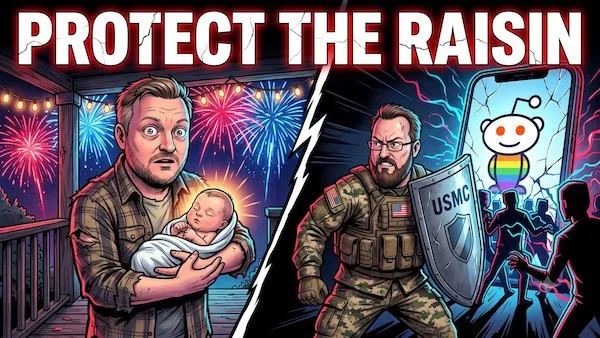
A new arrival in the Umstattd family coincides with escalating concerns about political rhetoric and personal safety, prompting a deeper examination of the challenges faced by public figures in today’s hyper-connected and often adversarial environment.
Introduction: A Joyful Occasion Meets Political Undercurrents
The recent birth of baby Umstattd on July 5th, a joyous occasion for any family, has been underscored by a palpable sense of concern for public figures navigating the increasingly contentious political climate. Thomas Umstattd, a prominent influencer, shared details of his newborn’s arrival, including a poignant anecdote about nearly naming the child "George Washington Umstattd" on July 4th, a nod to the nation’s independence day. While the personal narrative highlights the profound experience of new parenthood, it is inextricably linked to Umstattd’s broader anxieties regarding "leftist violence" and its potential impact on his family’s privacy and safety. This article delves into the multifaceted issues raised by Umstattd’s commentary, exploring the definitions of political rhetoric, the perceived threats to public figures and their families, and the strategies employed to maintain a public presence while safeguarding personal lives.
The Birth of a New Chapter and a Growing Unease
A Father’s Perspective on Birth and Beyond
Thomas Umstattd recounted the birth of his child, initially sharing his desire to name the baby "George Washington Umstattd" in honor of the Fourth of July, a day his wife was in labor. He described his wife as a "trooper," marveling at her strength during childbirth, which he termed a "miraculous event." Despite the overall successful delivery, Umstattd alluded to subsequent complications that necessitated hospital readmissions, adding a layer of strain to the family’s transition into parenthood.
The family is currently residing in what his daughter terms a "crisis home," a temporary arrangement necessitated by the lack of a prepared space for the newborn. This displacement, while presenting challenges, also offers proximity to Umstattd’s parents, providing valuable in-law support for childcare.
The Shadow of Online Discourse
Coinciding with the personal joys and challenges of his newborn’s arrival, Umstattd revealed that a "leftist subreddit" had begun targeting him. This experience has prompted him to address what he perceives as a growing wave of "leftist violence" and its implications for influencers. He expressed a desire to protect his children from potential threats, stating his intent to be the primary shield against any individual or group targeting him.
Defining "Leftist Violence": A Spectrum of Concern
Jonathan’s Analytical Framework
Jonathan, a co-commentator or associate of Umstattd, offered a more analytical perspective on the term "leftist violence." He sought to frame it not as a blanket accusation against all individuals who vote Democrat, but rather as a pattern of problem-solving observed within certain political ideologies. Jonathan articulated a core concern: the belief that "speech is violence." This perspective, he argued, leads some individuals to perceive words they dislike as a direct attack on their identity and, consequently, a threat to their survival, justifying a violent response.
He provided an anecdotal example of comments under a political commentator’s post that included violent threats, illustrating what he described as "deranged wackos." Jonathan emphasized that this mindset, characterized by a perceived need to respond to perceived verbal attacks with physical defense, is what Umstattd is addressing. He clarified that "leftist" in this context refers to a specific "strain of problem-solving" deemed "deranged," rather than a strict political affiliation.
Beyond Lethal Force: The Broader Definition of Harm
Thomas Umstattd expanded on this definition, asserting that "leftist violence" extends beyond lethal threats to encompass actions that create an unsafe environment for children. He cited an instance of individuals reportedly shouting at JD Vance’s children at Disney World, arguing that while political disagreement is valid, targeting children is unacceptable and indicative of a broader cultural acceptance of "left-wing violence."
Umstattd drew a historical parallel to the Weather Underground, a radical left-wing organization from the 1970s, suggesting that past acts of violence by such groups were downplayed or excused, leading to a normalization of such behavior. He expressed concern that this historical pattern contributes to a present-day acceptance of "left-wing violence," leading him to prioritize protecting his children from exposure.

Safeguarding the Public and Private Spheres
The Charlie Kirk Model: Public Persona, Private Family
Umstattd identified Charlie Kirk, a prominent conservative activist, as a model for how to navigate public life while protecting family privacy. Kirk’s strategy, according to Umstattd, involved making his children public figures in a limited capacity – visible but not identifiable by name or clear facial features. This approach, Umstattd suggested, allowed Kirk’s children to be safe in public spaces, as their anonymity served as a shield.
However, Umstattd noted the increased security needs for public figures like Kirk’s wife, attributing this to the current environment where "violence for the left is a form of communication." This implies that the very act of being a public figure, particularly one with a platform that attracts opposition, necessitates a higher level of personal security.
The Unpredictability of Right-Wing Violence
In a stark contrast, Umstattd then addressed the nature of violence on the right. He posited that while the right might not engage in violence as a "form of communication," its violence is characterized by its sudden and extreme nature, likening it to a "switch" that can flip, leading to catastrophic outcomes. He referenced the biblical story of the tribe of Benjamin in the Book of Judges, where prolonged tolerance of transgressions culminates in an overwhelming and destructive response, highlighting the potential for extreme and regretful violence when a threshold is crossed.
This analogy serves as a warning against provoking or escalating tensions, emphasizing the need to "ramp down the violent rhetoric" to prevent a similar "switch" from flipping on the right, which could result in widespread destruction and loss of life. Umstattd reiterated that until such de-escalation occurs, individuals like himself must adopt precautionary measures, particularly in response to targeted online harassment.
Strategic Photo Purging and Audience Engagement
Umstattd revealed a shift in his approach to sharing personal content online. Initially, he readily shared baby photos, which were popular with his audience. However, as the political discourse intensified and the perceived "left got meaner and more violent," he has begun to "slowly purge photos" of his children. He views sharing a picture of his newborn and himself as a calculated risk, assuming that all newborns share a generic appearance, thus minimizing identification. This cautious approach reflects a strategic adaptation to the evolving threat landscape.
The Aftermath of Perceived Attacks and Shifting Social Norms
The Impact of Perceived "Assassination" and Erosion of Trust
Jonathan highlighted a concerning development: the perceived "celebration" of what he termed the "Charlie Kirk assassination" (referring to threats or attacks against him, not a literal assassination) by some on the left. This, he argued, has fundamentally altered the social contract, eroding the previous understanding of shared humanity that allowed for political animosity without personal targeting of families. The previous era, where political adversaries could still express care for each other’s children, is now in question.
Tragic Incidents and the Erosion of Public Service
Thomas Umstattd recounted a tragic incident where the son of a federal judge was killed when assassins targeted the judge. This event underscores the tangible dangers faced by individuals in public service and their families. He also cited testimony from Amy Coney Barrett, detailing the severe and constant threats she and her family have received. Umstattd noted the profound impact these threats have had on her, allegedly pushing her political leanings further left out of fear for her children’s safety. He expressed empathy for her maternal instincts, recognizing the primal drive to protect one’s offspring, while simultaneously lamenting the potential for such fear to compromise broader civic engagement and national interests.
Conclusion: Navigating the Future of Public Life and Family Protection
The narrative presented by Thomas Umstattd and Jonathan offers a glimpse into the anxieties of public figures in an era of heightened political polarization and online aggression. The birth of a child, a moment of profound personal joy, becomes intertwined with concerns about safety and privacy, forcing a reevaluation of how public and private lives intersect. The discussion around "leftist violence" highlights a perceived ideological divide in problem-solving and communication, while the acknowledgment of potential right-wing volatility serves as a stark reminder of the universal dangers of unchecked aggression.
The strategies discussed—from controlled media exposure to cautious online sharing—underscore the evolving tactics required to maintain a public presence without compromising the well-being of loved ones. The chilling accounts of threats against public servants and their families serve as a somber testament to the real-world consequences of inflammatory rhetoric and the erosion of civil discourse. As the digital and physical landscapes continue to blur, the challenges of balancing influence with protection will likely remain a critical and ongoing concern for individuals navigating the complexities of modern public life. The hope for a more measured and respectful public sphere, where political discourse does not translate into personal threats, remains a paramount aspiration for a healthy democracy.