
Forza Horizon 6: A Masterclass in Open-World Design Marred by Disappointing Additions
Introduction
Forza Horizon 6 has arrived, and with it, a breathtaking reimagining of Japan as a sprawling, vibrant open-world playground. Playground Games has once again delivered a visually stunning and mechanically satisfying racing experience that cements the series’ position at the apex of the arcade racing genre. From the neon-drenched streets of Tokyo to the serene countryside and treacherous mountain passes, the game’s meticulously crafted world is an absolute triumph. However, beneath the dazzling exterior lie a few perplexing missteps in new features that, while not derailing the overall experience, prevent Forza Horizon 6 from achieving true perfection.
The Unparalleled Beauty of Japan: A World That Breathes
The heart and soul of any Forza Horizon game is its world, and in Forza Horizon 6, Japan is a revelation. The developers have masterfully captured the diverse and iconic landscapes of the nation, offering players an unparalleled driving experience. The game’s map is meticulously divided into nine distinct regions, each boasting its own unique character and charm.
From Bustling Metropolises to Serene Countryside
The journey begins with an exhilarating blast out of Tokyo, the game’s rendition of the Japanese capital. Players are immediately immersed in a world that shifts from the urban sprawl of skyscrapers and expressways to tranquil rice paddies and winding coastal highways. The transition is seamless, showcasing the remarkable environmental diversity that Japan offers. As the player ventures further, the scenery evolves dramatically.
The coastal highway offers breathtaking views of the deep blue sea and picturesque fishing villages, a stark contrast to the urban intensity of Tokyo. Progressing inland, players will find themselves navigating the challenging, switchback-laden mountain passes that are instantly reminiscent of the legendary Initial D manga and anime. These narrow, demanding routes offer a true test of driving skill, pushing players to their limits as they ascend towards higher altitudes.
Alpine Peaks and Frozen Trails
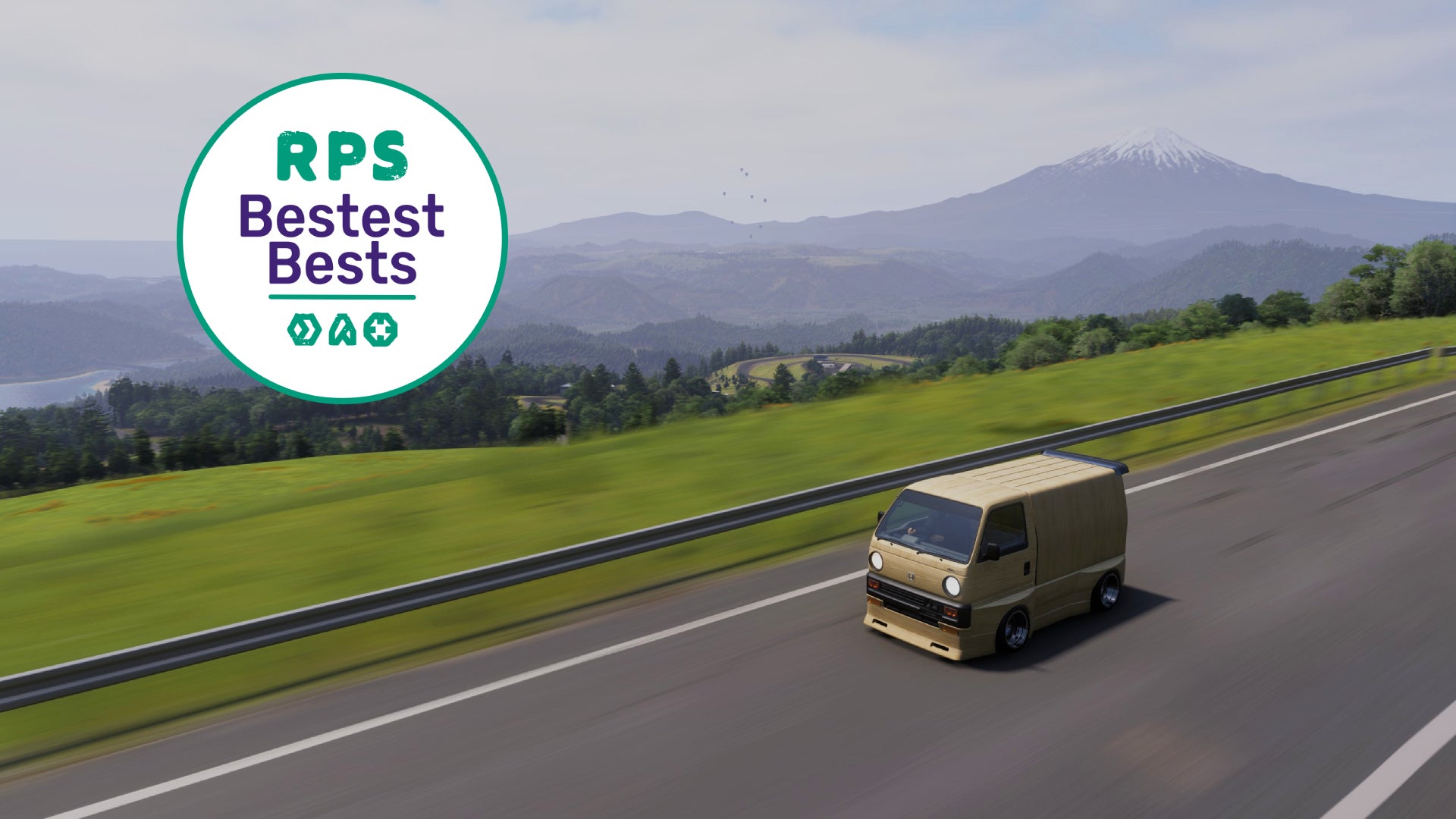
Upon reaching higher elevations, the landscape transforms once again. Wide alpine roads unfold, offering panoramic vistas of Tokyo in the distance to the south and snow-capped peaks to the north. The majestic Mount Fuji stands stoically to the west, a constant, awe-inspiring landmark. This scenery evokes memories of the stunning alpine routes found in central Europe, a testament to the sheer beauty captured within the game. The ascent continues, leading players into treacherous snowy ski trails and steep stretches encased in permafrost, banked by imposing snowdrifts. This dynamic weather and terrain system adds a significant layer of immersion and challenge.
Rivers, Waterfalls, and Fields of Color
The descent from the mountains reveals yet another facet of Japan’s diverse beauty. Twisting and turning alongside rushing rivers and a colossal waterfall, the player is guided through a landscape that gradually flattens. As the terrain becomes more amenable, vibrant fields of yellow, red, and purple emerge, interspersed with more rice paddies. The drive through rural hamlets, adorned with traditional Japanese architecture that appears frozen in time since the Sengoku period, is a visual feast. The journey culminates with a drive past a colossal stadium and a tunnel blast along the coast, complete with a rocket launch facility, before the familiar skyline of Tokyo reappears, welcoming players back into its intricate network of expressways and alleyways.
A World That Compares to the Best
The quality of an open-world driving game is intrinsically linked to the richness and variety of its environment. Forza Horizon 6’s Japan is, without question, an all-time great. It’s a sprawling, diverse love letter to the incredible scenery Japan offers, meticulously packaged into a landscape that is a joy to traverse in any vehicle. Following the initial awe of Forza Horizon 5’s Mexico, which eventually dissolved into a somewhat monotonous expanse of greens, browns, and beiges, there was a hope that Japan’s famously dynamic four-seasons-in-a-day climate would provide a setting as visually stimulating after hundreds of hours as Forza Horizon 4’s UK did. While it’s still early days, it feels highly probable that this hope will be realized. If Horizon Mexico was akin to an all-inclusive beach resort that could become tiresome with prolonged stays, Horizon Japan offers the promise of a mythical, month-long cross-country odyssey, returning with more cherished memories than can be captured in a hard drive.
New Features: A Mixed Bag of Innovation and Disappointment
Forza Horizon 6 introduces several new gameplay elements, some of which significantly enhance the experience, while others fall short of expectations.
The Discover Japan & Horizon Festival Dichotomy
The game’s activities are broadly split into two distinct trees: Discover Japan and the Horizon Festival. This division aims to provide a varied and engaging experience, catering to different playstyles.

-
Discover Japan: This side of the game focuses on exploration and immersion in the Japanese setting. It includes activities such as the popular regional mascot smashing (a fun, lighthearted collectible hunt), traditional street races, and the new touge driving challenges. Additionally, this branch houses tourism-focused missions, offering unique experiences like delivering food in a humble kei truck around Tokyo or joining a local drift club. The inclusion of barn find hunts, where players search for and restore long-lost classic vehicles, is another staple that remains a highlight.
-
The Horizon Festival: This remains the core of the Horizon experience, where players progress through the ranks by earning wristbands, a familiar system based on a combination of racing and stunt driving. Showcase events, including a thrilling race against a colossal, stomping mech, punctuate the progression, offering grand spectacles and memorable challenges. Alternating between these two trees is crucial for maintaining freshness, ensuring that the grind never feels monotonous.
Touge Races: A Missed Opportunity
While many of the new activities are welcome additions, the touge races stand out as a disappointing misstep. These races are designed as two-car, point-to-point challenges on winding roads, set against the backdrop of the night. While the concept itself is intriguing, the execution lacks the depth and excitement that could have made them a standout feature.
Unlike the nuanced mechanics found in similar racing games, such as Race Driver: GRID’s touge challenges, which incorporated elements like fastest time, closest following distance across multiple runs, and strict rules against car-to-car contact, Forza Horizon 6’s touge races feel surprisingly simplistic. The absence of these finer details, which would have encouraged precision driving and strategic risk-taking, has resulted in a missed opportunity to create truly memorable and engaging racing scenarios. The current iteration, while a decent diversion, fails to capture the thrill and intensity that the touge racing concept promises.
Enhancing the Open World: Aftermarket Cars and Car Meets
Playground Games has made a concerted effort to make the open world feel more alive and interactive. One notable addition is the introduction of new aftermarket and treasure cars. These are vehicles that can be found parked in various locations throughout the map, offering players the opportunity to purchase them at a discounted price compared to their regular showroom cost. This system makes building a car collection feel more organic and less reliant on constantly navigating menu screens. It encourages players to explore and discover new vehicles as part of the natural progression of their gameplay.
Furthermore, the game introduces car meets, reminiscent of the famous Daikoku parking area in real-world Japan. These designated areas allow players to gather with their motoring groups, showcase their customized rides, and engage with the community. Additionally, short time attack tracks are scattered across the map, providing opportunities to compete for the fastest times without ever leaving the open world, further integrating competitive elements into the free-roam experience.
The Estate and Custom Garages: A Promising Concept, Flawed Execution
Among the most ambitious new additions to Forza Horizon 6 are The Estate and customizable garages, features that aim to provide players with creative outlets and a sense of personal ownership over their racing spaces.

The Estate: An Underdeveloped Creative Sandbox
The Estate serves as a settlement-building zone, a player home that doubles as a customizable valley. While the intention is to allow players to design their own racetracks and motorsport destinations, the execution feels surprisingly underdeveloped, especially when contrasted with the polished mechanics and visually stunning world that surrounds it.
Similar to settlement building in games like Fallout 4 or custom track creators in other racing titles, The Estate offers a decent, albeit generic, selection of building blocks and decorative items. Players can clear land, place track pieces, and construct buildings. However, the user experience is hampered by a lack of intuitive controls and frustrating limitations. The auto-snapping feature, intended to simplify the building process, often leads to awkward alignment issues.
A significant point of contention is the inability to easily remove the natural terrain, such as grass, that clips through placed structures. This often necessitates building structures on elevated platforms or utilizing a patchwork of support pieces, leading to an unnatural and visually unappealing aesthetic. The developers’ own meticulously crafted test tracks within the main game world serve as a stark reminder of what is possible when design and execution are seamless. The struggle to create smooth, visually appealing banked turns on high-speed ovals further exacerbates the feeling of dissatisfaction.
While the potential for creative expression exists, the current implementation of The Estate feels more like a chore than an enjoyable pastime. The hope remains that future updates or community-discovered exploits, akin to Fallout 4’s infamous “rug glitch,” might unlock more sophisticated building capabilities and allow for creations that rival the beauty of the base game’s map.
Custom Garages: Limited Potential for Personalization
The custom garages, serving as the car tweaking zones within each player’s home, share many of the same limitations as The Estate. The process of placing decorative items and functional elements is often a battle against finicky height controls and a lack of seamless integration. The need to leave considerable space around a player’s main ride for optimal viewing in the Forzavista mode restricts the potential for creative and unorthodox layouts.
While the ability to display up to three additional cars is a welcome touch, the props and decor options are surprisingly limited. Players looking to create themed garages, such as a shrine dedicated to a specific marque or a tuning station plastered with aftermarket advertisements, will find themselves disappointed. The selection of decorative items is largely generic, consisting of basic gates, walls, and rural objects, lacking the specific flair that would allow for a truly personalized space.
Each garage section, whether for gear or decor, contains only one instance of each item, with no color or pattern variants. This severely limits the ability to create distinct and visually engaging garages, often resulting in spaces that feel bland and repetitive. It’s a stark contrast to the diverse and architecturally rich exteriors of the purchasable houses, which offer a variety of Japanese styles. At present, the custom garages offer a pale imitation of the picturesque Japanese landscapes found outside, or a characterless arrangement of generic furniture, failing to live up to the potential for creative expression.

Despite these shortcomings, The Estate and custom garages are features that can be easily ignored if they don’t appeal to a player’s interests. The presence of a custom garage upon loading into the game is a constant reminder of these features, but players can quickly exit them to engage in the core racing activities. It is important to acknowledge that this is Playground Games’ first foray into this type of abode customization, and it is plausible that future iterations of Forza will see these features refined and integrated more seamlessly into the overall experience.
Conclusion: A Near-Perfect Racing Experience
Despite the aforementioned criticisms, it is crucial to reiterate that the issues with The Estate and custom garages are not egregious enough to detract significantly from the overall excellence of Forza Horizon 6. Unlike the more significant concerns surrounding Playground Games’ parent company, Microsoft, these gameplay niggles are unlikely to be dealbreakers for the vast majority of players.
Forza Horizon 6 is a meticulously honed and crowd-pleasing racer that masterfully blends a visually stunning open world with accessible arcade driving mechanics. The depth of its car customization and tuning options allows it to subtly dip its toes into simulation waters, especially when driver aids are adjusted or setups are tinkered with.
The car roster, while predictably featuring many familiar favorites, is bolstered by a wealth of quirky and exciting new Japanese vehicles, alongside the latest models from all major manufacturers. Whether you’re powering through the introductory stages in a Mercedes-AMG One, pulling up to Daikoku in a uniquely charming Nissan S-Cargo, or drifting a modified Impreza down a mountainside, the driving experience remains consistently rewarding.
Unless you are a seasoned petrolhead seeking to satisfy a very specific niche, Forza Horizon 6 stands as the undisputed new king of the road, a testament to Playground Games’ unparalleled ability to craft engaging and beautiful open-world racing experiences. The game is a triumph, and while it has a few rough edges, its brilliance shines through, solidifying its place as a must-play title for any fan of the genre.


Leave a Comment