The Unseen Currents of Change: João Daniel Pereira’s Five-Year Odyssey Through the Heart of Protest
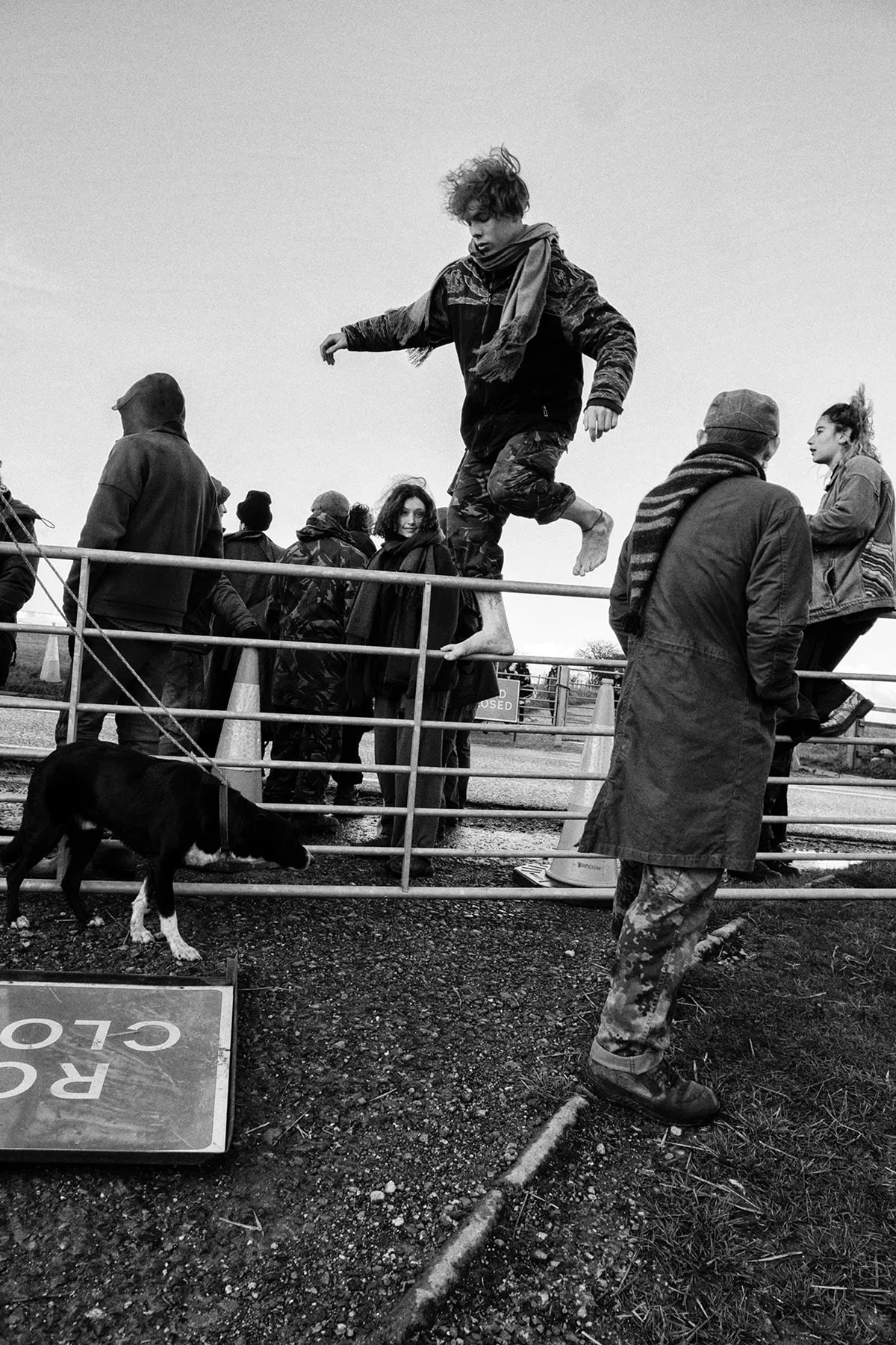
London, UK – For half a decade, a singular artistic vision has been meticulously chronicling the raw, visceral essence of public dissent. London-based photographer João Daniel Pereira, through his ambitious long-term project, has immersed himself in the turbulent yet often profoundly unifying world of protest, capturing not just the outward spectacle but the intricate tapestry of human emotion that fuels these movements. His work, a testament to an intuitive and deeply empathetic approach, transcends mere documentation, offering a profound meditation on the forces that drive individuals to coalesce, demand, and ultimately, seek change.
Pereira’s lens is not a detached observer; it is an active participant, flowing with the ebb and flow of the crowds. He eschews rigid pre-conceptions, instead choosing to surrender to the immediate experience, allowing the potent energies of tension, stillness, anger, grief, solidarity, and release to guide his vision. This trust in the unfolding moment, this unwavering presence, is the bedrock of his photographic practice. It is in this state of openness that scenes reveal themselves, not as staged tableaux, but as authentic expressions of collective aspiration and frustration.
The Genesis of a Visual Dialogue: From Observation to Immersion
The genesis of Pereira’s project can be traced to a growing fascination with the fundamental human drive to express collective discontent and aspiration. "I was drawn to the sheer energy of these gatherings," Pereira explains in a rare interview, "but also to the complex emotional landscape that lay beneath the surface. It’s easy to see the placards and hear the chants, but what truly captivated me was the underlying human experience – the shared vulnerability, the fierce determination, the moments of quiet reflection amidst the storm."
Over the past five years, Pereira has cultivated a unique methodology. He doesn’t chase headlines or target specific events with a predetermined agenda. Instead, he allows his intuition to lead him, seeking out gatherings where he feels a palpable resonance, a sense of genuine grassroots energy. This organic approach has led him to a diverse array of protests, from large-scale demonstrations that command international attention to smaller, more localized acts of defiance. Each encounter becomes an opportunity to delve deeper, to understand the motivations, the hopes, and the fears that bind individuals together in pursuit of a common cause.
His process is one of patient observation, of becoming a silent witness to the unfolding drama. He moves through the crowds, not as an imposing figure with a large camera, but as an integrated element, a part of the collective consciousness. This allows him to capture moments of intimacy amidst the throng – a shared glance of understanding between protesters, a hand offered in comfort, a solitary figure lost in thought against a backdrop of impassioned noise.
Nature as a Metaphor: Harmony in Chaos
Pereira draws a powerful parallel between the dynamics of protest and the natural world. His artistic philosophy is deeply informed by the observation that nature’s most profound harmonies do not arise from rigid order, but from the complex interplay of diversity, collision, adaptation, and chaos. This perspective offers a compelling framework for understanding the seemingly anarchical nature of protest.
"Nature is one of my main points of reference," Pereira states, his voice resonating with conviction. "In nature, harmony does not come from order, it emerges through diversity, collision, adaptation and chaos. I see protest in a similar way: disruptive on the surface, but often driven by a collective movement towards repair, visibility and change."
This analogy is not merely poetic; it is integral to his visual language. His photographs often capture the inherent tension and disorder that are undeniable aspects of protest. Yet, within these compositions, there is often a subtle suggestion of underlying structure, of a shared purpose that transcends the immediate disarray. He highlights the moments of unexpected beauty and resilience that emerge from conflict, mirroring the way life adapts and thrives in the most challenging environments. The collision of ideas and ideologies, the adaptation of strategies, the very chaos of a crowded street – all are seen as vital components in a larger process of societal evolution.
A Chronology of Collective Expression: Documenting the Shifting Tides of Dissent
Over the past five years, Pereira’s project has spanned a period of significant global and local upheaval. His photographs offer a compelling visual chronology of these shifting tides of dissent, capturing the evolving nature of protest and the issues that have galvanized public opinion.
Early Years (Circa 2019-2020): The Seeds of Discontent: The initial phase of the project coincided with growing concerns around climate change, social inequality, and political polarization. Pereira’s early work likely captured the burgeoning environmental activism, the early iterations of social justice movements, and the rumblings of discontent that were beginning to surface more prominently in public discourse. Images from this period might depict large-scale marches, vibrant street art as a form of protest, and the initial formation of solidarity networks.
The Pandemic Era (Circa 2020-2022): Protest Adapts and Endures: The advent of the COVID-19 pandemic presented unprecedented challenges for public gatherings. Pereira’s project undoubtedly documented how protest adapted to these constraints. This period might have seen a rise in smaller, more localized protests, digital activism, and innovative forms of socially distanced demonstrations. Images could reflect the unique visual language that emerged, such as masked protesters, signs held at a distance, and the increased use of online platforms to organize and disseminate messages. The global outcry against racial injustice following the murder of George Floyd would have been a significant focal point, likely captured by Pereira in powerful images of solidarity and demand for accountability.
Post-Pandemic Resurgence and New Fronts (Circa 2022-Present): A Reawakening of Public Voice: As restrictions eased, public protest saw a resurgence, often fueled by lingering grievances and the emergence of new political and social issues. Pereira’s recent work likely reflects this reawakening, capturing the renewed energy of large-scale demonstrations, but also the diversification of protest agendas. This could include continued activism around climate action, evolving discussions on economic justice, and responses to geopolitical events that have sparked widespread concern. The project has thus become a living document, charting the continuous evolution of collective expression in response to the ever-changing landscape of societal challenges.
Supporting Data and Emerging Themes: Unpacking the Visual Narrative
While the project is inherently artistic and subjective, the recurring themes and visual motifs within Pereira’s body of work offer valuable insights into the nature of protest.
- The Power of the Individual within the Collective: Pereira masterfully captures the paradox of protest – the strength derived from unity, yet the undeniable power of individual expression. His images often isolate a single face, a solitary gesture, or a quiet moment of contemplation amidst the roar of the crowd, reminding viewers that each participant brings their own story and conviction to the collective action.
- The Spectrum of Emotion: His intuitive approach allows him to delve into the full emotional spectrum of protest. Photographs that convey sheer exhilaration and unwavering hope sit alongside those that express deep-seated anger, profound grief, and quiet determination. This nuanced portrayal challenges simplistic stereotypes of protesters as solely angry or aggressive.
- The Visual Language of Resistance: Pereira’s work highlights the diverse visual languages employed in protest. From handmade signs bearing powerful slogans to symbolic acts of defiance, his photographs document the creativity and ingenuity that individuals employ to make their voices heard. The use of color, composition, and light all contribute to the emotional impact of these visual narratives.
- The Unseen Labor of Organizing: While often focusing on the visible manifestation of protest, Pereira’s work subtly alludes to the unseen labor of organizing, strategizing, and building consensus that underpins these movements. Moments of quiet discussion, shared leaflets, or leaders addressing smaller groups hint at the intricate infrastructure that supports large-scale dissent.
- The Lingering Impact: Beyond the immediate event, Pereira’s photographs often capture the lingering atmosphere, the palpable sense of change that remains after the crowds have dispersed. This could be the residue of chalk art on pavement, the discarded remnants of banners, or the reflective gaze of individuals carrying the weight of their convictions.
Official Responses and Societal Repercussions: The Ripple Effect of Dissent
The nature of official responses to protest is as varied as the protests themselves, and Pereira’s project, by its very existence, can be seen as a reflection of this dynamic. While his work does not directly engage with official statements or policies, the subjects he captures are often reacting to, and in dialogue with, governmental actions, societal norms, or corporate practices.
- Law Enforcement Presence: Many of Pereira’s photographs likely depict the presence of law enforcement, reflecting the often tense relationship between protesters and authorities. These images can range from passive observation to more charged encounters, offering a visual commentary on the state’s role in managing public dissent.
- Public Discourse and Media Representation: The very act of photographing protest contributes to the broader public discourse. Pereira’s work offers an alternative perspective to mainstream media narratives, providing a more intimate and empathetic portrayal of those who are protesting. This can, in turn, influence public perception and understanding of various social and political issues.
- Policy and Social Change: While direct causal links are difficult to establish in the short term, sustained and visible protest, as documented by Pereira, is often a catalyst for policy changes and societal shifts. His project captures the visual evidence of movements that have, over time, influenced legislation, challenged entrenched power structures, and fostered greater awareness of critical issues.
- Counter-Narratives and Dialogue: By presenting the human faces and emotional complexities of protest, Pereira’s work can serve as a powerful counter-narrative to simplistic or dismissive portrayals. This can encourage dialogue and understanding between different segments of society, fostering a more nuanced appreciation of the motivations behind collective action.
The Enduring Significance: A Mirror to Our Times
João Daniel Pereira’s five-year photographic odyssey is more than just a collection of images; it is a profound and timely exploration of the human spirit’s capacity for collective action and the relentless pursuit of a better future. His intuitive approach, his deep empathy, and his insightful analogy to the natural world combine to create a body of work that is both aesthetically compelling and intellectually stimulating.
In an era marked by rapid change and persistent challenges, Pereira’s project serves as a vital mirror, reflecting the energy, the passion, and the often-unseen currents of change that are shaping our world. His photographs remind us that protest, in its myriad forms, is not merely an act of disruption, but a fundamental expression of our shared humanity and our enduring hope for a more just, equitable, and visible society. The tension, the stillness, the anger, the grief, the solidarity, and the eventual release – these are not just emotions captured on film, but the very building blocks of progress, meticulously documented by a photographer who trusts the process and remains open to the profound revelations that emerge from the heart of dissent. His work is an invitation to look deeper, to feel more acutely, and to understand the intricate dance of change that unfolds in our streets and in our hearts.