The Unforgiving Genesis: Richard Stark’s The Hunter Unleashes the Iconoclastic Parker
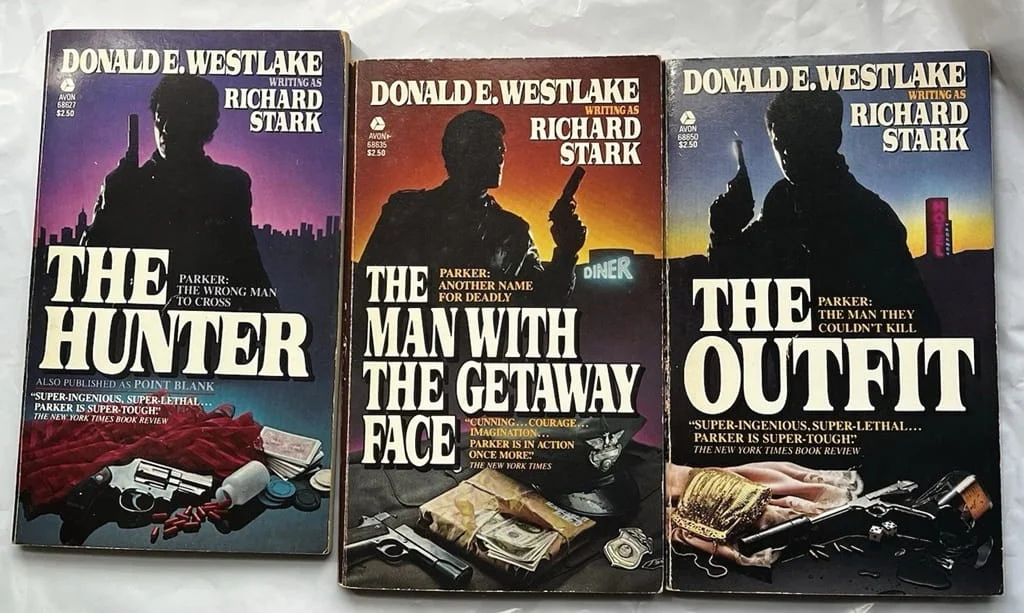
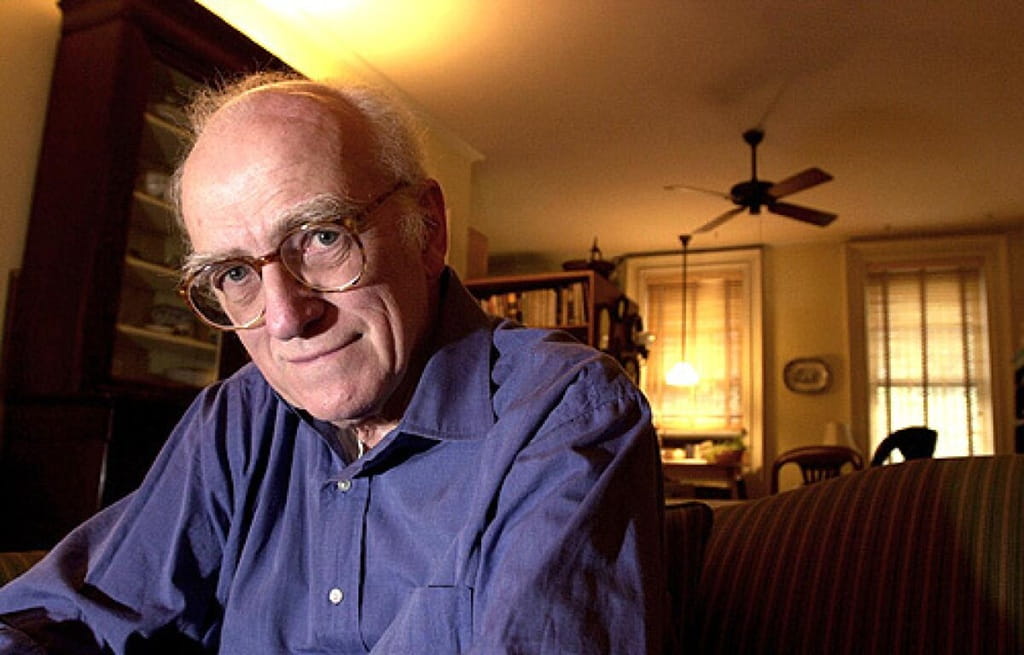
New York, NY – In the annals of crime fiction, few characters cast as long and dark a shadow as Parker. Born from the brilliant, if somewhat unsettling, mind of Donald E. Westlake, writing under the pseudonym Richard Stark, Parker made his brutal debut in 1962 with the novel The Hunter. Published by Pocket Books, this lean, relentless narrative didn’t just introduce a protagonist; it carved an archetype into the very bedrock of the hardboiled genre, forever altering its landscape. More than six decades later, The Hunter remains a chillingly effective masterpiece, a stark (pun intended) declaration of intent from an author determined to explore the darkest corners of human vengeance and criminal resolve.
From its opening lines, The Hunter plunges the reader into a world devoid of sentimentality. Parker emerges from the shadows, a force of nature driven by raw fury and an almost inhuman determination. He is angry, he is resolute, and he is, above all, out for blood. The novel’s initial image—Parker, with his famously "big hands," striding across the George Washington Bridge into the concrete labyrinth of New York City, unnerving motorists with his sheer, unyielding presence—is instantly iconic. This isn’t a hero’s entrance; it’s the arrival of an inevitable, terrifying reckoning. His immediate goal is not wealth, but revenge, a primal urge that sets the tone for the brutal journey ahead.
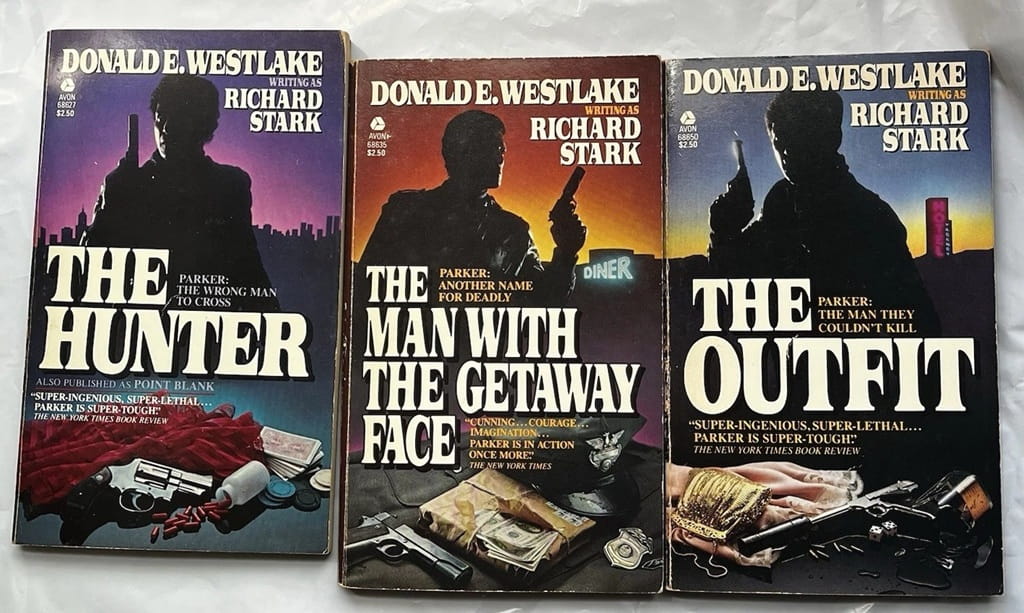
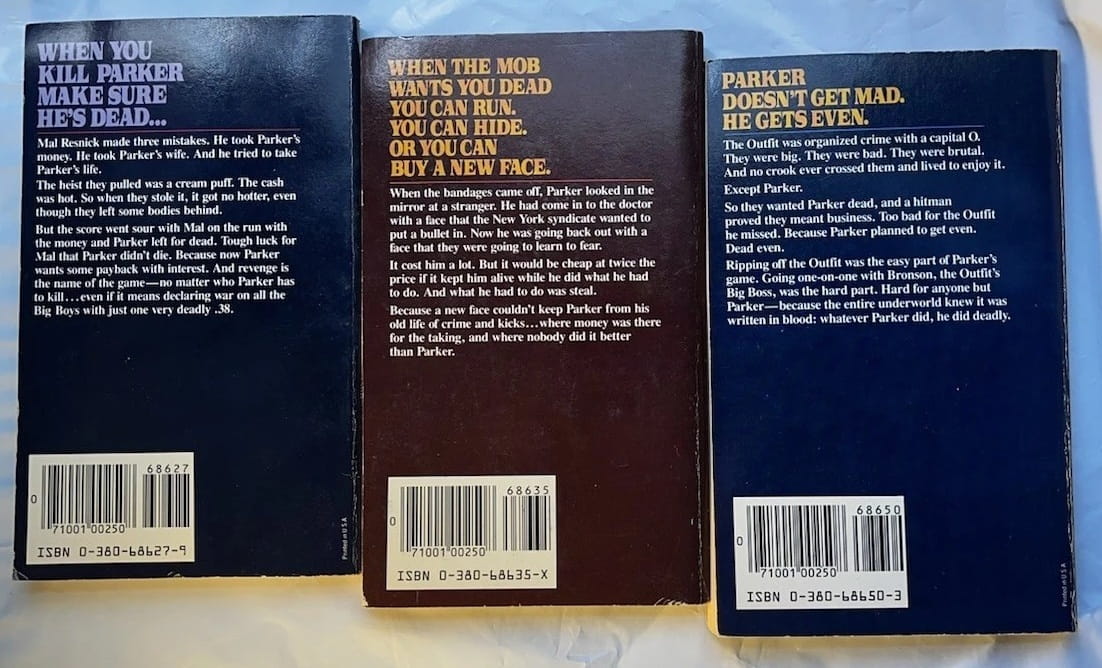
The Hunter is not merely a standalone novel but the foundational stone of the sprawling Parker series, a collection of crime novels revered for their minimalist prose, procedural precision, and unflinching portrayal of the criminal underworld. It also serves as the first installment of what is informally known as The Outfit Trilogy, a gripping arc where Parker finds himself in a relentless, often solitary, war against a powerful organized crime syndicate. This initial confrontation establishes the colossal stakes and the singular nature of Parker’s moral compass, or rather, his distinct lack thereof.
Chronology of a Classic: From Page to Prominence
The enduring power of The Hunter is perhaps best evidenced by its remarkable journey across various media, each adaptation attempting to capture the essence of Stark’s bleak vision. Its narrative DNA has proven remarkably adaptable, resonating with filmmakers and graphic novelists alike, even if not always explicitly acknowledging its literary origins.
The first major adaptation arrived just five years after the novel’s publication. In 1967, director John Boorman brought The Hunter to the big screen as Point Blank, a cinematic tour de force starring the legendary Lee Marvin as Walker (the name changed due to rights issues, but the character’s essence remained unmistakably Parker). Boorman’s film was a stylish, non-linear masterpiece that pushed the boundaries of conventional storytelling, earning critical acclaim for its stark visuals, brutal action, and Marvin’s iconic, stone-faced performance. It captured the novel’s sense of existential dread and relentless pursuit with a striking artistic vision, solidifying the character’s place in popular culture, even if under a different moniker.
Thirty-two years later, the story returned to theaters in 1999 with Payback, starring Mel Gibson as Porter (again, a name change, but the character’s lineage was clear). Payback offered a different take, characterized by Gibson’s signature blend of dark humor and violence. Interestingly, Payback exists in two distinct versions: the theatrical cut, which leaned more into a stylized, darkly comedic action film, and the Director’s Cut, which hewed significantly closer to Stark’s original, grittier narrative and more somber tone. The existence of these two versions underscores the novel’s flexibility for interpretation while also highlighting the challenge of translating Stark’s unique blend of ruthlessness and moral ambiguity.
However, for many purists and critics, the most faithful and artistically resonant adaptation came in 2008 with Darwyn Cooke’s graphic novel, Richard Stark’s Parker Vol. 1: The Hunter. Cooke, a revered comic book artist, masterfully translated Stark’s stark prose into stunning black-and-white visuals. His meticulous attention to detail, cinematic paneling, and profound understanding of Parker’s character resulted in an adaptation that many consider the only "truly accurate and legitimate" portrayal of the character and story outside of the novels themselves. Cooke’s work not only introduced Parker to a new generation of readers but also elevated the graphic novel medium as a powerful vehicle for literary adaptation.
Supporting Data: The Anatomy of Parker’s Revenge
The core of The Hunter is a meticulously constructed narrative of betrayal, survival, and retribution.
The Heist and the Treachery: The story begins in media res, with Parker already on his path of vengeance. Flashbacks, however, eventually reveal the inciting incident: a meticulously planned heist orchestrated by Mal Resnick, a former member of "The Outfit" (Stark’s term for the Mob) desperate to buy his way back in with a hefty sum of nearly $100,000. Parker and others are recruited for the job, but Mal, driven by insatiable greed, has no intention of sharing. After the successful robbery, Mal executes his treacherous plan. He manipulates Parker’s wife, Lynn, into shooting Parker, leaving him for dead. With Parker seemingly eliminated, Mal absconds with all the money, securing his re-entry into the Outfit, and even taking Lynn as his kept woman, setting her up in an apartment he funds.
The Unstoppable Force: Against all odds, Parker survives the gunshot wound. His recovery is not a journey of healing but a metamorphosis into an even more dangerous, singularly focused entity. He crosses the country, a phantom driven by a singular purpose: to track down Mal and exact his bloody revenge. His first encounter is with Lynn, a moment charged with emotional complexity, forcing Parker to confront his lingering feelings against the backdrop of her ultimate betrayal. The decision he makes in that encounter sets a chilling precedent for his future interactions.
Confronting the Outfit: Parker eventually locates Mal, but his objective expands beyond mere revenge. He also demands the return of his stolen share of the robbery money – a precise $40,000. This demand brings him into direct conflict with the Outfit itself, a colossal organized crime syndicate that views Parker’s claims with utter incredulity. Why should they, the all-powerful Mob, be responsible for the transgressions of one of their subordinates? Their initial dismissal of Parker’s demands quickly turns to disbelief, then fear, as Parker systematically dismantles their operations and eliminates their personnel. His unwavering resolve, coupled with his terrifying competence, forces the Outfit to grudgingly concede to his demands, even as they dispatch an army of assassins to eliminate him. The climax sees Parker battling hordes of professional killers, escaping with a suitcase full of cash, a testament to his unparalleled survival instincts and criminal prowess.
The Objective: Parker’s initial objective is twofold: revenge on Mal Resnick and the recovery of his $40,000. However, this seemingly personal vendetta quickly escalates into a one-man war against the entire Outfit. His objective morphs from personal retribution to a stark assertion of his own formidable power against an overwhelming, institutionalized criminal force.
The Adversaries:
- Mal Resnick: Stark paints Mal in vivid, unflattering colors. He is a textbook villain—greedy, cowardly, and ultimately pathetic in the face of Parker’s wrath. His betrayal is the catalyst, but his weakness highlights Parker’s strength.
- The Outfit: The Mob, as Stark calls them, represents the ultimate institutional adversary. Their collective power, vast resources, and ingrained arrogance make them a formidable foe. Seeing Parker, a single individual, confront and ultimately humble these powerful, deadly bosses who are accustomed to absolute deference, provides some of the book’s most compelling and darkly satisfying moments. Their "shocked incredulity" at Parker’s single-minded determination is a recurring, delightful theme.
The "String" (or Lack Thereof): In a series often defined by its ensemble casts and intricate heist planning, The Hunter stands out for Parker’s almost complete isolation. He operates solo, relying on his own wits and brutal efficiency. His only fleeting connection is with Rose (formerly Wanda), a prostitute from whom he occasionally gleans information and receives minor assistance, underscoring his detached and utilitarian approach to human interaction.
Others of Note:
- Lynn Parker: Parker’s wife makes her sole appearance in the series here, and for good reason. Her betrayal is central to the plot, and her ultimate fate highlights the harsh, unforgiving nature of Parker’s world.
- Joe Sheer: An older criminal associate of Parker’s, mentioned a few times, serving to subtly hint at Parker’s past and connections without derailing the focus on his current, solitary mission.
The Complication: The narrative structure of The Hunter is unique within the Parker series, as the central complication—Parker’s betrayal by his wife at Mal’s behest—has already occurred before the story truly begins. The novel’s genius lies in unfolding this complication through strategically placed flashbacks, revealing the layers of treachery and the depth of Parker’s personal loss that fuels his relentless quest. This approach immediately places the reader in the shoes of a vengeful protagonist, with the mystery of why he’s so enraged gradually revealed.
Official Responses and Critical Acclaim: The Enduring Legacy
While "official responses" in the journalistic sense are not applicable to a literary work, the reception and critical consensus surrounding The Hunter and its adaptations serve as powerful endorsements of its impact.
Richard Stark’s Parker series, inaugurated by The Hunter, has been lauded by critics and fellow authors for its stripped-down prose, cynical worldview, and groundbreaking approach to the anti-hero. Stark (Westlake) was praised for his ability to craft taut, suspenseful narratives driven by meticulous detail and a palpable sense of menace. The Hunter immediately established these trademarks, earning its place as a cornerstone of the hardboiled and noir genres. Its influence can be seen in countless subsequent crime novels and films that embrace a grittier, more amoral perspective.
The film adaptations, Point Blank and Payback, received varied but generally positive critical attention. Point Blank is often cited as a classic of neo-noir, praised for its experimental narrative structure, stylistic cinematography, and Lee Marvin’s seminal performance. It demonstrated the novel’s capacity for high art and its ability to transcend genre conventions. Payback, while perhaps less universally acclaimed than Point Blank, was a box office success and sparked renewed interest in the source material. The existence of its two cuts provided a unique insight into the interpretive challenges of adaptation, with the Director’s Cut often preferred by those seeking fidelity to Stark’s original vision.
Darwyn Cooke’s graphic novel adaptation of The Hunter garnered widespread critical adoration, winning multiple Eisner Awards. Reviewers consistently hailed it as a masterclass in adaptation, praising Cooke’s ability to capture Stark’s minimalist style and Parker’s stoic brutality through his distinctive artwork. It was seen as a definitive visual translation, a testament to the power of sequential art to honor and expand upon a literary classic. This adaptation solidified the enduring relevance of The Hunter for a contemporary audience and introduced the character to a new generation of readers who might not typically pick up a 1960s crime novel.
Implications: The Shaping of an Anti-Hero and a Genre
The Hunter is more than just a crime novel; it’s a foundational text that had profound implications for the development of the anti-hero archetype and the crime fiction genre itself.
The Proto-Parker: A Character in Transition:
To understand the full impact of The Hunter, one must recognize that the Parker introduced here is a "proto-Parker." As the reviewer notes, he is awarded "7 Parkers" on a scale of 10, indicating that while the core elements are present, the character has not yet fully calcified into the "almost-emotionless master thief and planner" known from later books. This early Parker is fascinating precisely because he is swayed by his emotions. His quest is driven by raw anger and revenge, not cold, calculated rationality. This makes him a true villain, albeit one whose actions are understandable given the profound betrayal he has suffered.
In The Hunter, Parker exhibits traits that would largely disappear in subsequent novels. He is impatient, prone to making less-than-perfect plans, and struggles more overtly with the authorities. He drinks liquor, watches cartoons on TV (a stark contrast to the later Parker who would simply lie in the dark, conserving energy), and, crucially, causes the accidental death of an innocent person—a moral transgression that the later, more controlled Parker would likely avoid or handle with greater detachment. His marriage to Lynn, a unique detail for the series, further emphasizes this early, more humanized (or at least, less robotic) iteration of the character. This "proto-Parker" status highlights the novel as a crucial evolutionary stage, a bridge between a particularly good thug and the iconic, procedural master criminal he would become.
Pioneering the Anti-Hero:
The Hunter was instrumental in popularizing the unapologetic anti-hero in crime fiction. Parker is not seeking justice; he is seeking what he believes is his due, and he will commit any act of violence necessary to achieve it. This stark moral landscape, devoid of traditional heroic virtues, was groundbreaking in 1962 and continues to influence authors who explore the darker side of human nature.
Minimalist Prose and Procedural Focus:
Stark’s writing style in The Hunter is a masterclass in economy. His lean, functional prose, devoid of flowery descriptions or introspective monologues, became a hallmark of the series and influenced countless writers. The novel’s focus on the mechanics of crime, the cold logic of Parker’s actions, and the step-by-step execution of his plans, established a procedural rigor that was highly innovative for its time.
Intriguing Details and Historical Context:
One particularly insightful detail from The Hunter is Parker’s creation of a false driver’s license to access someone else’s checking account, buy items, and then pawn them for cash. This "penny-ante, street-level-crime thing" is an anomaly for the later, more sophisticated Parker, offering a rare glimpse into his early, more rudimentary criminal tactics. It underscores his resourcefulness and adaptability, even at a lower rung of the criminal ladder.
It is also fascinating to note that the Parker series began in 1962, the very same year the James Bond film series launched with Dr. No. This parallel is striking: while Bond represented the glamorous, globe-trotting fantasy of espionage, Parker offered a gritty, grounded, and utterly amoral counterpoint, defining two very different, yet equally influential, archetypes of the 20th-century thriller. One was a national hero, the other an independent force of pure self-interest.
Conclusion: A Legacy Forged in Blood and Iron
The Hunter is not just the inaugural chapter of a celebrated crime series; it is a vital piece of literary history. It introduced a character whose ruthlessness, competence, and singular focus would resonate for decades, influencing countless authors and filmmakers. While this early Parker is a more emotionally charged, less polished version of the legend he would become, his debut is nonetheless an electrifying, unforgettable read. It is a testament to Richard Stark’s genius that even in its nascent form, Parker”s unforgiving world and relentless pursuit of what is "his" captivated audiences and laid the groundwork for one of the most compelling and enduring anti-heroes in all of fiction. Its legacy, solidified by critical acclaim and a string of diverse adaptations, ensures that The Hunter will continue to be studied, admired, and feared for generations to come.
Quote:
"When a fresh-faced guy in a Chevy offered him a lift, Parker told him to go to hell."
Subjective Rating: 7/10
Follows: Nothing (this is the first book in the series)
Followed by: Vol 2: The Man with the Getaway Face
Van Allen Plexico is a multi-award-winning author, member of the SFWA, and a Pulp Grandmaster. Among his many novels are the Harper & Salsa crime series, set in the Sixties and carrying something of the flavor of the Parker books, beginning with the 2018 Pulp Factory Award-Winning Best Novel of the Year, VEGAS HEIST. See all of his work at www.plexico.net.