Carl Jung’s "The Red Book": A Journey into the Psyche, Revealed
A profound and visually stunning exploration of the unconscious, Carl Jung’s "Liber Novus" is finally accessible, offering a unique window into the mind of a psychological titan.
For decades, Carl Jung’s seminal work, Liber Novus, more commonly known as The Red Book, remained largely hidden, a closely guarded testament to the depths of its creator’s inner life. Now, thanks to a comprehensive English translation and facsimile edition published by Norton in 2009, and a more accessible reader’s edition released in 2012, this extraordinary volume is finally available to a wider audience. The years since its unveiling have seen the book lauded, exhibited, and analyzed, revealing its profound significance not just as a psychological document, but as a work of singular artistic merit.
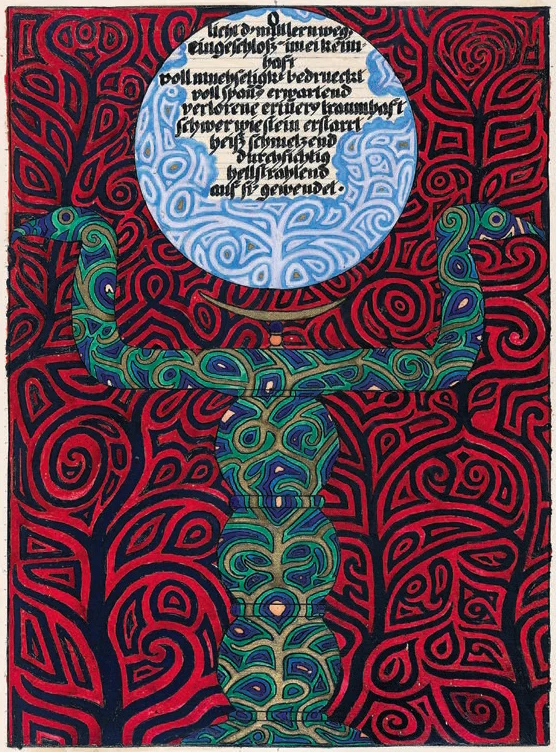
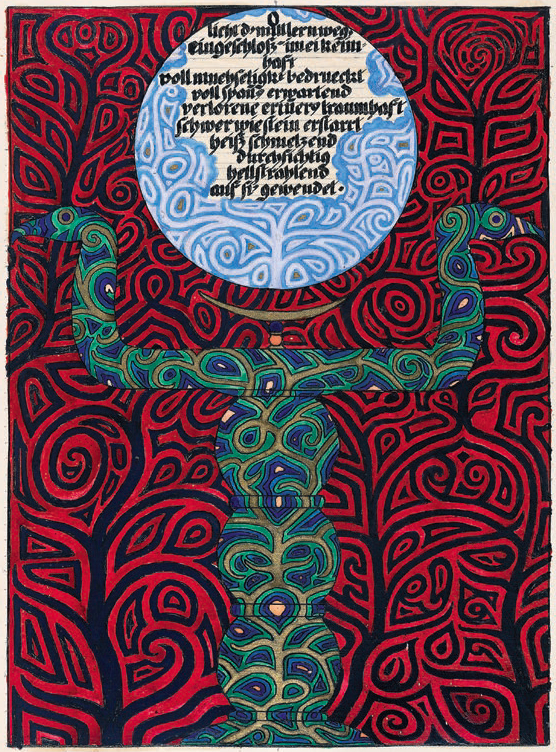
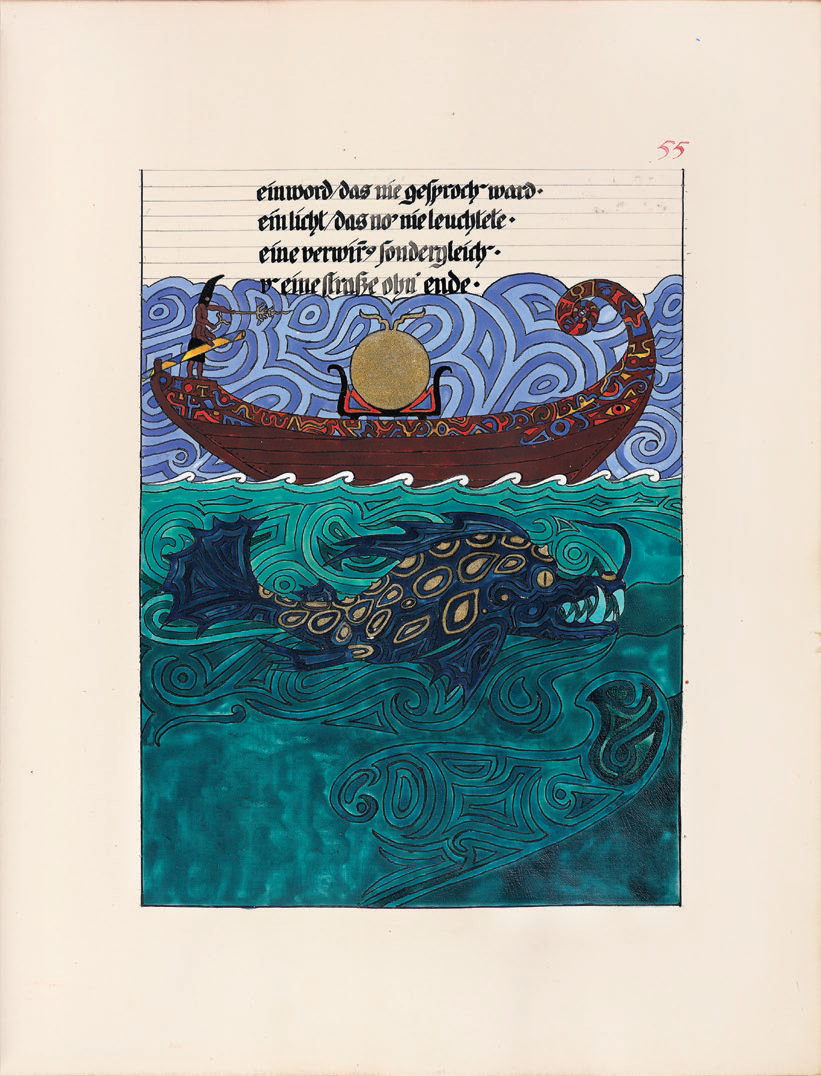
Art critic Peter Frank aptly described The Red Book as something that "could pass for a Bible rendered by a medieval monk," particularly noting the meticulous care with which Jung inscribed his writings in ornate Gothic script. This comparison immediately signals the book’s extraordinary nature, hinting at a spiritual or deeply personal quest conveyed through a visually arresting medium. While Jung himself eschewed the label of "artist," his intricate paintings and elaborate calligraphy within The Red Book undeniably position him as a creator of profound visual and textual depth. The book’s inclusion in museum exhibitions and its influence on projects like the "Encyclopedic Palace" at the 2013 Venice Biennale underscore its recognition as a significant artistic and visionary achievement, showcasing Jung as a figure whose artistic output was dedicated not to divine or earthly rulers, but to the exploration of the human experience itself.
The Genesis of a Masterpiece: A Life Dedicated to the Unconscious
The Red Book‘s origins lie in a period of profound personal crisis and intense introspection for Carl Jung. Following his rupture with Sigmund Freud in 1913, Jung experienced what he termed a "confrontation with the unconscious." This tumultuous period, lasting from 1913 to 1930, saw him meticulously record his visions, dreams, and inner dialogues in a series of notebooks. These initial records, known as the "Black Books," would later be rewritten and elaborated upon in the now-famous Red Book. Jung considered this monumental undertaking "the central work in his oeuvre," and scholar Sonu Shamdasani, in his introduction to the Rubin Museum’s exhibition, unequivocally states it is "literally his most important work."
The journey to bring The Red Book to light was a long and arduous one. Dr. Shamdasani himself spent three years persuading Jung’s family to release the book from its long seclusion in a Swiss vault. The family’s hesitation, spanning half a century, is perhaps understandable given the intensely personal and unconventional nature of its contents. A significant clue to this reluctance can be found in the only portion of The Red Book Jung published during his lifetime: "The Seven Sermons to the Dead."
"The Seven Sermons to the Dead": A Glimpse into Jung’s Visionary Landscape
Privately printed in 1916, "The Seven Sermons to the Dead" offered a select few a tantalizing preview of the esoteric and Gnostic themes that permeated Jung’s inner world. Composed during a period of intense Gnostic study, this text emerged from Jung’s visionary trance states, a direct translation of his profound inner experiences. He described the atmosphere during the genesis of these sermons as "thick" and charged with the presence of spirits. In a powerful recollection, Jung recounted:
"The atmosphere was thick, believe me! Then I knew that something had to happen. The whole house was filled as if there were a crowd present, crammed full of spirits. They were packed deep right up to the door, and the air was so thick it was scarcely possible to breathe. As for myself, I was all a-quiver with the question: ‘For God’s sake, what in the world is this?’ Then they cried out in chorus, ‘We have come back from Jerusalem where we found not what we sought.’ That is the beginning of the Septem Sermones."
These "sermons" are characterized by their challenging, often esoteric language, drawing heavily on Gnostic theology and occult terminology such as "pleroma." They delve into the mystical concept of "oceanic feeling," a term coined by Romain Rolland in 1927 to describe a sense of mystical oneness with the universe. This feeling, which so perplexed Sigmund Freud, leading him to dismiss it as infantile regression, took on a more complex and even sinister aspect in Jung’s work through the figure of Abraxas. This demigod, embodying a paradoxical union of opposites, "begetteth truth and lying, good and evil, light and darkness, in the same word and in the same act. Wherefore is Abraxas terrible." This duality, the simultaneous presence of creation and destruction, light and shadow, is a recurring motif in Jung’s exploration of the psyche.
The Artistry of the Unconscious: Beyond the Written Word
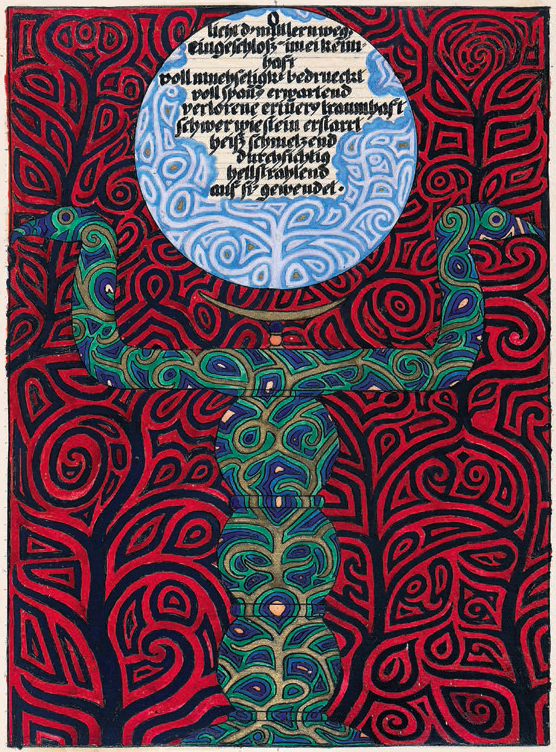
While "The Seven Sermons to the Dead" offers a textual window, the true power of The Red Book lies in its breathtaking integration of text and image. Jung’s hand-lettered manuscript is a testament to his meticulous craftsmanship. The stylistic parallels between his calligraphy and the ornate script of medieval monks are striking. Furthermore, his illustrations draw inspiration from a rich tapestry of visual traditions, including Persian miniature painting and East Asian calligraphy. Art critic Peter Frank notes that Jung "took on the similarly stylized and beautiful manners of non-western word-image conflagration," suggesting a deliberate engagement with diverse aesthetic forms to express his inner world.
These elaborate paintings are not mere embellishments; they are integral to the narrative and symbolic meaning of The Red Book. They depict the archetypal figures, symbolic landscapes, and profound psychological dramas that unfolded within Jung’s consciousness. The book thus functions as a visual and textual journey, inviting the reader to traverse the uncharted territories of the human psyche alongside its creator.
Confronting the "Oceanic Feeling": Freud vs. Jung
The concept of "oceanic feeling" serves as a crucial point of divergence between Jung and his former mentor, Sigmund Freud. While Freud, a staunch proponent of rationalism and scientific materialism, viewed such experiences as regression to an infantile state, Jung embraced them as fundamental to the human experience. Jung’s own childhood encounters with the numinous hinted at this deep-seated connection to something beyond the ordinary. He later wrote, "I found that I had been in a mist, not knowing how to differentiate myself from things; I was just one among many things." This early sense of diffuse identity and interconnectedness foreshadowed his lifelong exploration of the collective unconscious and the "oceanic feeling" of mystical oneness.
Freud’s antipathy towards mysticism did not deter Jung. Instead, it seemed to fuel his determination to explore the deepest reaches of the psyche, even if it meant venturing into territory that challenged conventional scientific understanding. The Red Book stands as the ultimate expression of this commitment, a testament to Jung’s willingness to engage with the irrational, the symbolic, and the mystical dimensions of human consciousness.
The Publication and Legacy of The Red Book
The eventual release of The Red Book was a watershed moment in Jungian studies and the broader understanding of his legacy. The arduous translation and publication process, spanning over a decade, underscores the magnitude of the task and the profound impact the book was expected to have. Its impact has been significant, inspiring a new wave of scholarship and public engagement with Jung’s most personal and perhaps most revealing work.
The Red Book is not an easy read. It contains didactic passages aimed at converts, but its core is rich with obscure poetry and profound symbolism, amplified by Jung’s powerful illustrations. The book’s visual language, as noted by Frank, echoes the "stylized and beautiful manners of non-western word-image conflagration," a deliberate choice to convey the ineffable nature of his inner experiences.
If, as Sonu Shamdasani asserts, The Red Book is Jung’s most important work, and if Jung himself, despite his efforts to keep it private, seemed to acknowledge its profound significance, then we are compelled to reconsider his place in the pantheon of thinkers and artists. The Red Book positions Jung not merely as a theorist of the unconscious, but as a visionary artist in his own right, a mystic poet and painter on par with the great illuminators of human consciousness throughout history. His legacy is thus expanded to encompass not only his groundbreaking psychological theories but also his extraordinary artistic achievement, a testament to the enduring power of the human imagination to explore the deepest mysteries of existence.
The continued study and appreciation of The Red Book promise to deepen our understanding of Carl Jung, the complexities of the human psyche, and the profound intersection of art, spirituality, and psychological exploration. It remains a vital resource for anyone seeking to understand the depths of the unconscious and the boundless potential of the human spirit.