Claudia Koh’s Artistry: Navigating the Complexities of Modern Existence Through a Singaporean Lens
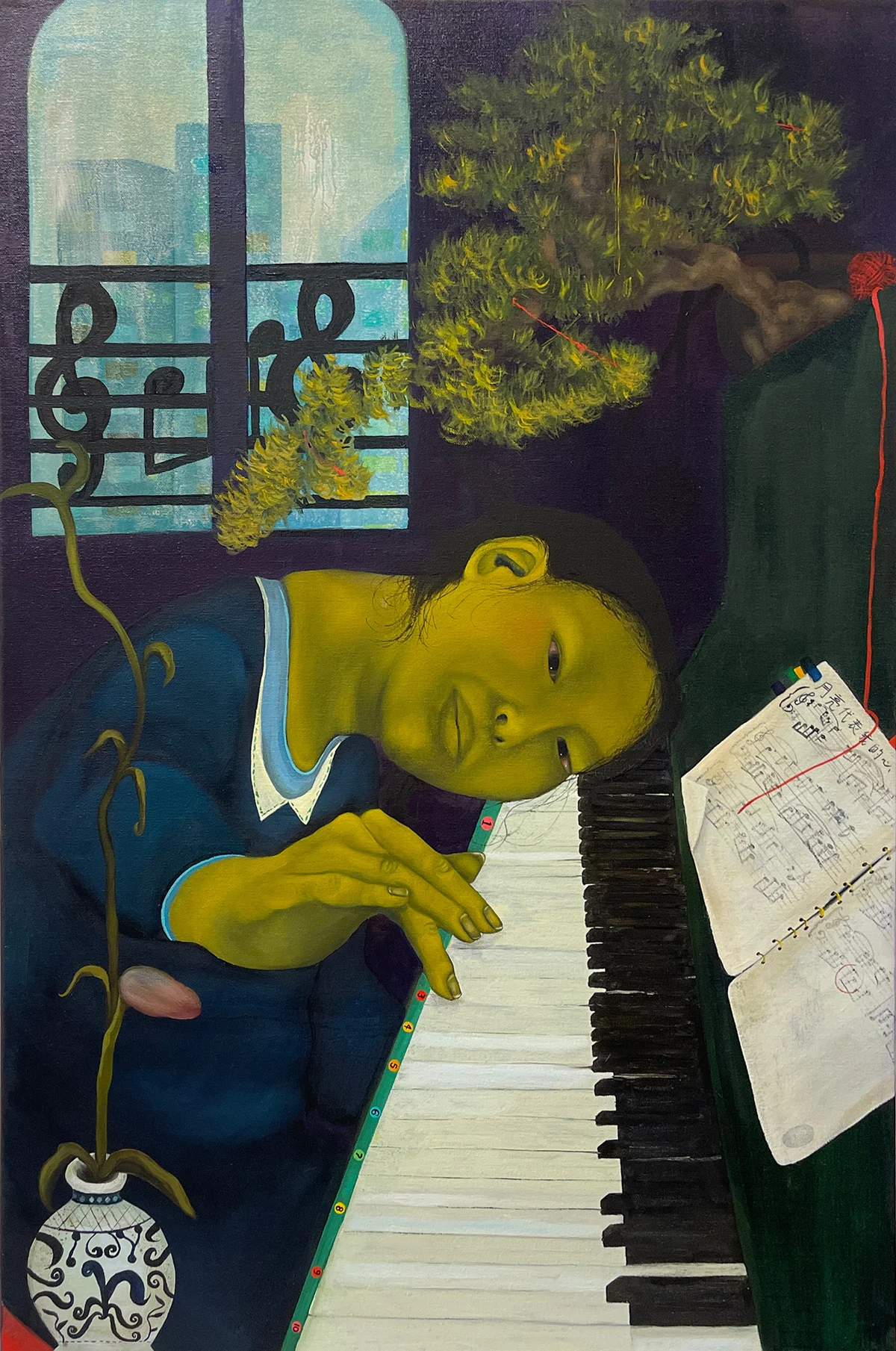
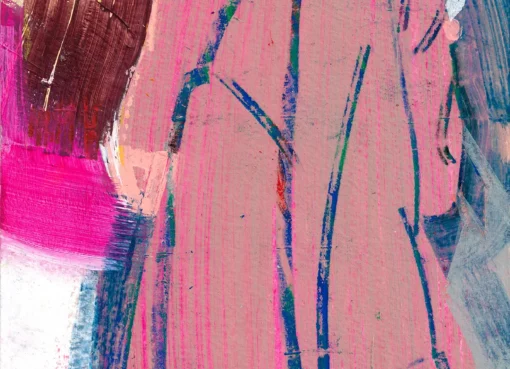
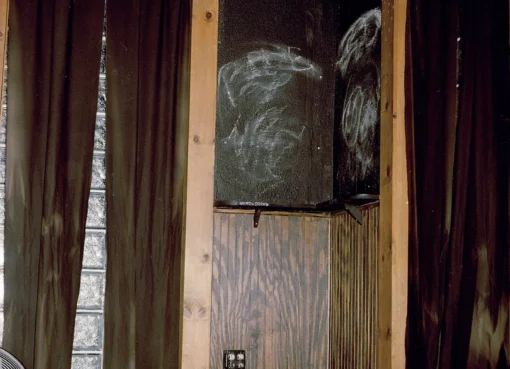
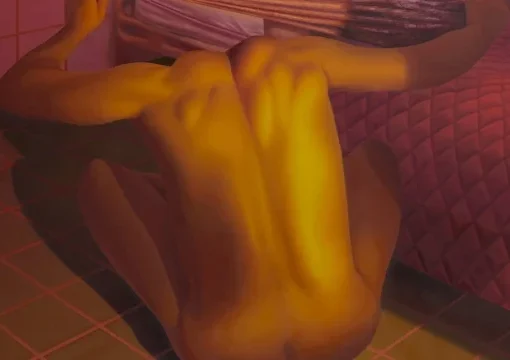
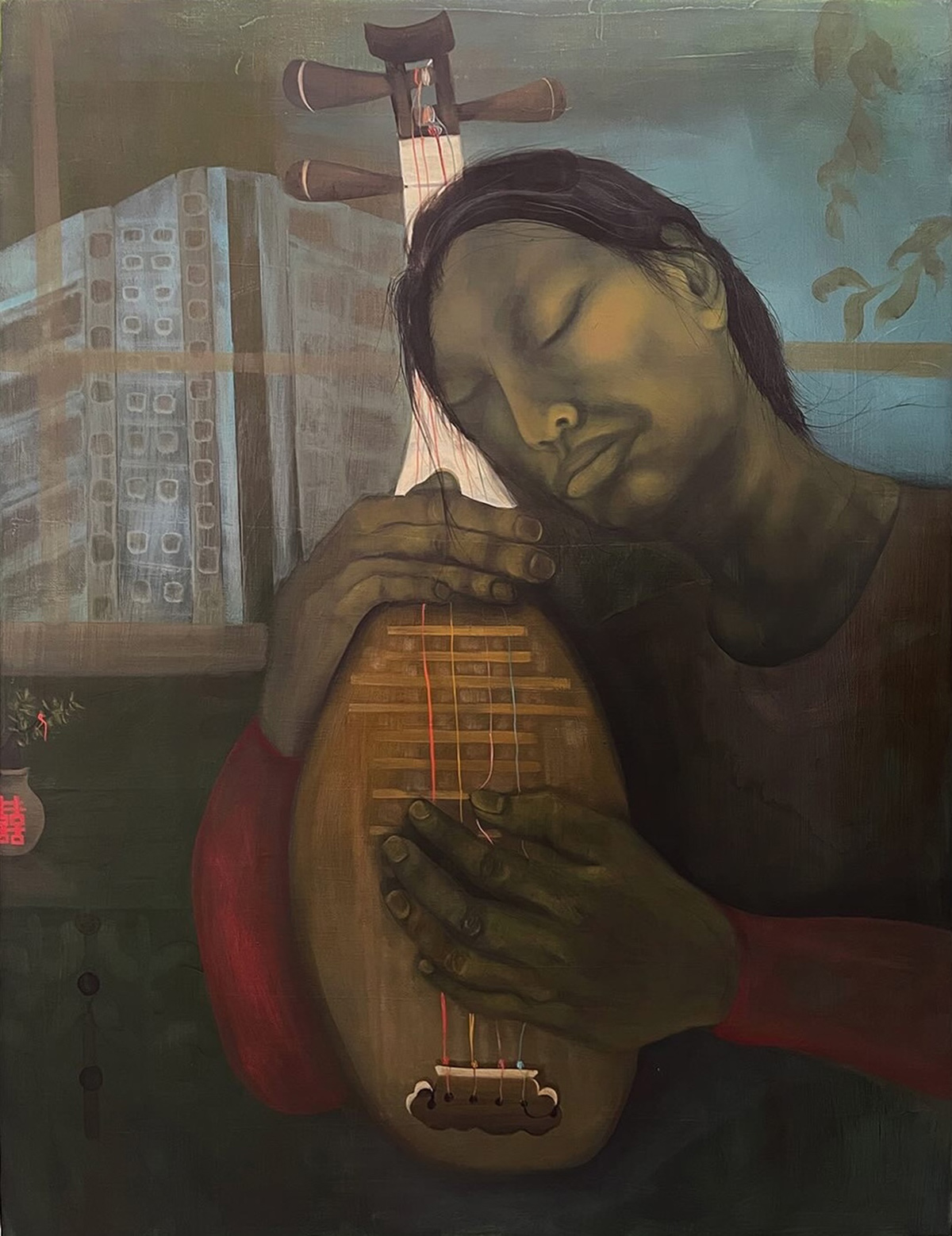
Singapore-born artist Claudia Koh is captivating audiences with her evocative paintings that delve into the intricate relationship between human experience, architecture, and the environments we cultivate. Through her art, Koh offers a profound exploration of how individuals navigate the structures that both support and constrain our daily lives, drawing inspiration from the vibrant urban landscape of Singapore, its intimate domestic spaces, and its often-overlooked systems of care. Her work is a poignant commentary on contemporary anxieties, skillfully blurring the lines between the built and organic worlds to investigate themes of belonging, resilience, and coexistence.
Koh’s artistic practice is deeply rooted in her keen observation of the growing tensions inherent in modern life. She masterfully captures the paradoxical reality of our increasingly technologically advanced and interconnected world, where experiences of isolation, anxiety, and social fragmentation persist. Her canvases become a visual dialogue, speaking to the ways in which our constant digital engagement exists alongside a palpable sense of disconnection, prompting viewers to reflect on their own place within these complex societal dynamics.
This article will delve into the multifaceted nature of Claudia Koh’s artistic vision, examining the core themes she explores, the inspirations behind her evocative style, and the broader implications of her work for understanding the human condition in the 21st century. We will explore the genesis of her artistic journey, tracing the evolution of her thematic concerns and the development of her unique visual language. Furthermore, we will consider the critical reception of her work and its potential to foster dialogue and introspection within the art world and beyond.
The Genesis of a Vision: Koh’s Artistic Roots and Influences
Claudia Koh’s artistic journey is deeply intertwined with her upbringing and the socio-cultural fabric of Singapore. Her early exposure to the nation’s dynamic urban environment, characterized by its rapid development and a unique blend of modernist architecture and verdant green spaces, has profoundly shaped her aesthetic sensibilities. This architectural landscape, a testament to human ingenuity and ambition, also serves as a backdrop against which she examines the human element. The juxtaposition of towering skyscrapers and meticulously planned residential estates with pockets of natural beauty and hidden domestic enclaves provides a rich tapestry for her artistic exploration.
Beyond the external structures, Koh is equally captivated by the internal architectures of our lives – the domestic spaces that serve as sanctuaries, laboratories, and sometimes, prisons. Her paintings often feature interiors that feel both familiar and uncanny, hinting at the unspoken narratives and emotional undercurrents that reside within these private realms. These spaces, meticulously rendered, become microcosms of larger societal structures, reflecting the ways in which our personal environments shape our identities and experiences.
Furthermore, Koh’s interest extends to the often-invisible "systems of care" that underpin our societies. This can encompass everything from formal institutions like hospitals and schools to informal networks of familial and community support. She examines how these systems, designed to nurture and protect, can also inadvertently create constraints and foster dependencies. Her work probes the inherent tensions within these structures, questioning their efficacy and their impact on individual autonomy and well-being.
Her artistic education and early career likely involved a rigorous engagement with art history, theory, and practice. While specific details of her formal training are not provided in the initial content, it is reasonable to infer a strong foundation in painting techniques and a sophisticated understanding of art’s historical and theoretical dialogues. Her Instagram presence, linked as a primary point of reference, suggests a contemporary artist actively engaging with the digital sphere, likely using it as a platform for showcasing her work, connecting with a wider audience, and perhaps even garnering feedback.
Thematic Resonance: Belonging, Resilience, and Coexistence
At the heart of Claudia Koh’s artistic practice lies a profound exploration of fundamental human experiences. Her paintings are not merely visual representations; they are intricate narratives that delve into the psychological and emotional landscapes of her subjects.
Belonging: The Search for Place in a Constructed World
The theme of belonging is a recurring motif in Koh’s work. She investigates how individuals forge a sense of identity and connection within environments that are often meticulously designed and controlled. This is particularly relevant in the context of urban living, where individuals can feel both anonymous and overwhelmed by the sheer scale of their surroundings. Koh’s imagined scenes often depict figures interacting with architectural elements, questioning whether these structures offer a true sense of refuge or merely reinforce a feeling of being an outsider. Her work prompts viewers to consider what it means to be "at home" in a world that is increasingly shaped by external forces and designed systems. The concept of belonging is explored not just in relation to physical spaces but also within social and cultural contexts, examining how individuals find their place within complex societal structures.
Resilience: Navigating Constraints and Embracing Imperfection
Another crucial theme is resilience. Koh acknowledges the inherent challenges and constraints that individuals face in their daily lives, whether imposed by societal expectations, environmental pressures, or personal circumstances. Her paintings suggest that resilience is not about defying these limitations but rather about finding ways to adapt, persevere, and even thrive within them. She often portrays figures in moments of quiet contemplation or subtle negotiation with their surroundings, hinting at an inner strength and an ability to find moments of grace amidst adversity. The "organic worlds" she references can be interpreted as the natural resilience of the human spirit, which seeks to flourish even within the most rigid of structures.
Coexistence: The Interplay of the Built and the Natural
Koh’s artistic vision is characterized by a compelling interplay between the built and organic worlds. She masterfully blurs the boundaries between man-made structures and natural elements, creating a visual dialogue that reflects the complex relationship between humanity and its environment. This can manifest in various ways: buildings that are overgrown with vegetation, organic forms that mimic architectural lines, or the integration of natural textures within urban settings. This fusion speaks to a deeper understanding of interconnectedness, suggesting that the human experience is not separate from the natural world but intrinsically woven into it. Her work challenges the conventional dichotomy between the artificial and the natural, proposing a more fluid and integrated perspective.
Visual Language and Artistic Approach
Claudia Koh’s paintings are characterized by a distinctive visual language that enhances the thematic depth of her work. While specific details about her palette, brushwork, or preferred mediums are not explicitly stated, her thematic concerns suggest a sophisticated approach to composition, color, and texture.

Blurring Boundaries: A Masterclass in Visual Ambiguity
The "imagined scenes" that Koh creates are central to her practice. These are not literal depictions but rather carefully constructed narratives that invite interpretation. The blurring of boundaries between the built and organic worlds is a key element of her visual strategy. This can be achieved through:
- Architectural Abstraction: Deconstructing architectural forms into their essential geometric components, then reassembling them in unexpected ways.
- Organic Integration: Introducing natural elements – flora, fauna, or organic textures – into seemingly man-made environments, creating a sense of organic intrusion or symbiotic relationship.
- Textural Ambiguity: Employing varied brushwork and layering techniques to create surfaces that can be read as both rough, textured concrete and the delicate veins of a leaf.
- Light and Shadow Play: Manipulating light and shadow to dissolve sharp edges, creating a sense of atmospheric depth and visual uncertainty.
The Human Element: Figures in Context
While architecture and environment play a significant role, the human experience remains at the forefront. Koh’s figures are often rendered in a way that emphasizes their relationship with their surroundings. They might be:
- Solitary Figures: Emphasizing individual contemplation and the experience of navigating vast or complex spaces.
- Figures in Subtle Interaction: Depicting quiet moments of connection or negotiation with architectural elements, suggesting a dialogue between human and structure.
- Silhouettes or Partially Obscured Forms: Drawing attention to the presence of humanity without overly defining individual identities, allowing for broader viewer identification.
Her approach likely involves a keen eye for composition, ensuring that the placement of figures within the architectural and environmental context conveys specific emotional and psychological nuances.
Contemporary Tensions: Technology, Isolation, and Fragmentation
Koh’s work resonates powerfully with the contemporary challenges of our increasingly digital age. She astutely observes the growing tensions between technological advancement and the human need for authentic connection.
The Paradox of Connectivity: Isolation in a Hyper-Connected World
In an era where we are more connected than ever through social media and digital platforms, paradoxically, many experience profound feelings of isolation. Koh’s paintings can be seen as a visual representation of this phenomenon. The meticulously rendered urban landscapes and sterile domestic interiors might symbolize the often-impersonal nature of our digital interactions, where the illusion of connection masks a deeper sense of solitude. Her work prompts a critical examination of how our reliance on technology might be contributing to social fragmentation and a decline in genuine human interaction.
Anxiety and Fragmentation: The Psychological Landscape of Modernity
The "anxiety and social fragmentation" that Koh addresses are palpable themes in contemporary society. Her art can be interpreted as an attempt to visualize these intangible psychological states. The sense of being overwhelmed by the scale of urban environments, the pressure to conform to societal expectations, and the constant bombardment of information can all contribute to a pervasive sense of anxiety. Koh’s blurring of boundaries and her use of ambiguous spaces can evoke a feeling of unease or disorientation, mirroring the psychological experience of living in a rapidly changing and often unpredictable world. Her paintings serve as a visual metaphor for the fragmented nature of modern identity, where individuals are constantly negotiating multiple roles and experiences.
Broader Implications and Artistic Significance
Claudia Koh’s art offers significant insights into the human condition in the 21st century. Her ability to weave together personal experience, architectural observation, and societal critique positions her as an artist of considerable depth and relevance.
Fostering Dialogue and Introspection
The power of Koh’s work lies in its ability to provoke thought and encourage introspection. By presenting complex themes in a visually compelling manner, she invites viewers to engage with their own experiences of belonging, resilience, and isolation. Her paintings serve as a mirror, reflecting the anxieties and aspirations of contemporary society and prompting critical self-reflection. The nuanced portrayal of human interaction with constructed environments encourages a re-evaluation of our relationship with the spaces we inhabit and the systems that govern our lives.
A Singaporean Voice on a Global Stage
As a Singaporean artist, Koh brings a unique perspective to universal themes. Her work, while rooted in the specific context of Singapore’s urban landscape and cultural nuances, speaks to broader human experiences that resonate across diverse cultures. Her ability to translate these specificities into universally understood artistic expressions highlights the power of art to transcend geographical and cultural boundaries. Her contributions enrich the global discourse on contemporary art, offering a fresh and insightful voice that challenges conventional narratives.
The Role of Art in Navigating Modernity
In a world grappling with rapid technological change, social upheaval, and environmental concerns, artists like Claudia Koh play a crucial role. Their work provides a vital space for contemplation, offering alternative perspectives and challenging dominant ideologies. Koh’s art reminds us of the enduring importance of human experience, resilience, and the search for meaning amidst the complexities of modern existence. Her paintings encourage us to look beyond the surface of our built environments and digital connections to understand the deeper currents of human emotion and connection that truly define our lives.
In conclusion, Claudia Koh’s paintings are a compelling testament to her artistic vision and her profound understanding of the human condition. Through her exploration of the interplay between human experience, architecture, and cultivated environments, she offers a rich and nuanced commentary on the challenges and triumphs of contemporary life. Her work, deeply rooted in her Singaporean heritage yet universally resonant, invites us to contemplate our place in the world, our capacity for resilience, and the enduring search for belonging and coexistence in an ever-evolving landscape. As her artistic career continues to unfold, Claudia Koh is poised to make an even more significant contribution to the contemporary art world, offering vital insights and sparking essential dialogues for years to come.