The Limits of Portability: Why Blade & Sorcery Will Not Run Natively on Valve’s Steam Frame

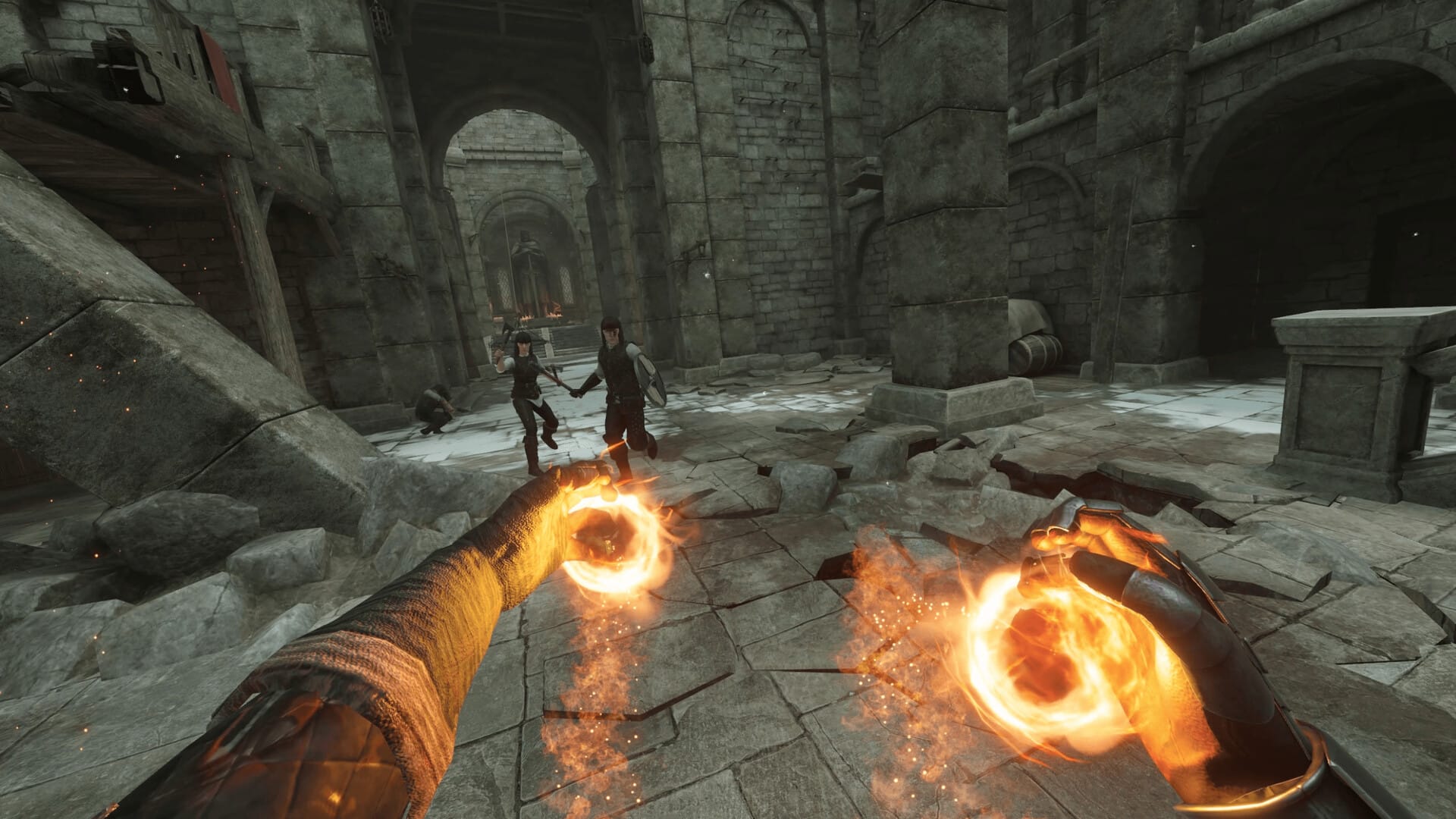
The dream of high-fidelity, physics-driven virtual reality without the umbilical cord of a tethered PC has long been the "holy grail" of the industry. However, as hardware evolves, so too do the demands of the software. In a move toward radical transparency, the developers of the seminal VR combat simulator Blade & Sorcery have confirmed that the PC version of the game will not run natively on Valve’s upcoming standalone headset, the Steam Frame.
The news serves as a sobering reminder of the persistent performance gap between mobile-class chipsets and dedicated gaming rigs, even as Valve prepares to launch what many consider the most powerful standalone VR device to date.
Main Facts: The "Unsupported" Verdict
Wully, a lead developer at Warpfrog—the studio behind Blade & Sorcery—recently addressed the community regarding the game’s compatibility with the Steam Frame. Despite the headset’s impressive specifications, Wully confirmed that the PC VR version of the game would be officially marked as "unsupported" for native, standalone play.
The decision stems from a fundamental mismatch between the game’s complex physics engine and the computational overhead required to run it on a mobile architecture. While the Steam Frame utilizes the cutting-edge Qualcomm Snapdragon 8 Gen 3 processor, the developer noted that even with the graphics settings dialed down to their lowest possible values, the game remains "too heavy" to maintain an acceptable frame rate.

Crucially, Wully emphasized that this limitation only applies to native execution—the process of the headset rendering the game itself. For users willing to utilize the Steam Frame’s primary design philosophy—streaming—the experience remains excellent. When the game is rendered on a powerful PC and beamed wirelessly to the headset, Blade & Sorcery performs exactly as intended.
Chronology: From Early Access Darling to Hardware Benchmark
To understand why this news has caused ripples in the VR community, one must look at the trajectory of Blade & Sorcery and the anticipation surrounding Valve’s hardware.
- December 2018: Blade & Sorcery enters Early Access on PC. It quickly becomes the gold standard for VR physics, eschewing "canned" animations for a fully simulated combat system where every sword strike, parry, and environmental interaction is calculated in real-time.
- November 2021: Recognizing the limitations of mobile hardware, Warpfrog releases Blade & Sorcery: Nomad for the Meta Quest 2. This version is a ground-up rebuild, featuring simplified physics, reduced enemy counts, and lower-fidelity textures to accommodate the mobile XR2 chipset.
- 2023–2024: Rumors of the "Steam Frame" (often referred to in leaks as "Deckard") begin to solidify. Enthusiasts hope for a device capable of bridging the gap between the mobile Quest ecosystem and the high-end Valve Index.
- Pre-Launch Window: Valve reveals the Steam Frame’s specifications, including the Snapdragon 8 Gen 3 and 16GB of RAM. The community begins to speculate that this "generational leap" might finally allow full PC VR titles to run without a PC.
- The Present: Warpfrog provides the reality check. By confirming the "unsupported" status, they clarify that while the Steam Frame is a powerhouse in the mobile space, it cannot yet replace a dedicated GPU for the most demanding simulations.
Supporting Data: The Technical Hurdle of Translation Layers
The difficulty in running Blade & Sorcery natively on the Steam Frame isn’t just a matter of raw GPU power; it is a matter of architecture and translation overhead.
The "Proton/FEX" Tax
The Steam Frame runs on SteamOS, a Linux-based operating system. Most PC VR games, including Blade & Sorcery, are built for Windows (x86 architecture). To run these on the Steam Frame’s ARM-based Snapdragon processor, the system must use two layers of translation:

- Proton: Valve’s compatibility layer that allows Windows games to run on Linux.
- FEX: An emulator that allows x86 instructions to run on ARM processors.
Wully specifically cited these layers as a bottleneck. Each layer of translation "steals" a percentage of the CPU’s performance. For a game like Blade & Sorcery, which is heavily CPU-bound due to its constant physics calculations (IK rigging, collision detection, and AI logic), this "translation tax" is the difference between a playable 90 FPS and a nauseating, stuttering mess.
Hardware Comparison
While the Steam Frame is significantly more powerful than the Meta Quest 3, the gap between it and a modest gaming PC remains vast:
| Feature | Meta Quest 3 | Steam Frame | Entry-Level Gaming PC (RTX 3060) |
|---|---|---|---|
| Processor | Snapdragon XR2 Gen 2 | Snapdragon 8 Gen 3 | Intel i5-12400 / Ryzen 5600 |
| RAM | 8 GB | 16 GB | 16 GB – 32 GB |
| Architecture | Native ARM | ARM (via Translation) | Native x86 |
| Cooling | Passive/Small Fan | Active (High Performance) | Large Heatsinks/Multiple Fans |
Physics-heavy games like Blade & Sorcery require high single-core CPU clock speeds to calculate collisions. Mobile chips, designed for thermal efficiency in a device worn on the face, simply cannot sustain the "boost" clocks required for sustained, complex melee combat involving multiple actors.
Official Responses: Transparency as a Policy
The developer’s statement was characterized by a desire to manage expectations. In an industry often criticized for over-promising and under-delivering, Warpfrog’s bluntness was welcomed by many.

"It’s better for us to be transparent about its performance," Wully stated. "The PCVR version […] is unfortunately a bit too heavy to run standalone on the Frame, and you’ll see it as ‘unsupported’ so people don’t get confused or disappointed."
This sentiment aligns with Valve’s own messaging. While Valve is marketing the Steam Frame as a device with standalone capabilities, they have been careful to label it a "streaming-first" headset. Valve’s official documentation states: "Steam Frame is a streaming-first, wireless VR headset + controllers that can handle your whole Steam library."
To assist consumers, Valve is implementing a "Steam Frame Verified" system, similar to the Steam Deck’s verification program. This will categorize games into:
- Verified: Runs "great" natively on standalone hardware.
- Playable: Runs with some manual adjustments or minor performance dips.
- Unsupported: Cannot maintain an acceptable experience natively.
- Streaming Only: Requires a PC connection to function.
Implications: The Future of Standalone VR and "Nomad"
The confirmation that Blade & Sorcery won’t run natively on the Steam Frame has several broader implications for the VR industry and Valve’s new hardware.
The Role of "Nomad"
The most likely outcome for fans who demand a native experience on the Steam Frame is the porting of Blade & Sorcery: Nomad. By bringing the optimized, lower-fidelity version of the game to the Steam store, Warpfrog could offer a "Verified" experience for Steam Frame users. While this version features less impressive graphics and fewer simultaneous enemies, it is built specifically to thrive on mobile architecture without the need for x86-to-ARM translation.
The "Streaming-First" Paradigm
This news reinforces Valve’s strategy. Unlike Meta, which is trying to move the entire industry toward mobile-first development, Valve is positioning the Steam Frame as a high-end peripheral that can go mobile when necessary. By including a dedicated wireless adapter for low-latency PC connection, Valve acknowledges that for the foreseeable future, the "True VR" experience still requires the power of a desktop computer.
A Warning for Other Titles
The "Unsupported" tag for Blade & Sorcery likely foreshadows the status of other physics-heavy or unoptimized PC VR titles. Games like Boneworks, Half-Life: Alyx, and Into the Radius may face similar hurdles. If a game designed in 2018 cannot run on a 2024 mobile flagship chip due to architectural overhead, it suggests that the dream of a "PC-free" Steam library is still several hardware generations away.
Conclusion: A Reality Check for the "Generational Leap"
The Steam Frame is undoubtedly a technical marvel, boasting a Snapdragon 8 Gen 3 and a robust RAM configuration that dwarfs its competitors. However, as the developers of Blade & Sorcery have clarified, raw specs are only half the story. The "translation tax" of running PC software on mobile hardware remains a formidable barrier.

For the VR enthusiast, the message is clear: the Steam Frame is a revolutionary tool for wireless PC VR streaming, but it is not yet a replacement for the PC itself. As we move toward the headset’s launch, the "Unsupported" status of one of VR’s most popular titles serves as a vital benchmark for what standalone hardware can—and cannot—achieve.
Ultimately, the existence of Blade & Sorcery: Nomad provides a path forward. The future of the Steam Frame may not lie in forcing PC games to run where they don’t belong, but in encouraging developers to create "Nomad-style" optimizations that respect the unique constraints of the standalone format. Until then, the PC remains the undisputed home of the "heavy" VR simulation.