Beyond the Dust and Grit: Aaron Agosto’s "Brash Rodeo" Unveils the Nuanced Soul of the American West
Montana’s Flathead Valley becomes the canvas for a photographic exploration that challenges deeply ingrained myths, revealing unexpected tenderness within a seemingly hyper-masculine arena.
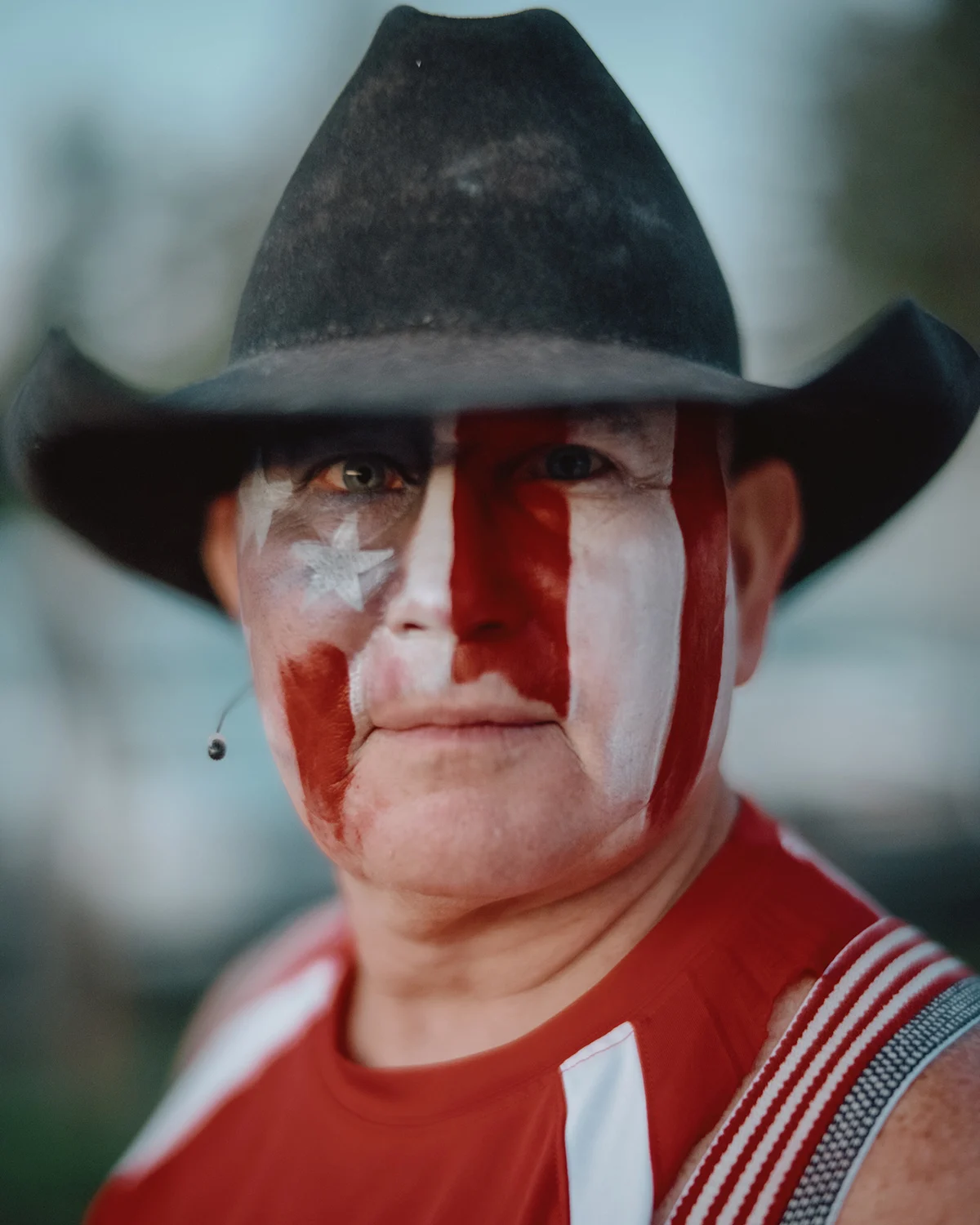
In the heart of Montana’s sprawling Flathead Valley, a region steeped in the lore of cowboys, vast landscapes, and untamed spirit, photographer Aaron Agosto is carving a unique niche. His work, deeply interwoven with the historical and cultural fabric of the American West, transcends mere documentation. Agosto’s latest series, "Brash Rodeo," is a poignant testament to this, offering a profound re-examination of the iconic rodeo culture, particularly through the lens of Montana’s longest-running open rodeo. This project, born from a serendipitous encounter and a desire for connection, delves into the unexpected moments of "softness" found within an environment often perceived as exclusively rugged and hyper-masculine.
The Genesis of "Brash Rodeo": A Pittsburgher’s Unexpected Connection
The narrative of "Brash Rodeo" is inextricably linked to Vance Brash, the proprietor and driving force behind the rodeo. Brash, a man whose own journey mirrors a departure from conventional expectations, moved to Montana from Pittsburgh in 2017. His relocation marked a significant shift, transplanting him from the urban sprawl to the expansive embrace of Big Sky Country. It wasn’t until the spring of 2020, upon completing his home, that Brash found himself with a surplus of time and a burgeoning desire to forge a genuine connection with his adopted homeland. This personal quest for belonging became the unlikely incubator for a vibrant cultural institution and, subsequently, for Agosto’s compelling photographic series.
Brash’s initial foray into the rodeo arena was not driven by a lifelong passion for the sport itself, but rather by a curiosity born of his new surroundings. "I went to my first rodeo expecting a violent spectacle," Brash recalls, his words echoing a common preconceived notion. "But instead, I was drawn to moments of softness." This unexpected observation forms the bedrock of Agosto’s artistic exploration. The "softness" Brash perceived was not a negation of the rodeo’s inherent excitement and physicality, but rather an emergent quality – the gentle play of light across the arena floor, the subtle interactions between riders and their animals, and the quiet camaraderie that often exists beneath the surface of adrenaline-fueled competition.
For Agosto, this insight resonated deeply. He saw in Brash’s experience a parallel to his own artistic journey. The project evolved into more than just documenting a local event; it became a personal odyssey for both the photographer and the rodeo organizer. "Over time, the project became a way for me to build a connection with a place and culture that wasn’t my own," Brash explains, highlighting the transformative power of immersion. "As well as a way to challenge my own preconceived notions of what I had expected the American West to be."
Challenging the Mythos: Reimagining the "Rugged Individualist"
The American West, a landscape saturated with powerful myths and enduring archetypes, has long been painted with broad strokes of rugged individualism, brash machismo, and a romanticized notion of poetic solitude. These narratives, deeply embedded in popular culture and historical accounts, often overshadow the complexities and nuances of the people and places that constitute this vast region. Vance Brash, in his personal journey and through the creation of his rodeo, found himself confronting these very myths.
"The mythology of the west I had always thought I had known was one of rugged individualism, of brash machismo, and poetic solitude," Brash articulates. This perception, he admits, was a significant departure from the reality he began to experience. The "Brash Rodeo," as envisioned and nurtured by Vance, became a microcosm where these entrenched narratives were subtly, yet powerfully, dismantled. It wasn’t about rejecting the heritage of the West, but rather about enriching it with a more contemporary and multifaceted understanding.
Aaron Agosto’s lens became the instrument through which this reinterpretation was made visible. His photographs, eschewing the sensationalized drama often associated with rodeo coverage, instead focus on the human element. He captures the quiet determination in a rider’s eyes before mounting a bucking bronc, the gentle hand of a handler tending to a spirited horse, and the shared laughter among participants after a grueling event. These are not the overt displays of bravado that fuel the myth; they are the subtle gestures that reveal a deeper, more complex humanity.
"As I grew to know the west, I began to understand a more nuanced view of the place and culture," Brash concludes, a sentiment that undoubtedly informs Agosto’s photographic approach. The series, therefore, becomes a visual dialogue, a conversation between the photographer’s artistic vision and the lived experiences of the people who embody the modern American West. It is a testament to the fact that beneath the weathered exteriors and the dusty arenas, there exists a rich tapestry of emotions, relationships, and evolving identities.
Chronology of a Vision: From Pittsburgh to the Arena
The story of "Brash Rodeo" is a narrative of convergence, a coming together of disparate elements that culminates in a unique artistic and cultural expression. The timeline of this project, though perhaps not marked by grand pronouncements, is characterized by a series of personal decisions and evolving perspectives.
2017: A New Chapter in Montana
Vance Brash makes the pivotal decision to relocate from Pittsburgh to Montana’s Flathead Valley. This move signifies a deliberate embrace of a different way of life, a departure from his previous urban existence. The initial years are likely dedicated to establishing roots, finding his footing in a new environment, and building the infrastructure for his future endeavors.
Spring 2020: The Spark of Opportunity
With the completion of his home, Vance Brash finds himself with an unexpected abundance of time. The global circumstances of early 2020, while challenging for many, presented Brash with a unique opportunity for introspection and engagement with his surroundings. It is during this period that his desire to connect with Montana, his new home, intensifies.
The Inaugural Rodeo Experience
Driven by a burgeoning curiosity, Vance Brash attends his first rodeo. This experience proves to be a turning point. Instead of the visceral, perhaps even violent, spectacle he anticipates, he is struck by subtler elements: the quality of the light, the quiet interactions, and an unexpected sense of tenderness within the perceived hyper-masculine environment. This observation plants the seed for what would become the "Brash Rodeo" and its underlying ethos.
The Birth of "Brash Rodeo"
Inspired by his firsthand experience and the desire to foster a sense of community and connection, Vance Brash embarks on the endeavor to organize and run Montana’s longest-running open rodeo. The name itself, "Brash Rodeo," likely reflects a playful acknowledgment of his own persona and his commitment to creating a unique event. This venture becomes more than just a sporting event; it becomes a platform for cultural expression and personal growth.
Aaron Agosto’s Artistic Engagement
Photographer Aaron Agosto, already based in the Flathead Valley and deeply attuned to the spirit and history of the American West, encounters the "Brash Rodeo." Recognizing the unique perspective offered by Vance Brash and the potential for a deeper exploration of Western culture, Agosto begins his photographic series. His work is informed by his understanding of the region’s past and his keen eye for capturing authentic human moments.
The Evolution of the Project
As Agosto immerses himself in the rodeo environment and builds relationships with its participants, his project evolves. It transcends mere documentation to become a nuanced exploration of connection, perception, and the redefinition of Western identity. The series, "Brash Rodeo," is born from this sustained engagement, capturing the unexpected softness and the evolving narratives of the American West.
Supporting Data: The Cultural Resonance of Rodeo
While the provided text focuses on the artistic and personal narratives, understanding the broader context of rodeo culture and its significance in the American West provides crucial supporting data for Aaron Agosto’s series. Rodeo is not merely a sport; it is a cultural touchstone, deeply embedded in the historical and economic fabric of many Western communities.
Economic Impact: Rodeos, both professional and amateur, contribute significantly to local economies. They draw tourists, support local businesses through accommodation, dining, and retail, and provide opportunities for livestock producers and agricultural communities. The "Brash Rodeo," as Montana’s longest-running open rodeo, likely plays a vital role in its local economic ecosystem.
Preservation of Tradition: Rodeo is often seen as a living embodiment of Western heritage. It celebrates the skills and traditions of ranching and horsemanship that are central to the historical development of the American West. Participants often come from generations of ranching families, carrying forward a legacy of hard work, resilience, and a deep connection to the land.
Community Building: Rodeos serve as crucial community gatherings. They bring people together from diverse backgrounds, fostering a sense of shared identity and belonging. For many, the annual rodeo is a highlight of the year, a time for social connection and celebration. Vance Brash’s desire to connect with his new home through the rodeo directly speaks to this community-building aspect.
Evolution of the Sport: While traditionalists often emphasize the historical roots of rodeo, the sport has also evolved. Modern rodeo includes sophisticated training techniques, advancements in animal welfare considerations, and a growing awareness of the mental and physical demands placed on both athletes and animals. This evolution allows for contemporary interpretations and challenges to older, more rigid perceptions.
Challenging Stereotypes: The "Brash Rodeo" series, by focusing on unexpected moments of softness, directly engages with the prevalent stereotypes associated with rodeo and the American West. These stereotypes often portray the West as solely a land of stoic, tough individuals, devoid of emotional depth. Agosto’s work, by highlighting the nuances of human interaction and the quiet beauty within the arena, offers a counter-narrative that is both refreshing and essential for a more complete understanding of Western culture.
The Role of Photography in Cultural Interpretation: Photography has a long and powerful history of shaping perceptions of the American West. From the grand landscape photography of the 19th century to the documentary work of the Great Depression, images have played a critical role in constructing and deconstructing the myths of this region. Aaron Agosto’s "Brash Rodeo" continues this tradition, using the medium to offer a fresh and introspective perspective on a time-honored cultural practice.
Official Responses and Interpretations: Acknowledging the Nuance
The concept of "official responses" in the context of an artistic photo series might seem unconventional. However, we can interpret this as the broader reception and interpretation of the work by the artistic community, cultural critics, and potentially, the participants themselves.
Artistic Community Recognition: Aaron Agosto’s work, particularly his series "Brash Rodeo," is likely to be met with acclaim within the photography and art world. His ability to delve beneath the surface of a well-known cultural phenomenon and extract unexpected emotional resonance is a hallmark of compelling documentary and fine art photography. The series offers a valuable contribution to the ongoing discourse about the American West and its evolving identity.
Cultural Critics’ Perspective: Art and cultural critics would likely analyze "Brash Rodeo" through the lens of post-modern interpretations of the American West. They would discuss how Agosto’s work challenges traditional iconography and embraces a more fluid and nuanced understanding of masculinity, community, and place. The focus on "softness" within a traditionally "hard" environment would be a key point of discussion, highlighting the project’s ability to subvert expectations.
Participant Engagement: While not an "official" response in a formal sense, the reaction of the individuals featured in the photographs is crucial. If Vance Brash and the rodeo participants feel that Agosto’s work accurately and respectfully captures their experiences and challenges their own preconceived notions, it signifies a successful artistic endeavor. The project, as Brash himself indicates, became a way for him to connect with his new home and culture, suggesting a positive reception from those intimately involved.
The Institutionalization of "Brash Rodeo": If "Brash Rodeo" gains wider recognition through exhibitions, publications, or online platforms, it signifies an institutionalization of its message. This recognition validates Agosto’s artistic vision and amplifies the nuanced portrayal of Western culture he presents. It moves from a personal project to a broader cultural statement.
The Broader Dialogue on Western Identity: The series contributes to a larger, ongoing dialogue about what it means to be "Western" in the 21st century. As the demographics and cultural landscapes of Western states continue to evolve, there is a growing need for artistic expressions that reflect this complexity. "Brash Rodeo" offers a vital piece of this evolving narrative, moving beyond simplistic stereotypes to embrace a more authentic and inclusive representation.
Implications: Redefining the American West Through a Lens of Tenderness
Aaron Agosto’s "Brash Rodeo" series carries significant implications, not only for the art world and the understanding of Western culture but also for our broader societal perceptions. By venturing beyond the expected and uncovering moments of unexpected softness, Agosto’s work prompts a re-evaluation of deeply ingrained myths and offers a pathway towards a more nuanced and inclusive understanding of the American West.
Challenging the Hegemony of "Rugged Individualism": The series directly confronts the pervasive myth of the lone, hyper-masculine cowboy as the sole archetype of the American West. It suggests that true strength and connection can be found in vulnerability, collaboration, and empathy. This challenges a long-held cultural narrative that often equates masculinity with stoicism and emotional repression, opening up space for a more diverse and emotionally intelligent understanding of Western identity.
Reimagining Masculinity: In an era where discussions around toxic masculinity are prevalent, "Brash Rodeo" offers a refreshing counterpoint. By highlighting the "softness" in interactions and the shared humanity within a seemingly tough environment, the series implicitly redefines masculinity. It suggests that strength can coexist with tenderness, and that genuine connection is not a sign of weakness but a source of profound resilience.
The Power of Place and Belonging: Vance Brash’s personal journey from Pittsburgh to Montana, and his subsequent quest to connect with his new home through the rodeo, underscores the profound human need for belonging. Agosto’s photographs capture this desire for connection and the ways in which cultural engagement can foster a sense of community and identity, even for those who are not born into a particular tradition. This has implications for how we understand migration, integration, and the creation of new cultural landscapes.
The Evolution of Cultural Narratives: The American West is not a static entity; it is a continually evolving cultural landscape. "Brash Rodeo" serves as a powerful example of how contemporary artists can engage with established traditions and reinterpret them for a modern audience. It demonstrates that the myths of the West are not immutable but can be re-examined, enriched, and made more relevant through critical observation and empathetic storytelling.
The Importance of Unexpected Observations: The series is a testament to the artistic and personal value of looking beyond the obvious. Vance Brash’s initial observation of "softness" in the rodeo, a detail often overlooked by those seeking only spectacle, became the catalyst for a profound artistic exploration. This highlights the importance of curiosity, open-mindedness, and the willingness to challenge one’s own preconceived notions in all aspects of life, not just in artistic pursuits.
A More Humanized Portrayal of Rural Life: In an increasingly urbanized world, the portrayal of rural life and its associated cultures often falls into simplistic or romanticized narratives. "Brash Rodeo" offers a more humanized and complex view of life in a rural Western community. It acknowledges the challenges and the grit, but also the warmth, humor, and deep connections that bind people together.
In conclusion, Aaron Agosto’s "Brash Rodeo" is more than just a collection of photographs; it is a cultural intervention. It invites viewers to look deeper, to question their assumptions, and to embrace the multifaceted nature of the American West. By revealing the unexpected tenderness that coexists with the dust and grit, Agosto offers a vision of the West that is not only more authentic but also more profoundly human. The series stands as a powerful reminder that beneath the surface of any tradition, there lie stories of connection, vulnerability, and the enduring search for meaning and belonging.